Welcome to a captivating exploration of sacred spaces that blend spiritual enrichment with breathtaking design. Across the United States, historic and modern places of worship stand as testaments to the diverse expressions of Christian faith. Whether you’re drawn to quiet reflection or awe-inspiring craftsmanship, these destinations offer something for every traveler.
Religious tourism isn’t just about visiting buildings—it’s a doorway to understanding America’s cultural tapestry. Each site tells a story of tradition, community, and evolving beliefs. From soaring steeples to intimate chapels, the selected locations highlight how different denominations shape both their practices and their architecture.
You’ll learn how these sacred spaces balance reverence with accessibility. Many welcome visitors to attend services, join guided tours, or simply admire their artistry. Respectful engagement is encouraged, whether you’re attending a hymn sing-along or studying stained-glass narratives.
This guide will help you appreciate the historical significance and modern relevance of these landmarks. Prepare to uncover hidden details about their construction, denominational roots, and role in local communities. Practical tips will also ensure your visits are both meaningful and memorable.
Key Takeaways
- Explore sites that showcase spiritual depth and architectural brilliance
- Gain cultural insights through America’s Christian heritage
- Discover how denominations shape worship styles and building designs
- Learn etiquette for engaging with active faith communities
- Understand the societal impact of religious diversity
- Get ready for a guide packed with historical context and travel advice
Introduction: Discovering Sacred Spaces
Stepping into America’s sacred spaces feels like opening a living history book. These buildings aren’t just walls and windows—they’re storytellers of faith, resilience, and community. From New England meeting houses to Southern chapels, each structure reveals how people have gathered, prayed, and shaped society for generations.
Visiting these locations lets you touch history. You’ll see how social movements like abolition or civil rights unfolded under vaulted ceilings. Stained glass becomes a timeline, showing saints alongside modern activists. Even the pews whisper tales of weddings, town meetings, and quiet moments of reflection.
What makes these visits special? You’re not just observing—you’re invited to participate. Many congregations host Q&A sessions or cultural events. As one pastor notes: “Our doors open wider than our steeples reach.” Respectful travelers can join Sunday services, choir practices, or community meals.
| Worship Style | Music | Community Focus | Architectural Clues |
|---|---|---|---|
| Traditional Liturgy | Pipe organs | Historical preservation | Gothic arches |
| Contemporary Praise | Band-led | Youth programs | Multi-use spaces |
| Participatory Services | A cappella hymns | Social justice work | Eco-friendly design |
This article focuses on three major denominations that shaped America’s spiritual landscape. Each offers distinct traditions while sharing core values of service and fellowship. Whether you seek quiet meditation or lively discussions, these spaces welcome all curious minds.
Remember: Check visitor guidelines before arriving. Some locations request modest attire or restrict photography during services. A little preparation ensures your experience honors both the space and its worshippers.
A Brief History of Protestantism and Its Impact
A single document sparked a spiritual revolution in 1517. Martin Luther’s Ninety-five Theses challenged religious authority, declaring faith alone as the path to salvation. This bold move rejected strict hierarchies, urging believers to engage directly with Scripture.
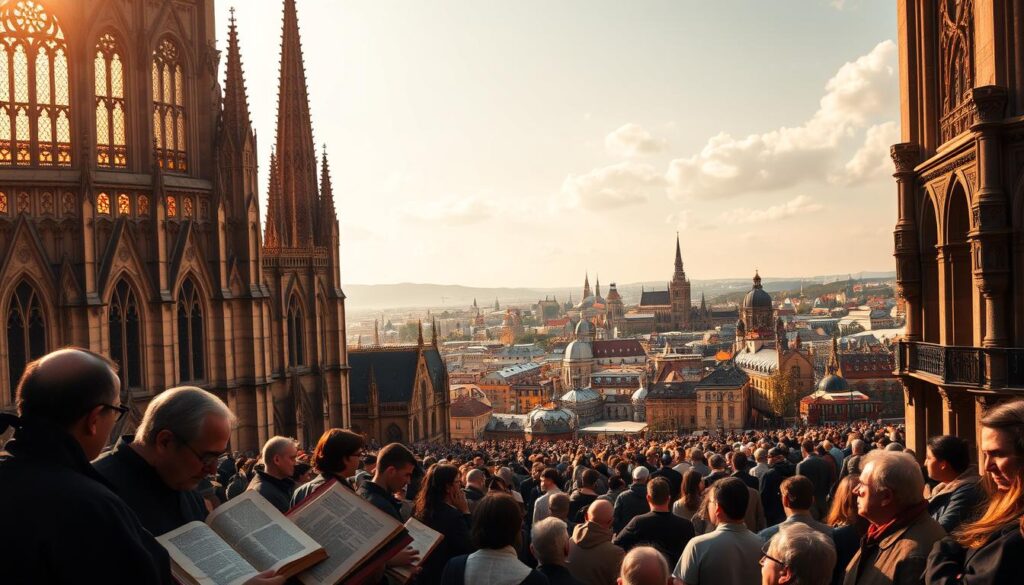
Luther’s ideas spread like wildfire across Europe. Reformers like John Calvin and Huldrych Zwingli added their voices, creating diverse denominations. Their shared focus? Personal connection with God over ritual. This shift birthed congregational singing and sermons in local languages.
When these principles reached America, they shaped more than worship. Early colonists used Protestant concepts of self-governance to frame democratic ideals. Churches became hubs for debating liberty – some even stored gunpowder during the Revolution!
The legacy lives in surprising ways. Nineteenth-century congregations led abolition efforts, while 20th-century faith groups marched for civil rights. Many Ivy League schools started as training grounds for clergy, proving education’s sacred role.
Today, these roots influence how communities tackle modern issues. Food banks, climate action, and interfaith dialogues all carry echoes of Reformation values. As one historian notes: “The past isn’t just present – it’s actively shaping tomorrow’s conversations.”
The Evolution of Church Architecture and Design
Imagine walking into a room where every wall speaks. That’s what happened when 16th-century reformers reimagined sacred spaces. Gone were the gold-leaf saints and painted altars. Instead, whitewashed walls displayed Bible verses in bold lettering. This shift turned buildings into three-dimensional sermons, where architecture itself taught theology.
John Calvin’s arrival in Geneva sparked more than debates—it changed how people experienced worship. Iconoclasts removed statues and stained glass, replacing them with pulpits centered under high ceilings. Why? To focus attention on preaching. As one historian quips: “They traded visual spectacles for spoken truth.”
| Denomination | Architectural Focus | Key Feature |
|---|---|---|
| Lutheran | Acoustic precision | Balcony seating |
| Baptist | Baptismal centrality | Pool visibility |
| Methodist | Community gathering | Movable chairs |
America put its spin on these designs. Colonial meeting houses doubled as town halls, reflecting faith’s role in public life. Today’s structures prioritize flexibility—think retractable stages and solar-paneled roofs. Modern congregations might worship in converted warehouses, proving spaces adapt to mission needs.
From vaulted ceilings that amplify hymns to circular layouts encouraging discussion, every detail serves a purpose. As you visit these sites, notice how light falls on open Bibles or how aisles guide movement. You’re not just seeing buildings—you’re witnessing living expressions of belief.
Martin Luther and the Reformation Legacy
A monk’s bold act in 1517 changed how millions relate to their faith. Martin Luther’s Ninety-five Theses didn’t just critique church practices—they redefined Christianity’s core. His doctrine of justification by faith alone declared salvation a divine gift, not a reward for deeds. This idea shook medieval Europe and still guides modern denominations.
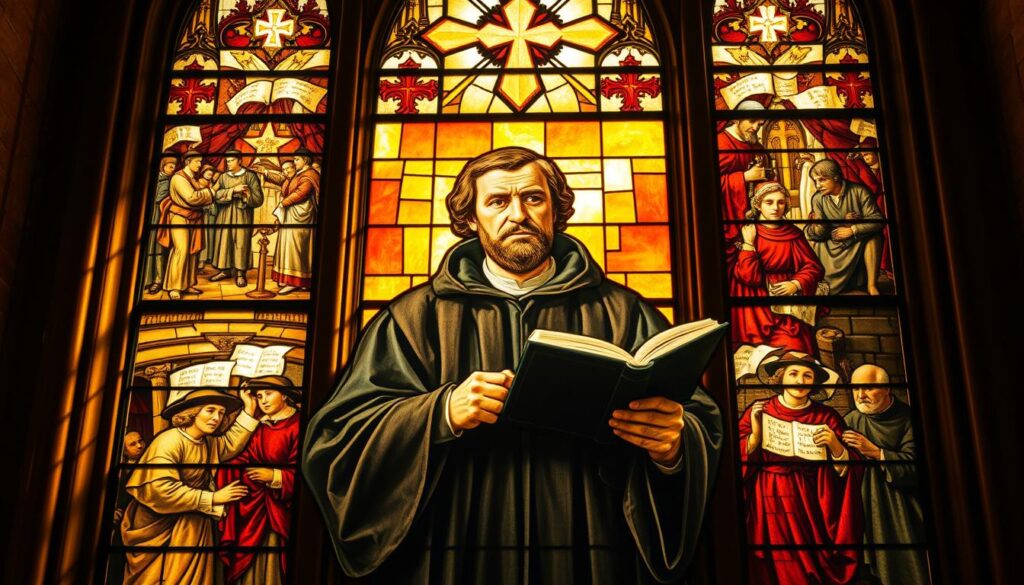
Luther rejected labels tied to his name. He preferred “evangelical,” from the Greek euangelion (“good news”), to emphasize gospel centrality. “What makes someone Christian isn’t membership in a group,” he argued, “but trust in God’s grace.” This focus reshaped worship, prioritizing scripture over hierarchy.
His German Bible translation empowered ordinary people. Suddenly, farmers and shopkeepers could read scripture without clergy mediation. This democratization sparked global translation efforts, making sacred texts accessible across languages.
| Luther’s Principle | Medieval Practice | Reformation Innovation |
|---|---|---|
| Salvation by faith | Indulgences sold | Grace as free gift |
| Priesthood of believers | Clergy dominance | Shared spiritual authority |
| Vernacular worship | Latin-only services | Local language engagement |
These ideas transformed church governance. Congregations began electing leaders and debating theology collectively. Modern Protestant groups reflect this legacy—whether through participatory services or community-led charity work.
Luther’s reforms live in unexpected ways. From hymn lyrics in pop music to interfaith food drives, his emphasis on personal faith and social responsibility endures. As one pastor notes: “We’re still learning to balance conviction with compassion, just as Luther did.”
Understanding Protestant Denominations in the United States
America’s spiritual landscape blooms with diverse denominations, each rooted in unique interpretations of Scripture. Baptists emphasize personal conversion and believer’s baptism, while Methodists focus on social holiness and communal growth. Presbyterians, guided by Calvinist principles, value elder-led governance—a contrast to Lutheran traditions shaped by Reformation-era liturgy.
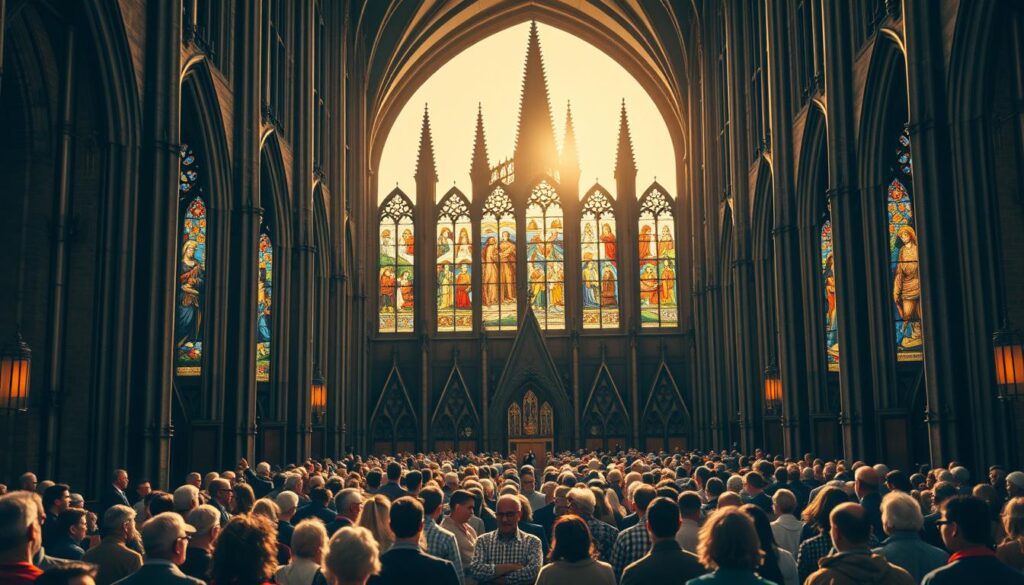
Historical migrations shaped these groups. Scandinavian Lutherans settled the Midwest, Dutch Reformed communities flourished near the Great Lakes, and Anglican colonists left lasting marks in Virginia. These patterns created regional identities: Baptist strongholds in the South, Quaker peace advocacy in Pennsylvania, and Pentecostal vibrancy in urban centers.
Modern shifts challenge traditional structures. Nondenominational movements now attract younger crowds with contemporary worship styles. Yet established groups adapt through technology and outreach. “Our hymns might stream online, but our mission stays grounded,” notes a Methodist pastor in Ohio.
Despite differences, core beliefs unite these traditions. All affirm Scripture’s authority and salvation through grace. Whether in steepled churches or storefront chapels, shared values of service and fellowship continue shaping North America’s faith communities.
3 protestant churches: A Closer Look
America’s spiritual journey unfolds through landmarks where belief and beauty converge. Our curated list spotlights three locations chosen for their historical impact, architectural innovation, and community roles. Each represents distinct denominational traditions while welcoming visitors to explore their stories.
- Showcase design elements reflecting their era
- Maintain active community outreach programs
- Offer educational resources for guests
From a New England meeting house to a Southern revival-style chapel, these buildings reveal how regional cultures shaped worship spaces. The Midwest’s Scandinavian-inspired sanctuary demonstrates immigrant influences on American faith practices.
“Our architecture isn’t just stone and glass—it’s an invitation to explore living traditions,” shares a pastor from one featured congregation. Visitors might attend gospel choir rehearsals or view civil rights-era artifacts displayed in fellowship halls.
Upcoming sections detail each location’s unique blend of theology and local flavor. You’ll discover practical insights for planning visits, from seasonal events to volunteer opportunities that deepen cultural understanding.
United Methodist Church: Tradition and Transformation
With 7.8 million members, the United Methodist Church stands as a dynamic force in American religious life. Born from John Wesley’s 18th-century revival movement, this denomination blends Anglican roots with frontier-era adaptability. Its signature combination of structured theology and grassroots activism continues to shape communities nationwide.
From Hymns to Humanitarian Work
Early Methodists rode horseback to spread their message of personal holiness and social reform. This zeal fueled abolition efforts and women’s suffrage campaigns. Today, their faith drives food pantries, disaster relief teams, and climate action initiatives. As one member explains: “We’re called to love God and neighbor – that means showing up where needs are greatest.”
Buildings That Build Bridges
United Methodist architecture mirrors its evolving mission. Historic sanctuaries feature stained-glass tributes to reformers, while modern campuses host job-training centers. Key design elements include:
- Circular seating fostering connection
- Multilingual signage welcoming diverse groups
- Solar panels powering community kitchens
This denomination’s unique governance balances bishops’ guidance with lay leadership. It’s a system that honors tradition while empowering local innovation – much like the church itself.
Southern Baptist Convention: Spiritual and Cultural Significance
In a nation shaped by religious diversity, one denomination stands out for its profound influence. The Southern Baptist Convention unites over 16 million members across the United States, making it the country’s largest Protestant group. Founded in 1845, its growth mirrors America’s own story—rooted in regional identity yet adapting to national challenges.
Distinctive practices define this faith community. Believer’s baptism by immersion symbolizes personal commitment, while local church autonomy allows congregations to address community needs. “We’re bound by shared beliefs, not rigid structures,” explains a Tennessee pastor. This flexibility fuels both rural chapels and urban mega-churches with stadium-style seating.
Membership Trends and Growth Insights
Recent years brought shifting dynamics for the Baptist Convention. While maintaining strong presence in the South, new initiatives target diverse urban populations. Multilingual services and youth mentorship programs reflect changing demographics. Yet traditional values like biblical authority remain central to worship and outreach.
Architectural styles reveal this balance of heritage and innovation. Classic white-steepled buildings dot small towns, symbolizing continuity. Modern complexes feature coffee shops and sports facilities, creating spaces for connection beyond Sunday services. Both models prioritize scripture-focused sanctuaries where sermons take center stage.
The denomination’s future hinges on addressing generational shifts. Younger members increasingly value social justice alongside evangelism. As one Texas congregation shows, food banks and disaster relief now complement mission trips. This evolving approach seeks to honor tradition while speaking to contemporary needs.
Lutheran Church: Faith, Art, and Architecture
Music fills vaulted spaces where ancient hymns meet modern voices. The Lutheran tradition, rooted in Martin Luther’s reforms, thrives through a blend of liturgical reverence and evolving cultural engagement. In the United States, this denomination balances European heritage with American innovation, creating spaces where theology takes physical form.
Heritage and Beliefs
With 4.5 million members, the Evangelical Lutheran Church in America leads one of the nation’s largest faith communities. Their Missouri Synod counterpart (2.3 million) maintains stricter doctrinal adherence. Both share core teachings like the sacramental union—viewing communion as Christ’s real presence “in, with, and under” bread and wine.
Architectural designs reflect this duality. Gothic arches frame stained-glass narratives of Reformation heroes, while accessible layouts welcome diverse congregations. “Our buildings teach through light and sound,” explains a Minnesota pastor.
Modern Relevance in Worship
Traditional liturgy coexists with fresh approaches. Congregations host jazz vespers and podcast sermons without abandoning Luther’s Small Catechism. Food pantries and climate initiatives extend Sunday teachings into daily life.
Seasonal celebrations—like Advent candlelight services—anchor communities in shared ritual. Through music, service, and adaptive spaces, these churches prove ancient traditions can speak to contemporary hearts.
FAQ
What are the largest Protestant denominations in the United States?
The United Methodist Church, Southern Baptist Convention, and Evangelical Lutheran Church in America rank among the largest. Each has distinct traditions, membership trends, and cultural influence across communities.
How has Protestant church architecture evolved over time?
Early designs emphasized simplicity and functionality, reflecting Reformation values. Modern structures often blend traditional elements with contemporary styles, prioritizing communal worship and accessibility.
Why is Martin Luther significant to Protestant history?
Luther’s 95 Theses sparked the Reformation, challenging doctrinal practices and paving the way for new theological perspectives. His legacy continues to shape Lutheran beliefs and broader Protestant thought.
What factors influence membership growth in groups like the Southern Baptist Convention?
Outreach efforts, cultural engagement, and regional demographics play key roles. While some denominations report stable numbers, others adapt to shifting spiritual preferences among younger generations.
How do United Methodist and Lutheran traditions differ?
The United Methodist Church emphasizes social justice and adaptive worship, while Lutheran practices focus on liturgical traditions and grace-centered theology. Both prioritize community impact but approach faith through unique lenses.