For millions of believers, sacred rituals form the heartbeat of spiritual life. The Catholic Church recognizes seven unique celebrations that bridge heaven and earth. These practices aren’t ancient traditions alone—they’re living encounters designed to deepen our connection with God.
Each sacrament combines physical actions with divine purpose. Water, oil, and words become channels of grace, reflecting how Jesus Christ embraced both body and spirit during His earthly ministry. This incarnational approach reminds us that faith thrives through tangible experiences.
Some misunderstand these rites as mere symbols or luck-based customs. In reality, they’re transformative encounters rooted in biblical foundations. From baptism to marriage, every sacrament marks a pivotal moment in a believer’s journey.
This guide will unpack their historical roots, spiritual meanings, and modern relevance. You’ll discover how these sacred acts nourish faith, strengthen communities, and mirror God’s love in action.
Key Takeaways
- Seven sacraments serve as direct connections to divine grace through physical rituals
- Each practice combines visible elements with invisible spiritual realities
- Sacraments are transformative encounters, not symbolic gestures or superstitions
- Rooted in Jesus’ teachings, they address key moments in spiritual growth
- Understanding sacraments enhances appreciation for Catholic worship traditions
Understanding the 7 Sacraments in Catholicism
At the heart of Christian practice lie seven sacred acts that mark life’s pivotal moments. These rituals, organized into three groups, create a roadmap for spiritual growth:
- Initiation: Baptism, Eucharist, Confirmation
- Healing: Reconciliation, Anointing of the Sick
- Service: Marriage, Holy Orders
Historical Background and Spiritual Significance
Early Christians developed these practices from Jesus’ teachings. The Church Fathers later refined them, ensuring each ritual maintained its power to transform lives. Unlike ordinary symbols, sacraments make real what they represent—grace becomes tangible through water, oil, or vows.
How Sacraments Reflect God’s Love
Through these sacred means, believers experience divine presence in daily life. A baptismal blessing isn’t just words—it’s an embrace. Communion bread isn’t a snack—it’s nourishment for the soul. This active love meets people where they are, offering strength for every season.
Baptism: Initiation into the Catholic Faith
New beginnings hold special power in faith journeys. Baptism serves as the gateway sacrament, washing away original sin while welcoming individuals into God’s family. Through water and sacred words, this transformative ritual marks the start of lifelong spiritual growth.
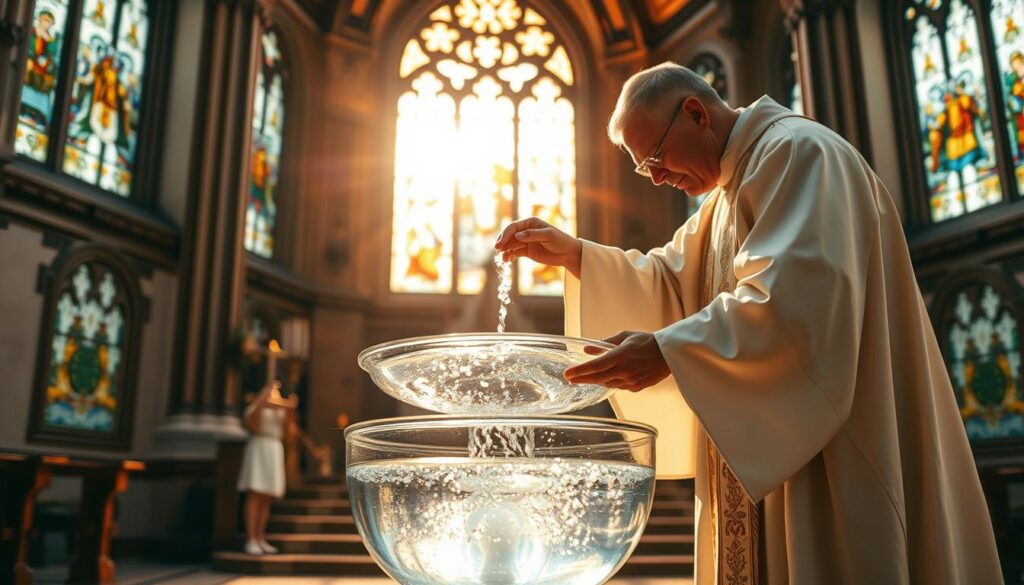
Infant Baptism vs. Adult Baptism
Most Catholic families baptize infants, trusting God’s grace to guide their child’s future. Parents and godparents promise to nurture the baby’s faith until they can choose for themselves. Adults joining the Church often experience baptism through the RCIA program—a months-long journey of study and reflection.
Symbols and Meaning of Holy Water
The pouring of blessed water symbolizes rebirth, echoing Jesus’ resurrection. As the priest speaks the Trinitarian formula, the person being baptized receives an indelible spiritual mark. This single, unrepeatable act unites all Christians, regardless of age or denomination.
Whether received as a child or adult, baptism creates lasting bonds. It’s not just about joining a community—it’s about awakening to divine love that shapes every chapter of life.
Eucharist: The Heart of Catholic Worship
Gathering around a shared table forms the core of countless family memories. In Catholic practice, this simple act becomes something extraordinary through the Eucharist. More than a symbolic meal, it’s considered the source and summit of spiritual life—a daily opportunity to encounter divine love.
Transubstantiation and the Real Presence
At every Mass, ordinary bread and wine undergo a profound change. Through transubstantiation, these elements become Christ’s living body and blood while keeping their appearance. This mystery transforms the altar into a place of intimate connection. As St. Thomas Aquinas noted, “What you see is the bread, but what it truly is becomes the presence of Christ.”
Celebrating First Holy Communion
Children typically receive their first communion around age seven. Preparation includes learning prayers and making their initial confession. Many families mark this milestone with white garments and festive gatherings. The experience often becomes a cherished memory that shapes a lifelong relationship with faith.
| Preparation Step | Purpose | Typical Age |
|---|---|---|
| Religious Education Classes | Teach core beliefs | 6-7 years |
| First Confession | Spiritual cleansing | 7-8 years |
| Communion Practice | Learn rituals | 7-8 years |
Regular participation requires simple preparations. Catholics fast for one hour before receiving the sacrament, focusing their hearts on this sacred time. Many find that frequent communion strengthens their daily walk, offering nourishment for life’s challenges.
Confirmation: Sealing with the Holy Spirit
What transforms a quiet faith into bold spiritual courage? For many believers, this sacrament answers that question through sacred oil and ancient promises. Often called a “spiritual coming-of-age,” confirmation strengthens the grace first received at baptism.
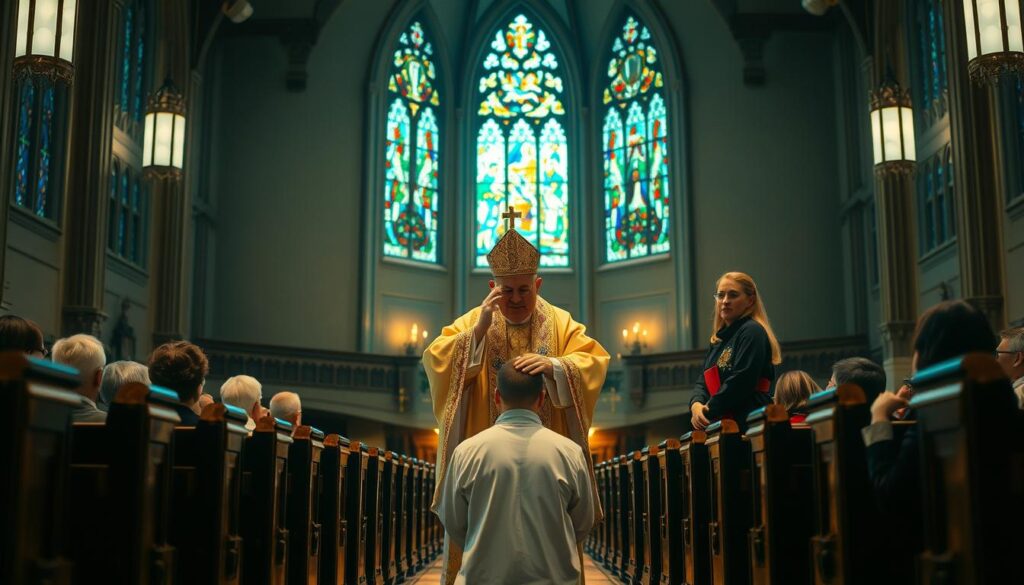
The Power of Chrism Oil
During the ceremony, bishops bless chrism oil—a fragrant mix of olive oil and balsam. This sacred blend represents the Holy Spirit‘s lasting presence. As the minister traces a cross on the candidate’s forehead, they declare: “Be sealed with gifts of the Spirit.”
The oil’s sweet aroma lingers as a physical reminder. “Like a signature on the soul,” one priest explains, “this anointing marks believers as Christ’s lifelong ambassadors.”
Choosing Heavenly Allies
Many select a saint’s name during preparation—a tradition connecting past and present. Teens might pick Francis for his love of nature, or Teresa for her compassionate service. Adults often choose mentors from Church history.
This practice creates bridges across generations. As St. Augustine wrote:
“The saints are our companions, not distant statues.”
Most children receive confirmation after years of faith formation, typically around age 13. Adult converts experience it alongside baptism—a powerful one-two embrace of divine faith. Both paths lead to the same destination: a heart ready to shine.
Reconciliation: Healing Through Confession
What lifts the weight of guilt and restores inner peace? For many believers, this sacrament offers a fresh start through honest self-reflection. Known as Confession or Penance, it transforms brokenness into hope.
The Journey to Forgiveness and Renewal
Individuals confess sins privately to a priest, who serves as a spiritual guide. The process isn’t about shame—it’s about reclaiming healing through accountability. Some visit weekly; others come during Lent or Advent.
The priest assigns penance, like prayers or acts of kindness, to nurture growth. Though he speaks the words, forgiveness flows from divine power, not human authority. This sacred exchange mends relationships with God and community.
Regular practice builds resilience against repeating sins. As one believer shared: “Leaving the confessional feels like breathing clean air after years underwater.” Through Reconciliation, burdens lift, and hearts find wings.
FAQ
Why does the Church emphasize infant baptism?
Infant baptism highlights God’s grace freely given before personal choice, welcoming children into the faith community. Parents and godparents pledge to nurture the child’s spiritual growth until they can affirm their beliefs.
What makes the Eucharist central to Catholic worship?
The Eucharist is considered the “source and summit” of faith because Catholics believe in the Real Presence of Jesus Christ. Through transubstantiation, bread and wine become His Body and Blood, offering spiritual nourishment and unity with believers.
How does Confirmation strengthen a person’s faith?
Confirmation deepens the gifts of the Holy Spirit received at baptism. The anointing with chrism oil symbolizes strength to live as witnesses to Christ, while choosing a patron saint provides a model for virtue and discipleship.
Can someone receive Reconciliation without confessing to a priest?
The sacrament requires confessing sins to a priest, who acts in Christ’s name to offer absolution. This practice reflects Jesus’ command to His apostles: “Whose sins you forgive are forgiven” (John 20:23).
Why is holy water used in rituals like baptism?
Holy water signifies purification, renewal, and life. It recalls Jesus’ baptism in the Jordan River and serves as a tangible reminder of God’s cleansing grace and the believer’s call to holiness.
What role do sponsors play in Confirmation?
Sponsors guide candidates in living their faith, much like godparents at baptism. They often share wisdom, pray for the candidate, and encourage a lifelong commitment to the Church’s mission.