As autumn leaves fall, many faith communities prepare for a sacred time of reflection. This special period in the liturgical year blends joyful anticipation with quiet preparation. For generations, believers have used these weeks to refocus their hearts while honoring ancient traditions.
The season bridges historical remembrance with future hope. It invites participants to celebrate Christ’s birth while reflecting on spiritual readiness for life’s journey. Families often mark this period with meaningful rituals, from lighting candles to shared prayers.
Starting near November 30th, these four weeks create space for both personal growth and community connection. The rhythm of this observance helps people step back from holiday chaos. Instead of frantic shopping, it encourages thoughtful pauses to appreciate faith’s deeper gifts.
Key Takeaways
- Combines celebration of historical events with preparation for spiritual renewal
- Creates intentional space for reflection during busy holiday months
- Rooted in centuries-old traditions that shape modern worship practices
- Offers practical tools for families to grow in faith together
- Shifts focus from commercial stress to meaningful spiritual connections
Introduction to Advent in Catholicism
When December dawns, a timeless tradition calls hearts to prepare through waiting. This liturgical period mirrors the ancient yearning of the people of Israel, who spent centuries anticipating their promised deliverer. Today, it offers a rhythm of reflection that connects modern believers to this shared spiritual heritage.
Overview of the Season
Rooted in the liturgical calendar, these four weeks transform ordinary December days into sacred space. The Church intentionally designs this time to help slow down before Christmas festivities begin. As one guide notes: “We don’t just recall history—we reawaken our hunger for divine connection.”
Historical and Spiritual Context
This season bridges two profound hopes: the Jewish expectation of a Messiah and the Christian hope for Christ’s return. By entering this intentional preparation, believers join a story larger than their daily lives. The Catechism emphasizes making present the “ancient expectancy” through prayer and anticipation.
Families and parishes use tools like wreaths or scripture readings to mark this journey. These practices turn homes into spaces of joyful celebration mixed with quiet readiness. In our fast-paced modern world, this rhythm offers a countercultural invitation to pause and reflect.
The Meaning and Origin of Advent
The word “Advent” carries centuries of spiritual anticipation within its syllables. Its roots reveal a beautiful invitation—not just to wait, but to move toward something greater. This period invites reflection on how divine promises shape human history and personal faith journeys.

Latin Roots: “Ad + Venire” Explained
Breaking down the term, “ad venire” combines Latin words meaning “to come toward.” This phrase captures the season’s essence: believers aren’t stationary observers but active participants in a sacred approach. One scholar notes: “The language itself mirrors our spiritual journey—leaning into hope rather than passively expecting it.”
Understanding this linguistic foundation shifts perspectives. It transforms the arrival from a single event into an ongoing way of living. Just as travelers prepare for a journey, this season encourages hearts to make space for what’s coming.
Advent as the Season of Arrival
Christ’s birth in Bethlehem forms only part of the story. The arrival extends to his presence in daily life and the promised future renewal. Families lighting candles or reading scriptures aren’t just remembering history—they’re nurturing a living connection.
This threefold sense of anticipation—past, present, and future—keeps traditions vibrant. By embracing this layered meaning, modern believers find fresh relevance in ancient practices. It turns December into a time of active preparation, where every wreath candle or prayer becomes a step toward deeper spiritual awakening.
Customs, Symbols, and Liturgical Significance
As winter’s chill sets in, homes and churches glow with symbolic light. These traditions carry centuries of meaning, transforming simple objects into tools for spiritual connection. Each custom invites reflection, blending history with hope.
Advent Wreaths and Candle Traditions
Long before electric lights, families gathered around flickering flames. The Advent wreath traces its roots to medieval Germany, where people lit candle-topped wreaths to push back winter’s darkness. Christians later reshaped this practice, weaving in biblical symbolism.
The circular shape mirrors God’s endless love. Evergreen branches whisper of life that outlasts winter. Four candles mark the weeks, their colors shifting like dawn’s light. Three purple ones glow first, second, and fourth Sundays—a hue of royalty and repentance. The pink third-week candle bursts in like joy, shouting: “Celebration’s near!”
Liturgical Colors and Their Spiritual Meanings
Purple drapes altars and clothes during this season, echoing Lent’s reflective mood. But here, it’s less about sorrow—more about preparing hearts for wonder. As one priest explains: “We’re tuning our souls to heaven’s frequency.”
Rose hues on Gaudete Sunday act like a halftime cheer. They remind believers that waiting isn’t passive—it’s active hope. This color shift mirrors nature’s winter-to-spring turn, urging hearts to hold on for brighter days ahead.
Spiritual Preparation and Reflective Practices
As holiday lights twinkle, many find their deepest peace in quiet moments of devotion. This sacred season invites believers to swap seasonal stress for soul-nourishing rhythms. Through ancient practices renewed each year, ordinary December days become pathways to spiritual awakening.
Prayer, Reflection, and Scripture
Daily prayer routines anchor the season’s rhythm. Morning moments with Scripture or evening examen reflections help hearts stay attuned to divine whispers. One parish leader shares: “Simple prayers repeated daily can reshape our entire December journey.”
Isaiah’s prophecies and John the Baptist’s messages take center stage in readings. These texts fuel hope while challenging complacency. Many find fresh meaning in Mary’s story too—her “yes” at the Annunciation models perfect readiness.
Sacraments like confession offer tangible ways to renew hearts. Extended parish reconciliation hours make this preparation accessible. As one worshiper notes: “Clearing inner clutter creates space for Christmas joy to truly land.”
Intentional pauses counter holiday rush. Lighting a candle during coffee breaks or savoring silence before sunrise carves sacred space. These small acts help align daily lives with the season’s deeper purpose—a heart open to wonder.
Exploring Advent Catholicism and the Liturgical Year
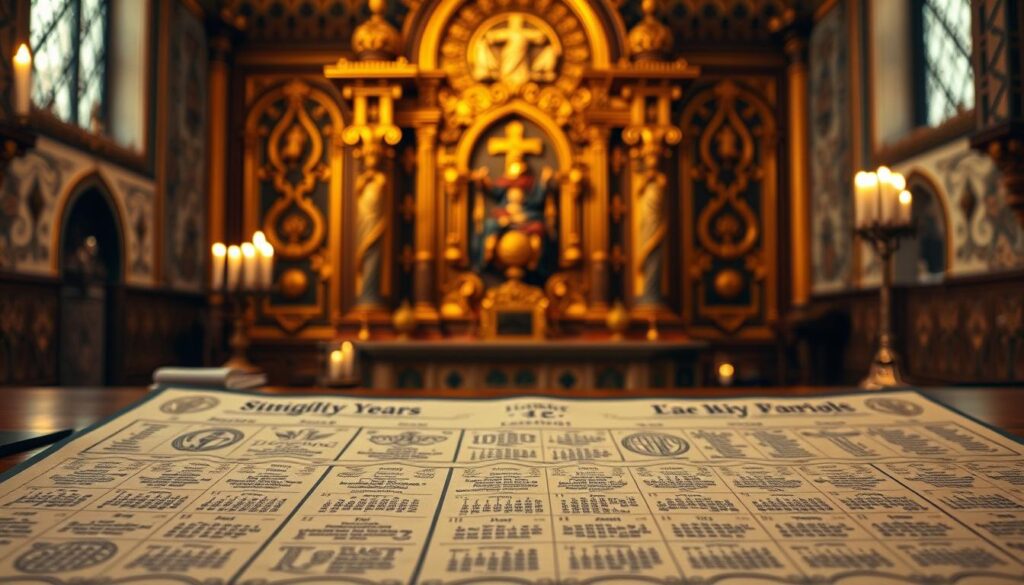
The Church’s annual cycle of worship turns like a compass needle, always pointing hearts toward divine mysteries. This liturgical year begins not in January but with hopeful preparation, creating a spiritual “reset button” for believers worldwide.
Renewing Faith Through Worship
Advent begins between November 27-December 3 each year, lasting 22-28 days. This variability means some weeks feel more packed than others—a design that mirrors life’s unpredictable time demands. The four Sundays create stepping stones:
| Sunday | Theme | Color | Focus |
|---|---|---|---|
| First | Hope | Purple | Prophetic promises |
| Second | Peace | Purple | John the Baptist |
| Third (Gaudete) | Joy | Rose | Mary’s journey |
| Fourth | Love | Purple | Bethlehem arrival |
Parishes worldwide sync their Sunday Advent readings, creating unity across continents. A Chicago priest notes: “When we light the wreath candles, we join a flame that circles the globe.”
Gaudete Sunday: Midpoint Celebration
The third week brings a vibrant shift—rose vestments replace purple, and readings emphasize joy. This Sunday Advent tradition dates to medieval times when Lenten-style fasting paused for celebration.
Choirs often sing louder, bells ring brighter, and sermons focus on Mary’s Magnificat. The change isn’t just decorative—it’s theological punctuation. As one worshiper shared: “When the pink candle glows, you feel Christmas leaning in to whisper hello.”
Advent in Daily Life and Family Traditions
Twinkling lights and evergreen scents signal a shift in home rhythms during this sacred season. Families across America blend cherished customs with creative new practices to mark the four Sundays of preparation. These traditions turn living rooms into spaces where faith grows alongside festive decor.

Decorating, Tree Traditions, and Home Celebrations
When to bring out the Christmas tree becomes a family conversation each year. Some households transform their home completely on the first Sunday, while others add decorations gradually:
| Timing | Approach | Spiritual Focus |
|---|---|---|
| First Sunday | Full tree setup | Symbolic fresh start |
| Weekly additions | Lights → ornaments → star | Progress toward joy |
| Gaudete Sunday | Tree unveiling | Celebrating halfway mark |
A parent from Ohio shares: “We hang one handmade ornament each night after dinner prayers. It keeps our family mindful of the season’s purpose.” Many today use Advent calendars with Scripture verses or acts of kindness to deepen daily life.
The third Sunday’s rose-colored theme inspires unique celebrations. Some host “Gaudete gatherings” with carol singing or cookie exchanges. These moments balance holiday bustle with the Advent time’s reflective heart, helping families honor both tradition and spiritual growth.
Modern Perspectives on Preparing for Christmas
In our notification-filled world, believers face a beautiful challenge: honoring timeless hope while texting schedules. This season’s heartbeat pulses with dual anticipation—celebrating Jesus Christ’s historical birth while staying alert for his promised return. Unlike holiday rush, this way of waiting transforms ordinary days into sacred preparation.
Adapting Ancient Customs for Today’s World
Modern lives demand fresh approaches to age-old traditions. Families now light digital wreaths during video calls or share daily devotions via apps. Parishes stream evening prayers for commuters and host community gift drives through social media. These innovations keep the season’s core intact while meeting people where they are.
The Role of Community and Outreach
Preparing for Jesus Christ’s second coming naturally spills into serving others. Many churches pair Advent calendars with food pantry donations—each day’s prayer matched with a canned good. Youth groups organize blanket drives while discussing how ancient prophecies shape modern community care. This way of living turns hope into action.
By blending old and new, believers create spaces where people encounter joy beyond tinsel. Whether through smartphone reminders for quiet reflection or neighborhood caroling events, each practice plants seeds for God’s coming kingdom—in hearts and our world.
FAQ
What is Advent in the Catholic Church?
It’s a four-week season of spiritual preparation for celebrating Jesus’ birth at Christmas and anticipating His promised return. This time focuses on prayer, reflection, and hope.
Why does the Church use an Advent wreath?
The wreath’s circular shape symbolizes eternal life, while its four candles represent hope, peace, joy, and love. Lighting one each week helps families mark the journey toward Christmas.
What do purple and rose liturgical colors mean during this period?
Purple signifies penance and longing for Christ’s arrival. Rose, used on Gaudete Sunday, signals a shift toward joyful anticipation as Christmas draws near.
How can individuals deepen their faith during these weeks?
Many focus on daily prayer, Scripture readings (like Isaiah’s prophecies), and acts of charity. These practices quiet the heart to embrace the season’s true meaning.
What makes Gaudete Sunday special?
The third Sunday emphasizes joy with a rose-colored candle and readings that highlight rejoicing. It reminds believers that Christ’s light overcomes darkness.
Are home traditions part of Catholic Advent observance?
Yes! Families often light wreath candles together, display nativity scenes, or use calendars with daily reflections. These rituals create shared moments of faith and anticipation.
How do modern Catholics balance ancient customs with busy lives?
Communities blend timeless practices—like evening prayer or outreach programs—with digital resources (apps, virtual reflections) to stay connected to the season’s purpose amid modern demands.