With over 80 million members worldwide, the Lutheran tradition stands as one of Christianity’s most enduring legacies. Born from 16th-century reforms, this faith emphasizes grace, scripture, and community. Its teachings continue to shape lives across six continents, blending ancient wisdom with modern practice.
What began as a movement to renew the church has grown into a global family. While Northern Europe remains its historic heart, vibrant communities now thrive in Africa, Asia, and the Americas. In the United States alone, millions find meaning in Lutheran churches’ blend of tradition and adaptability.
At its core, this faith celebrates personal connection to divine grace. Unlike some Christian traditions, it teaches that salvation comes through faith alone. Worship styles vary, but all share a focus on scripture and sacraments that have guided believers for five centuries.
Key Takeaways
- Third-largest Protestant tradition with nearly 90 million global followers
- Originated from 16th-century reforms emphasizing biblical authority
- Core principles include salvation through faith and grace alone
- Fastest growth occurring in Africa and Asia today
- Balances historical practices with contemporary cultural engagement
Historical Roots of the Lutheran Reformation
Martin Luther’s bold actions in 1517 sparked a religious revolution across Europe. This Augustinian monk sought to reform Roman Catholic Church practices he believed distorted biblical teachings. His famous 95 Theses questioned indulgences – payments claimed to reduce punishment for sins. “Why does the pope not empty purgatory for love’s sake?” Luther challenged, highlighting contradictions he saw in church policies.
Early Protestant Ideas and Influences
Luther never planned to start a new denomination. He aimed to clarify the gospel message within existing structures. The term “Lutheran” emerged as critics tried to discredit his ideas during 1519 debates. Ironically, this label stuck despite Luther preferring “evangelical” – meaning “good news” centered.
Key Events of the 16th Century
Three pivotal moments shaped this era:
- The 1517 Wittenberg church door posting that ignited public debate
- Luther’s defiant 1521 Diet of Worms testimony: “Here I stand”
- Mass-produced German Bible translations via Gutenberg’s press
These developments empowered ordinary people to engage with faith directly. By mid-century, what began as academic arguments became a movement redefining Christianity’s landscape. The church would never be the same – nor would European society.
The Life and Impact of Martin Luther
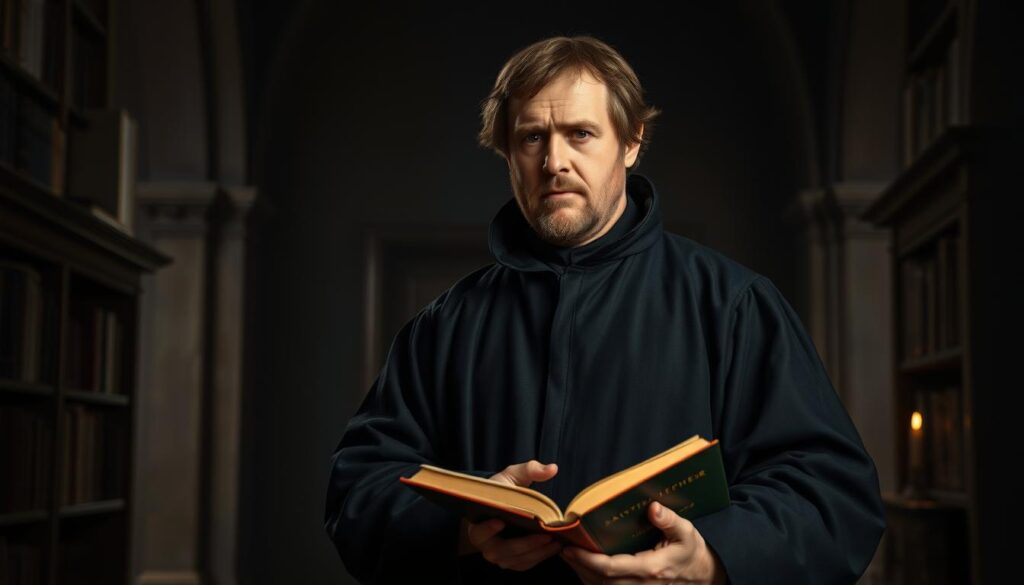
Few figures have reshaped religious thought as profoundly as Martin Luther, a humble monk turned reformer. His journey began with personal struggles—tormented by guilt, he later discovered freedom in God’s grace through faith. This revelation became the spark that lit the Reformation flame.
Milestones in Luther’s Reformation
Luther’s breakthrough came from studying scripture. He realized salvation wasn’t earned through human effort but received as a gift. His 1522 German Bible translation broke barriers, letting ordinary people read God’s Word firsthand. “I did nothing; the Word did everything,” he insisted, crediting scripture’s power over his own.
His Enduring Legacy in Christianity
Luther’s teachings reshaped worship and society. He championed the priesthood of all believers, declaring every Christian could approach God directly. This idea fueled educational reforms—he pushed for schools so everyone could read scripture.
Beyond theology, Luther influenced music by writing hymns and promoted social responsibility. His focus on faith alone remains central to millions worldwide. As he once said: “What is Luther? The teaching isn’t mine.” His work points beyond himself—to grace that transforms lives.
Understanding Lutheranism’s Core Doctrines
At the heart of this tradition lies a revolutionary idea: God’s grace transforms lives through trust, not effort. Three key teachings form its foundation, offering both comfort and direction to believers worldwide.
God’s Gift, Not Human Achievement
The central truth? Salvation comes entirely through faith. As one reformer declared: “We are saved by faith alone, but faith is never alone.” This gift brings peace, freeing people from chasing perfection. It’s why this teaching is called “the article by which the church stands or falls.”
Two Voices in Scripture
The Bible speaks in two ways. The Law reveals our need for help. The Gospel answers with Jesus Christ‘s promise: “I’ve done everything for you.” Check out how they work together:
| Law | Gospel |
|---|---|
| Shows our limits | Reveals God’s love |
| Commands action | Offers forgiveness |
| Diagnoses the problem | Provides the cure |
Where Grace Happens
Worship becomes a meeting place through means of grace. The Bible’s words and sacraments act like delivery trucks, bringing God’s promises straight to believers. This makes Sunday services more than rituals—they’re encounters with divine love that strengthen faith over time.
Together, these teachings create a faith rooted in grace and lived through trust. As one member shared: “It’s not about being good enough—it’s about being held secure.”
The Significance of the Augsburg Confession and Book of Concord
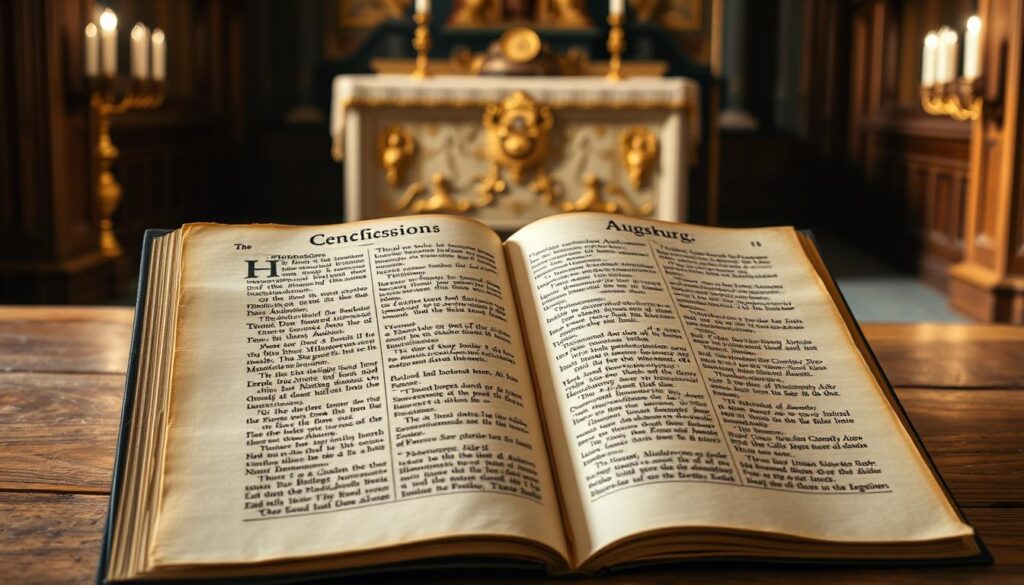
In 1530, a carefully crafted document changed religious history. Philipp Melanchthon, Martin Luther’s colleague, presented the Augsburg Confession to Emperor Charles V. This bold confession became Protestantism’s first official statement of faith. Seven princes and two cities endorsed it, showing growing support for reformed teachings.
Foundational Documents of the Faith
Fifty years later, leaders compiled the Book of Concord. This collection united key Reformation writings, signed by 51 rulers and 35 cities. Melanchthon called these texts “a light to show Christ’s teaching clearly.” They still guide the Lutheran church today, balancing biblical truth with practical application.
These documents did more than state beliefs. They created unity across regions through shared commitments. As one historian notes: “The confessions became both a compass and anchor—directing churches while keeping them rooted.”
The Practice of Confessional Subscription
Modern Lutheran pastors make a special promise. When ordained, they vow to teach “in agreement with the confessions.” This practice ensures sermons and sacraments stay true to Reformation principles.
The system allows flexibility too. Churches interpret ancient texts for modern issues while keeping core teachings intact. It’s like having a trusted recipe book—the ingredients stay consistent, but bakers adapt methods for new kitchens.
Through this approach, the Augsburg Confession and Book of Concord remain living documents. They protect tradition while inviting fresh ways to share timeless truths.
Lutheran Worship and Sacraments: Baptism and the Lord’s Supper
At the heart of Lutheran practice, two sacred acts bridge heaven and earth. These sacraments aren’t symbolic gestures—they’re God’s hands reaching into daily life. Through simple elements like water and meal, believers experience divine promises in physical form.
The Role of Baptism in Salvation
Water becomes holy when paired with God’s Word. Lutherans see baptism as God claiming people first, not humans choosing God. This explains why infants receive the sacrament—grace arrives before understanding. “It’s like being born into a family,” one pastor explains. “You don’t earn your place at the table.”
The practice connects to Jesus’ command in Matthew 28: “Make disciples, baptizing them.” Water washes, but the real power comes from Christ’s promise attached to it. Parents bringing babies forward act on this trust—God starts His work early.
The Mystery and Meaning of Communion
Every Lutheran service celebrates this meal as more than memory. When bread and wine are shared, Christ’s body and blood come near. As Luther wrote:
“The mouth receives the Lord’s Supper, but faith grasps the gift.”
This “real presence” makes communion a spiritual encounter. The elements stay ordinary—wheat flour, grape juice—yet carry extraordinary grace. Members often leave the rail feeling renewed, having tasted forgiveness literally.
Both sacraments shape Lutheran identity. Weekly, believers return to water’s promise and the table’s nourishment. As one member puts it: “We don’t climb up to God—He comes down through bread, wine, and water.”
Cultural and Global Influence of Lutheran Churches
What began as a regional movement now spans continents, shaping cultures from Scandinavian fjords to African savannas. The Lutheran World Federation reveals a surprising shift—while Northern Europe birthed this tradition, its heartbeat now pulses strongest in unexpected places.

Lutheran Heritage in Northern Europe
For centuries, church steeples defined skylines from Berlin to Stockholm. Lutheran teachings became part of national identity, blending faith with local customs. Clergy preserved languages during foreign rule—Estonian hymns and Norwegian Bible translations kept cultures alive.
Modern Global Expansion and Diversity
Today’s growth hotspots tell a new story. Africa hosts 15 million church members—more than Germany’s 13 million. Asia’s 7.4 million Lutherans nearly match North America’s 8.1 million. Missionaries and immigrants planted seeds that grew into vibrant communities.
| Region | Lutheran Members (millions) |
|---|---|
| Africa | 15 |
| Northern Europe | 13 |
| Asia & Middle East | 7.4 |
| North America | 8.1 |
This spread shows grace transcends borders. An Ethiopian pastor notes: “Our choirs mix drums with hymns—same message, new rhythms.” From Brazilian favelas to Indonesian islands, Lutherans adapt traditions while keeping core teachings intact.
The Lutheran World Federation celebrates this diversity. As one leader says:
“We’re not exporting European culture—we’re sharing hope that speaks every language.”
Navigating the Contemporary Lutheran Landscape in America
American Lutherans today balance centuries-old traditions with modern challenges. Two major groups lead this effort: the Lutheran Church—Missouri Synod (LCMS) and the Evangelical Lutheran Church in America (ELCA). Together, they serve over 4 million members across 50 states.
Adapting to a Pluralistic Society
The LCMS holds tightly to traditional teachings, calling the Bible “God’s error-free Word.” This conservative approach appeals to those seeking clear guidelines in changing times. Meanwhile, the ELCA often addresses social issues like climate change and racial justice, reflecting its progressive leanings.
Both groups share core practices—Sunday sacraments and hymn-based worship—but differ in cultural engagement. LCMS churches frequently run private schools, while ELCA congregations partner with food banks and immigrant services. “We’re not just preserving faith,” says an Ohio pastor, “we’re living it through action.”
Technology now bridges generations in church America. Live-streamed services reach homebound members, while apps deliver daily devotions. Yet the heartbeat remains unchanged: communities gathering around grace-filled teachings that still transform lives after 500 years.
FAQ
What makes Lutheran beliefs different from other Christian denominations?
Lutherans emphasize salvation through God’s grace alone, received by faith, rather than human effort. Key teachings like justification by faith, the authority of Scripture, and the sacraments as “means of grace” set their theology apart.
Why is Martin Luther important to the Lutheran Church?
Martin Luther’s 16th-century writings and reforms challenged practices like indulgences, emphasizing direct access to God through Scripture. His translation of the Bible and works like the Small Catechism remain central to Lutheran identity.
What role do the Augsburg Confession and Book of Concord play today?
These documents define Lutheran doctrine, clarifying teachings on grace, sacraments, and worship. Many churches, like the Evangelical Lutheran Church in America, still affirm them as foundational to their faith practice.
How do Lutherans view baptism and communion?
Baptism is seen as God’s promise of forgiveness and new life, offered even to infants. Communion involves Christ’s real presence in bread and wine, uniting believers with His sacrifice and grace.
Where is the Lutheran Church most influential globally?
While rooted in Northern Europe, groups like the Lutheran World Federation now span six continents. Growth in Africa and Asia reflects adaptation to local cultures while retaining core teachings.
How do Lutheran churches address modern societal changes?
Many, like the ELCA, engage in social justice while balancing tradition. Topics like inclusivity and interfaith dialogue are approached through Scripture, grace, and the Lutheran emphasis on God’s unconditional love.
Do Lutherans emphasize good works if salvation is by faith?
Good works flow naturally from gratitude for God’s grace, not as a requirement for salvation. This reflects Luther’s teaching that faith “is always doing” but never earns God’s favor.
Why do some Lutheran churches still use traditional liturgy?
Liturgy connects worshipers to historic creeds and sacraments, reflecting the belief that God’s Word and promises remain central. However, contemporary services are also common, blending tradition with modern expressions.