The Anglican view on baptism is complex and multifaceted. According to the Articles of Religion (XXVII), baptism is not only a sign of profession but also a sign of regeneration or new birth, where individuals are grafted into the Church.
The question of whether baptism saves is a matter of debate within the Anglican tradition. Different perspectives on baptism and salvation exist, and understanding these varying views can provide insight into the richness and diversity of Anglican theology.
Key Takeaways
- Anglican beliefs on baptism are complex and multifaceted.
- Baptism is considered a sign of regeneration or new birth.
- The role of baptism in salvation is debated within the Anglican tradition.
- Understanding different perspectives on baptism can enrich one’s appreciation of Anglican theology.
- Anglican beliefs on baptism are rooted in the Articles of Religion.
Understanding Anglicanism
To grasp the nuances of Anglican beliefs on baptism, it’s essential to understand the foundational principles of Anglicanism. Anglicanism is a Christian tradition that originated in the Church of England, and it has evolved into a global communion of churches.
Overview of Anglicanism
Anglicanism is characterized by a commitment to scripture, reason, and tradition. This blend allows for a rich and nuanced understanding of Christian theology and practices. The Anglican Communion is a global fellowship of churches that are in communion with the Archbishop of Canterbury, symbolizing unity and shared beliefs.
- Scripture plays a central role in Anglican theology, guiding beliefs and practices.
- Reason is valued as a tool for understanding and interpreting scripture and tradition.
- Tradition provides a link to the historical and theological heritage of the Christian faith.
Key Doctrines of the Anglican Church
The Anglican Church is founded on several key doctrines that shape its understanding of baptism and salvation. These include:
- The importance of sacraments as means of grace.
- The authority of scripture in matters of faith and practice.
- The role of tradition in interpreting scripture and guiding church practices.
By understanding these foundational elements, we can better appreciate the Anglican perspective on baptism and its significance in the life of the church.
The Significance of Baptism in Anglicanism
Understanding the significance of baptism in Anglicanism requires delving into its historical roots and theological underpinnings. Baptism has been a central sacrament in the Christian tradition, and Anglicanism is no exception. The historical context of baptism in Anglicanism is shaped by the Reformation and the influence of Catholic and Protestant traditions.
Historical Context of Baptism
The historical context of baptism in Anglicanism is complex, reflecting the theological debates and reforms of the 16th century. The Church of England, from which Anglicanism originates, retained many Catholic traditions while incorporating Protestant principles. This blend is evident in the sacrament of baptism.
- Retention of Catholic Traditions: The ritual and significance of baptism were maintained, emphasizing its role in salvation.
- Incorporation of Protestant Principles: The understanding of baptism was influenced by Protestant theology, focusing on faith and grace.
The Role of Baptism in Anglican Worship
Baptism plays a vital role in Anglican worship, serving as a means of grace and a sign of regeneration. It is a sacrament that initiates individuals into the Christian community.
- Baptism is seen as a means of grace, through which God’s grace is conferred upon the individual.
- It is a sign of regeneration, symbolizing the spiritual rebirth of the baptized.
- Baptism marks the initiation into the Christian community, welcoming the individual into the Church.
The significance of baptism in Anglicanism is multifaceted, reflecting both historical and theological dimensions. Its role in worship and theology underscores its importance in the life of the Church and its adherents.
Different Views on Baptism and Salvation
Within Anglicanism, the relationship between baptism and salvation is interpreted in various ways. This diversity reflects the complex and multifaceted nature of Anglican theology.
The Sacramental View of Baptism
Some Anglicans adhere to a sacramental view of baptism, believing that it is a means of regeneration. According to this perspective, baptism is not merely a symbolic act but a sacrament through which God’s grace is conferred. This view is rooted in the understanding that sacraments are outward signs of inward grace, and baptism is seen as a crucial moment in the process of salvation.
The sacramental view is supported by references to baptism in the New Testament and the early Christian tradition. Proponents argue that baptism is essential for salvation because it is through this act that one is incorporated into the body of Christ.
The Symbolic View of Baptism
In contrast, other Anglicans view baptism as a symbolic act that represents a believer’s faith and commitment to Christ. According to this perspective, baptism is an important ritual that signifies a person’s decision to follow Jesus, but it is not considered a necessary step for salvation. This view emphasizes the role of personal faith and the decision to follow Christ as the primary elements of salvation.
Those holding the symbolic view often point to the importance of faith and repentance in the process of salvation, suggesting that baptism is a public declaration of these inner commitments rather than a means of achieving salvation itself.
Perspectives from Anglican Leaders
Anglican leaders have contributed significantly to the discussion on baptism and salvation, offering a range of insights that reflect the diversity within Anglican theology. Some leaders emphasize the sacramental nature of baptism, highlighting its role in the initiation into Christian life. Others stress the importance of understanding baptism in the context of the broader Christian journey, which includes faith, repentance, and a commitment to living out one’s beliefs.
The diversity of views within Anglicanism on baptism and salvation underscores the richness and complexity of Anglican theology. By exploring these different perspectives, one can gain a deeper understanding of the nuances and debates within the Anglican tradition.
Theological Foundations of Anglican Baptism
Understanding Anglican baptism requires exploring its theological roots. The Anglican Church’s beliefs about baptism are shaped by a commitment to scripture, tradition, and reason.

Scripture’s Role in Baptism Beliefs
Scripture plays a pivotal role in informing Anglican beliefs about baptism. The Bible provides numerous accounts of baptism, emphasizing its significance as a sacrament. Passages such as Matthew 28:19 and Romans 6:3-4 are particularly influential, highlighting the importance of baptism in the life of a Christian.
The Anglican Church interprets these scriptures within the context of its broader theological framework, recognizing baptism as a means of grace and a sign of regeneration. This understanding is rooted in the belief that baptism is not merely a symbolic act but a sacramental one, through which God’s grace is conferred.
The Book of Common Prayer and Baptism
The Book of Common Prayer is another foundational element in Anglican baptism theology. It provides the liturgical framework for baptism services, outlining the rituals and prayers that accompany the sacrament. The Book of Common Prayer’s baptism liturgy emphasizes the importance of baptism as a rite of initiation into the Christian community.
The prayers and readings included in the baptism service underscore the sacrament’s significance, drawing on scripture to illuminate the meaning and implications of baptism. By using the Book of Common Prayer, Anglicans ensure that their baptism practices are grounded in a rich liturgical tradition that is both historically rooted and theologically informed.
In conclusion, the theological foundations of Anglican baptism are multifaceted, drawing on scripture, the Book of Common Prayer, and the Articles of Religion. This comprehensive approach provides a nuanced understanding of baptism, highlighting its role as a means of grace and a sign of regeneration. As such, Anglicans believe that baptism is a vital aspect of Christian life and discipleship.
Infant Baptism vs. Adult Baptism
The practice of baptism in Anglicanism is marked by a significant debate between proponents of infant baptism and those who advocate for adult baptism. This discussion reflects fundamental differences in understanding the role of faith and the significance of baptism in the life of a believer.
Rationale for Infant Baptism
Proponents of infant baptism argue that it is a biblical practice supported by scriptures that indicate the baptism of entire households, which likely included infants. They see infant baptism as a means of initiating a child into the covenant community, emphasizing the grace of God that is not dependent on the individual’s faith response. This perspective is grounded in the belief that baptism is a sacrament that confers spiritual benefits, including regeneration and incorporation into Christ’s body.
The theological rationale for infant baptism is further supported by the Anglican understanding of baptism as a means of grace. According to this view, baptism is not merely a symbolic act but a channel through which God’s grace is conveyed to the individual. This understanding is rooted in the Book of Common Prayer and other Anglican liturgical resources, which describe baptism as a sacrament that effects what it symbolizes.
Adult Baptism and Personal Faith
On the other hand, advocates for adult baptism stress the importance of personal faith and conscious decision-making in the baptismal process. They argue that baptism should be preceded by a personal conversion experience and a deliberate choice to follow Christ. This perspective emphasizes the role of faith in baptism, suggesting that the sacrament is most meaningful when it is accompanied by a conscious commitment to the Christian life.
The debate between infant and adult baptism in Anglicanism highlights the complexity of understanding baptism and salvation. While both perspectives agree on the significance of baptism, they differ on the issue of when and how it should be administered. This ongoing discussion reflects the diverse and rich theological landscape within Anglicanism, where different views on baptism coexist and contribute to a deeper understanding of the sacrament.
The Process of Baptism in Anglican Tradition
The Anglican tradition approaches baptism with a rich liturgical practice that is deeply rooted in the Book of Common Prayer. This foundational text guides the ritual of baptism, ensuring a consistent and meaningful experience across Anglican communities.
The Ritual of Baptism
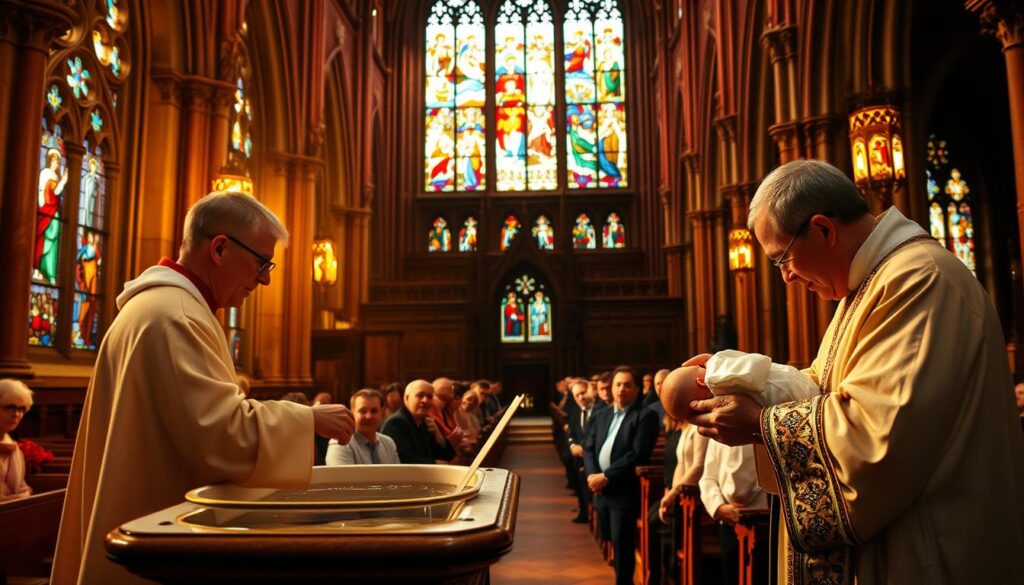
The ritual of baptism in Anglican tradition is characterized by its use of sacramental language and symbolic actions. The ceremony typically involves the use of water, either through immersion or affusion, signifying purification and rebirth. The Book of Common Prayer provides the liturgical framework, which includes prayers, readings from Scripture, and the baptismal vows.
During the baptismal service, the community gathers to witness the baptism and to support the individual being baptized. This communal aspect underscores the importance of community in Anglican theology. The ritual is not just a personal moment of faith but a public declaration of commitment to the Christian life.
Church Community’s Role in Baptism
The church community plays a vital role in the baptismal process. In Anglican tradition, baptism is not seen as an isolated event but as part of a lifelong journey of faith supported by the community. The community’s role is multifaceted, involving support, guidance, and prayer for the baptized individual.
For infant baptisms, the community, along with the parents and godparents, makes vows on behalf of the child, committing to raise them in the Christian faith. For adult baptisms, the community welcomes the individual into their fellowship, providing a network of support and encouragement.
In both cases, the community’s involvement emphasizes the communal nature of faith in Anglicanism. Baptism is a starting point for a relationship with God and with the body of Christ, the church.
Baptism as a Means of Grace
The sacrament of baptism is considered a means of grace in Anglican tradition, emphasizing God’s initiative in salvation. This understanding is rooted in the broader context of Anglican theology, where grace is seen as a fundamental aspect of God’s relationship with humanity.
Understanding Grace in Anglican Theology
Grace, in Anglican theology, refers to the unmerited favor of God towards humanity. It is through grace that individuals are saved and brought into a relationship with God. The concept of grace is central to Anglican doctrine, influencing various aspects of church life and practice, including the sacrament of baptism.
The Anglican understanding of grace is shaped by scriptural teachings and the traditions of the early Christian church. It emphasizes the importance of God’s initiative in salvation, highlighting that salvation is a gift from God rather than something earned by human effort.
How Baptism Facilitates Grace
Baptism is seen as a means through which God’s grace is conveyed to the individual. In the sacrament, the person being baptized is united with Christ in his death and resurrection, participating in the benefits of salvation. This understanding is based on New Testament teachings, particularly those found in the writings of St. Paul.
The role of baptism in facilitating grace is closely tied to the concept of sacramental efficacy. In Anglican theology, sacraments are considered effective means of grace, not because of the worthiness of the person administering or receiving the sacrament, but because of the faithfulness of God to his promises.
The Relationship Between Faith and Baptism
Exploring the relationship between faith and baptism reveals the depth and richness of Anglican theological thought. This complex interplay is central to understanding Anglican beliefs about baptism and salvation.
The Importance of Faith in Baptism
Faith plays a crucial role in the sacrament of baptism within Anglicanism. It is seen as a means of grace, where God’s love and forgiveness are conveyed to the individual being baptized. The importance of faith is emphasized in the baptismal liturgy, where the congregation affirms their faith and promises to support the baptized individual in their spiritual journey.
The role of faith in baptism is multifaceted:
- It is a response to God’s initiative, acknowledging the grace offered in baptism.
- Faith is nurtured through the sacramental life of the Church, including baptism.
- The presence of faith in baptism is seen as essential for the effective reception of God’s grace.
Can Baptism Exist Without Faith?
The question of whether baptism can exist without faith is a matter of debate within Anglicanism. Some argue that baptism is effective regardless of the individual’s faith status, citing the practice of infant baptism where the faith of the community and the parents is considered sufficient.
Others contend that personal faith is essential for baptism to be meaningful, pointing to instances of adult baptism where the individual has made a conscious decision to follow Christ. This perspective emphasizes the importance of personal commitment in the baptismal process.
The Anglican Communion’s diverse views on this matter reflect its broad theological spectrum. Key points include:
- The sacramental nature of baptism is seen as effective ex opere operato, or by the act itself, regardless of the faith of the individual.
- The role of the community’s faith in supporting the baptized, especially in cases of infant baptism.
- The necessity of personal faith for a meaningful baptismal experience, particularly in adult baptisms.
In conclusion, the relationship between faith and baptism in Anglicanism is nuanced, reflecting a range of theological perspectives. Understanding this complex interplay is crucial for grasping the broader context of Anglican beliefs about baptism and salvation.
Ecumenical Perspectives on Baptism
Ecumenical conversations surrounding baptism reveal a complex landscape of beliefs and practices among different Christian denominations. This diversity is a natural outcome of the various theological interpretations and historical developments within Christianity.
The Anglican Communion, with its rich tradition and distinctive theology, offers a unique perspective on baptism that is both sacramental and symbolic. Understanding how Anglican views compare to those of other denominations can foster greater ecumenical understanding.
Anglican Views Compared to Other Denominations
The Anglican Church’s stance on baptism is characterized by its adherence to the sacraments as means of grace, a view that is shared by some other liturgical denominations. For instance:
| Denomination | View on Baptism | Sacramental Practice |
|---|---|---|
| Anglican | Sacramental, regenerative | Infant and adult baptism |
| Roman Catholic | Sacramental, regenerative | Infant baptism |
| Baptist | Symbolic, believer’s baptism | Adult baptism by immersion |
This comparison highlights the diversity in baptismal practices and beliefs across Christian denominations.
The Role of Dialogue in Ecumenism
Ecumenical dialogue plays a crucial role in fostering unity among Christian denominations. By engaging in discussions about baptism and other sacraments, churches can work towards a more cohesive understanding of their shared faith.
Dialogue facilitates the exchange of ideas and fosters mutual respect among the participating denominations. It is through this process that the churches can address their differences and work towards greater unity.
The ongoing ecumenical conversations on baptism not only enrich the understanding of this sacrament within the Anglican Communion but also contribute to the broader Christian community’s quest for unity.
Current Debates Within Anglicanism
Within Anglicanism, diverse perspectives on baptism have sparked ongoing discussions and debates. The Anglican community is grappling with various interpretations of baptism’s significance and efficacy, reflecting a range of theological understandings.
The Trend of Flexible Beliefs on Baptism
The Anglican Church is witnessing a trend towards more flexible beliefs regarding baptism, with some members embracing a more sacramental view, while others adopt a more symbolic understanding. This diversity of thought is leading to a richer, albeit more complex, understanding of baptism within the community.
The sacramental view posits that baptism is a means of grace, where the sacrament itself conveys spiritual benefits. On the other hand, the symbolic view sees baptism as an outward sign of an inward commitment, emphasizing the importance of personal faith.
Addressing Controversial Issues in Baptism
Controversial issues surrounding baptism in Anglicanism include debates over infant baptism versus adult baptism, and the role of faith in the baptismal process. Some argue that infant baptism is a valid practice rooted in tradition, while others contend that adult baptism is more biblically grounded, as it involves a personal decision.
- The debate over whether baptism is essential for salvation continues, with some Anglicans affirming its necessity, while others see it as a symbolic act.
- The role of the church community in baptism is another area of discussion, with some emphasizing the importance of communal support.

The ongoing debates within Anglicanism reflect a dynamic and evolving understanding of baptism. As the community continues to explore and discuss these issues, a deeper understanding of Anglican beliefs on baptism is likely to emerge.
Conclusion: The Anglican Perspective on Baptism and Salvation
The Anglican tradition presents a nuanced view of baptism and salvation, reflecting a range of theological understandings. This conclusion aims to summarize the key beliefs and explore future directions in Anglican baptism beliefs.
Summary of Key Beliefs
Anglican beliefs on baptism are rooted in a complex interplay of sacramental theology, scriptural interpretation, and ecclesiastical tradition. The sacrament of baptism is seen as a means of grace, where grace is understood as God’s unmerited favor towards humanity.
- Baptism is considered a vital aspect of Christian initiation.
- The practice is grounded in scripture and the Book of Common Prayer.
- There is a diversity of views on whether baptism is essential for salvation.
The Anglican Communion’s stance on baptism and salvation is not monolithic; it encompasses a spectrum of beliefs, from sacramental to symbolic interpretations of baptism. This diversity is a reflection of the tradition’s commitment to inclusivity and theological exploration.
Future Directions in Anglican Baptism Beliefs
As the Anglican Communion continues to evolve, its beliefs on baptism are likely to be shaped by ongoing theological discussions and ecumenical dialogue. Key areas of focus may include:
- The role of baptism in contemporary Christian practice.
- The relationship between baptism and other sacraments.
- The implications of baptismal theology for ecumenical relations.
By engaging with these issues, the Anglican tradition can continue to deepen its understanding of baptism and its significance for Christian life and salvation.
Further Resources for Understanding Anglican Baptism
For readers seeking to deepen their understanding of the Anglican perspective on baptism and salvation, a range of resources is available. Exploring these resources can provide insight into the complexities of Anglican theology of baptism and soteriology.
Recommended Readings on Anglican Baptism
Several texts offer in-depth analysis of Anglican baptism beliefs. These include historical and theological examinations that shed light on the sacrament’s significance within the Anglican tradition.
Online Communities Discussing Anglican Theology
Online forums and communities dedicated to Anglican theology provide a platform for discussion and exploration of baptism and soteriology. Engaging with these communities can enhance one’s understanding of the Anglican perspective on baptism and salvation.
FAQ
Do Anglicans believe baptism saves?
Anglicans have varying views on the relationship between baptism and salvation, with some believing that baptism is a means of receiving God’s grace and others seeing it as a symbolic act.
What is the significance of baptism in Anglicanism?
Baptism is a vital sacrament in Anglicanism, seen as a means of initiation into the Christian community, a sign of regeneration, and a mark of God’s grace.
What are the different views on baptism and salvation within Anglicanism?
Anglicanism encompasses a range of perspectives on baptism and salvation, including sacramental and symbolic views, reflecting the diversity of the tradition.
What is the role of scripture in shaping Anglican baptism beliefs?
Scripture plays a central role in shaping Anglican baptism beliefs, with the Bible providing a rich and nuanced understanding of baptism and its significance.
What is the difference between infant baptism and adult baptism in Anglicanism?
Anglicanism practices both infant and adult baptism, with the former seen as a means of initiating children into the Christian community and the latter emphasizing the importance of personal faith.
How does the Anglican Church view the relationship between faith and baptism?
The Anglican Church sees faith as essential to baptism, but also acknowledges that baptism can be a means of receiving God’s grace, even in the absence of explicit faith.
How does Anglicanism compare to other Christian traditions on baptism?
Anglican views on baptism share similarities with other Christian traditions, but also exhibit distinct differences, reflecting the unique characteristics of the Anglican tradition.
What is the current state of debate within Anglicanism on baptism?
The debate within Anglicanism on baptism continues, with ongoing discussions around the significance of baptism, the role of faith, and the relationship between baptism and salvation.
Where can I find more resources on understanding Anglican baptism?
There are various resources available, including recommended readings and online communities, that can provide a deeper understanding of Anglican baptism and its significance.