Anglicanism grew from the Church of England after the English Reformation and now includes a global family known as the Anglican Communion. Estimates vary, but between 85 and 110 million people identify with the Anglican Church worldwide. Many Anglicans belong to national or regional provinces that govern themselves while remaining linked by shared history and worship.
The Book of Common Prayer remains a central unifying text, shaping liturgy and common practice across provinces. Anglican beliefs emphasize Scripture, apostolic tradition, and the historic episcopate, which together help define the tradition’s identity. Historically described as a via media, Anglicanism often presents a balance that is both catholic and reformed.
Leadership in the Anglican Communion is decentralized but visibly connected to the Archbishop of Canterbury, who serves as primus inter pares and convenes key meetings such as the Lambeth Conference. Practical Anglican life focuses on worship, sacraments, and parish ministry, while study of the Thirty-nine Articles and The Books of Homilies helps explain doctrinal roots.
Key Takeaways
- Anglicanism developed from the Church of England and has a global presence as the Anglican Communion.
- Membership estimates range roughly from 85 to 110 million adherents worldwide.
- The Book of Common Prayer is a principal unifying liturgical text across provinces.
- Anglican beliefs stress Scripture, tradition, and the historic episcopate.
- The Archbishop of Canterbury is a symbolic leader who convenes international gatherings.
- Anglican identity often describes a via media—both catholic and reformed.
What is Anglicanism: defining the tradition and identity
Anglicanism asks a simple question about belonging and practice. The phrase what is anglicanism points to a family of churches that share common liturgy, history, and a commitment to both scripture and tradition. Readers looking for a clear definition will find a blend of English roots, doctrinal breadth, and local adaptation.
Origins of the term and historical meaning
The origins of Anglican trace to Latin usage in medieval documents, including phrases in Magna Carta that referenced the English Church. The word grew into common use by the 16th century and then gained wider popularity in the 19th century. Early meanings emphasized those in communion with the See of Canterbury and a distinct English ecclesial heritage.
Anglican as adjective and noun: who is an Anglican
As an adjective, Anglican describes liturgy, institutions, and theological outlooks tied to the Church of England. As a noun, Anglican denotes a person who belongs to an Anglican church or follows Anglican rites. Usage can vary by country; for example, in the United States the term Episcopal is commonly used for the same tradition.
Via media and the dual identity: catholic and reformed
The phrase via media captures a core self-understanding of Anglican identity. Historically, leaders such as Thomas Cranmer shaped worship and doctrine that were both reformed in theology and catholic in structure. This middle way aims to hold sacramental worship and episcopal order alongside the reforms of the sixteenth century.
Understanding Anglican identity means recognizing a tension and a balance. The via media approach allowed the tradition to bridge divides between Protestant reform and catholic continuity. That balance continues to shape debates about worship, authority, and mission across the Anglican world.
History of the Anglican Church: from early Britain to the Reformation
The story of the English church begins in Roman Britain, where Christian communities took root and figures such as St. Alban came to be venerated as early martyrs. After Rome withdrew, Celtic Christianity grew on islands and in remote monasteries. Celtic practice kept married clergy, a distinctive tonsure, and a different method for calculating Easter, giving these communities a strong local identity.
By the late sixth century, Pope Gregory I launched the Gregorian mission to reach the Anglo-Saxons. Augustine of Canterbury led that mission in 596 and established ties between England and Rome. Efforts to align customs and clergy drew attention to differences between Celtic and Roman usages.
The Synod of Whitby in 664 proved decisive. Northumbrian leaders met to settle disputes about liturgical practice and the date of Easter. The ruling favored Roman customs and marked a shift toward continental patterns of worship and governance. This decision reduced the independence of the Celtic churches and helped create a more unified English church.
Tensions over episcopal appointments and papal authority simmered for centuries. English monarchs and the papacy clashed over who appointed bishops and held legal precedence. Key legal measures, from the Constitutions of Clarendon to statutes in the later medieval period, reflected ongoing friction between crown and clerical power.
The English Reformation altered church life and law in dramatic fashion. Breaking with Rome, Parliament passed the Act of Supremacy in 1534, naming Henry VIII as Supreme Head of the Church of England. The move reshaped ecclesiastical authority and property, bringing the national church under royal control.
Religious change continued under Thomas Cranmer, who produced the first Book of Common Prayer in 1549. The Elizabethan settlement and the Thirty-nine Articles helped define doctrine and practice for the emerging Church of England. These reforms created a distinct identity that blended aspects of Catholic heritage and Protestant theology, shaping the later history of the Anglican tradition.
Anglicanism in the global context: the Anglican Communion and provinces
The Anglican Communion links churches across continents through shared worship, episcopal polity, and history. This loose network has no central legal authority. Unity rests on common practice and mutual recognition rather than centralized control.
Structure and leadership
The Communion gathers around the symbolic leadership of the Archbishop of Canterbury, who serves as primus inter pares. That office offers moral and spiritual focus, not jurisdiction outside the Church of England. Decision-making takes place in consultative bodies such as the Lambeth Conference, the Anglican Consultative Council, and Primates’ Meetings.
National and regional autonomy
Anglican provinces operate as self-governing churches. Each province, led by an archbishop or primate, divides into dioceses under bishops. This model lets provinces shape policy and pastoral practice to fit local contexts while maintaining shared liturgy and doctrine.
Membership trends and shifting influence
Estimates of global membership range widely, reflecting different counting methods. Growth in Sub-Saharan Africa, parts of Asia, and Latin America has driven a marked shift in influence. Global South Anglicans now represent a large and growing share of baptized Anglicans worldwide.
Impact on conversations and tensions
As the balance of numbers moves southward, debates over doctrine and practice often reflect differing priorities between Western provinces and Global South Anglicans. Those conversations shape mission, governance, and interprovincial relations across the Communion.
Anglican theology and core beliefs
The Anglican tradition balances Scripture, apostolic practice, and reason to form a reliable path for faith. This method grew from the work of Richard Hooker and Lancelot Andrewes, who taught that Scripture, tradition, and reason work together to guide belief and moral life. Anglican theology keeps the Bible central while honoring the Church Fathers and historic practices.
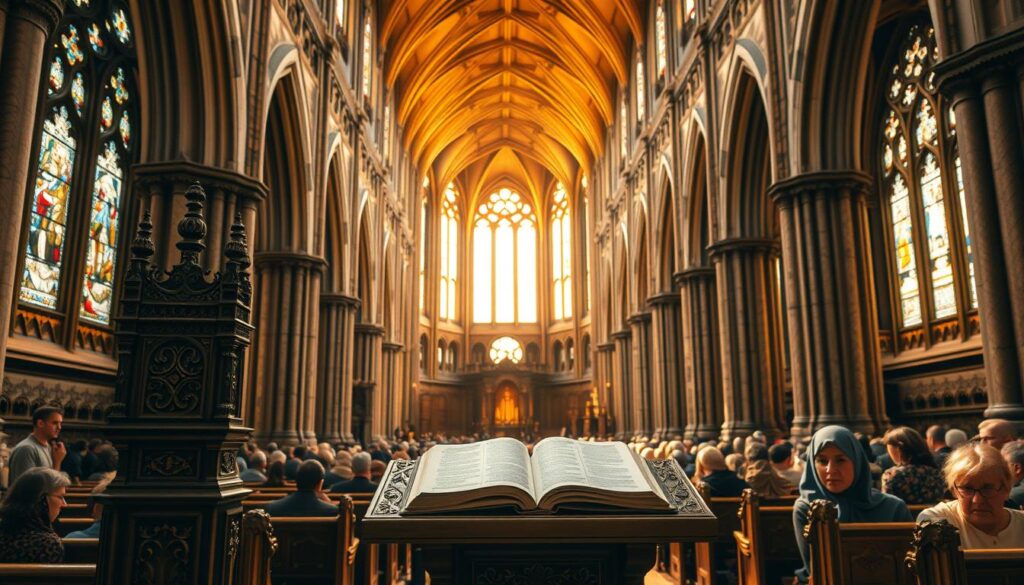
Scripture, tradition, and reason: the Anglican approach
Anglicans treat the Bible as the primary authority for doctrine. At the same time, they value the continuity of apostolic tradition and the tested wisdom of the Church. Reason plays a role in interpreting texts and applying faith to new questions.
That threefold method—Scripture, tradition, and reason—encourages careful study and a humble posture toward mystery. It shapes preaching, pastoral care, and theological debate across provinces.
The creeds and foundational documents: Thirty-nine Articles and Books of Homilies
The Apostles’ Creed and the Nicene Creed stand as concise statements of core belief. These creeds unite Anglicans with the wider church and anchor liturgical life.
The Thirty-nine Articles and the Books of Homilies function as historic guides. The Thirty-nine Articles laid out doctrinal positions in the sixteenth century. The Books of Homilies supplied practical teaching for clergy. Together they form a touchstone for teaching and dispute resolution.
Understanding the sacraments, especially the Eucharist
Anglican sacramental theology affirms traditional rites while allowing a range of theological emphasis. Baptism and the Eucharist hold primary sacramental status. Other rites are valued as means of grace within parish life.
Discussion about the Eucharist shows diversity within Anglican communion. Some emphasize a real spiritual presence in consecrated bread and wine. Others stress an outward sign that conveys grace through faith. This range reflects differing strands of Anglican sacraments and worship, yet all aim to center Christ in communal life.
| Topic | Core emphasis | Representative source |
|---|---|---|
| Authority | Scripture guided by tradition and tested by reason | Richard Hooker, Anglican teaching |
| Creeds | Apostles’ Creed and Nicene Creed as core statements | Common liturgy across provinces |
| Formularies | Doctrinal norms for worship and doctrine | Thirty-nine Articles; Books of Homilies |
| Sacraments | Primary focus on Baptism and Eucharist with varied Eucharistic theology | Prayer Book practice; parish catechesis |
| Theological method | Integration of Scripture, tradition, and reason in pastoral decision-making | Anglican theological schools and episcopal teaching |
Worship and liturgy: the Book of Common Prayer and services
The Book of Common Prayer shaped public worship in England after Thomas Cranmer compiled the first edition in 1549. It gathered Morning Prayer, the Eucharist, baptism, marriage, burial, and pastoral rites into a single, portable collection for parish use. Many provinces keep the BCP as a shared liturgical touchstone even when they adopt local language or revisions.
Morning Prayer remains one of the most widely used offices in Anglican worship. It offers Scripture readings, canticles, and set prayers that can be led by clergy or lay readers. The pattern promotes daily discipline and links congregations across the Anglican Communion through familiar forms of prayer.
The Eucharist stands at the heart of sacramental life for most Anglicans. Services vary from plain, Scripture-centered celebrations in low-church settings to more elaborate liturgies with incense and choral music in Anglo-Catholic parishes. Rubrics and ceremonial details change from one edition of the Book of Common Prayer to another.
Worship styles form a wide spectrum: high churchmanship emphasizes sacrament, ritual, and continuity with historic Catholic practice. Low churchmanship favors preaching, evangelistic simplicity, and sparse ceremonial. Central and broad expressions mix elements from both, creating local blends of Anglican liturgy and pastoral care.
Parishes can adapt language and music while remaining rooted in common forms. This flexibility lets congregations maintain tradition and meet contemporary needs. The result is a living, varied worship life that keeps the Book of Common Prayer central to Anglican identity.
Ecclesiology and church order: bishops, priests, deacons, and laity
The Anglican tradition balances historic structure with local participation. Its governance rests on ordained ministry, shared councils, and active lay leadership. This arrangement shapes worship, pastoral care, and decision-making at every level of church life.
Episcopal polity means authority flows through bishops who oversee dioceses and clergy. Bishops trace their ministry through the laying on of hands, a practice tied to apostolic succession. Those links offer continuity with the early church while guiding present-day diocesan governance.
Episcopal polity and apostolic succession explained
In Anglican churches, bishops serve as chief pastors and guardians of doctrine. Consecrations usually involve multiple bishops to reinforce apostolic succession. Historic lists of consecrations and archbishops help maintain clear lines between generations of leaders.
Roles and responsibilities of bishops, priests, and deacons
Bishops have a duty to preserve unity, teach the faith, and supervise clergy. Priests lead congregations in worship, preaching, and pastoral care. Deacons focus on service, outreach, and supporting liturgy. Together these orders form a threefold ministry that supports parish life.
Synods, dioceses, and parish-level governance
Diocesan governance normally takes shape through synods and councils where clergy and laity deliberate. Provincial gatherings, such as General Conventions in the Episcopal Church, set wider policy. At the parish level, vestries or church councils handle budgets, buildings, and local ministries with active lay participation.
Active laity help shape mission, education, and pastoral support. That shared work keeps Anglican polity responsive to local needs while holding to the wider church’s order and tradition.
Anglican worship life and seasonal practices
Anglican worship blends a steady rhythm of seasons with local parish life. The Anglican liturgical year shapes services, private devotion, and special observances across parishes in the United States and beyond. Patterns of prayer, hymnody, and ritual lead communities through the church’s calendar.
The liturgical cycle marks times for preparation, penitence, joy, and remembrance. Advent Lent Easter sit at the heart of that cycle, guiding both weekly worship and major festivals. Parishes mark saints’ days, harvests, and patronal feasts while maintaining the Daily Office in many congregations.
The ceremonial life varies by churchmanship. Anglo-Catholic parishes may use incense, processions, and richly embroidered Anglican vestments. Evangelical congregations tend to simplify ceremony yet keep the calendar’s core seasons. Every style preserves a focus on the Eucharist and scripted prayer.
Music helps shape the congregation’s response. Church music ranges from plainchant and Anglican chant to hymnody and full choral settings by composers like Charles Villiers Stanford and Herbert Howells. Pipe organs and choirs remain central in cathedrals, while contemporary bands appear in some parish contexts.
Devotional practices supplement parish worship. Monastic communities such as the Community of St. Clare and revival movements keep the Daily Office and offer retreats. Many Anglicans keep private devotions like the Jesus Prayer or use the Book of Common Prayer for daily readings.
Saints and commemorations provide touchstones for local identity. Historic figures like St. Alban and Augustine of Canterbury appear in calendars and sermons. Their stories anchor seasonal preaching and invite personal reflection throughout the year.
Overall, the blend of calendar, ritual, vesture, and music gives Anglican worship a distinct continuity. That continuity supports both communal celebration and individual devotion across divergent parish styles.
Scripture and authority in Anglican teaching
The Anglican view of Scripture frames how authority works in worship, teaching, and private devotion. Anglicans affirm the Bible as central to faith while recognizing its place alongside long-standing church practice and reasoned thought. This balance shapes pastoral decisions and theological reflection across provinces.
Inspiration and canon
Anglican teaching affirms the inspiration of Scripture, echoing the Book of Common Prayer catechism that calls Scripture “God-breathed.” The Bible is seen as both divine and human, produced over centuries by many authors in Hebrew, Greek, and Aramaic. This view supports the claim that Scripture contains all things necessary for salvation while inviting careful reading and study.
Scripture, tradition, and reason
Richard Hooker’s model remains influential in explaining how Scripture, tradition, and reason interact. Anglicans differ on emphasis, yet most agree Scripture holds the primary place. Tradition supplies interpretation and continuity. Reason helps test claims and apply teachings in changing contexts. This threefold method guides preaching, liturgy, and moral discernment.
Historical evidence for the biblical canon
Early church figures such as Clement of Rome, Ignatius, Polycarp, Irenaeus, and Augustine used New Testament writings, showing early acceptance. Councils like Hippo in 393 AD contributed to formalizing the biblical canon. Manuscript evidence for the New Testament appears within decades of the originals and in thousands of copies, a point often cited for textual reliability compared with other ancient works.
| Topic | Key Points | Practical Impact |
|---|---|---|
| Inspiration | Scripture viewed as God-breathed; divine and human authorship | Anchors doctrine and preaching; invites faithful study |
| Scripture | Primary authority in matters of faith and salvation | Shapes teaching, liturgy, and catechesis |
| Tradition | Historic practices and creeds inform interpretation | Provides continuity and liturgical structure |
| Reason | Critical thinking and moral reasoning applied to texts | Helps address contemporary issues and pastoral care |
| Biblical canon | Recognized through early usage and councils; well-attested manuscripts | Supports confidence in the text and its transmission |
Contemporary issues and controversies within Anglicanism
The Anglican Communion faces a mix of theological and institutional tensions that shape its life today. Debates over authority, liturgy, and pastoral practice have created clear differences between provinces in Africa, Asia, the Americas, and Europe.
Ordination of women remains a live issue across provinces. Roughly two-thirds of provinces ordain women to all orders, including the episcopate. Other provinces permit women only as deacons or priests. A minority do not ordain women at any level. These variations produce pastoral challenges when clergy move between jurisdictions.
Disagreements over human sexuality have driven long-term friction. The consecration of Gene Robinson in 2003 marked a turning point for many. Since the 1990s, questions about gay clergy and same-sex unions have led to impaired communion statements and public announcements by Global South leaders.
The topic of same-sex unions often triggers formal responses from primates and synods. Some provinces bless civil partnerships or marriages. Others declare such unions incompatible with their doctrine. Those opposing recognition cite Scripture and tradition. Those supporting recognition emphasize pastoral inclusion.
Realignment movements have emerged in response to these disputes. The Continuing Anglican movement began in 1977. The Anglican Church in North America formed in 2009. GAFCON has organized Global South and sympathetic dioceses into a network focused on conservative teaching and mission. These efforts reflect deep divides over theology and authority.
Anglican realignment has produced parallel jurisdictions and missionary bishops. Provinces and networks sometimes recognize clergy from other bodies. This creates complex questions about diocesan boundaries, property, and collegiate relationships among bishops.
Such controversies influence local congregations as well as global councils. Conversations about unity and difference now include legal, pastoral, and missional dimensions. The shape of the Communion will depend on how provinces navigate ordination of women, same-sex unions, and the pressures that fuel Anglican realignment.
Anglican mission, social teaching, and public engagement
The Anglican tradition has long combined proclamation with public service. Mission efforts grew alongside British global presence, shaping local churches and civic institutions. Anglican communities balance evangelism, charity, and advocacy when addressing local needs.
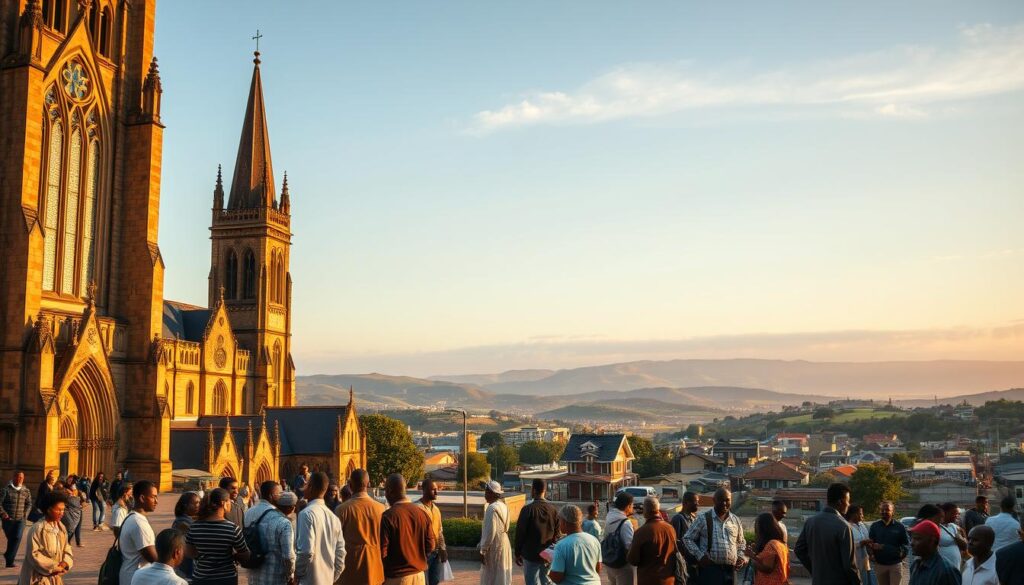
Historical mission societies and global expansion
From the Society for Promoting Christian Knowledge to the Society for the Propagation of the Gospel in Foreign Parts, organized efforts sent clergy and teachers overseas. The Church Missionary Society played a central role after its founding in 1799. These organizations promoted education, healthcare, and translation of Scripture as part of church planting and provincial formation.
Social ethics: life issues, justice, and pastoral responses
Anglican social teaching frames moral questions within scripture, tradition, and reason. Lambeth Conferences have long addressed life issues such as abortion and euthanasia while affirming pastoral support for vulnerable people. Provinces often adopt different pastoral approaches, yet many maintain active programs in development, education, and health ministry.
Ecumenical relationships and interchurch dialogue
Engagement with other churches shapes public witness. The Chicago–Lambeth Quadrilateral offers common ground for dialogue with Roman Catholics, Orthodox, and Protestants. Ecumenism advances shared liturgical practices, theological exchange, and cooperative service projects across denominational lines.
Practical public engagement blends worship, charity, and policy work. Local parishes partner with NGOs, schools, and health clinics to serve communities. Such partnerships reflect a long history of mission while adapting to modern social challenges.
Anglicanism and its expressions in the United States
The story of Anglicanism in the United States traces from colonial parishes tied to the Church of England to a distinct American identity. After the Revolution, clergy and laity reorganized worship and governance to meet new political realities. The result was a church shaped by local practice, national conventions, and a uniquely American liturgical tradition.
Colonial roots, the Episcopal Church, and post-Revolution changes
In colonial America the Church of England served as an established presence in several colonies. Ties to England loosened with independence. Leaders such as Samuel Seabury and others moved quickly to secure episcopal consecration so American congregations could maintain apostolic orders. By 1789 the Protestant Episcopal Church in the United States of America adopted the first American BCP, adapting rites and language for a new republic.
Formation of the Anglican Church in North America and recent realignments
Disputes over doctrine and practice in the early 21st century prompted realignment. Groups seeking alternative oversight helped form the Anglican Church in North America in 2009. That body established its own provincial structures and leadership to serve congregations that dissented from the Episcopal Church. The split reshaped denominational maps while leaving many local ties intact.
Local parish life, American liturgies, and the American Book of Common Prayer
Parish life in the United States shows wide liturgical variety. Some congregations favor Anglo-Catholic ritual, others practice a low-church evangelical style. Vestries and diocesan conventions handle governance, while bishops supply oversight.
The American BCP remains central to worship across traditions. It guides Morning Prayer, Evening Prayer, and the Eucharist. Contemporary authorized liturgies supplement the 1789 book while keeping pastoral rites familiar to U.S. worshipers.
Conclusion
Anglicanism remains a distinct Western Christian tradition shaped by the Church of England and the English Reformation. This anglicanism overview highlights the movement’s balance of Scripture, tradition, and reason, its historic episcopate, and the unifying role of the Book of Common Prayer in worship and identity.
Parish and diocesan teaching keeps Anglican beliefs alive through Anglican 101 courses that cover history, sacraments, governance, and mission. Contemporary debates over ordination, human sexuality, and church authority show how varied practice and conviction can be across provinces, even as creeds and sacramental life provide steady reference points.
The global picture matters: the Anglican Communion is a voluntary fellowship of autonomous provinces under Canterbury’s symbolic primacy, with strong growth in the Global South. This Anglican Church summary underlines both the movement’s historical roots and its evolving global influence.
In short, the future of Anglicanism will be shaped by how communities hold to core rites and theology while engaging modern social and pastoral questions. For readers seeking an Anglican beliefs recap, the essentials remain clear: scripture, liturgy, sacrament, and a commitment to ordered ministry rooted in history.
FAQ
What is Anglicanism and how did it develop?
Anglicanism is the Western Christian tradition that grew out of the Church of England during the English Reformation. It balances Scripture, apostolic tradition, and the historic episcopate, and it often describes itself as a via media—both “catholic and reformed.” Key formative documents include the Book of Common Prayer, the Thirty-nine Articles, and The Books of Homilies.
Where does the word “Anglican” come from and what does it mean?
The term traces to the Latin phrase in Magna Carta, “Anglicana ecclesia,” meaning the English Church. It first appears in the 16th century and became widely used in the 19th century to describe churches and people in communion with the See of Canterbury. In many countries “Episcopal” is the preferred adjective or church title, as in the United States and Scotland.
Who counts as an Anglican?
An Anglican is generally a member of a church that follows Anglican rites and traditions. That includes people in the global Anglican Communion—autonomous national or regional provinces in full communion with Canterbury—as well as some churches that use Anglican liturgies outside formal communion.
How did early Christianity and Celtic traditions influence the English Church?
Christianity in Roman Britain left a legacy including veneration of martyrs like St. Alban and flourishing Celtic Christian expressions with different practices such as married clergy and alternate dating of Easter. Figures such as St. Patrick and St. Columba shaped local devotion before the Gregorian mission reconnected England with Roman practices.
What was the Gregorian mission and the Synod of Whitby?
In AD 596 Pope Gregory I sent Augustine of Canterbury to evangelize the Anglo-Saxons. The Synod of Whitby (663/664) resolved key differences between Celtic and Roman practice—most notably the calculation of Easter—bringing the English Church closer to continental norms and papal usages.
How and why did the Church of England separate from Rome?
Longstanding disputes over appointments and authority culminated in legal tensions like the Constitutions of Clarendon and Statutes of Provisors and Praemunire. The decisive break came in the 16th century when Parliament passed the Act of Supremacy (1534), making Henry VIII Supreme Head of the Church of England, followed by reforms led by Thomas Cranmer and the Elizabethan Religious Settlement.
What is the Anglican Communion and how is it organized?
The Anglican Communion is a voluntary global family of autonomous provinces that are historically in communion with the Archbishop of Canterbury. Provinces govern themselves under archbishops or primates and are organized into dioceses led by bishops. The Communion has consultative bodies—the Lambeth Conference, the Anglican Consultative Council, and Primates’ Meetings—but no central juridical authority.
What role does the Archbishop of Canterbury play?
The Archbishop of Canterbury is the primus inter pares—a first among equals—who convenes the Lambeth Conference and chairs primates’ meetings and the Anglican Consultative Council. He serves as a focus of unity but has no jurisdictional authority over autonomous provinces outside the Church of England.
How many Anglicans are there worldwide and where is Anglicanism growing?
Estimates vary—commonly cited figures range from about 85 million to roughly 110 million adherents. In recent decades growth and influence have shifted toward the Global South, particularly Sub-Saharan Africa, parts of Asia, and Latin America, while membership and cultural influence have declined or stabilized in some Western provinces.
What are the core sources of authority in Anglican theology?
Anglicanism emphasizes the Bible as the primary rule of faith, interpreted within the living stream of apostolic tradition and reason. Influential thinkers like Richard Hooker framed the balance among Scripture, tradition, and reason. Creeds such as the Apostles’ and Nicene Creeds are standard confessions.
What foundational documents shape Anglican belief?
Important formularies include the Thirty-nine Articles (16th century), The Books of Homilies, and the Book of Common Prayer. The Chicago–Lambeth Quadrilateral (Scripture, creeds, sacraments, historic episcopate) is often cited in ecumenical contexts to summarize Anglican identity.
How do Anglicans understand the sacraments, especially the Eucharist?
Anglicans recognize traditional sacraments with particular emphasis on the Eucharist. Eucharistic theology varies across the spectrum: some hold more catholic understandings of real presence, while others hold Reformed or spiritual-presence views. All tend to see sacraments as outward signs conveying grace.
What is the Book of Common Prayer and why is it important?
Compiled by Thomas Cranmer in 1549, the Book of Common Prayer collects services for common use and is a unifying liturgical text across Anglicanism. While provinces have produced revised or national prayer books, the BCP remains culturally and liturgically central for worship, catechesis, and pastoral rites.
What are common Anglican services?
Typical services include Morning Prayer, Evening Prayer, the Eucharist (Holy Communion), baptism, confirmation, marriage, burial, and pastoral rites. The liturgical year—Advent, Lent, Easter, and feast days—structures worship and spiritual life.
Why do Anglican worship styles vary so much?
Churchmanship spans High (Anglo-Catholic), Low (Evangelical), and Central/Broad traditions. This produces a wide range of liturgical styles—from ornate ritual, vestments, and incense to simple, Bible-centered services—reflecting differing theological emphases within the same ecclesial family.
What is episcopal polity and apostolic succession?
Anglican churches use episcopal polity—governance by bishops who claim apostolic succession through the historic laying on of hands. The threefold ministry—bishops, priests (presbyters), and deacons—structures orders of ministry and sacramental oversight.
What are the roles of bishops, priests, and deacons?
Bishops oversee dioceses, safeguard doctrine and unity, and ordain clergy. Priests serve local congregations, preside at the Eucharist, and provide pastoral care. Deacons focus on service, liturgy, and outreach. Laity also participate actively in governance through vestries, synods, and parish ministries.
How are Anglicans governed at diocesan and provincial levels?
Governance includes diocesan synods, provincial synods or General Conventions (for example, the Episcopal Church in the U.S.), and parish vestries or councils. These bodies legislate on worship, discipline, budgets, and mission within the limits of provincial constitutions and canons.
What does the Anglican liturgical year look like?
The Anglican calendar follows seasons such as Advent, Christmas, Epiphany, Lent, Holy Week, Easter, and Ordinary Time, with major feasts and saints’ days observed according to local and provincial custom. The calendar informs scripture readings, prayers, and devotional rhythms.
What devotional and musical traditions exist in Anglicanism?
Anglican devotional life includes the Daily Office (Morning and Evening Prayer), private prayer practices, reverence for saints like St. Alban and Augustine of Canterbury, and monastic revivals. Music—chant, hymnody, choral tradition, and organ—has long been central to Anglican worship.
How do Anglicans view the Bible and its authority?
Anglicans affirm the inspiration and centrality of Scripture. The Thirty-nine Articles and catechisms in prayer books state that Scripture contains all things necessary for salvation. Interpretation, however, is informed by tradition and reason, with room for diverse theological emphases.
What is the Anglican position on the biblical canon and historical reliability?
Anglican teaching accepts the canonical New and Old Testaments established in church history—roots traceable to early councils and the witness of the Church Fathers. Anglican education often highlights manuscript evidence and historical continuity supporting the Bible’s reliability.
Do all Anglican provinces ordain women?
Practice varies. Roughly two-thirds of provinces ordain women to all orders (deacon, priest, bishop). Other provinces permit women to serve at some orders but not others, and a minority do not ordain women at all. Provincial autonomy allows different approaches.
What controversies around human sexuality affect Anglican unity?
Debates over homosexuality, same-sex unions, and the ordination of LGBT clergy have caused deep tensions since the 1990s. Events such as the 2003 consecration of Gene Robinson and subsequent Lambeth discussions intensified divisions, leading to impaired communion declarations and strained inter-provincial relations.
What are realignment movements like ACNA and GAFCON?
Realignment movements emerged in response to theological disputes. The Anglican Church in North America (ACNA, formed 2009) and networks like GAFCON offer alternative fellowship and oversight for groups that separated from some established provinces. The Continuing Anglican movement (since 1977) similarly formed parallel bodies over liturgical and doctrinal changes.
How did mission societies shape global Anglicanism?
Societies like the Society for Promoting Christian Knowledge, the Society for the Propagation of the Gospel in Foreign Parts, and the Church Missionary Society played major roles in Anglican expansion during the colonial era. They helped establish churches, schools, and hospitals that later became autonomous provinces.
What social teachings do Anglicans uphold?
Anglican social ethics address life issues, justice, poverty, and pastoral care. Historically, Lambeth Conferences affirmed pro-life positions on abortion and opposed euthanasia, but practical responses vary by province. Many Anglican bodies engage actively in development, education, and health ministries.
How do Anglicans engage in ecumenical dialogue?
Anglicans participate in dialogues with Roman Catholics, Orthodox, and Protestant churches, often using the Chicago–Lambeth Quadrilateral as a basis for conversation. Shared worship elements, mutual recognition of ministries, and the historic episcopate are key focal points in ecumenical efforts.
What is the Anglican story in the United States?
The Church of England was present in the American colonies. After the Revolution, American Anglicans reorganized as the Protestant Episcopal Church in the United States of America. Samuel Seabury was consecrated the first American bishop in 1784, and the first American Book of Common Prayer appeared in 1789.
Why was ACNA formed and who leads it?
The Anglican Church in North America formed in 2009 amid disputes over theology and sexuality within existing provinces. ACNA was established as a new province outside the official Anglican Communion structures, with leaders such as Robert Duncan and Foley Beach serving as its archbishops in the early years.
What does local parish life look like in the U.S. today?
U.S. parishes reflect broad churchmanship—some emphasize Anglo-Catholic ritual, others Evangelical simplicity. Worship is shaped by the American Book of Common Prayer and authorized liturgies, while diocesan bishops, parish vestries, and national conventions guide governance and mission.
How do Anglicans handle disputes and maintain unity without a central authority?
Unity depends on shared history, common worship, and episcopal structures rather than centralized legal authority. Consultative gatherings (Lambeth Conference, Anglican Consultative Council, Primates’ Meetings) provide forums for discussion. However, differing theological convictions and regional priorities mean tensions and impaired communion sometimes arise.