At the heart of Anglican Christianity is a profound commitment to Jesus Christ as the Son of God. This commitment is rooted in a personal decision to follow Jesus as Lord, marking the beginning of a lifelong journey of faithfulness.
For Anglicans, being a Christian involves a deliberate choice to commit to Jesus, followed by a continuous process of deepening faith. This foundational belief shapes the Anglican perspective on Jesus as the Son of God, influencing their spiritual practices and community life.
Key Takeaways
- Anglican Christianity centers on Jesus Christ as the Son of God.
- The faith involves a personal commitment to follow Jesus.
- This commitment initiates a lifelong journey of faithfulness.
- Anglicans deepen their faith through spiritual practices.
- The belief in Jesus shapes Anglican community life.
Understanding the Anglican Faith
At the heart of Anglicanism lies a deep-seated belief in the Holy Trinity, with Jesus Christ being a central figure. This belief is foundational to understanding the Anglican faith and its practices.
Overview of Anglicanism
Anglicanism is a Christian tradition that originated from the Church of England. It is characterized by a balance between tradition and reason, allowing for a diverse range of practices and interpretations within the community. Anglicans believe in the importance of scripture, drawing on the Bible for guidance on matters of faith and practice.
The Anglican Communion is a global entity, with adherents in many countries around the world. Despite geographical differences, Anglicans are united by a common faith and worship, centered on Jesus Christ.
Core Beliefs and Practices
Core to Anglican beliefs is the doctrine of the Trinity, affirming the Father, Son, and Holy Spirit as one God. Anglicans believe that Jesus is God’s Son, a belief that is at the heart of Christian faith. This belief is reflected in various practices, including worship, sacraments, and community service.
Anglican worship is characterized by liturgical services, which include readings from the Bible, prayers, and the Eucharist (also known as Holy Communion). The Eucharist is a significant ritual, symbolizing the unity of believers with Christ and with each other.
Belief in God as Father, Son, and Holy Spirit is fundamental to Anglican faith. As stated, “Belief in God as Father, Son and Holy Spirit is at the heart of our faith. Christians believe that Jesus is God’s Son.” This foundational belief shapes Anglican theology and practice, influencing how Anglicans engage with the world around them.
The Concept of the Trinity in Anglicanism
Understanding the Trinity is crucial for grasping the Anglican perspective on Jesus Christ and their faith as a whole. The concept of the Trinity is central to Anglican theology, shaping their beliefs about God and their relationship with Him.
What is the Trinity?
The Trinity refers to the belief in one God in three distinct persons: God the Father, Jesus Christ the Son, and the Holy Spirit. This doctrine is foundational to Anglicanism, influencing their worship, sacraments, and overall faith practice. As stated in Anglican beliefs, “We believe and trust in one God, Father Son and Holy Spirit… Jesus reveals to us that God is our Father, and that God is available to us through the Holy Spirit.”
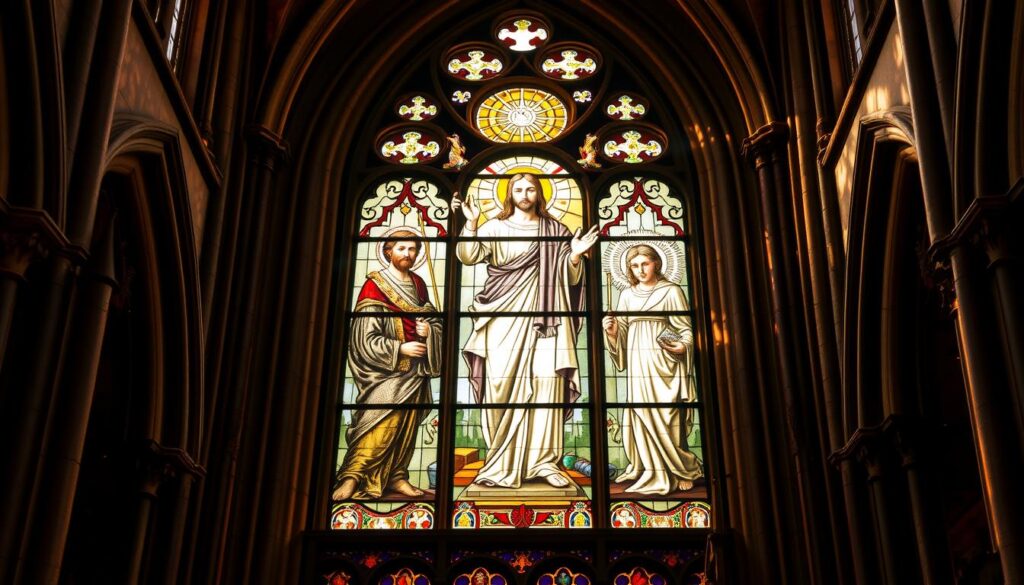
The Role of Jesus in the Trinity
Jesus Christ plays a pivotal role in the Trinity, being considered the Son of God. In Anglican theology, Jesus is seen as the revelation of God’s love and redemption for humanity. The relationship between Jesus and the other persons of the Trinity is one of unity and cooperation, with Jesus being sent by the Father and working through the Holy Spirit.
The significance of Jesus in the Trinity underscores the Anglican emphasis on Christ as the central figure of their faith. This is reflected in their liturgy, sacraments, and daily worship, where Jesus is acknowledged as the mediator between God and humanity.
Jesus Christ in Anglican Theology
At the heart of Anglican theology lies a profound affirmation of Jesus Christ as God’s Son. This belief is not only central to the Anglican faith but is also deeply intertwined with the church’s liturgical practices and theological understandings.
Affirmation of Christ as God’s Son
The Anglican Church’s affirmation of Jesus as God’s Son is rooted in its adherence to traditional Christian doctrine. The historic 1662 Catechism in the English Book of Common Prayer plays a significant role in this affirmation, serving as a foundational text that prepares individuals for confirmation and church membership.
This catechism underscores the importance of understanding Jesus Christ’s role in the context of Christian theology, emphasizing His divinity and His relationship with God the Father.
The Nicene Creed and Its Significance
The Nicene Creed is a pivotal element in Anglican worship and theology, serving as a unifying statement of faith across various Christian denominations. Its significance lies in its clear articulation of the belief in Jesus Christ as God’s Son, alongside affirming the Father and the Holy Spirit.
Recitation of the Nicene Creed during worship services reinforces the Anglican Church’s commitment to this fundamental Christian doctrine, highlighting the integral role of Jesus Christ in the life of the church and its believers.
Historical Development of Anglican Beliefs
Understanding the historical context of Anglicanism is crucial to grasping its beliefs about Jesus Christ. The Anglican Communion is a global communion of churches that traces its roots back to the early Christian church.

Origins of Anglicanism
Anglicanism originated in the 16th century during the English Reformation. The Church of England, the mother church of the Anglican Communion, was formed under the leadership of King Henry VIII. The separation from the Roman Catholic Church was a pivotal moment in Anglican history, shaping its theology and practices.
The early Anglican Church sought to maintain a balance between Catholic and Protestant traditions. This balance is reflected in its liturgy, theology, and governance.
Influences on Early Anglican Theology
Early Anglican theology was influenced by various factors, including the writings of the early Church Fathers and the theological debates of the Reformation era. The influence of Protestant reformers like Martin Luther and John Calvin is evident in Anglican theology, particularly in its emphasis on scripture and the sacraments.
“Anglicans are heirs of a rich tradition of Christian faith and life. That tradition stretches from today’s worldwide Anglican Communion… back centuries.”
The Anglican tradition has continued to evolve, incorporating elements from different Christian traditions while maintaining its unique identity.
The historical development of Anglican beliefs about Jesus Christ is a complex and multifaceted topic. It involves understanding the theological debates, liturgical practices, and ecclesiastical structures that have shaped Anglicanism over the centuries.
Biblical Foundations for Belief in Jesus as God’s Son
The belief in Jesus as the Son of God is a cornerstone of Anglican theology, derived from key passages in the New Testament. This foundational belief is not merely a doctrine but a living faith that shapes the worship, practices, and daily lives of Anglicans.
Key Scripture Passages
Several New Testament passages are pivotal in establishing Jesus as God’s Son. One of the most significant is the narrative of Jesus’ baptism, where a voice from heaven declares, “You are my Son, whom I love; with you I am well pleased” (Mark 1:11). This affirmation by God the Father is seen as a powerful endorsement of Jesus’ identity and mission.
Another crucial passage is the Prologue to the Gospel of John, which introduces Jesus as the Word who was with God in the beginning and is God (John 1:1). This passage is often cited in Anglican theology to affirm the divinity of Jesus Christ.
- The visitation of the Magi, who come to worship Jesus as the newborn king (Matthew 2:1-12), signifies the recognition of Jesus’ divine status.
- The transfiguration narrative, where Jesus is seen in glory with Moses and Elijah, further reinforces his divine nature (Matthew 17:1-8).
Interpretation of the New Testament
Anglican interpretation of the New Testament is guided by a commitment to understanding the scripture within its historical and cultural context. This involves a careful reading of the texts, consideration of the original languages, and an awareness of the theological themes that run throughout the narratives.
The Anglican approach to biblical interpretation is characterized by a balance between tradition and reason, encapsulated in the Chicago-Lambeth Quadrilateral. This framework emphasizes the importance of scripture, alongside reason, tradition, and the sacraments, in shaping theological understanding.
“The Gospel (‘good news’) of Jesus Christ… God the Father sent his eternal Son into this world to reconcile us to himself.”
This understanding underscores the Anglican belief in Jesus as God’s Son, a belief that is both biblically grounded and theologically rich. It highlights the significance of Jesus’ role in the salvation narrative and the centrality of this belief in Anglican theology.
The Role of Sacraments in Recognizing Jesus
Through sacraments, Anglicans reaffirm their belief in Jesus as the Son of God, deepening their spiritual connection. The sacraments of Eucharist and Baptism are pivotal in Anglican worship, serving as tangible means through which the divine is experienced.
Eucharist and Its Meaning
The Eucharist, also known as Holy Communion, is a sacrament in which Anglicans participate in the body and blood of Christ. It is a ritual instituted by Jesus at the Last Supper, where he commanded his disciples to “do this in remembrance of me” (Luke 22:19). The Eucharist is seen as a means of grace, where believers are spiritually nourished and united with Christ and with each other.
The significance of the Eucharist lies in its ability to bring the community together, fostering a sense of unity and shared faith. It is a celebration of Jesus’ sacrifice and resurrection, central to Christian belief.
| Aspect | Significance in Eucharist |
|---|---|
| Communion | Unity with Christ and the community |
| Remembrance | Celebration of Jesus’ Last Supper |
| Grace | Spiritual nourishment for believers |
Baptism and Jesus’ Significance
Baptism is another sacrament that holds significant importance in the Anglican Church. It is the rite of initiation into the Christian community, symbolizing the believer’s death to sin and rebirth in Christ. Through Baptism, individuals are incorporated into the body of Christ, becoming part of the Christian family.
As stated in the Anglican tradition, “Through faith, repentance, and Baptism we are spiritually united to Jesus and become children of God the Father.” This sacrament is seen as a moment of spiritual rebirth, where the individual is cleansed of sin and welcomed into the community of believers.
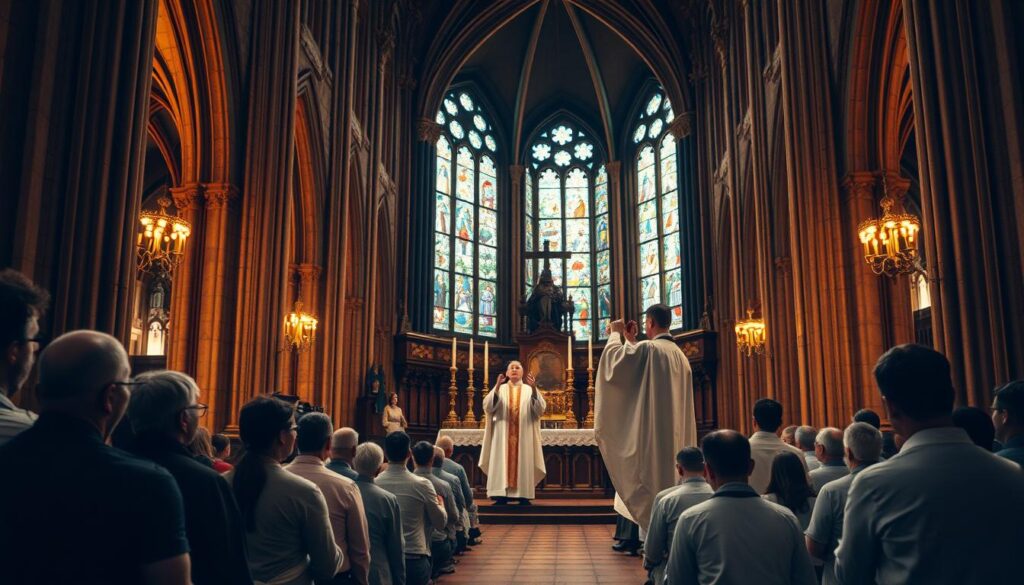
The sacraments of Eucharist and Baptism are foundational to the Anglican faith, emphasizing the centrality of Jesus Christ. They provide a tangible connection to the divine, reinforcing the belief in Jesus as the Son of God.
Anglican Worship and Its Focus on Christ
In Anglican worship, the figure of Jesus Christ is paramount, guiding the liturgy and hymns. The Anglican Church’s worship practices are deeply rooted in its belief in Jesus as the Son of God, reflecting a profound reverence that is evident in its liturgical components and musical elements.
Liturgy and Its Components
The Book of Common Prayer is a cornerstone of Anglican worship, known worldwide for its expression of Christian prayer and worship. It outlines the structure of Anglican liturgy, which includes Morning and Evening Prayer, the Eucharist, and other sacraments. These components are integral to Anglican worship, emphasizing the role of Jesus Christ in the life of the believer.
The liturgy is not just a ritual but a meaningful practice that connects Anglicans with their faith and with each other. It is through the liturgy that the community reaffirms its belief in Jesus Christ, drawing on scripture and tradition to deepen their understanding and devotion.
Hymns and Their Messages
Hymns play a crucial role in Anglican worship, conveying theological truths and expressing devotion to Jesus Christ. Many traditional Anglican hymns focus on the life, death, and resurrection of Jesus, highlighting his significance in Christian faith. These hymns are not just musical compositions but are imbued with theological meaning, serving as a vehicle for teaching and reinforcing the beliefs of the community.
The messages conveyed through Anglican hymns are diverse, ranging from the celebration of Jesus’ life and teachings to the reflection on his sacrifice and the hope of his return. This rich hymnody is a testament to the centrality of Jesus Christ in Anglican worship and theology.
By examining the liturgy and hymns, it becomes clear that Anglican worship is characterized by a deep focus on Jesus Christ. This focus is what shapes the identity and practice of the Anglican Church, making it a vibrant expression of Christian faith.
Engaging with Other Christian Denominations
Anglicans have historically sought to build bridges with other Christian traditions, recognizing the shared faith in Jesus Christ. This ecumenical effort is rooted in the belief that unity among Christians is essential for a more effective witness to the Gospel.
Common Ground with Other Denominations
The Anglican Communion has identified key areas of commonality with other Christian denominations, particularly in their affirmation of Jesus Christ as the Son of God. The Lambeth Quadrilateral, adopted in 1888, outlines four essential elements for Christian unity: the Holy Scripture, the Apostles’ and Nicene Creeds, the sacraments of Baptism and Eucharist, and the historic episcopate. This framework has facilitated dialogue and cooperation with various Christian traditions.
One of the significant areas of common ground is the understanding of Jesus Christ as central to the Christian faith. Anglicans, along with other Christian denominations, affirm the divinity and humanity of Jesus, as expressed in the Nicene Creed. This shared belief has enabled meaningful ecumenical conversations and collaborations.
Differences in Christology
Despite the common ground, there are differences in Christology among Christian denominations. Some traditions may have varying interpretations of the nature and significance of Jesus Christ. For instance, differences exist in the understanding of the sacraments and their relation to Christ’s presence and work.
Anglican theology, while affirming the divinity of Jesus, also recognizes the importance of reason and tradition in understanding Christ’s role in salvation. This nuanced approach can sometimes lead to differences with other denominations that may emphasize different aspects of Christology.
Ecumenical dialogue has helped to clarify these differences, promoting a deeper understanding among Christian communities. By engaging with other denominations, Anglicans continue to refine their theology of Jesus Christ, enriching their own faith and contributing to the broader Christian tradition.
Contemporary Perspectives on Jesus as God’s Son
As the world becomes increasingly complex, Anglicans are reaffirming their faith in Jesus Christ, embracing both tradition and modernity. This reaffirmation is evident in how they respond to modern challenges and engage younger generations in their beliefs.
Anglican Responses to Modern Challenges
The Anglican Communion faces numerous contemporary challenges, from social and cultural changes to theological debates. Despite these challenges, the belief in Jesus as God’s Son remains a foundational element of the Anglican faith.
“To be a Christian you must, like Thomas, wholeheartedly submit to the living Christ as your Lord and God.” This quote underscores the importance of a personal and profound commitment to Jesus Christ in the face of modernity.
Anglicans are responding to modern challenges by:
- Engaging in interfaith dialogue to promote understanding and peace.
- Addressing social justice issues, such as inequality and climate change, through the lens of their faith.
- Embracing technology to spread their message and connect with a wider audience.
Youth Engagement and Beliefs
Engaging younger generations is crucial for the future of the Anglican Communion. Young Anglicans are being encouraged to explore their faith in Jesus Christ in meaningful ways.
Some initiatives include:
- Youth-oriented worship services that incorporate contemporary music and themes relevant to young people’s lives.
- Faith-based community service projects that allow young Anglicans to live out their beliefs in practical ways.
- Online platforms and social media campaigns to reach and engage young people where they are most active.
By embracing both tradition and innovation, Anglicans are ensuring that their faith remains vibrant and relevant in the modern world.
Conclusion: The Centrality of Jesus in Anglicanism
Anglicans affirm Jesus Christ as the Son of God, a belief central to Anglican Christianity and Jesus’ significance in their faith. This core tenet is reflected in their worship, sacraments, and daily lives, affirming that Jesus is the Son of God, the Creator and Savior of the world.
Key Takeaways
The exploration of Anglican beliefs and practices highlights the importance of understanding Jesus’ role in the Trinity and the Nicene Creed’s significance. Anglicans believe Jesus is integral to their salvation and relationship with God.
Faith Dialogues
Ongoing dialogues about faith within the Anglican community and with other Christian denominations foster a deeper understanding of Jesus’ significance. This dialogue is crucial in addressing modern challenges and engaging younger generations in the faith, ensuring that the belief in Jesus as God’s Son remains vibrant and relevant.
FAQ
Do Anglicans believe Jesus is the Son of God?
Yes, Anglicans believe Jesus is the Son of God, a fundamental aspect of their faith that is rooted in the Trinity and affirmed through various sacraments and practices.
What is the Anglican view on Jesus Christ?
Anglicans view Jesus Christ as the central figure of their faith, believing Him to be the Son of God who came to save humanity. This belief is reflected in their worship, sacraments, and theology.
How does the Anglican Church understand the Trinity?
The Anglican Church understands the Trinity as one God in three persons: God the Father, Jesus Christ the Son, and the Holy Spirit. This concept is crucial to Anglican theology and informs their beliefs about Jesus.
What role does the Nicene Creed play in Anglican beliefs about Jesus?
The Nicene Creed is significant in Anglican beliefs as it affirms Jesus Christ as the Son of God, of one being with the Father, and emphasizes the importance of this doctrine in Christian faith.
How do Anglicans interpret the Bible in relation to Jesus as God’s Son?
Anglicans interpret the Bible, particularly the New Testament, as affirming Jesus as God’s Son. They rely on key scripture passages that highlight Jesus’ divinity and His role in salvation.
What is the significance of the Eucharist in Anglican worship regarding Jesus?
The Eucharist, or Holy Communion, is a sacrament in which Anglicans believe Jesus is present, making it a central act of worship that affirms their faith in Jesus Christ as Lord and Savior.
How do Anglicans engage with other Christian denominations on the issue of Jesus Christ?
Anglicans engage with other Christian denominations by recognizing common ground in the belief in Jesus Christ, while also acknowledging and respecting differences in Christology and theological interpretations.
How do contemporary Anglicans respond to modern challenges regarding their beliefs about Jesus?
Contemporary Anglicans respond to modern challenges by reaffirming the core beliefs about Jesus as God’s Son, while also engaging in dialogue and reflection on how these beliefs are lived out in today’s world.
What is the importance of Jesus in Anglican worship and liturgy?
Jesus is central to Anglican worship and liturgy, with hymns, prayers, and the sacraments all focusing on Jesus Christ as the Son of God and the savior of humanity.
How do Anglican youth engage with the belief in Jesus as God’s Son?
Anglican youth engage with the belief in Jesus through various means, including religious education, youth programs, and worship services that are designed to be relevant and meaningful to their lives.