The Anglican tradition, stemming from the Church of England, places significant emphasis on the role of the Bible in Christian faith. At its core, Anglican beliefs about the Bible are rooted in the scripture’s authority and its interpretation within the context of tradition and reason.
Anglicans base their Christian faith on the Bible, alongside the traditions of the apostolic church, apostolic succession, and the writings of the Church Fathers. This multifaceted approach allows for a rich and nuanced understanding of scripture, fostering a deep connection between faith and daily life.
The interpretation of the Bible within Anglicanism is guided by a balance between scripture, tradition, and reason, ensuring a comprehensive and thoughtful approach to understanding God’s word.
Key Takeaways
- Anglicans view the Bible as a foundational element of their Christian faith.
- The interpretation of scripture is balanced between scripture, tradition, and reason.
- Anglican beliefs are shaped by the traditions of the apostolic church and the writings of the Church Fathers.
- The Bible plays a central role in Anglican worship and daily life.
- Anglicanism fosters a nuanced understanding of scripture through its multifaceted approach.
What is Scripture in Anglicanism?
At the heart of Anglicanism lies a profound respect for Scripture as the Word of God. This reverence is rooted in the understanding that the Bible is not just a historical document, but a living, breathing testament to God’s love and plan for humanity.
Definition of Scripture
In Anglican theology, Scripture is considered the inspired Word of God, authoritative and sufficient for salvation. The Thirty-nine Articles of Religion, a foundational document in Anglicanism, articulates this belief, stating that the Bible contains all things necessary for salvation. This definition underscores the centrality of Scripture in Anglican faith and practice.
As Richard Hooker, a key figure in Anglican theology, noted, “The Bible is the Word of God, and it is the only rule for faith and practice.” This perspective highlights the importance of Scripture in guiding Anglican beliefs and actions.
Historical Background
The Anglican understanding of Scripture has its roots in the English Reformation. Reformers like Thomas Cranmer emphasized the authority of the Bible, making it accessible to the faithful in their vernacular language. This historical context is crucial for understanding the Anglican view of Scripture as both authoritative and accessible.
“The Bible is not just a book, but a library of books, written by different authors, in different styles, and in different historical contexts, yet forming a coherent whole.”
Importance in Worship
Scripture plays a vital role in Anglican worship. The Book of Common Prayer, another cornerstone of Anglicanism, integrates Scripture into the liturgy, with readings and prayers drawn from the Bible. This liturgical use of Scripture underscores its importance in the life of the Anglican community.
The Anglican approach to Scripture is characterized by a balance between reverence for the Bible as the Word of God and a critical, informed understanding of its historical and cultural context. This balance allows Anglicans to engage with Scripture in a way that is both faithful and intellectually honest.
The Bible’s Role in Anglican Faith
At the heart of Anglicanism lies a deep reverence for Scripture. The Bible is considered a foundational element that shapes the faith, practices, and daily lives of Anglicans around the world.
Source of Doctrine
The Anglican Church views the Bible as a primary source of doctrine. It is seen as the inspired word of God, containing all necessary elements for salvation and guiding Christian life. The Scriptures are consulted in forming doctrines that are central to Anglican belief and practice.
Doctrine derived from the Bible influences various aspects of Anglicanism, from sacraments to moral teachings. This reliance on Scripture ensures that Anglican doctrine remains rooted in biblical teachings.
Guiding Principles for Life
Beyond doctrine, the Bible serves as a guide for daily living. Anglicans are encouraged to turn to Scripture for wisdom, comfort, and guidance in their personal and communal lives. The Bible’s teachings are seen as relevant to all aspects of life, offering a moral framework that informs decisions and actions.
The application of biblical principles in daily life is considered essential for living a Christian life. This involves not just personal study but also communal reflection on Scripture within the church community.
Community and Personal Study
The Bible is central to both community and personal study in the Anglican tradition. In worship services, Scripture is read and reflected upon, fostering a communal understanding of God’s word. Personal study is also encouraged, allowing individuals to deepen their faith and understanding of biblical teachings.
Through both communal worship and personal devotion, the Bible remains a living, active part of Anglican life. It is seen as a source of spiritual nourishment and guidance, shaping the faith and practices of Anglicans.
Anglican Approach to Biblical Interpretation
The interpretation of Scripture within Anglicanism is characterized by a blend of historical, theological, and traditional perspectives. This multifaceted approach allows Anglicans to engage with the Bible in a way that is both deeply rooted in tradition and open to contemporary understanding.
Historical-Critical Method
The historical-critical method is one of the key approaches Anglicans use to interpret the Bible. This involves examining the historical context in which the biblical texts were written, as well as the cultural and literary contexts. By doing so, Anglicans seek to understand the original meaning of the texts and how they might be applied today. This method encourages a nuanced understanding of Scripture, recognizing both its historical depth and its ongoing relevance.
Theological Interpretation
In addition to historical-critical analysis, Anglicans also engage in theological interpretation of the Bible. This involves understanding the Bible within the context of Christian doctrine and tradition. Theological interpretation seeks to discern the Bible’s teachings on faith, morality, and the nature of God. It is an approach that is deeply informed by the creeds and confessions of the Christian faith, ensuring that biblical interpretation is aligned with the broader Christian tradition.
The Role of Tradition
Tradition plays a significant role in Anglican biblical interpretation. Anglicans believe that understanding the Bible is not just about individual interpretation but also about being part of a community that has interpreted Scripture over centuries. This communal aspect of interpretation is seen as essential, providing a check against individualistic or idiosyncratic readings of the text. By engaging with the tradition, Anglicans can ensure that their interpretation of Scripture is informed by the insights and understandings of Christians past and present.
In conclusion, the Anglican approach to biblical interpretation is characterized by a rich interplay between historical, theological, and traditional perspectives. This approach allows for a deep and nuanced understanding of Scripture, one that is both faithful to the Christian tradition and responsive to contemporary contexts.
The 39 Articles and Scripture
The Thirty-nine Articles of Religion play a pivotal role in defining Anglican beliefs regarding the authority and interpretation of Scripture. These articles, adopted in the 16th century, remain a foundational document for Anglicanism, affirming the authority and sufficiency of Scripture.
Overview of the Articles
The Thirty-nine Articles were formulated during a time of significant theological debate, aiming to establish a clear and unified doctrine for the Church of England. They address various aspects of Christian faith and practice, with a particular emphasis on the role of Scripture.
Key aspects of the Articles include:
- The authority of Scripture in matters of faith
- The relationship between Scripture and tradition
- The interpretation of biblical teachings in the context of contemporary issues
Authority of Scripture in the Articles
The Articles assert the supremacy of Scripture in matters of faith, emphasizing its authority and sufficiency for salvation. Article VI, for instance, states that “Holy Scripture containeth all things necessary to salvation,” underscoring the Bible’s central role in Anglican doctrine.
The implications of this assertion are profound, influencing both personal faith and communal worship practices within Anglicanism.
| Article | Statement on Scripture | Implication |
|---|---|---|
| Article VI | Holy Scripture containeth all things necessary to salvation | Scripture is sufficient for salvation |
| Article XX | The Church hath power to decree rites or ceremonies | Tradition is subordinate to Scripture |
Scriptural References in the Articles
The Thirty-nine Articles are replete with references to Scripture, demonstrating the deep interconnection between the Articles and the Bible. These references serve to ground the doctrines and practices outlined in the Articles firmly in biblical teachings.
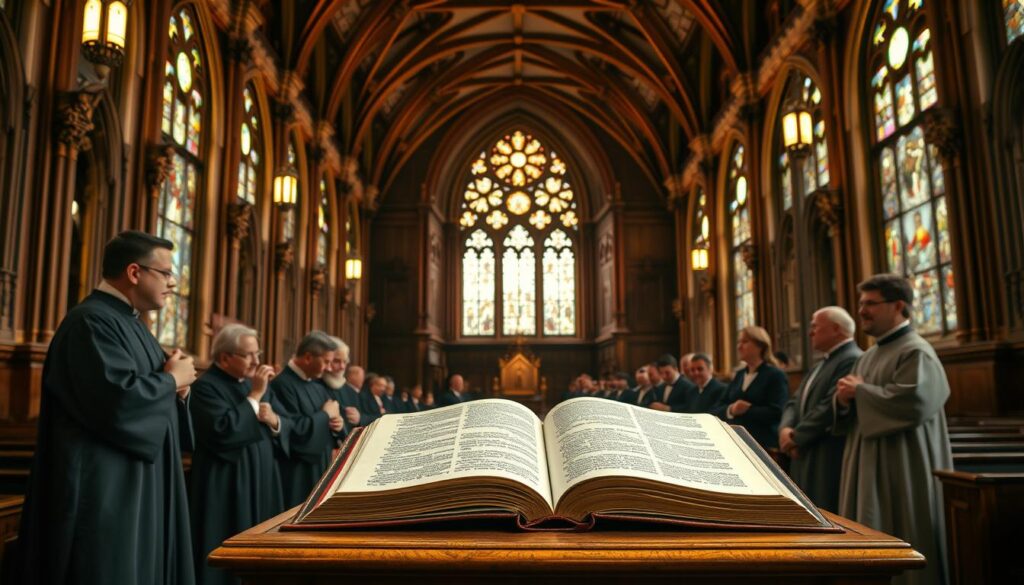
By examining the scriptural references within the Articles, one can gain a deeper understanding of the Anglican approach to biblical interpretation and its application to faith and practice.
The Book of Common Prayer and Scripture
The integration of scripture into Anglican worship is perhaps most evident in the Book of Common Prayer, a cornerstone of Anglican liturgical practice. This foundational text has been a guiding force in shaping Anglican beliefs and worship practices for centuries.
Integration of Scripture
The Book of Common Prayer is replete with references to scripture, incorporating biblical passages into its liturgies and prayers. This integration is not merely superficial; it reflects a deep-seated commitment to grounding worship practices in biblical teachings.
Scripture’s Role in the Book of Common Prayer is multifaceted. It serves as a source of doctrine, guiding principles for life, and a foundation for community and personal study. The prayer book’s liturgies are designed to engage worshippers with scripture, fostering a deeper understanding of biblical teachings.
Liturgical Use of Bible Passages
The Book of Common Prayer’s liturgies are rich in biblical allusions and direct references. From the daily offices to the sacraments, scripture is woven throughout, providing a framework for worship that is both grounded in tradition and open to the guidance of the Holy Spirit.
The use of scripture in the liturgy serves several purposes. It provides a common language for worship, drawing on a shared heritage of biblical understanding. It also offers a structure for exploring the depths of faith, inviting worshippers into a more profound engagement with the divine.
Impact on Worship Practices
The integration of scripture into the Book of Common Prayer has had a profound impact on Anglican worship practices. It has shaped the way Anglicans understand and engage with scripture, fostering a culture of biblical literacy and devotion.
| Aspect of Worship | Impact of Scripture |
|---|---|
| Liturgy | Scripture provides the framework and content for many liturgies, grounding worship in biblical teachings. |
| Prayer | The use of biblical language and imagery in prayers enriches worship, connecting personal and communal prayer to the broader narrative of scripture. |
| Community | Shared engagement with scripture fosters a sense of community among Anglicans, creating a common heritage and understanding. |
In conclusion, the Book of Common Prayer’s integration of scripture has profoundly shaped Anglican worship, fostering a deep and abiding connection to biblical teachings. This connection continues to influence Anglican beliefs and practices, reflecting the enduring importance of scripture in the life of the church.
The Relationship Between Scripture and Tradition
Anglicanism’s theological methodology is rooted in a dynamic interaction between biblical Scripture, historical tradition, and rational inquiry. This complex interplay is fundamental to understanding Anglican beliefs and practices.
Importance of Tradition in Anglicanism
Tradition plays a significant role in Anglicanism, serving as a vital link to the early Christian church and the teachings of the apostles. For more insights on the historical context, you can explore resources like Catholicism and the Bible: A Comprehensive, which provides a broader understanding of the relationship between tradition and Scripture in Christian denominations.
The importance of tradition is evident in several areas:
- Continuity with the early church
- Guidance in interpreting Scripture
- Shaping worship and liturgical practices
Balancing Scripture and Tradition
Anglicans strive to maintain a balance between Scripture and tradition, recognizing that both are essential to a comprehensive understanding of the faith. This balance is achieved through:
- Careful biblical exegesis
- Consideration of historical and cultural contexts
- Dialogue with the broader Christian tradition
By embracing both Scripture and tradition, Anglicans can foster a rich and nuanced faith that is grounded in the Bible while being informed by the insights of the Christian heritage.
The Role of Reason
Reason plays a crucial role in Anglican theology, serving as a means to critically evaluate and understand the faith. The integration of reason allows Anglicans to:
- Engage with contemporary issues and challenges
- Interpret Scripture and tradition in light of modern knowledge
- Foster a thoughtful and informed faith
By combining Scripture, tradition, and reason, Anglicans can cultivate a vibrant and dynamic faith that is both rooted in tradition and responsive to the needs of the contemporary world.
Influence of Scripture on Anglican Ethics
In Anglicanism, the Bible is not just a religious text but a foundational guide for ethical decision-making and moral teachings. Scripture profoundly shapes Anglican ethics, influencing their understanding of morality, social justice, and their responses to contemporary issues.
Teachings on Morality
Anglican moral teachings are rooted in biblical principles. The Ten Commandments and the Beatitudes are foundational to understanding right and wrong. These scriptures guide Anglicans in making ethical decisions in personal and public life.
For instance, the commandment “Love thy neighbor as thyself” (Mark 12:31) is seen as a guiding principle for interpersonal relationships and community service. Anglicans are encouraged to apply this teaching in various contexts, from family life to social justice initiatives.
Social Justice and Scripture
Social justice is a critical aspect of Anglican ethics, driven by scriptural mandates to care for the poor and marginalized. Biblical passages such as the prophetic calls for justice in Isaiah and the teachings of Jesus on caring for the least among us (Matthew 25:31-46) inspire Anglican social justice initiatives.
| Scriptural Reference | Social Justice Theme | Anglican Response |
|---|---|---|
| Isaiah 1:17 | Call for Justice | Advocacy for the marginalized |
| Matthew 25:31-46 | Caring for the Least Among Us | Community service and aid programs |
| Micah 6:8 | Acting Justly | Promoting fair practices and equality |
Contemporary Issues Addressed
Anglicans turn to Scripture for guidance on contemporary ethical issues. The Bible’s teachings on love, compassion, and justice inform their responses to challenges such as climate change, economic inequality, and human rights.
“The earth is the Lord’s, and everything in it, the world and all who live in it;” (Psalm 24:1) is a scripture that inspires environmental stewardship, a pressing contemporary issue.
By engaging with Scripture, Anglicans are equipped to address complex ethical dilemmas, striving to live out their faith in meaningful ways.
The Anglican Communion’s Views on Scripture
With a presence in over 165 countries, the Anglican Communion’s views on scripture are shaped by a diverse array of cultural and theological perspectives.

Global Perspective
The Anglican Communion is a global fellowship of churches that respects the authority of scripture while interpreting it within the context of tradition and reason. This approach allows for a nuanced understanding of biblical teachings.
Scripture is seen as a source of guidance for faith and practice, with the Bible being central to Anglican worship and doctrine.
Variations Among Provinces
Despite the shared commitment to scripture, there are variations in how different provinces within the Anglican Communion interpret and apply biblical teachings. These variations reflect the cultural and theological diversity across the globe.
- Some provinces may emphasize certain biblical teachings over others based on local contexts.
- The role of scripture in worship can also vary, with some provinces incorporating biblical readings more frequently than others.
Unifying Beliefs About the Bible
While there are variations, there are also unifying beliefs about the Bible across the Anglican Communion. The Bible is universally regarded as a source of divine revelation and guidance.
“The Bible is the primary source of our faith and practice, guiding us in our understanding of God’s love and salvation.”
This shared belief underscores the importance of scripture in Anglican identity and practice, fostering a sense of unity and shared purpose across the global communion.
Missions and Scripture
Scripture plays a pivotal role in guiding Anglican missions and evangelism worldwide. The Anglican Communion’s approach to spreading the faith is deeply rooted in its beliefs about the authority and relevance of the Bible.
Scripture in Evangelism
Evangelism within the Anglican Communion is characterized by a strong emphasis on sharing the teachings of Scripture. Anglican evangelists and missionaries rely on biblical narratives and principles to convey the message of Christianity. This approach is based on the belief that Scripture has the power to transform lives and communities.
- Sharing personal testimonies that reflect biblical values
- Using Scripture to address social and moral issues
- Engaging in community service as a manifestation of Christian love
Biblical Foundations for Mission Work
The biblical foundations for Anglican mission work are multifaceted, encompassing various aspects of Christian discipleship and service. Key biblical themes include:
- The Great Commission (Matthew 28:18-20)
- The command to love one’s neighbor (Mark 12:31)
- The call to care for the marginalized and vulnerable (Matthew 25:31-46)
These themes guide Anglican mission initiatives, from local community projects to international development programs.
Training for Lay Leadership
Training for lay leadership is a critical component of Anglican mission work. Programs focus on equipping laypeople with a deep understanding of Scripture and its application in various contexts. This includes:
- Biblical literacy and interpretation
- Leadership and community engagement skills
- Understanding of the Anglican tradition and its mission theology
By empowering lay leaders, the Anglican Communion strengthens its capacity to spread the Gospel and serve communities effectively.
Embracing Scripture in Modern Anglicanism
As Anglicanism navigates the complexities of the digital age, it is essential to reaffirm the significance of Scripture in contemporary society. The Anglican beliefs about the Bible remain a cornerstone of faith, guiding principles for life, and a source of doctrine.
Digital Age and Scripture
The digital landscape offers opportunities for Anglicans to engage with Scripture in innovative ways, such as through online Bible studies and digital devotionals. This shift enables the Church to reach a broader audience and make Scripture more accessible.
Engaging the Younger Generation
To engage younger generations, Anglican communities are incorporating contemporary methods of biblical engagement, such as social media discussions and interactive Bible studies. This approach helps to make the Bible more relatable and relevant to younger audiences.
Promoting Biblical Literacy
Promoting biblical literacy is crucial in modern Anglicanism. By encouraging the study of Scripture and providing resources for understanding its historical and cultural context, Anglicans can deepen their faith and ensure the continued relevance of the Bible in contemporary society.
By embracing these strategies, Anglican views on scripture can remain vibrant and relevant, fostering a deeper connection with the Bible and its teachings.
FAQ
What is the significance of Scripture in Anglicanism?
Scripture is central to Anglican faith and practice, serving as the primary source of doctrine and guiding principles for life.
How do Anglicans interpret the Bible?
Anglicans use a variety of methods to interpret the Bible, including historical-critical analysis, theological interpretation, and consideration of tradition.
What role do the Thirty-nine Articles play in shaping Anglican beliefs about Scripture?
The Thirty-nine Articles affirm the authority of Scripture and provide a framework for understanding its role in Anglican doctrine and practice.
How is Scripture incorporated into Anglican worship?
The Book of Common Prayer integrates Scripture into Anglican worship through liturgical readings, prayers, and other elements, shaping the community’s understanding and application of biblical teachings.
How do Anglicans balance Scripture and tradition?
Anglicans balance Scripture and tradition by recognizing the importance of both in understanding God’s revelation, with reason playing a key role in this balancing act.
How does Scripture influence Anglican ethics?
Scripture shapes Anglican ethics by providing teachings on morality, guiding principles for social justice, and a framework for addressing contemporary issues.
What is the global perspective on Scripture within the Anglican Communion?
The Anglican Communion shares a common commitment to Scripture, with variations among provinces reflecting diverse cultural and theological contexts, yet united in their affirmation of the Bible’s authority.
How is Scripture used in Anglican missions and evangelism?
Scripture is foundational to Anglican missions and evangelism, providing the basis for mission work, training for lay leadership, and the proclamation of the Gospel.
How can Anglicanism remain relevant in the modern era while embracing Scripture?
By engaging with Scripture in the digital age, promoting biblical literacy, and finding ways to connect with younger generations, Anglicanism can remain vibrant and relevant.
What are the challenges of embracing Scripture in contemporary Anglicanism?
Challenges include adapting to the digital age, engaging younger people, and promoting a deeper understanding of Scripture, all while remaining faithful to Anglican traditions and beliefs.