The Anglican tradition places significant emphasis on the sacrament of baptism, viewing it as a crucial aspect of the salvation process. According to the Anglican Catechism, “God forgives my sins and reconciles me to himself through his Son, Jesus Christ, whom he has given to the world as an undeserved gift of love.”
Understanding Anglican beliefs on baptism is essential to grasping the broader context of salvation within this Christian tradition. The question of whether baptism is necessary for salvation is a complex one, deeply rooted in the sacramental theology of the Anglican Church.
Key Takeaways
- The Anglican view on baptism is closely tied to its understanding of salvation.
- The sacrament of baptism is seen as a means of God’s forgiveness and reconciliation.
- Anglican theology emphasizes the role of Jesus Christ in the salvation process.
- The significance of baptism is rooted in the Anglican Catechism.
- Understanding Anglican beliefs on baptism provides insight into the broader Christian tradition.
Understanding the Anglican Perspective on Baptism
To comprehend the Anglican perspective on baptism, one must consider the historical and theological factors that have shaped it. The Anglican Church’s views on baptism are deeply intertwined with its understanding of sacraments and salvation.
Historical Context of Anglican Beliefs
The Anglican Communion’s stance on baptism has its roots in the English Reformation and the subsequent development of Anglican theology. Historically, the Church of England retained many Catholic traditions while incorporating Protestant principles. This blend is reflected in its sacramental theology, including its views on baptism.
As Richard Hooker, a influential Anglican theologian, once noted, “Baptism is a sacrament of initiation into the Christian faith.” This perspective underscores the significance of baptism in the life of a Christian.
Key Theological Positions
Anglicans generally view baptism as a sacrament, a means of grace through which God’s love is made manifest. The sacrament of baptism is seen as essential for salvation, as it is through baptism that one is initiated into the Christian community and receives the gift of the Holy Spirit.
“The faith by which we are justified is not a mere intellectual assent, but a living trust in the promises of God, which includes the sacrament of baptism as a vital component.” –
The importance of baptism in Anglicanism is further highlighted by its inclusion in the Church’s liturgy and catechism, emphasizing the role of baptism in the process of salvation.
The Role of Baptism in the Anglican Tradition
Baptism holds a significant place in Anglicanism, serving as a foundational sacrament that initiates believers into the Christian community. This sacrament is deeply rooted in the Anglican tradition, emphasizing the role of water and the Holy Spirit in the salvation process.
Sacramental View of Baptism
In Anglican theology, baptism is considered a sacrament that conveys God’s grace to the individual being baptized. It is viewed as a means of spiritual regeneration, where the person baptized is united with Christ in his death and resurrection. This sacramental understanding underscores the belief that baptism is not merely a symbolic act but a means of grace that brings about spiritual transformation.
The sacramental view of baptism is supported by various scripture references, including the Gospel of John and the Epistles of Paul, which highlight the significance of water and the Spirit in the process of salvation.
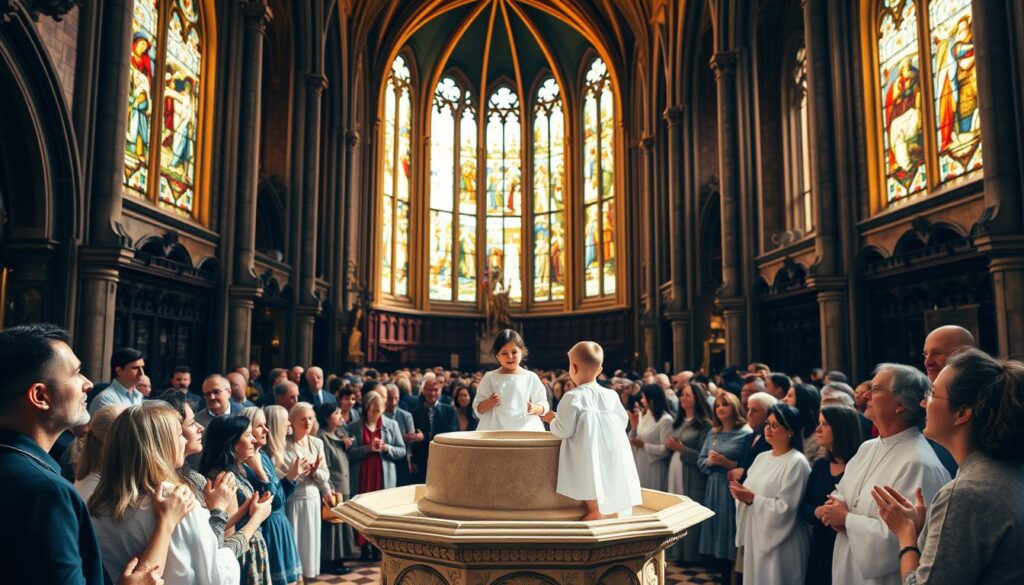
Baptism as an Initiation Rite
Baptism serves as an initiation rite into the Christian community, marking the beginning of an individual’s journey as a follower of Christ. In the Anglican tradition, baptism is seen as the first step in a lifelong process of discipleship and spiritual growth.
| Aspect | Description | Significance |
|---|---|---|
| Sacramental Significance | Baptism is a means of God’s grace | Spiritual regeneration and union with Christ |
| Initiation into Community | Marks entry into the Christian community | Beginning of discipleship and spiritual growth |
| Role of Water and Spirit | Emphasizes the importance of water and the Holy Spirit | Symbolizes cleansing and spiritual rebirth |
The table above summarizes the key aspects of baptism in the Anglican tradition, highlighting its sacramental significance, role in initiating individuals into the Christian community, and the symbolic importance of water and the Holy Spirit.
Is Baptism Necessary for Salvation in Anglicanism?
Baptism’s role in salvation is a topic of significant debate among Anglicans. While there is a general consensus that baptism is an essential aspect of the Christian faith, the extent to which it is necessary for salvation varies among different congregations.
General Consensus Among Anglicans
The Anglican Communion generally views baptism as a sacrament that is integral to the process of salvation. This perspective is rooted in the belief that baptism is a means of grace, through which God’s love and forgiveness are conveyed to the individual. The Chicago-Lambeth Quadrilateral, a foundational document for Anglicanism, underscores the importance of baptism as one of the sacraments “ordained by Christ himself.”
Many Anglicans believe that baptism is necessary for salvation because it represents the initiation into the Christian community and is seen as a moment when God’s grace is imparted. This understanding is supported by various scripture references, including Jesus’ command to baptize in the name of the Father, Son, and Holy Spirit (Matthew 28:19).
| Aspect | Description | Relevance to Salvation |
|---|---|---|
| Sacrament | Baptism is considered a sacrament in Anglicanism. | Seen as a means of grace, contributing to salvation. |
| Initiation | Baptism marks the initiation into the Christian community. | Represents a crucial step in the Christian journey. |
| Scriptural Basis | Supported by biblical references such as Matthew 28:19. | Provides a scriptural foundation for the practice. |
Variations in Beliefs Among Congregations
Despite the general consensus, there are variations in beliefs regarding the necessity of baptism for salvation among different Anglican congregations. Some congregations adhere to a more baptismal regeneration view, where baptism is seen as directly linked to the regeneration or salvation of the individual. Others may view baptism more as a symbolic act of faith, where the actual salvation is dependent on personal faith and commitment.
The diversity within the Anglican Communion reflects a range of theological perspectives and cultural influences. Understanding these variations is crucial for appreciating the complex relationship between baptism and salvation in Anglicanism.
Theological Foundations of Baptism in Anglicanism
Baptism in Anglicanism is supported by a rich tapestry of scripture and church teachings. The Anglican Church views baptism as a sacrament, a means of grace instituted by Christ, which is rooted in biblical narratives and reinforced by ecclesiastical traditions.
Scripture References Supporting Baptism
The practice of baptism is deeply rooted in biblical teachings. The New Testament provides several accounts that underscore the significance of baptism. For instance, Matthew 28:19 instructs believers to “go and make disciples of all nations, baptizing them in the name of the Father and of the Son and of the Holy Spirit.”
Additionally, the baptism of Jesus by John the Baptist (Matthew 3:13-17) is seen as a pivotal moment that establishes baptism as an essential aspect of Christian discipleship. The Apostle Paul’s writings further elucidate the role of baptism in Christian life, as seen in Romans 6:3-4, where baptism is associated with the believer’s union with Christ’s death and resurrection.

Church Teachings and Catechism Insights
The Anglican Church’s teachings on baptism are also informed by its catechisms and liturgical practices. The Anglican Catechism provides a detailed explanation of baptism, highlighting its significance as a sacrament of initiation into the Christian faith.
The Catechism outlines the promises made by the baptized (or their sponsors in the case of infant baptism) and the responsibilities that come with being part of the Christian community. It emphasizes the role of baptism in the forgiveness of sins and the believer’s incorporation into the body of Christ.
- Baptism is recognized as a sacrament instituted by Christ.
- It signifies the believer’s union with Christ’s death and resurrection.
- The Catechism underscores the importance of baptismal vows and the lifelong commitment they entail.
The Meaning of Baptism in the Anglican Faith
The Anglican understanding of baptism is deeply rooted in the symbolic significance of water and the concept of spiritual rebirth. This sacrament is not merely a ritual but a profound moment of spiritual transformation.
Symbolism of Water and Rebirth
In the Anglican tradition, water is a powerful symbol of cleansing and renewal. The act of baptism, whether through immersion or sprinkling, signifies the washing away of sins and the rebirth of the individual into a new life in Christ. As the Book of Common Prayer states, “In baptism, we are born again, and the old Adam is drowned in the waters of death and resurrection.”
“For as many of you as have been baptized into Christ have put on Christ. There is neither Jew nor Greek, there is neither slave nor free, there is no male and female, for you are all one in Christ Jesus.” – Galatians 3:27-28
The symbolism of water in baptism is multifaceted. It represents:
- Cleansing from sin
- Renewal and rebirth
- Identification with Christ’s death and resurrection
| Symbol | Meaning |
|---|---|
| Water | Cleansing, Renewal, Rebirth |
| Baptismal Act | Identification with Christ’s Death and Resurrection |
The role of the Holy Spirit in baptism is also crucial, as it is believed to be the agent of spiritual rebirth, empowering the baptized individual for a life of faith and service.
In conclusion, the meaning of baptism in the Anglican faith is rich in symbolism, particularly with the use of water representing spiritual rebirth and renewal. This understanding underscores the significance of baptism as a foundational sacrament in the Anglican tradition.
Infant Baptism: Traditions and Beliefs
The practice of baptizing infants is a significant aspect of Anglican faith, embodying a complex interplay of theology and tradition. Infant baptism, also known as paedobaptism, has been a part of Anglican heritage since its inception.
At the heart of the debate on infant baptism are several key arguments. Proponents argue that baptism is not just a symbol of faith but a means of grace, where God’s grace is conferred upon the individual, regardless of age. This perspective is grounded in the belief that baptism is a sacrament that initiates one into the Christian community.
Arguments in Favor of Infant Baptism
One of the primary arguments in favor of infant baptism is the belief in the original sin and the need for its removal through baptism. Anglicans who support infant baptism often cite scriptural references, such as the baptism of whole households (Acts 16:15, 1 Corinthians 1:16), as indicative of the practice.
Another argument is the covenantal aspect of baptism, where infant baptism is seen as analogous to circumcision in the Old Testament, serving as a sign and seal of God’s covenant with the individual and their family.
Different Practices in Varying Congregations
Despite the theological underpinnings supporting infant baptism, practices vary significantly across different Anglican congregations. Some parishes adhere strictly to traditional practices, while others have adopted more contemporary approaches, including dedication services for infants as an alternative or complement to baptism.
| Practice | Description | Theological Emphasis |
|---|---|---|
| Traditional Infant Baptism | Baptism performed on infants, often with godparents | Sacramental, Original Sin |
| Believer’s Baptism | Baptism performed upon profession of faith, typically on adults or older children | Faith Commitment, Personal Decision |
| Infant Dedication | A service where infants are dedicated to God, often followed by baptism at a later age | Family Commitment, Future Faith |
The diversity in practices reflects the broad spectrum of beliefs within Anglicanism, from sacramental to more evangelical perspectives. This diversity is a testament to the communion’s ability to accommodate different theological emphases while maintaining a shared commitment to the significance of baptism.
Adult Baptism: A Personal Decision
Embracing adult baptism is a meaningful choice for those within the Anglican community, reflecting a commitment to faith. This significant decision is rooted in the individual’s personal journey and understanding of their beliefs.
The Importance of Faith and Intention
In the Anglican tradition, faith and intention are crucial elements for adult baptism. It’s not just a ritual but a conscious decision made by the individual, signifying their commitment to their spiritual path.
The process involves a deep reflection on one’s beliefs and a clear understanding of the sacrament’s significance. This introspection is guided by the teachings of the Anglican Church, which emphasizes the importance of informed faith.
Preparing for Adult Baptism: A Spiritual Journey
Preparing for adult baptism is a spiritual journey that involves several steps, including catechesis, where individuals learn about the faith, the sacraments, and the responsibilities of being a member of the Anglican Church.
This journey is not just about the individual; it often involves the support of the community. The preparation process is designed to strengthen the person’s faith and understanding, ensuring that their decision to be baptized is informed and meaningful.
The Anglican Church supports individuals through this journey, providing guidance and resources to help them understand the significance of baptism and their commitment to their faith.
The Relationship Between Baptism and Faith
In the Anglican tradition, baptism and faith are deeply intertwined concepts that together form the foundation of a believer’s spiritual life. The connection between these two elements is crucial for understanding the Anglican perspective on salvation.
Faith as a Component of Salvation
Faith plays a pivotal role in the Anglican understanding of salvation. It is through faith that believers accept God’s grace and commit to following Jesus Christ. The Anglican view on salvation emphasizes the importance of faith as a personal response to God’s love and mercy.
In Anglican theology, faith is not just an intellectual assent but a deep, heartfelt trust in God’s promises. This understanding is rooted in scripture and is reflected in the church’s teachings and practices.
Baptism and Spiritual Growth
Baptism is seen as a sacrament that initiates a believer into the Christian life, marking the beginning of their spiritual journey. It is through baptism that individuals are incorporated into the body of Christ, the church, and receive the grace necessary for spiritual growth.
The sacrament of baptism is rich in symbolism, with water representing cleansing and rebirth. This symbolic act is believed to have a profound effect on the believer’s spiritual life, initiating a process of growth and transformation.
The relationship between baptism and faith is further illustrated in the following table, which highlights key aspects of their interplay in the Anglican tradition.
| Aspect | Baptism | Faith |
|---|---|---|
| Role in Salvation | Initiates into Christian life | Personal response to God’s grace |
| Symbolism | Water: cleansing and rebirth | Trust in God’s promises |
| Outcome | Incorporation into the church | Spiritual growth and commitment |
Understanding the interplay between baptism and faith provides valuable insights into the Anglican perspective on salvation. By exploring these concepts together, believers can deepen their appreciation for the rich theological heritage of Anglicanism.
Conclusion: Navigating Anglican Views on Baptism and Salvation
The Anglican views on baptism and salvation offer a rich and nuanced understanding of the Christian faith. At its core, the Anglican tradition emphasizes the significance of baptism as a sacrament that initiates believers into the community of faith.
Understanding the Sacramental View
The sacramental view of baptism within the Anglican Church underscores the importance of this rite in the life of a believer. It is seen as a means of grace, where the individual is welcomed into the community and begins their journey of faith.
Exploring the Significance of Baptism
The significance of baptism in the Anglican faith is multifaceted, encompassing both the symbolic and spiritual dimensions. As believers explore the Anglican Church sacraments, they gain a deeper understanding of the role baptism plays in their spiritual growth and development.
For those seeking to deepen their faith, understanding the Anglican perspective on baptism and salvation provides a foundation for further exploration and reflection. It invites believers to consider the ways in which baptism informs their understanding of God’s grace and their place within the community of faith.
FAQ
Do Anglicans believe baptism is necessary for salvation?
Anglicans generally believe that baptism is a crucial step in the salvation journey, but there are variations in beliefs among different congregations regarding its necessity.
What is the sacramental view of baptism in Anglicanism?
In Anglicanism, baptism is considered a sacrament, a means of grace that initiates individuals into the Christian faith, and is seen as a crucial step in the salvation journey.
What is the significance of baptism in the Anglican faith?
Baptism is significant in the Anglican faith as it symbolizes rebirth through water, representing spiritual cleansing and renewal, and is considered essential for spiritual growth.
How do Anglicans view infant baptism?
Anglicans have varying practices regarding infant baptism, with some congregations practicing it as a tradition, while others do not, and the theological debates surrounding it continue.
What is the importance of faith and intention in adult baptism?
In Anglicanism, faith and intention are considered crucial for adult baptism, as they represent a personal commitment to the Christian faith and a willingness to embark on a spiritual journey.
How does baptism relate to faith in Anglicanism?
In Anglicanism, baptism and faith are closely linked, with faith being a component of salvation, and baptism being seen as a means of spiritual growth and development.
What are the theological foundations of baptism in Anglicanism?
The theological foundations of baptism in Anglicanism are rooted in scripture references, church teachings, and catechisms, which provide insights into the practice and significance of baptism.
What is the role of baptism in initiating individuals into the Christian faith?
Baptism is seen as an initiation rite in Anglicanism, marking the beginning of an individual’s journey into the Christian faith, and is considered a crucial step in their spiritual development.
How do Anglicans understand the relationship between baptism and salvation?
Anglicans understand baptism as a means of grace that is closely tied to salvation, but the exact nature of this relationship can vary among different congregations and individuals.