Discover a faith tradition rooted in Scandinavian heritage and heartfelt spirituality. This denomination blends time-honored Lutheran principles with the energy of a 19th-century revival movement, creating a unique space for worship and growth.
Founded by Finnish and Norwegian immigrants, this community emphasizes personal renewal and shared devotion. Through practices like communal prayer and scriptural study, members seek to deepen their relationship with the divine while honoring their ancestors’ spiritual legacy.
What makes this group stand out? Its ability to preserve traditions while adapting to contemporary American life. The focus remains on salvation through grace, forgiveness, and living by sacred teachings – values that continue to shape its identity today.
Key Takeaways
- Rooted in 1800s Scandinavian immigrant traditions
- Combines Lutheran theology with revivalist spirituality
- Emphasizes personal transformation and forgiveness
- Maintains strong ties to historical practices
- Fosters close-knit communities across generations
- Balances tradition with modern American life
Historical Journey and Roots
The story of this faith community begins with determined immigrants carving out spiritual spaces in a new land. Finnish and Norwegian settlers arrived in the 1800s, carrying traditions that would blossom into organized worship groups across America.
Early Beginnings in America
In December 1872, Salomon Korteniemi led excluded members to form their own group. Originally called the Salomon Korteniemi Lutheran Society, this became the first organized expression of their distinct beliefs. By 1879, they adopted the Finnish Apostolic Lutheran name – a title reflecting their evolving identity.
Calumet, Michigan made history in 1872 by hosting America’s first formal gathering. These pioneers transformed northern European customs into sustainable practices for their new home.
Influence of the Laestadian Revival and Finnish Heritage
The spiritual fire came from Swedish preacher Lars Levi Laestadius, whose revival movement spread through Scandinavia. Members brought this energy from Finland and Norway’s state churches, blending it with their cultural identity.
Early congregations in Massachusetts, Michigan, and Oregon shared identical foundations. Their structure preserved Scandinavian values while adapting to American life – a balance still visible today. Through shared rituals and ancestral ties, these communities built bridges between old-world faith and new-world possibilities.
Core Beliefs of the apostolic lutheran church
This faith community anchors its identity in a rich tapestry of spiritual renewal and historical continuity. Members blend time-tested principles with transformative practices, creating a living tradition that speaks to modern seekers.
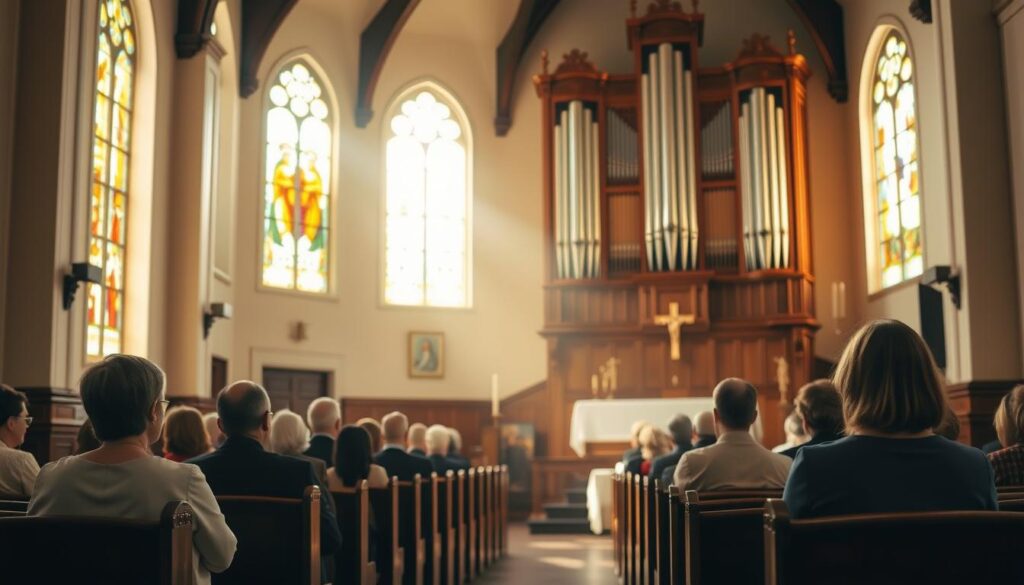
Doctrinal Foundations and Luther’s Teachings
At the core lies Martin Luther’s Small Catechism, the primary guide for understanding faith. This 16th-century book shapes daily practices through simple explanations of commandments, sacraments, and prayer. As one member notes: “Our teachings flow from scripture first, then Luther’s clear explanations.”
The community embraces three historic statements:
| Confession | Purpose | Relevance |
|---|---|---|
| Apostles’ Creed | Affirms Trinity | Weekly recitation |
| Nicene Creed | Defines Christ’s nature | Ecumenical unity |
| Augsburg Confession | Outlines Lutheran theology | Doctrinal standard |
The Role of Regeneration and Absolution from Sin
Spiritual rebirth forms the heart of their journey. Through the Holy Spirit’s work, believers experience profound inner change. This regeneration isn’t a one-time event but an ongoing process of growth.
Unique to their practice is audible forgiveness during gatherings. Leaders openly declare absolution, echoing Luther’s emphasis on “hearing grace spoken aloud.” This approach helps members confront sin while celebrating liberation through faith.
They maintain a delicate balance – urging separation from harmful influences while embracing mercy for imperfect people. As the Augsburg Confession states:
“Our entire salvation rests on Christ’s work, not human effort.”
Church Practices, Congregations, and Community Impact
At the heart of this spiritual community lies a dynamic approach to leadership and worship. Members blend everyday vocations with sacred callings, creating a faith experience rooted in shared responsibility. This model keeps traditions alive while addressing modern spiritual needs.
Lay Preaching, Minister Training, and Service Traditions
Most spiritual leaders here balance secular jobs with preaching duties. Lay preachers – often teachers, builders, or farmers – study scripture during evenings and weekends. Many now pursue formal education at Michigan’s Inter-Lutheran Theological Seminary, deepening their understanding of sacred texts.
Congregations thrive from Michigan’s Upper Peninsula to New Hampshire’s forests. Each group typically features multiple preachers who rotate sermons, offering fresh perspectives. Monthly communion services unite members, with the first Sunday reserved for this cherished ritual.
Publications and Liturgical Celebrations
Printed materials bind the community across states. The hymnal and altar book preserve centuries-old Scandinavian melodies and prayers. Many also read Rauhan Side (Bond of Peace), a Finnish publication reinforcing doctrinal unity.
Special events highlight cultural roots. Midsummer gatherings feature traditional hymns, while Christmas services glow with candlelit processions. As one leader shared: “Our strength comes from shared leadership and lived faith.”
Missionary efforts extend these practices nationwide. Volunteer preachers travel between states, planting new groups that honor heritage while nurturing modern believers.
Schisms, Evolution, and Comparative Movements
Faith communities often grow through both unity and division. The Laestadian movement’s story includes moments of passionate debate that reshaped its path in America. These disagreements, while challenging, helped different groups focus on what mattered most to their members.
Historical Schisms and Doctrinal Disputes
Early splits often centered on how strictly to apply biblical rules. The 1886 Hallite separation began when some felt others neglected practical guidance for daily living. Later divisions followed similar patterns:
| Year | Groups | Core Issue |
|---|---|---|
| 1921 | Heidemanians vs Pollarites | Public vs private confession |
| 1940 | Koskela faction | Role of Old Testament laws |
| 1962 | Aunesites & Reedites | Leadership authority |
These splits created smaller, tight-knit groups. The Old Apostolic branch became the largest by the 20th century, showing how adaptation sometimes follows separation.
Modern Interpretations and Continuing Challenges
Today’s members honor their past while facing new questions. Many know their group as “Mickelsens” – a nod to Reverend Andrew Mickelsen’s mid-1900s leadership. His work balanced tradition with modern needs, setting a pattern still followed.
Current debates often focus on technology’s role and cultural shifts. As one member shared: “We’re learning how to keep our hearts focused while our world keeps changing.” Through it all, the movement’s core goal remains – nurturing faith that transforms lives.
Conclusion
Bridging continents and centuries, this unique faith continues to flourish through family and community. Strong connections to Scandinavian countries remain vital, with spiritual guidance flowing from ancestral homelands to American congregations. The emphasis on multigenerational bonds fuels growth, as values pass naturally through close-knit family networks.
Local groups maintain remarkable independence while sharing core practices. This decentralized approach allows adaptation to regional needs without losing doctrinal unity. Members find strength in balancing historical roots with contemporary expressions of belief – a dance between tradition and relevance.
Challenges emerge in preserving identity amid rapid societal changes. Yet the movement thrives through its focus on spiritual renewal and mutual support. As one elder notes: “Our greatest witness lives in homes, not handbooks.” With no central office, leadership grows organically from local boards and lay preachers.
Looking ahead, this community navigates modernity by clinging to timeless truths. Sacred texts like Luther’s book of catechism remain touchstones, while new generations reinterpret applications. Through it all, the heartbeat persists – faith nurtured in hearts, homes, and humble gatherings.
FAQ
What historical events shaped this faith community in America?
The group traces its roots to Finnish immigrants in the 19th century. They blended Martin Luther’s teachings with the Laestadian revival’s focus on repentance and forgiveness, creating a distinct spiritual identity.
How do teachings on sin and forgiveness influence daily life?
Central to their doctrine is the belief in personal regeneration through absolution. Members emphasize confessing sins openly and seeking grace, which fosters accountability and humility within the community.
Are services led by trained clergy or lay members?
Lay preaching is common, with ministers often chosen from within congregations. Training focuses on scriptural knowledge rather than formal seminary education, reflecting their commitment to accessible spiritual leadership.
What role do publications play in preserving traditions?
Works like Voice of Zion share sermons, testimonies, and hymns. These resources strengthen unity across scattered congregations and pass down teachings to younger generations.
Have modern interpretations caused divisions?
Yes, debates over practices like communion frequency and technology use have led to splits. Some groups adapt cautiously, while others maintain stricter adherence to historic customs.
How does this community support members spiritually?
Regular gatherings, home visits, and mutual encouragement are key. The emphasis on shared repentance and forgiveness creates close bonds, often described as a “family of believers.”