This short guide explains how the Assumption is understood and lived out by parish communities across the United States.
We cover what the doctrine means for the Virgin Mary and why it matters for everyday believers. You’ll get clear, friendly explanations of history, prayer, and local celebrations.
Expect practical tips on finding Mass times, where a website or link lists schedules, and how to join processions or Adoration at your parish.
The article offers a roadmap through theology and practice, connecting the name of the feast to Saint Mary and showing how St. Thomas resources help make doctrine tangible in worship.
Key Takeaways
- Clear, readable overview of the feast for families and newcomers.
- Practical steps to find parish schedules and livestream links.
- Connections between belief, prayer, and liturgical life.
- How churches honor the Blessed Virgin Mary with Mass and processions.
- Guidance on what to read or ask at a local parish office.
What the Assumption Means in Catholic Belief
Believers see the end of Mary’s earthly life as a sign of hope: tradition holds that the Blessed Virgin was taken into heavenly glory, both body and soul. This teaching points to our shared promise of resurrection and frames Mary as intimately united with her Son’s victory over death.
The Blessed Virgin Mary: Body and Soul Taken into Heaven
On November 1, 1950, Pope Pius XII defined this dogma in Munificentissimus Deus, giving formal shape to what many faithful had long celebrated. The definition says Mary, having completed her earthly life, was assumed body and soul into heavenly glory.
Assumption versus Dormition in Christian traditions
Eastern Christians usually speak of the Dormition, the “falling asleep” of the Mother of God. Both East and West honor the same mystery but use different terms and emphases: the East often affirms a natural death followed by glorification.
Early books and witnesses—like the Liber Requiei Mariae, the Six Books Dormition Apocryphon, and traditions recorded by John Damascene—show long-standing devotion. The New Testament is silent about Mary’s end, so scholars consult these sources and other citations to trace how belief developed.
Immaculate Conception and the Assumption: Distinct Marian Dogmas
Two central Marian dogmas bookend the life of the virgin mary: one speaks to her spotless origin, the other to her final glorification.
The immaculate conception means Mary was preserved from original sin from the first moment of her existence. It does not refer to Jesus. Clear use of these terms helps avoid common mistakes.
The mary assumption refers to Mary being taken, body and soul, into heavenly glory at the end of her earthly life. The solemnity is celebrated on August 15 and points to the hope of bodily resurrection.
- Separate but related: each dogma highlights a different stage of the blessed virgin mary’s role in salvation.
- Theology and tradition: thinkers like thomas aquinas and classic books shape how the catholic church expresses these beliefs.
- Feasts matter: December 8 (mary immaculate conception) and August 15 (mary assumption) guide parish catechesis and devotion.
How Catholics Celebrate the Assumption: Liturgy, Vigil, and Holy Day Practices
Each August 15, parishes mark a communal feast that blends liturgy, song, and local custom.
August 15 is a holy day in the United States, and many faithful attend a Vigil Mass the evening before to make participation easier. Parishes often offer multiple Mass times—early morning, midday, and evening—to fit work schedules.
August 15 Holy Day of Obligation in the United States
Parish liturgies focus on Marian prayers, hymns, and readings that highlight hope in the resurrection. Families can check a parish website for the holy day schedule and a link to livestreams when they cannot attend in person.
Vigil Mass, blessings, and seasonal customs
Many churches add festive elements such as processions and the blessing of herbs, a summer custom that honors the Blessed Virgin as a garden of grace.
- Vigil Masses make the celebration accessible for workers and families.
- Local processions and hymns give the day a joyful, communal tone.
- Parish websites usually post schedules and livestream links for homebound faithful.
| Practice | Where Seen | Purpose |
|---|---|---|
| Vigil Mass | Urban and suburban parishes | Allows wider participation |
| Blessing of herbs | Regions with strong folk devotions | Connects creation and Marian devotion in summer |
| Procession & hymns | Parish feast days | Public witness and communal prayer |
| Livestreamed Mass | Parish website | Includes homebound and curious visitors |
assumption catholic church
Communities named Saint Mary of the Assumption serve as hubs of prayer, service, and art. A cathedral saint dedication often marks a regional center for diocesan liturgies and major celebrations.
People who search the name “assumption catholic church” usually want Mass times, confession hours, or feast-day details. Most parish homepages include a clear link to schedules, bulletins, and livestreams to help plan a visit.
These parishes show strong devotion to the Virgin Mary and the Blessed Virgin through rosaries, novenas, processions, and visible art. Iconography and paintings of the Assumption invite prayer and reflection.
- Services: daily Mass, confession, and sacramental preparation.
- Community: ministries from faith formation to outreach.
- Welcome: searching by saint mary helps newcomers find a nearby community quickly.
From Early Traditions to Dogma: A Brief History of the Assumption
Traces of the Dormition appear in early Christian writing and moved from local memory into public worship.
Apocryphal Dormition texts and early Church witnesses
Early communities kept stories about the Virgin Mary’s end in simple, treasured accounts. Books such as the Liber Requiei Mariae and the Six Books Dormition Apocryphon date to the second through fourth centuries.
These original narratives are not Scripture, yet they show devotion that lasted for years. By around AD 600 the feast was in the East during Emperor Maurice’s time. Roman use followed by the late seventh century.
Pope Pius XII and Munificentissimus Deus (1950)
After many petitions and a worldwide consultation, Pope Pius XII defined the teaching in Munificentissimus Deus on November 1, 1950.
The document draws on liturgy, patristic citations, and archived original petitions to explain the message it proclaims. Its day of proclamation affirmed what the faithful had long celebrated: a promise of glorification and hope.
- Roots: ancient texts and local feasts preserved memory.
- Development: centuries of worship and teaching shaped formal definition.
- Authority: the catholic church articulated the belief to guide the faithful.
| Period | Source | Significance |
|---|---|---|
| 2nd–4th centuries | Apocryphal books | Preserved early Dormition traditions |
| c. AD 600 | Eastern liturgy | Feast attested under Emperor Maurice |
| Late 7th century | Roman usage | Feast enters Western practice |
| 1950 | Munificentissimus Deus | Papal definition by pope pius xii clarifying the mary assumption message |
Saint Mary of the Assumption in the U.S.: Notable Cathedrals and Parishes
Some parish names point to local memory and architectural ambition; San Francisco’s cathedral combines both under Saint Mary’s title.
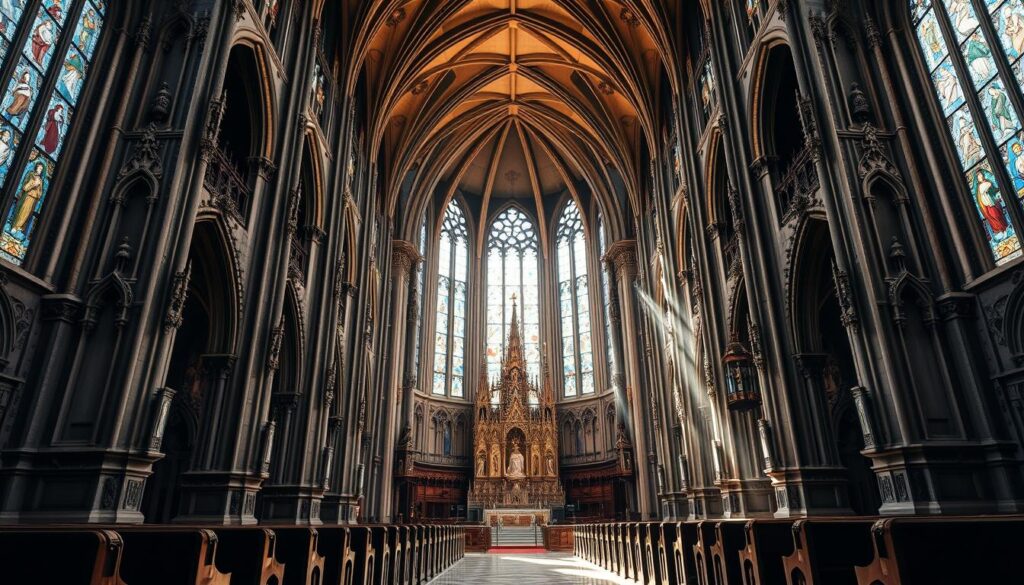
Cathedral of Saint Mary of the Assumption, San Francisco: Architecture and legacy
The Cathedral of Saint Mary of the Assumption at 1111 Gough St. is the archdiocese’s principal seat. It rises to about 190 feet and is crowned by a 55‑foot golden cross.
Designed by John Michael Lee, Paul A. Ryan, Angus McSweeney, with contributions from Pier Luigi Nervi and Pietro Belluschi, the building uses a hyperbolic paraboloid saddle roof. The modern form makes it one of the more distinctive cathedrals in the United States.
Old Saint Mary’s and evolving dedications
Old Saint Mary’s (1853–54) still stands near the financial district. The 1891 cathedral that followed was lost to fire in 1962, a reminder of resilience and renewal.
Across the country, many churches bear this name and mark vigils, processions, and local devotions to the Virgin Mary. Cathedrals and parish communities keep these practices alive, drawing on tradition from figures like Pius XII and saints such as St. Thomas.
| Site | Founded/Date | Notable Feature |
|---|---|---|
| Old Saint Mary’s | 1853–54 | Historic downtown parish |
| 1891 Cathedral | 1891–1962 | Destroyed by arson; memory preserved |
| Current Cathedral | Completed 1971; dedicated 1996 | Saddle roof; seats ~2,400 |
Inside the Cathedral of Saint Mary of the Assumption (San Francisco)
San Francisco’s cathedral greets visitors with a bold modern silhouette that lifts the eye and spirit. The interior draws sightlines upward, where the roof becomes a luminous canopy framing worship around the altar of st. mary.
Design and the iconic roof
The design is a collaboration: John Michael Lee, Paul A. Ryan, and Angus McSweeney worked with Pier Luigi Nervi and Pietro Belluschi. Their engineering work uses eight hyperbolic paraboloid segments to form the roof.
Key dates and milestones
The 1891 building was dedicated on January 11, 1891 and destroyed by arson on September 7, 1962. Cornerstone for the present structure was laid December 13, 1967; completion followed in 1971 and formal dedication came on October 5, 1996.
Papal and leadership moments
A historic liturgical highlight came when john paul celebrated a papal Mass in 1987. A long line of rectors and archbishops has guided parish life through these years.
| Feature | Detail | Note |
|---|---|---|
| Plan | 255 feet square | Expansive nave and sightlines |
| Height | 190 feet | Roofline draws focus upward |
| Cross | 55-foot golden cross | Visual marker on the skyline |
| Capacity | 2,400 | Large diocesan gatherings |
Parish Life and Practices: How Communities Live Marian Devotion
Bay Area parishes keep Marian practice alive through liturgy, prayer, and service. Ordinary rhythms—daily Mass, Adoration, and confession—shape devotion to the Blessed Virgin.
Mass, Adoration, Confession, and multilingual worship
Cathedral Basilica of St. Joseph offers Sunday Masses in English and Spanish. Holy Family streams daily Mass and Most Holy Trinity celebrates in English, Spanish, and Vietnamese.
Many parishes pray the rosary before daily Mass. St. Joseph of Cupertino posts confessions 3:30–4:45 p.m. on Saturdays. Queen of Apostles holds Saturday Adoration and Confession.
Examples from Bay Area parishes and cathedrals
St. Mary of the Immaculate Conception (Gilroy, Los Gatos) keeps a daily rosary and Thursday Adoration. Our Lady of La Vang supports extensive Vietnamese bilingual liturgies. St. Thomas Aquinas in Palo Alto coordinates daily Mass at three sites and a Sunday Gregorian Mass.
“Parish rhythm turns private prayer into a shared celebration.”
Parish pages usually include a link to livestreams and schedules to help visitors plan. If you are new, staff can help you join a choir, prayer group, or service ministry that honors the sacred heart of our faith and saint mary devotion.
Examples of Parish Schedules and Devotions (United States, California)
Practical schedules help visitors find Mass times, vigils, and livestreams. Below are sample rhythms from Bay Area parishes so you can plan a visit or join online.
St. Mary of the Immaculate Conception (Gilroy & Los Gatos)
Gilroy: daily Mass 8:30 a.m.; rosary 8:00 a.m.; Adoration Thursdays 7:00–8:00 p.m.; Saturday vigil 5:00 p.m.; Sunday 7:30, 9:00 (livestream), 11:00, 5:00 p.m.
Los Gatos: daily Mass 8:30 a.m.; rosary 8:00 a.m.; Saturday vigil 5:00 p.m. (livestream); Sunday 9:00 (livestream), 11:00, 5:00 p.m.
St. Joseph of Cupertino & St. Joseph (Mountain View)
Cupertino: confessions Sat 3:30–4:45 p.m.; Sunday 9:30 (livestream), 11:00, 3:00 (Young Adults), 5:00 p.m.
Mountain View: confessions Sat 4:00–5:00 p.m. (English/Spanish); weekday Masses 7:30 a.m. and 2:00 p.m.; Sunday Spanish 1:00 p.m., Korean 5:00 p.m.; regular adoration.
Sacred Heart, Holy Family, and Most Holy Trinity
Sacred Heart of Jesus (San Jose) and Holy Family offer multiple English and Spanish Masses with livestreams. Most Holy Trinity adds Vietnamese services and Sunday livestream at 11:00 a.m.
St. Thomas Aquinas Parish (Palo Alto)
Daily Mass 8:00 a.m. (St. Albert the Great) and 12:15 p.m. (St. Thomas); Sunday Gregorian Mass at noon; regular confession and adoration across sites.
“A parish link or website often makes the difference for travelers and the homebound.”
| Parish | Key Times | Notable Devotion |
|---|---|---|
| St. Mary (Gilroy) | Daily 8:30 a.m.; Sun 9:00 livestream | Rosary before Mass; Thursday Adoration |
| St. Joseph (Cupertino) | Sat Confession 3:30–4:45 p.m.; Sun 9:30 livestream | Young adult Mass; frequent confessions |
| Sacred Heart (San Jose) | Sat 5:00 p.m.; Sun multiple livestreams | Bilingual worship and community outreach |
| St. Thomas (Palo Alto) | Daily Masses; Sun noon Gregorian Mass | Adoration and multi-site parish life |
Marian Names and Titles Across Churches
A parish name can tell you much about a community’s history, language, and the way it prays to Mary.
Catholic communities call her Saint Mary, Our Lady, or by a local title like saint mary assumption to highlight a particular aspect of her role as mother of the faithful.
Titles such as Queen of Apostles, Our Lady of the Rosary, and Our Lady of La Vang show cultural roots and shared love for the virgin mary.
The word “Assumption” emphasizes her destiny in glory and invites believers to live as citizens of heaven now. Devotional groups often take a parish title to deepen their identity.
These names complement one another. Catechesis links each title to Scripture, liturgy, and doctrine so prayer grows richer.
“Devotion to Mary always leads us closer to Jesus,”
Theologians like st. thomas remind us prayer named for the Blessed Virgin points to Christ, the center of every title.
| Title | Local Meaning | Typical Use |
|---|---|---|
| Saint Mary | General devotion | Parish and feast-day focus |
| Our Lady of the Rosary | Prayer and family devotion | Rosary groups and processions |
| Our Lady of La Vang | Cultural identity | Bilingual liturgies and festivals |
| Saint Mary Assumption | Hope in glorification | Feast on August 15; parish identity |
Liturgical Calendar Notes: Summer Feasts and the Month of August
Mid‑summer brings a focused season of devotion. The month highlights a key feast on August 15 and invites communities to deepen prayer and service.
Parishes often add extra Confession times and special devotions in the week before the day to help people prepare. Outdoor processions and parish meals extend the liturgy into fellowship during warm summer evenings.
The blessing of herbs is a regional custom that links creation to praise. In some places, families set a simple home altar with flowers and an image of the virgin mary and pray a short nightly devotion through the month.
“Keeping the day well—Mass, a shared meal, and quiet reflection—helps the feast bear fruit all month.”
| Practice | When | Purpose |
|---|---|---|
| Extra Confessions | Week before Aug 15 | Prepare hearts for the solemnity |
| Outdoor Procession | Aug 15 or nearby weekend | Public prayer and community fellowship |
| Blessing of herbs | Aug 15 | Celebrate creation and devotion |
| Two‑week fast (Eastern) | Leading to Dormition | Penitential preparation and prayer |
August sits near harvest time, a fitting moment to give thanks. The rhythm of summer invites rest, and Marian celebrations turn that rest into worship offered back to God and the wider catholic church community.
The Role of Saints and Theologians: Thomas Aquinas to John Paul II
Careful thinkers and holy witnesses across centuries help turn ancient memory into living devotion about the Virgin Mary’s destiny.
Thomas Aquinas models reasoned faith. His work links Scripture, liturgy, and tradition so doctrine feeds prayer in parish life.
St. John Damascene preserved early preaching about the blessed virgin and the empty tomb. His homilies show how recollection became shared worship.
- Pope Pius and later popes used pastoral teaching to clarify belief for everyday disciples.
- John Paul highlighted strong evidence in tradition for a death and glorification before the mary assumption.
- Saints, monks, and laity across cultures kept devotion alive through prayer and service.
“Their writings send us to Christ, strengthening hope in the resurrection.”
Takeaway: theology and holiness work together. Scholars explain, saints show, and parishes pass these truths to families and catechists.
Resources, Links, and Citations to Explore Further
Use cathedral and parish web pages to find current Mass times, archived original bulletins, and music lineups before a holy day. These pages are the fastest way to confirm schedules, livestream links, and volunteer sign-ups.
Cathedral and parish websites for Mass times and livestreams
Check official sites like www.smcsf.org, https://www.stjosephcathedral.org/, and local parish pages for up-to-date schedules. Each website usually lists confession hours, Adoration times, and a livestream link for homebound visitors.
Key historical articles, archived material, and original sources
For study or pilgrimage, visit cathedral history pages that cite dedication programs, past rector lists, and architectural notes. Many pages include scanned archived original bulletins and citations to older work or books that document dates, architects, and even height in feet for the cathedral saint buildings.
| Site | What to find | Why it helps |
|---|---|---|
| www.smcsf.org | History, schedule, architecture | Plan visits and verify facts |
| http://smpgilroy.org | Rosary, Adoration, archived bulletins | Prepare for feast-day participation |
| http://www.paloaltocatholic.net/ | Multi-site Mass times, Gregorian liturgy | Coordinate travel and study groups |
Tips: use each official link to confirm times, cross-reference citations when preparing a talk, and save favorite websites so you can check seasonal changes quickly. For deeper reading, compare original narratives and modern summaries to trace sources and see how the history informs parish life.
Conclusion
Conclusion
Remembering Mary’s glory points us to hope in our own resurrection. The teaching defined by pope pius xii after many years of prayer crowns centuries of worship and practice.
From the immaculate conception to the way mary immaculate bears grace, the story shows how grace begins, grows, and blossoms into life eternal.
Join your parish on the day or across the month for a shared celebration. Use the link above to find Mass, Adoration, and clear terms for local devotion.
This final section invites you to bring these pages into prayer. Whether in a quiet chapel or the cathedral of saint mary assumption, let the blessed virgin and the virgin mary lead you to Christ. Thank you for reading; may study become service.
FAQ
What does the doctrine that Mary was taken into heaven teach?
The teaching holds that Mary, mother of Jesus, was preserved from corruption at death and was assumed, body and soul, into heavenly life. It honors her unique role in salvation history and affirms belief in the resurrection of the body for all faithful.
How is the Immaculate Conception different from Mary being taken into heaven?
The Immaculate Conception refers to Mary being preserved from original sin from the first moment of her life. Being taken into heaven concerns the end of her earthly life and her bodily glorification. Both are distinct Marian doctrines celebrated in the liturgical year.
When is the holy day that honors Mary’s entrance into heaven?
The principal feast that commemorates Mary’s entrance into heavenly life is celebrated on August 15. In many places it is observed as a holy day with special Masses, vigils, and blessings tied to the summer liturgical calendar.
What kinds of liturgy and devotional practices are common for this feast?
Parishes often offer a Vigil Mass the evening before, solemn Masses on the day, Marian prayers like the Rosary, and sometimes processions or seasonal blessings. Many cathedrals and parishes also livestream services and provide multilingual worship options.
How did the teaching become defined as dogma?
The doctrine was formally defined by Pope Pius XII in the 1950 apostolic constitution Munificentissimus Deus. He relied on longstanding tradition, early Christian accounts, and the sensus fidelium to proclaim the dogma.
Are there early texts or traditions about Mary’s dormition and translation?
Yes. Early apocryphal accounts and patristic witnesses recount Mary’s dormition (falling asleep) and her translation to heaven. These traditions influenced later theological reflection and popular devotion, even before formal definition.
Which U.S. cathedrals are notable for their dedication to Mary under this title?
Several major U.S. churches carry titles honoring Mary, including the Cathedral of Saint Mary of the Assumption in San Francisco and parishes named St. Mary of the Immaculate Conception. These sites often serve as architectural and pastoral centers in their communities.
What are key facts about the Cathedral of Saint Mary of the Assumption in San Francisco?
The cathedral is known for its modern design and distinctive roof geometry, completed in the 1970s after earlier structures and reconstructions. It hosts significant liturgies, episcopal events, and local parish ministries.
How do parish communities live Marian devotion throughout the year?
Devotion is expressed through Mass, Eucharistic adoration, Confession, the Rosary, feast-day celebrations, bilingual liturgies, and community outreach. Many parishes also keep schedules for daily Mass and special devotions tied to parish life.
Where can I find Mass times, livestreams, or historical resources for a cathedral or parish?
Most cathedrals and parishes publish schedules and livestream links on their official websites. Diocesan pages, archived articles, and local parish histories provide further context and primary sources for researchers and visitors.
Which saints and theologians shaped reflection on Mary’s role?
Medieval and modern theologians, including Thomas Aquinas in his theological work and recent popes like John Paul II, contributed to Marian theology. Their writings and homilies help guide pastoral practice and popular devotion today.
Are there regional examples of parish schedules and devotions in California?
Yes. Parishes such as St. Mary of the Immaculate Conception in Gilroy and Los Gatos commonly list daily Mass, Rosary, and adoration. Other nearby communities offer confession, multilingual liturgies, and livestreamed services to meet diverse needs.
How do parishes mark the vigil and holy day liturgically?
Parishes typically celebrate a Vigil Mass the evening before, special readings and prayers on the day itself, hymns honoring Mary, and sometimes processions or parish blessings. Local customs may add seasonal elements tied to the month of August.