Let’s explore one of humanity’s oldest spiritual paths—a vibrant tradition that continues to shape lives globally. With roots stretching back over 3,000 years, this living faith thrives as a mosaic of philosophies, rituals, and cultural expressions. Its teachings have guided millions in finding purpose and connection.
Often described as more than a single religion, this tradition embraces diverse practices united by shared principles. British scholars in the 1800s first used the term “Hinduism,” yet its wisdom flows from ancient texts like the Vedas. Today, it remains deeply woven into India’s cultural fabric while resonating worldwide.
What makes this tradition unique? Instead of rigid doctrines, it celebrates many paths to truth. From yoga’s mindful movements to colorful festivals honoring deities, its practices adapt across regions. Nearly 80% of India’s population identifies with this path, alongside growing communities globally.
Key Takeaways
- Originating over 3,000 years ago, Hinduism may be the oldest continuously practiced faith
- British writers coined the term “Hinduism” in the 19th century to describe India’s spiritual traditions
- Over 1 billion followers worldwide engage with its diverse philosophies and rituals
- Core teachings emphasize karma, dharma, and the pursuit of spiritual liberation
- Regional variations create rich cultural expressions within the broader tradition
Introduction to Hinduism for Beginners
Imagine a spiritual path with no single founder or rulebook—this is Hinduism. Unlike structured religions, it blends philosophy, culture, and personal practice into a living tradition. Its ideas have shaped daily life in India for millennia while adapting to modern times.
Surprisingly, the word “Hinduism” only became common in the 1800s. British scholars used it to describe India’s diverse spiritual practices. Many followers prefer sanatana dharma (“eternal law”), seeing their faith as timeless wisdom rather than a fixed religion.
What makes this philosophy unique? It welcomes multiple paths—from temple rituals to meditation—letting people choose their way to connect with the divine. As one scholar notes:
“It’s not about one truth, but many rivers flowing to the same ocean.”
With roots stretching back 4,000 years, these teachings remain vibrant today. You won’t find a central authority or uniform beliefs here. Instead, shared concepts like karma and dharma unite regional traditions, creating a rich tapestry of spiritual life.
Foundations of belief of hinduism
What connects modern spiritual practices to ancient urban planners and poets? The answer lies in a cultural legacy spanning over 4,000 years. This tradition’s roots intertwine with humanity’s earliest cities and timeless philosophical inquiries.
Historical Background and Vedic Influences
Archaeologists made a stunning discovery in the 1920s—the ruins of the Indus Valley civilization. This Bronze Age society (3300–1300 BCE) left behind figurines resembling later Hindu deities. One dig site revealed a seal depicting a cross-legged figure surrounded by animals, sparking debates about early spiritual symbolism.
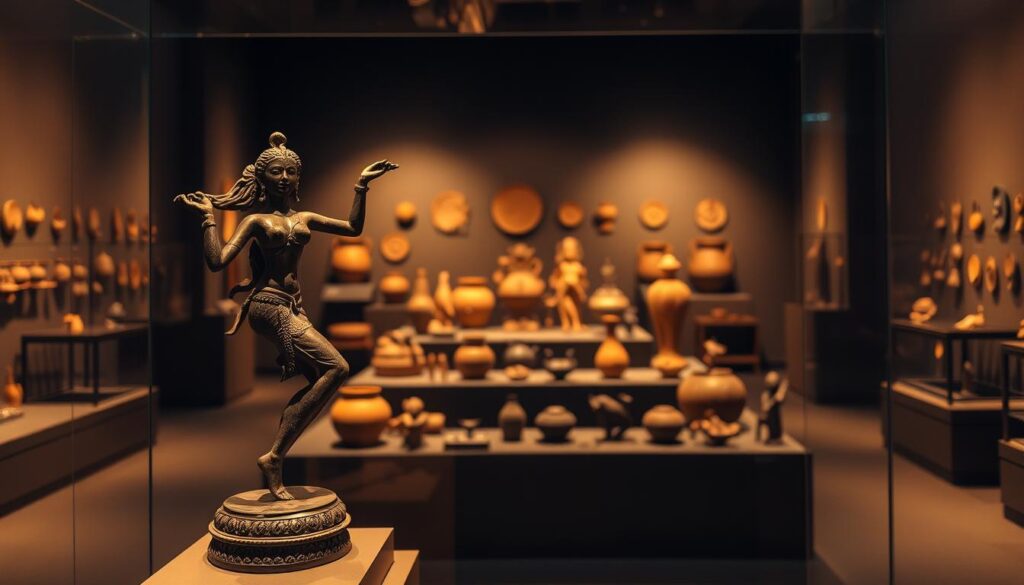
The Vedic period (1500–500 BCE) brought transformative changes. Nomadic tribes composed the Rigveda’s poetic hymns, establishing rituals still performed today. “These ancient verses aren’t just prayers,” notes historian Michael Witzel. “They’re philosophical explorations of existence itself.”
Sacred Texts and Philosophical Ideas
Four foundational texts form Hinduism’s literary backbone:
- The Vedas: Ritual guidelines and cosmic hymns
- Upanishads: Mystical teachings about universal consciousness
- Epics like Mahabharata: Stories exploring moral dilemmas
- Puranas: Colorful narratives about divine incarnations
Remarkably, priests still chant Vedic mantras using Bronze Age pronunciation techniques. This unbroken oral tradition demonstrates how ancient sacred texts remain living wisdom rather than historical relics. Modern practitioners reinterpret these teachings through yoga studios and environmental activism, proving their enduring relevance.
Exploring Hindu Deities and Worship Practices
Step into a world where divine energy takes countless forms. Hindu deities represent nature’s forces, human virtues, and cosmic cycles. This vibrant system lets devotees connect with sacred power through personalized symbols and stories.
Major Gods, Goddesses, and Their Roles
Three primary gods form Hinduism’s cosmic framework. Brahma sparks creation, Vishnu sustains life, and Shiva transforms existence. But the pantheon expands far beyond this trio.
Lakshmi brings prosperity through lotus flowers. Saraswati’s veena instrument symbolizes wisdom. Krishna’s playful flute melodies teach love’s power. Each deity offers unique blessings while reflecting universal truths.
Temples, Puja, and Rituals
Morning bells ring through temples as priests bathe stone icons in milk and honey. This practice, called puja, turns daily worship into multisensory devotion. Homes feature miniature shrines where families offer flowers and lamps.
Pilgrimages to sacred rivers or mountain shrines deepen spiritual bonds. As scholar Diana Eck observes:
“Rituals make the divine tangible – a smile on Krishna’s statue feels as real as a friend’s greeting.”
These rituals aren’t just traditions. They’re living conversations between humans and the sacred, blending ancient devotion with modern life.
Diverse Sects and Traditions in Hinduism
Hinduism’s spiritual landscape blooms with diverse paths, each offering unique ways to connect with the sacred. Four main sects shape this vibrant ecosystem, blending ancient wisdom with regional customs. From fiery ascetics to temple musicians, these traditions prove spirituality thrives in many forms.
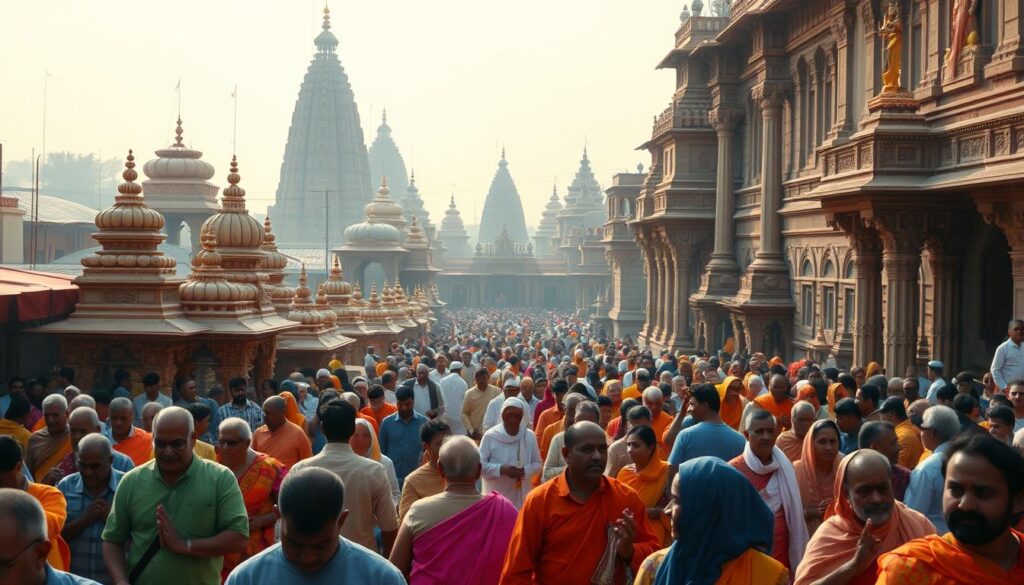
Paths of Devotion: Three Major Traditions
Shaivism centers on Shiva, the cosmic dancer. Followers in southern India built towering temples that later spread across Southeast Asia. Cambodia’s Angkor Wat originally honored Shiva before becoming a Buddhist site.
Vaishnavism claims over 640 million followers worldwide. Devotees cherish Vishnu’s incarnations like Rama and Krishna. Their bhajans (devotional songs) fill homes from Gujarat to Texas.
Shaktism celebrates divine feminine power through goddesses like Durga and Kali. This tradition influenced India’s art and society, with festivals like Navaratri drawing millions.
| Sect | Focus | Regions | Unique Practice |
|---|---|---|---|
| Shaivism | Shiva | India, Southeast Asia | Meditation in cremation grounds |
| Vaishnavism | Vishnu | Global | Kirtan singing sessions |
| Shaktism | Devi | Eastern India | Yantra geometry rituals |
| Smartism | Five Deities | South India | Vedic scholarship |
Smartism: Preserving Ancient Wisdom
This orthodox tradition worships five deities equally. Based at Sringeri Temple, Smartism maintains Vedic rituals through Brahmin scholars. “It acts as a bridge between ancient rites and modern needs,” notes religious historian Dr. Meera Nair.
Despite differences, these sects share core values. Temple festivals often feature multiple deities, showing Hinduism’s inclusive order. This flexibility helps the faith stay relevant in today’s changing world.
The Hindu Caste System and Social Order
Understanding India’s social fabric requires examining a structure older than the Roman Empire. This ancient hierarchy organized communities through spiritual principles and practical needs. While its modern form sparks debate, its historical roots reveal surprising complexity.
Historical Evolution of the Caste System
Early Vedic texts describe varna as fluid social roles, not rigid birth categories. By 1000 BCE, these roles crystallized into four main groups:
| Caste | Role | Occupations | Social Status |
|---|---|---|---|
| Brahmins | Spiritual guidance | Priests, scholars | Highest |
| Kshatriyas | Leadership | Rulers, soldiers | Second tier |
| Vaishyas | Commerce | Merchants, farmers | Third tier |
| Shudras | Service | Laborers, artisans | Fourth tier |
| Dalits | Excluded | Sanitation, leatherwork | Outsiders |
For centuries, this system dictated marriage partners, dining customs, and job opportunities. A 17th-century traveler noted:
“A man’s shadow could pollute food meant for higher castes.”
The concept of karma explained birth positions as consequences of past actions. This belief helped maintain social order but also justified discrimination. Dalits faced harsh restrictions, often forbidden from entering temples or using public wells.
Modern India banned caste discrimination in 1950. Affirmative action programs now help marginalized groups. Yet challenges persist, showing how ancient structures adapt to contemporary values. Recent laws punish caste-based hate crimes, proving society continues evolving.
Hinduism’s Global Influence and Cultural Legacy
Stone whispers stories of devotion across continents. From Cambodia’s jungles to India’s plains, sacred sites reveal a spiritual legacy stretching beyond borders. These marvels show how ancient ideas shaped societies far from their origins.
Architectural Wonders and Sacred Sites
The 8th-century Kailasa Temple astonishes visitors—carved top-down from volcanic rock. Angkor Wat’s sunrise silhouette draws millions, its original Hindu roots still visible. South India’s Meenakshi Temple bursts with colorful towers, proving sacred art thrives today.
Modern Practices and International Reach
Yoga studios from Tokyo to Texas teach poses first described millennia ago. Diwali lights now brighten New York skylines, while Bali’s festival crowds chant Sanskrit verses. Over 3 million U.S. followers blend tradition with modern life.
This living tradition keeps evolving. Temples host coding workshops beside rituals. Ancient mantras stream on apps, reaching a global world. As cultural bridges strengthen, these practices remind us that sacred spaces exist everywhere—from mountain shrines to city streets.
FAQ
What are the core sacred texts in Hinduism?
The Vedas, Upanishads, Bhagavad Gita, and epics like the Mahabharata and Ramayana form Hinduism’s foundation. These writings explore dharma, karma, and the nature of reality, guiding spiritual and ethical practices.
How do Hindu worship practices vary across regions?
Rituals like puja (devotional offerings) and festivals such as Diwali or Holi differ based on local customs. Temples in South India, for example, may emphasize intricate ceremonies, while home shrines in the North focus on personal devotion.
What is the role of karma and dharma in daily life?
A: Karma (action-consequence) and dharma (duty/righteousness) shape moral choices. Hindus believe living by these principles promotes harmony and aids spiritual growth, ultimately leading toward moksha (liberation).
How has the caste system evolved in modern times?
Originally tied to Vedic social roles, the caste system’s rigid hierarchies are now legally banned in India. Many Hindus today reject discrimination, focusing instead on individual merit and equality.
Which Hindu festivals are celebrated globally?
Diwali (Festival of Lights), Holi (Festival of Colors), and Navaratri are widely observed. These events, marked by dance, music, and community gatherings, highlight themes of renewal and divine triumph.
Are there different sects within Hinduism?
Yes! Major traditions include Vaishnavism (devotion to Vishnu), Shaivism (worship of Shiva), and Shaktism (focus on goddesses like Durga). Each has unique rituals but shares core philosophies.
What are some famous Hindu temples worldwide?
Angkor Wat in Cambodia, Tirupati Balaji in India, and Nepal’s Pashupatinath Temple are iconic sites. These architectural marvels reflect Hinduism’s influence across Southeast Asia and beyond.