Rooted in 16th-century reforms led by Martin Luther, this Protestant denomination reshaped Christianity’s landscape. Luther’s critiques of Catholic practices sparked a movement emphasizing grace, scripture, and personal faith. Today, millions globally identify with these teachings, which prioritize salvation through divine mercy rather than human effort.
Central to this tradition is the conviction that scripture alone guides spiritual truth. Foundational texts like the Augsburg Confession and Book of Concord outline core doctrines. These documents clarify ideas such as justification by faith—a principle declaring redemption as a gift from God, not earned by deeds.
Worship practices reflect these values through sacraments like baptism and communion. Congregations often blend traditional hymns with modern teachings, fostering community while honoring history. Understanding these elements helps explain why this branch of Christianity remains influential centuries after its inception.
Key Takeaways
- Originated from Martin Luther’s 16th-century reforms challenging Catholic doctrines
- Core focus on grace, scripture, and salvation through faith alone
- Guided by historic texts like the Book of Concord and Augsburg Confession
- Sacraments and communal worship play central roles in practice
- Maintains global influence with distinct theological identity
Introduction to Lutheran Beliefs and Heritage
A movement that started centuries ago now unites 90 million people across the globe. While Northern Europe remains a stronghold, Africa hosts 15 million followers—more than Germany itself. Vibrant communities thrive from Tanzania to Indonesia, proving spiritual values transcend borders.
This tradition goes deeper than cultural symbols like lefse or bratwurst. At its heart lies a 500-year-old commitment to scriptural focus and inclusive theology. Religious identity here stems from shared teachings, not ethnic ties—making it accessible to diverse populations.
Local congregations actively shape their neighborhoods through schools, clinics, and food banks. “We serve because grace compels action,” explains a Kenyan pastor. This practical approach bridges Sunday worship with weekday needs, creating faith that works in real life.
Hymns and liturgical practices connect modern worshippers to historical roots. From Bach’s compositions to Swahili worship songs, music remains a powerful expression of shared beliefs. These traditions adapt while keeping core principles intact.
As membership grows in tropical climates and urban centers, leaders balance heritage with fresh perspectives. The challenge? Honoring Reformation-era truths while addressing 21st-century questions about justice, technology, and interfaith dialogue.
Historical Origins and the Reformation Movement
A single act of defiance in 1517 ignited a spiritual revolution across Europe. What began as an academic debate reshaped religious power structures and gave birth to a new way of understanding Christianity.
Martin Luther’s 95 Theses and the Spark of Reform
On October 31, Martin Luther nailed his fiery arguments to a Wittenberg church door. His 95 critiques targeted the catholic church’s sale of forgiveness certificates called indulgences. “Why does the pope’s wealth grow while poor believers buy false peace?” he demanded.
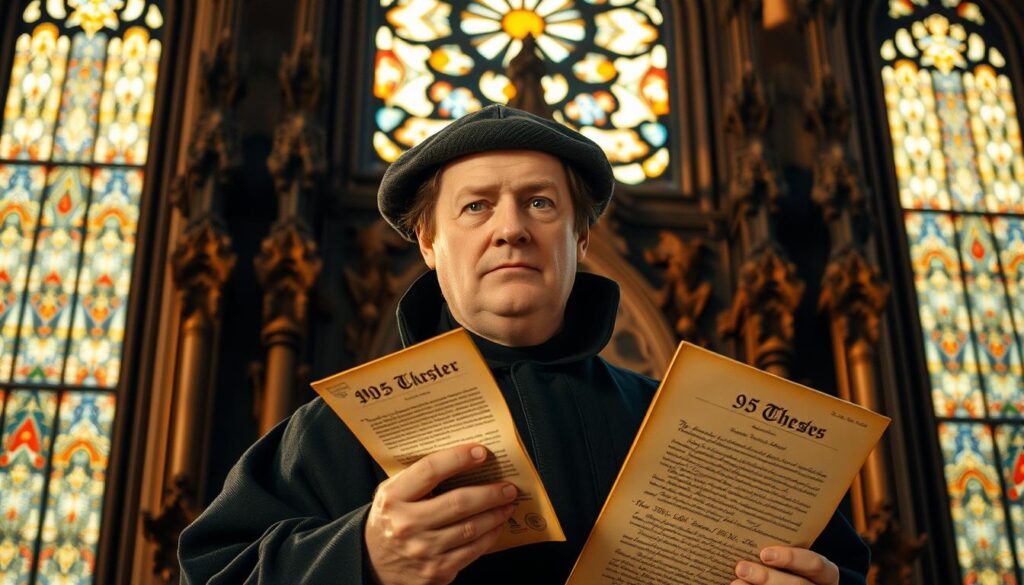
Luther’s radical idea? Faith alone – not payments or rituals – connects people to divine grace. This challenged 300 years of tradition. Though he aimed to reform existing institutions, his ideas snowballed into a full-blown movement.
Emergence of Lutheranism in 16th Century Europe
Northern Germany became ground zero for this spiritual awakening. By 1530, entire states adopted Luther’s teachings as official doctrine. Check out how practices shifted:
| Practice | Catholic Church | Lutheran Churches |
|---|---|---|
| Salvation | Good works + sacraments | Grace through faith |
| Scripture Authority | Church + Bible | Bible alone |
| Clergy Role | Separate class | Integrated with state |
The new testament translation into German let ordinary people read Scripture themselves. Congregations formed outside Rome’s control, creating the first lutheran churches. By the late 1500s, Scandinavia and Baltic regions had state-supported congregations blending spiritual and civic life.
“The true treasure of the church is the gospel of the glory and grace of God.”
This century-defining shift proved ideas could outpower empires. What started as local protests became a permanent branch of Christianity – one still shaping millions’ lives today.
Martin Luther and Lutheran Identity
What’s in a name? For Martin Luther’s followers, this question sparked centuries of identity debates. The label now associated with their theology began as a mocking term from opponents. During heated 16th-century clashes with Roman Catholic Church leaders, critics aimed to reduce the reforms to one man’s ideas.
Choosing “Evangelical” Over a Label
German theologian Johann Maier von Eck first hurled “Lutheran” as an insult during a 1519 debate. Luther fired back: “Why tie Christ’s message to my name?” He insisted the movement should be called “evangelical” – rooted in the Greek word for “good news.”
The reformer’s famous quip – “What is Luther? Neither was I crucified for anyone” – became a rallying cry. He collaborated with other thinkers, showing this wasn’t about personal fame. Yet by the 1550s, people embraced the term to clarify their distinct faith practices.
Three key factors explain this naming shift:
- Distinguishing from Calvinist and Anabaptist groups
- Emphasizing continuity with Luther’s biblical teachings
- Creating legal recognition in political agreements
This tension between Christ-centered humility and doctrinal clarity still shapes communities today. As one modern pastor notes: “We honor Luther’s work, but our ultimate loyalty belongs to Scripture.”
The Role of the Augsburg Confession in Shaping Doctrine
When seven German princes stepped forward at the 1530 Diet of Augsburg, they changed religious history. Philipp Melanchthon, Martin Luther’s brilliant collaborator, crafted a document that became the North Star for Lutheran theology. His Augsburg Confession didn’t just defend reforms—it built a bridge between ancient Christian truths and new spiritual insights.
Presented to Emperor Charles V, this confession achieved what debates couldn’t: legal recognition for reformed congregations. Its 28 articles clarified core positions on salvation, sacraments, and Scripture’s authority. Unlike other Protestant groups, Lutherans now had an official statement distinguishing their faith from both Catholicism and emerging Calvinist movements.
Three revolutionary aspects made it unique:
- Written in diplomatic language to seek unity, not conflict
- Rooted in early church teachings while addressing 16th-century issues
- Endorsed by political leaders, giving it civic legitimacy
Melanchthon’s masterpiece remains astonishingly relevant. Over 75% of global Lutheran bodies still affirm its doctrines today. As one scholar notes: “Accepting the Augsburg Confession isn’t about agreeing with Luther—it’s embracing biblical truth articulated for a crisis moment.”
This foundational text continues guiding worship practices and theological education. Its balanced approach—firm on grace through faith yet open to dialogue—sets the tone for how Lutheran communities engage modern challenges while honoring their roots.
The Book of Concord as a Doctrinal Foundation
Imagine holding a 444-year-old book that still guides millions today. That’s the enduring power of the Book of Concord, finalized in 1580. This landmark collection brought together ten essential documents, signed by 86 political and religious leaders, to resolve theological disputes across reformed communities.
Key Creeds and Catechisms
At its core, the compilation features three ancient creeds shared by most Christian traditions. These affirmations ground Lutheran teachings in historical faith while allowing distinct interpretations of grace. Martin Luther’s Small Catechism stands out as a practical guide—originally written to help families teach core principles.
The Augsburg Confession remains central, defending reformed views on sacraments and divine authority. Alongside Luther’s fiery Smalcald Articles, it shows how confession shaped both doctrine and daily practice. Modern confirmands still memorize passages from these texts, connecting new generations to Reformation-era insights.
What makes this book unique? It balances timeless truths with 16th-century context. Documents like the Formula of Concord address specific debates while upholding scripture’s supremacy. As one historian notes: “This wasn’t about creating new ideas—it was preserving essential truths for turbulent times.”
FAQ
What makes Lutheran teachings distinct from Roman Catholicism?
Lutherans emphasize salvation through grace alone, received by faith, rather than relying on human effort. Unlike Roman Catholicism, they reject papal authority and teach that Scripture is the sole guide for doctrine. Practices like private confession are optional, not mandatory.
Why is the Augsburg Confession important?
Written in 1530, this document outlined core teachings of the Reformation, defending reforms against accusations of heresy. It remains a foundational text for defining doctrine in congregations worldwide, emphasizing justification by faith and sacraments.
How did Martin Luther influence Protestant theology?
Luther’s 95 Theses challenged indulgences and corruption, sparking the Reformation. His translation of the Bible into German and writings, like the Small Catechism, reshaped Christian thought by prioritizing Scripture and personal faith over institutional traditions.
What role does the Book of Concord play today?
It unites Lutherans globally by compiling key texts, including the Augsburg Confession and Luther’s catechisms. Pastors often use it for teaching, ensuring doctrinal consistency across synods and preserving Reformation principles in modern worship.
Do Lutherans practice communion like Catholics?
While both view the Lord’s Supper as sacramental, Lutherans reject transubstantiation. They teach Christ’s real presence “in, with, and under” the bread and wine, emphasizing its role as a gift of grace rather than a ritual to earn merit.
How do Lutherans approach good works?
Good works are seen as a joyful response to God’s grace, not a requirement for salvation. The focus remains on faith in Christ’s sacrifice, with actions flowing naturally from gratitude rather than obligation or fear.