In an age where ancient traditions meet digital innovation, one religious leader stands out for bridging timeless wisdom with modern communication. Robert Emmet Barron, founder of the global ministry Word on Fire, has transformed how spiritual teachings connect with today’s seekers. His documentary series and online presence have redefined evangelization, earning him the nickname “bishop of the Internet” among followers.
Barron’s approach combines intellectual depth with relatable storytelling. With over 151 million YouTube views and 3 million Facebook followers, he makes complex theological ideas accessible without watering them down. This balance attracts both lifelong believers and those exploring faith for the first time.
What sets his work apart is how he addresses modern spiritual needs. He critiques superficial approaches to religion, urging deeper engagement with sacred traditions. His Parisian academic training shines through in content that respects doctrine while speaking to contemporary issues like secularism and social media culture.
Young adults particularly resonate with his message. By meeting people where they are—on smartphones and streaming platforms—he’s building a vibrant community hungry for authentic connection. This guide explores how his methods offer a blueprint for meaningful religious outreach in the digital era.
Key Takeaways
- Pioneered digital strategies making ancient teachings relevant to modern audiences
- Attracted over 151 million video views through accessible theological content
- Addresses growing spiritual hunger with intellectually rigorous yet approachable messaging
- Blends academic expertise from Parisian institutions with mass media savvy
- Created a model for religious organizations to engage tech-connected generations
Overview of Bishop Barron’s Mission and Media Legacy
Born in Chicago to Irish-American parents, Robert Barron discovered his passion for theology through unexpected sources. As a teenager at Fenwick High School, he stumbled upon Thomas Aquinas’ writings—an encounter that shaped his future. This early fascination with philosophical depth later fueled his mission to make ancient wisdom resonate in modern times.
Biography Highlights and Early Initiatives
In 2000, Bishop Barron took a bold step by founding Word on Fire Catholic Ministries. This non-profit became his vehicle for merging scholarly rigor with mass communication. His academic training in Paris added intellectual weight to projects designed for everyday viewers.
Digital Outreach and Impact on the Modern Faith Community
Bishop Barron’s media breakthrough came in 2007 with a viral video analyzing moral themes in Martin Scorsese’s The Departed. This creative approach—linking pop culture with spiritual lessons—became his signature style. Soon, his programs appeared on major networks like WGN America and EWTN.
Today, Word on Fire’s YouTube channel and podcasts connect with millions globally. Followers appreciate how complex doctrines become relatable through film reviews and documentary series. This strategy builds communities beyond church walls, proving faith can thrive in digital spaces.
Formation and Theological Foundations
The intellectual journey that shaped this influential religious figure began with rigorous academic training. His path through prestigious institutions laid the groundwork for a unique approach to sharing spiritual insights.

Early Life, Education, and Spiritual Awakening
Robert Barron started at the University of Notre Dame before transferring to Mundelein Seminary. Selected as a Basselin Scholar at the Catholic University of America, he earned philosophy degrees by 1982. These studies sharpened his ability to address modern challenges to faith.
His spiritual curiosity ignited through encounters with Thomas Aquinas. This medieval thinker’s ideas became lifelong companions, later shaping Barron’s ability to connect ancient wisdom with contemporary questions.
Academic Training and Ecclesiastical Milestones
In Paris, Barron earned his Doctorate in Sacred Theology in 1992. His groundbreaking dissertation compared Aquinas’ work with modern theologian Paul Tillich. This fusion of classical and contemporary thought became his trademark.
Ordained as a priest in 1986, he spent 23 years teaching at the University of St. Mary of the Lake. Fluent in four languages, he crafted lessons that made complex doctrines relatable—skills now seen in his books and digital content.
His tenure at the Pontifical University St. Mary’s campus transformed theological education. Students recall how he made Aquinas’ 13th-century ideas feel urgent for 21st-century seekers.
Rise as a Media Evangelist
The digital age demanded fresh ways to share spiritual wisdom. One ministry answered this challenge by merging sacred messages with cutting-edge technology. Its approach transformed religious communication, reaching millions through screens and speakers.
Breakthroughs in Television, Podcasts, and Social Media
October 2010 marked a historic shift when Word on Fire debuted its weekly TV program. This show became the first national religious series hosted by a priest in six decades. Fans tuned in for deep dives into film analysis and cultural commentary.
The ministry’s YouTube videos changed the game completely. Over 1,000 video commentaries have racked up 84 million views. These short clips make complex ideas snackable without losing depth.
| Platform | Content Type | Reach |
|---|---|---|
| Television | Weekly show | National broadcast |
| Podcast | Faith & culture talks | 10M+ downloads |
| YouTube | Video commentaries | 84M+ views |
Creating a Global Platform with Word on Fire
The headquarters in Rochester tells the story visually. Glass walls showcase movie posters beside saint portraits. This mix reflects the ministry’s core philosophy – faith meets modern culture.
Weekly podcasts and YouTube videos now form a complete media ecosystem. Followers choose their favorite format while getting the same rich content. This strategy keeps the Word Fire burning across generations.
Young creators draw inspiration from this model. They see how quality production and smart storytelling make ancient truths feel urgent today. The ministry proves spiritual content can thrive in competitive digital spaces.
Exploring catholicism bishop barron: A Case Study on His Ministry
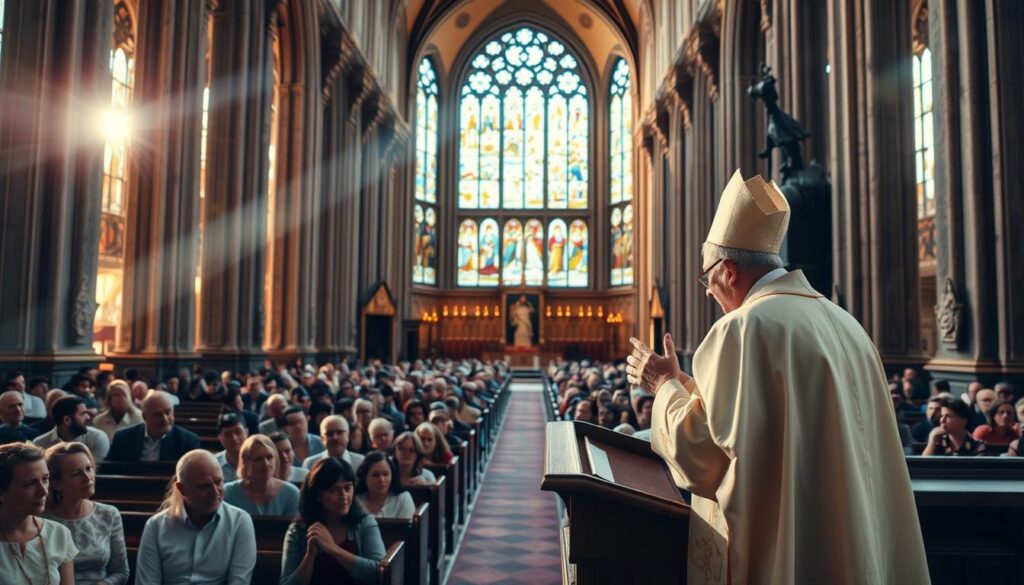
A global journey through sacred sites became the catalyst for modern spiritual renewal. The 2011 documentary filmed across 16 nations didn’t just showcase cathedrals—it reignited faith journeys through cinematic storytelling. One viewer described the experience as “finally seeing the puzzle pieces click into place,” leading to his life-changing conversion.
Strategies Behind His Evangelization Model
This ministry thrives by treating culture as fertile ground rather than enemy territory. Film analyses and art discussions become gateways to deeper truths, meeting people where their interests already lie. The founder often compares this approach to St. Paul’s Athenian sermon—connecting timeless messages to local landmarks.
Nick Chancey’s story exemplifies the model’s power. After watching the series, he realized “there was only one pathway forward.” Such transformations stem from content that respects viewers’ intelligence while sparking curiosity. The team at Word Fire Catholic Ministries crafts each video and article as both invitation and challenge.
Growth continues despite broader declines, proving vibrant tradition outshines “beige” alternatives. As engagement numbers show, modern seekers crave substance served with creativity—not diluted teachings. This case study reveals how ancient fires can warm new generations when tended with media savvy and cultural fluency.
Impact on Contemporary Catholic Culture
Modern spiritual hunger meets ancient wisdom in unexpected places. Young men—a group often absent from pews—now flock to online faith content, with Bishop Barron attracting over 60% male viewership on YouTube. This demographic shift reflects a broader search for meaning among college-educated audiences.
Bridging Secular and Sacred Spaces
Cultural figures like Jordan Peterson play an unexpected role in this revival. Though not religious himself, Peterson’s biblical analyses spark curiosity that algorithms often steer toward Barron’s teachings. This digital handoff introduces secular listeners to structured theology through relatable gateways.
Barron’s 2016 World Youth Day keynote showcased his unique appeal. By blending intellectual rigor with cultural fluency, he connects with people feeling adrift in modern life. His approach transforms abstract doctrines into actionable life frameworks.
The result? A growing community of followers finding purpose through screens. As Jordan Peterson fans explore faith’s depths, and World Youth Day attendees carry insights home, a new generation discovers ancient truths can anchor modern lives.
FAQ
What role does Word on Fire play in modern faith communities?
Founded by Robert Barron, Word on Fire uses documentaries, podcasts, and social media to make theological ideas accessible. Its YouTube channel and programs like the “Catholicism” series engage millions globally, blending tradition with digital innovation.
How has Pope Francis influenced Barron’s approach to ministry?
As auxiliary bishop of the Archdiocese of Los Angeles, Barron aligns with Pope Francis’s emphasis on outreach. His work focuses on dialogue with secular culture, seen in collaborations with figures like Jordan Peterson and Ben Shapiro.
What educational background supports Barron’s theological work?
Barron studied at the Pontifical University of St. Thomas Aquinas in Rome, earning a doctorate in sacred theology. This academic rigor shapes his ability to explain complex teachings, from Aquinas’s philosophy to modern ethical debates.
Why is Barron considered a leader in youth evangelization?
Through platforms like World Youth Day and viral YouTube videos, he addresses topics like atheism and pop culture. His relatable style helps younger audiences connect faith with everyday life.
How does the Word on Fire team operate from its California headquarters?
The team produces content like the “Pivotal Players” documentary, hosts conferences, and manages a podcast network. Their work supports parishes and individuals seeking deeper engagement with Catholic teachings.
What distinguishes Barron’s evangelization model?
He combines intellectual depth with media savvy, using platforms like Twitter and Instagram to reach diverse audiences. His strategies emphasize beauty, truth, and storytelling to revitalize interest in religion.