Millions of people worldwide are discovering new ways to deepen their faith through mindful movement and prayer. A growing number of believers are exploring how physical practices rooted in ancient traditions can coexist with Western religious teachings. This fusion creates opportunities for spiritual growth while raising important questions about maintaining theological integrity.
The global wellness industry, valued at over $4.5 trillion, reflects our collective search for holistic health. Many faith communities now recognize the value of integrating body-awareness techniques with traditional worship. Recent surveys show 1 in 4 churchgoers engage in some form of meditative exercise, seeking harmony between physical discipline and spiritual devotion.
This exploration isn’t without challenges. Some religious leaders emphasize the need for discernment, while others celebrate the potential for enhanced prayer experiences. We’ll hear from practitioners who’ve found creative solutions, like modified poses paired with Scripture reflection. Their stories reveal how personal faith journeys can evolve without compromising core beliefs.
Key Takeaways
- Modern believers increasingly combine physical wellness practices with religious traditions
- Industry growth reflects widespread interest in holistic spiritual approaches
- Successful integration requires thoughtful adaptation and guidance
- Modified techniques help align exercises with specific faith values
- Personal stories demonstrate diverse paths to meaningful practice
Exploring the Origins and Philosophy of Yoga
Long before modern studios offered mats and straps, ancient seekers developed a system unifying body and spirit. Rooted in Sanskrit’s “to yoke,” this practice aimed to bridge human and divine realms. Second-century sage Patanjali crystallized these ideas in his Yoga Sutras, outlining eight pathways for spiritual growth.
Historical Roots in Eastern Traditions
Early forms emerged from India’s Vedic culture, blending Hindu rituals with Buddhist mindfulness. Jain teachings later added ethical layers, creating a rich spiritual tapestry. These foundations emphasized inner transformation over physical feats.
From Asanas to Spiritual Discipline
Patanjali’s framework reveals surprising truths: the postures we know today formed just one step toward enlightenment. His eight limbs prioritized moral living and mental focus before movement.
“Yoga is the stilling of thought-waves to realize the true self,”
he wrote, highlighting meditation’s central role.
| Yoga Type | Focus | Key Practice |
|---|---|---|
| Hatha | Physical alignment | Asanas & breathwork |
| Raja | Mental mastery | Meditation techniques |
| Karma | Selfless action | Service to others |
Cultural Transformations Over the Years
When these teachings reached Western shores, gyms rebranded ancient techniques as fitness routines. While accessibility grew, some core principles faded. Modern hybrids now balance tradition with contemporary needs, proving philosophy adapts without losing its essence.
Understanding Catholic Spirituality in the Context of Yoga
The integration of physical postures and spiritual reflection isn’t new to religious traditions. For centuries, faith communities have explored how bodily awareness enhances divine connection. This exploration reveals fascinating parallels between ancient disciplines and modern spiritual practices.
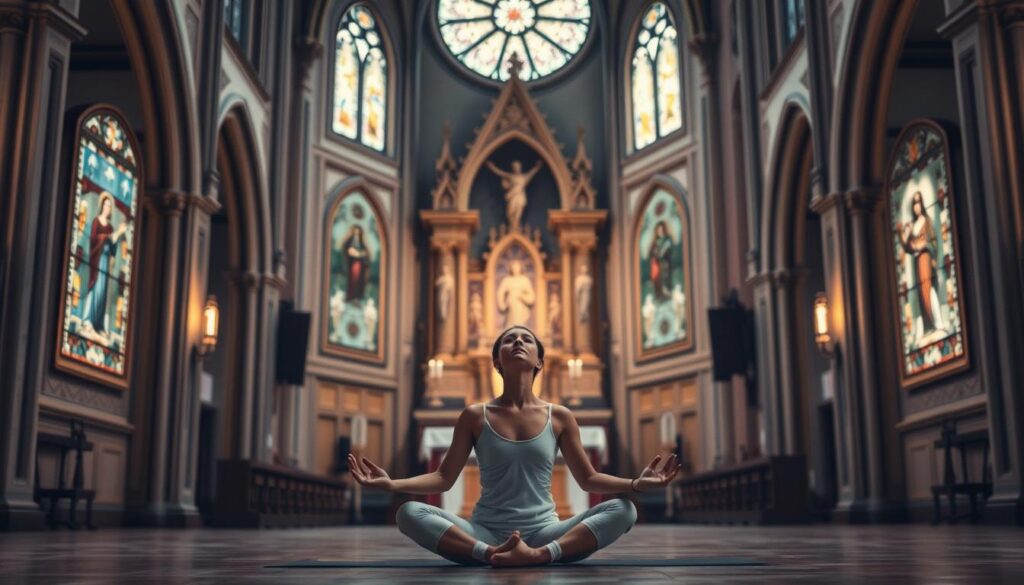
Contemplative Prayer and Embodied Faith
Saint Teresa of Avila described prayer as “an intimate sharing between friends.” Her writings emphasize body awareness during meditation, mirroring yoga’s mind-body focus. Many believers use breath-focused prayers resembling pranayama techniques to calm their thoughts.
Ignatius of Loyola’s Spiritual Exercises guide practitioners to notice divine presence in everyday actions. This approach values physical sensations as pathways to spiritual insight. “God speaks through our bodies,” wrote one modern retreat leader, echoing centuries of mystical tradition.
Reflections on Tradition and Theology
Church teachings about the body as a “temple” create surprising common ground. Some theologians suggest mindful movement can become sacred dialogue when rooted in Christian intent. This perspective aligns with historical practices like walking meditations used by monks.
The concept of spiritual detachment appears in both traditions. Ignatian “indifference” and yoga’s yamas both teach releasing distractions to focus on ultimate truth. As one priest-yoga instructor notes: “Our postures become prayers when we direct them toward communion.”
These connections don’t erase differences but reveal shared human yearning. Through thoughtful adaptation, many find movement practices deepen their understanding of incarnational faith – the belief that spirituality lives through our physical being.
Integrating catholicism yoga: Tradition Meets Modern Spirituality
Modern spiritual explorers are reshaping ancient disciplines into tools for contemporary devotion. One pioneering initiative bridges 16th-century Jesuit principles with mindful movement, creating space for transformative encounters.
Aligning Spiritual Practices with Faith
Bobby and Alan Haras launched Ignatian Spirituality & Yoga in 2016 through Jesuit-supported retreats. Their approach helps participants connect physical awareness with spiritual freedom. “Movement becomes prayer when we direct it toward justice,” they explain.
Many programs now adapt traditional methods to honor Christian values. Breathwork might accompany Psalm recitations, while sun salutations transform into gestures of gratitude. This careful reshaping maintains core theology while embracing holistic wellness.
| Traditional Element | Adapted Practice | Spiritual Goal |
|---|---|---|
| Sanskrit chants | Scripture meditation | Deepen prayer focus |
| Universal consciousness | Divine presence | Strengthen faith |
| Self-realization | Communal service | Live social justice |
Over 40 U.S. retreat centers now incorporate these blended methods. Spiritual directors report increased engagement when combining movement with examen prayer. The key lies in intentional framing – viewing postures as vessels for grace rather than isolated exercises.
This integration requires ongoing discernment. Practitioners learn to separate physical benefits from philosophical concepts that might conflict with their beliefs. The result? A dynamic spiritual practice that honors both body and tradition.
Practical Insights on Embracing Both Traditions
Many seekers find that blending movement with prayer opens new pathways to spiritual depth. By focusing on intentional adaptation, believers can create practices that honor their values while nurturing physical wellness.
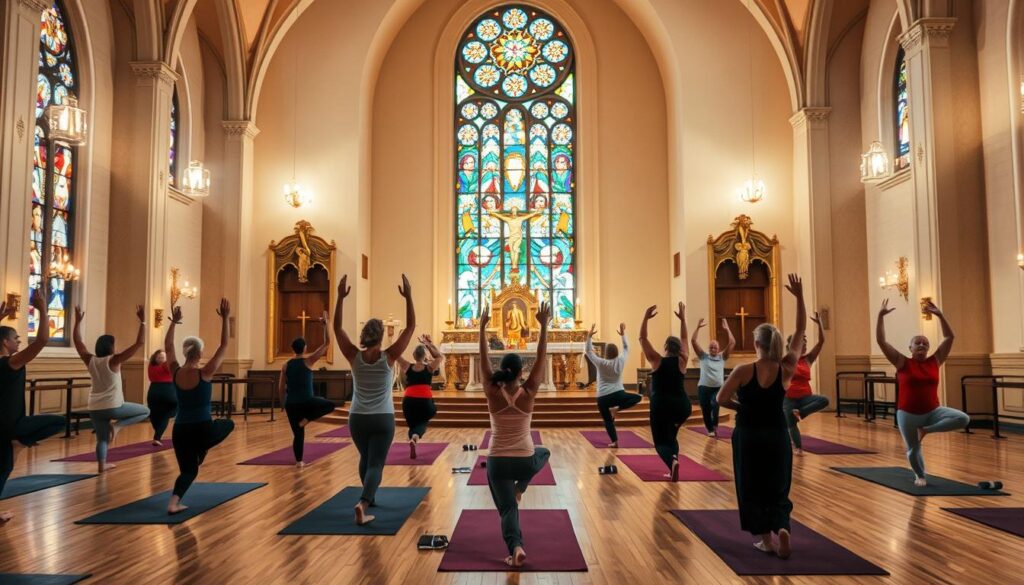
Mind-Body Connection for Spiritual Growth
A theology professor at a Jesuit university shares how her chapel-based classes create sacred space. “Stepping onto the mat becomes an act of surrender,” she explains. Her students pair breathwork with psalms, transforming exercise into embodied prayer.
Adapting Postures for a Faithful Practice
Creative modifications help align physical routines with faith principles:
- Warrior poses reframed as “Courage in Christ” positions
- Sun salutations reimagined as gestures of gratitude
- Resting postures paired with examen reflection
Bridging Meditation Techniques and Catholic Prayer
Many replace traditional mantras with scripture phrases. One retreat leader suggests: “Breathe in ‘Be still,’ exhale ‘and know.'” This approach maintains focus while deepening connection to familiar prayers.
| Traditional Practice | Faith-Aligned Adaptation | Benefit |
|---|---|---|
| Om chanting | Gregorian chant rhythms | Enhances meditative focus |
| Lotus position | Kneeling prayer posture | Supports sacramental awareness |
Real-Life Applications and Personal Stories
Over 60% of practitioners in recent surveys reported increased prayer focus after modifying their routines. Programs like Pietra Fitness offer Christ-centered alternatives, while experienced teachers help navigate cultural concerns. As one participant noted: “My mat has become a meeting place with grace.”
Conclusion
Balancing ancient practices with modern faith requires thoughtful consideration. The debate about movement-based disciplines and Christian teachings continues, with valid concerns on both sides. Some see inherent conflicts, while others find enriched prayer through adapted methods.
Personal discernment remains essential. Seek guidance from spiritual mentors and respect your tradition’s core values. Many discover that modified routines—like pairing breathwork with Scripture—can align physical wellness with spiritual goals.
This conversation reflects larger questions about engaging diverse wisdom traditions. Whether through yoga, walking meditation, or traditional prayer forms, the goal stays consistent: honoring the sacred connection between body and spirit.
Explore practices that resonate with your beliefs. Let curiosity and theological grounding guide you. After all, every stretch toward understanding can become a step closer to divine connection.
FAQ
Can practicing yoga conflict with Catholic teachings?
While some worry about cultural or philosophical differences, many believers find harmony by focusing on intention. Physical postures and breathwork can enhance mindfulness without compromising faith. Always consult clergy if uncertain.
How does meditation in yoga differ from Catholic contemplative prayer?
Both practices seek inner stillness, but their focus varies. Contemplative prayer centers on deepening a relationship with God, while yoga meditation often emphasizes mindfulness. Some blend the two by incorporating Scripture or sacred phrases.
Are there ways to adapt yoga postures for a faith-centered practice?
Absolutely! Many modify poses by integrating prayer intentions or reflecting on themes like gratitude. Viewing movement as a form of worship helps align the body and spirit.
Has the Church officially addressed yoga’s spiritual implications?
No universal statement exists, but leaders like Pope Francis encourage discernment. Prioritize practices that enrich your faith while respecting tradition. Open dialogue with spiritual guides is key.
Can yoga enhance my understanding of Catholic spirituality?
For some, mindful movement fosters a deeper appreciation for embodied faith—like seeing the body as a “temple.” Pairing postures with prayer can create space for reflection and growth.
How do I balance Eastern traditions with my Catholic identity?
Focus on shared values like humility, service, and reverence. Many practitioners separate physical exercise from spiritual rituals, ensuring their core beliefs remain central.