Welcome to your guide exploring Christianity’s rich tapestry of beliefs and practices. For over 2,000 years, followers of Jesus Christ have built communities with distinct ways of worship, leadership, and spiritual life. Today, these traditions form a vibrant mosaic spanning continents and cultures.
You’ll find Roman Catholicism at the heart of this story, with its global community of 1 billion members. But that’s just one thread in a larger fabric. From Eastern Orthodoxy’s ancient rituals to Protestantism’s emphasis on personal faith, each group reflects unique answers to big questions about tradition and authority.
Why did Christianity split into different groups? Events like the Great Schism of 1054 reshaped the religious landscape. Later, the Protestant Reformation sparked new ways of thinking about the church’s role. This article breaks down these milestones without heavy jargon, making complex history easy to grasp.
By the end, you’ll recognize what unites these traditions—and what makes each one special. Whether you’re curious about worship styles or leadership structures, we’ve got you covered. Let’s dive in!
Key Takeaways
- Christianity includes multiple traditions beyond Roman Catholicism
- Major historical events shaped today’s religious landscape
- Differences often center on leadership and interpretation of teachings
- Shared beliefs in Jesus Christ unite all branches
- Worship styles vary from structured rituals to personal practices
Introduction to the Branches of Catholicism
Imagine walking into a global family reunion where distant cousins share core values but express them uniquely. That’s Christianity today—1.3 billion Roman Catholics sit alongside Eastern Orthodox communities and Protestant groups, all tracing their roots to Jesus’ teachings. Scholar Bart D. Ehrman notes this stunning variety: missionaries living in poverty, televangelists reaching millions, and Appalachian preachers handling snakes during worship.
What binds these groups? A belief in Christ’s divinity and the Trinity. Yet interpretations vary widely. Some emphasize ancient traditions like incense-filled liturgies, while others focus on personal Bible study. These differences emerged through centuries of cultural exchanges, political shifts, and theological debates.
You’ll notice patterns in how churches operate. The Roman Catholic structure revolves around papal authority, while Orthodox communities prioritize collective decision-making. Protestant denominations often let local congregations interpret scripture independently. This spectrum of leadership styles shapes everything from holiday celebrations to social outreach programs.
History reveals why a Greek Orthodox service feels worlds apart from a Southern Baptist gathering. The Great Schism of 1054 split Eastern and Western Christianity over doctrinal disputes. Later, the Reformation challenged centralized power structures, birthing new worship formats. Each era added layers to Christianity’s evolving story.
Rather than weakening the faith, this diversity proves its resilience. From Ethiopian Orthodox rituals preserved for millennia to modern megachurches, Christianity adapts while keeping its central message: redemption through Christ’s love.
What is a branch of catholicism?
Have you ever wondered how one faith can take so many forms across the globe? Christianity’s family tree grows through distinct traditions, each shaped by centuries of cultural evolution and theological reflection. These groups share core beliefs in Christ’s teachings but express them through unique practices and structures.
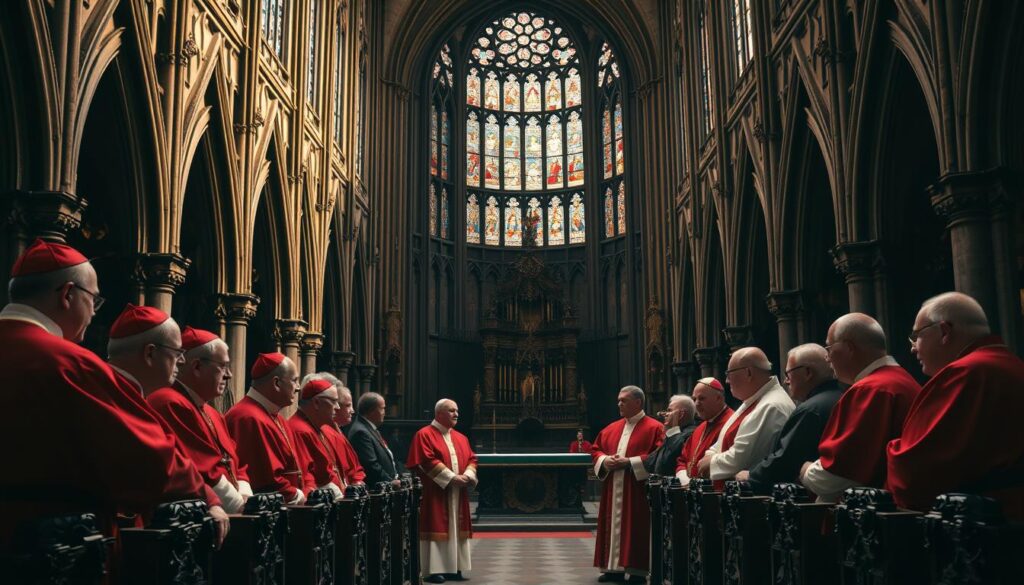
At the heart of differences lies authority. Roman Catholics look to the Pope as their spiritual leader, while Eastern Orthodox communities rely on collective decisions by patriarchs. Protestant groups often empower local congregations to interpret scripture independently. “Our unity exists in Christ,” notes theologian Richard Rohr, “but our expressions of faith reflect humanity’s beautiful complexity.”
Sacraments reveal another layer of diversity. Some traditions celebrate seven sacred rituals, others focus on baptism and communion. These practices aren’t just ceremonies—they’re lived expressions of doctrine that connect believers to divine grace.
Understanding these variations helps you see how Christianity adapts while maintaining its essence. From incense-filled Orthodox liturgies to vibrant Protestant worship services, each tradition offers a unique path to spiritual truth rooted in shared theology.
Historical Perspectives on Catholic Denominations
History’s turning points shaped Christianity like rivers carving canyons. Two earth-shaking events—the Great Schism of 1054 and the Protestant Reformation—created lasting divides still visible today.
The East-West split began with a fiery debate over leadership. Eastern churches rejected the Pope’s authority, arguing that no single leader should hold supreme power. This clash over the filioque clause—a phrase added to the Nicene Creed—still separates Orthodox and Catholic communities after nearly a millennium.
Fast-forward to 1517: Martin Luther’s hammer strikes echo across Europe. His 95 Theses challenged church practices like indulgence sales, declaring salvation came through faith alone. This sparked the Protestant Reformation, birthing new denominations that prioritized personal Bible study over papal decrees.
Earlier splits also left marks. In 451 CE, the Council of Chalcedon divided churches over Christ’s nature. Oriental Orthodox groups favored a unified divine-human essence, creating distinct traditions in Egypt and Ethiopia.
Three key patterns emerge from these upheavals:
- Leadership disputes often triggered lasting divisions
- Reformers sought to “purify” practices they saw as corrupted
- Theological debates about Christ’s nature reshaped worship styles
These historical fractures explain why a Lutheran service feels different from an Armenian Apostolic liturgy. Each tradition carries forward decisions made in critical moments, preserving unique interpretations of shared truths.
Key Features of the Roman Catholic Church
What holds together a spiritual community spanning 1 billion members across 200 nations? The answer lies in distinct structures shaping Catholic identity. This global network thrives through clear leadership models and sacred rituals passed down generations.
Papal Authority and Leadership
The Pope sits at the center of Catholic governance as Bishop of Rome and St. Peter’s successor. Catholics believe his ex cathedra statements on faith carry divine protection from error. This authority flows through cardinals, bishops, and priests—a hierarchy ensuring consistent teachings worldwide.
Significance of Sacraments and Tradition
Seven sacred rituals mark life’s spiritual milestones. From baptism’s cleansing waters to last rites’ comforting oil, these practices connect believers to God’s grace. “The sacraments are actions of the Holy Spirit,” explains the Catechism, “making believers more like Christ.”
| Sacrament | Purpose | Life Stage |
|---|---|---|
| Baptism | Spiritual rebirth | Infancy/adulthood |
| Eucharist | Communion with Christ | First communion |
| Confirmation | Strengthening faith | Adolescence |
| Matrimony | Sacred union | Marriage |
| Holy Orders | Clergy consecration | Vocational call |
Ancient tradition guides modern practice. Writings from Augustine and decisions by councils like Vatican II carry equal weight with Scripture. This blend of old and new keeps the catholic church rooted yet responsive—a living bridge between past and present.
Insights into the Eastern Orthodox Church
Step into an Orthodox church and you’re transported through centuries of spiritual tradition. This ancient Christian community maintains practices unchanged since the Roman Empire’s eastern half. Its 1054 split from Western Christianity created distinct worship styles and leadership models.
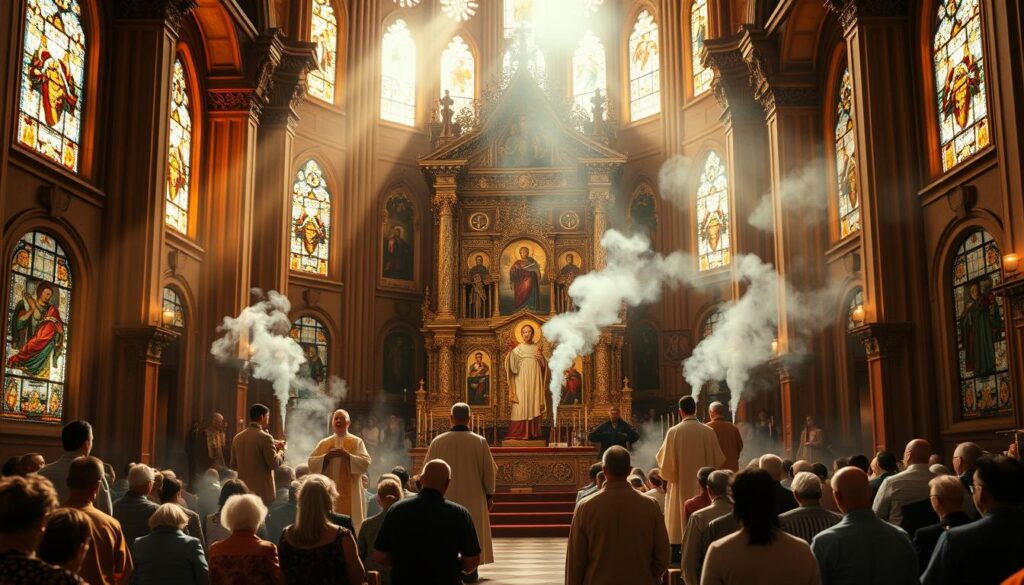
The Eastern Orthodox Church operates through self-governing national bodies. Greek, Russian, and Serbian Orthodox groups share core beliefs while adapting to local cultures. Their unity comes from shared sacraments and reverence for early church councils.
Emphasis on Icons and Liturgy
Golden icons glow in candlelight during Orthodox services. These sacred images aren’t decorations—they’re called “windows into heaven.” Believers kiss icons of Christ or saints, seeking connection with divine grace through physical acts of devotion.
Orthodox liturgy engages all five senses:
- Choirs chant ancient hymns in harmony
- Incense swirls toward vaulted ceilings
- Priests wear jeweled vestments during processions
This immersive worship lasts hours, inviting participants to experience faith through movement and ritual. The Eastern Orthodox approach sees beauty as a pathway to spiritual truth.
The Journey of Theosis and Mysticism
Orthodox spirituality centers on theosis—becoming more like God through grace. This lifelong process combines prayer, sacraments, and ethical living. Mystics practice hesychasm, silent repetition of the Jesus Prayer to achieve inner stillness.
“Theosis transforms our entire being,” explains theologian John Meyendorff. Unlike Western Christianity’s focus on legal concepts of salvation, the Orthodox Church emphasizes mystical union. Believers see salvation as healing humanity’s broken relationship with the divine.
Through these practices, the Eastern Orthodox tradition preserves Christianity’s mystical roots while addressing modern spiritual hunger.
The Protestant Reformation’s Influence on Catholic Denominations
Imagine ideas so powerful they redraw spiritual maps. The 16th-century Protestant Reformation did exactly that, challenging centuries of religious norms. At its core stood two radical principles: sola scriptura (Scripture alone) and sola fide (faith alone). These concepts rewrote rules about who gets to interpret divine truth.
Martin Luther lit the fuse in 1517 by nailing his 95 Theses to a church door. His writings, like The Babylonian Captivity of the Church, argued salvation comes through grace, not human effort. This struck at Catholic teachings about sacraments and good works. Suddenly, every believer could approach God directly—no priest required.
Three seismic shifts reshaped Christianity:
- Bible translation into common languages
- Rejection of papal authority
- Simplified worship services
The Catholic Church responded with its own reforms. Councils clarified doctrines and addressed corruption. Meanwhile, Protestant groups multiplied—Lutherans, Calvinists, Anabaptists—each adding new perspectives.
Today, these debates still matter. Many churches blend elements from both traditions, while others hold firm to distinct identities. As theologian Timothy George observes: “The Reformation isn’t over—it’s still reforming how we understand faith.”
Oriental Orthodoxy: Preserving Early Christian Traditions
Across Africa and the Middle East, ancient Christian communities thrive with practices unchanged for 1,500 years. The Oriental Orthodox churches trace their roots to the earliest followers of Jesus, maintaining theological paths less traveled by mainstream Christianity.
Miaphysite Christology and Cultural Identity
At their core lies miaphysite doctrine—the belief that Christ’s divine and human natures merged into one. This view, solidified after rejecting the 451 CE Council of Chalcedon, sets them apart from other Orthodox churches. “Our faith isn’t divided,” explains Coptic Pope Tawadros II. “Christ acts through a single, unified essence.”
Six vibrant traditions form this family:
- Egypt’s Coptic Church with its lunar calendar
- Ethiopian Orthodoxy’s unique biblical canon
- Armenian Apostolic rituals shaped by national identity
These communities blend deep theology with cultural heritage. Ethiopian services feature drum-led hymns, while Syrian Orthodox liturgy uses Aramaic—Jesus’ native tongue. Through war, persecution, and modernization, they’ve guarded traditions that offer living links to Christianity’s formative centuries.
FAQ
How does the Eastern Orthodox Church differ from the Roman Catholic Church?
The Eastern Orthodox Church emphasizes icons and ancient liturgy in worship, rejects the Pope’s universal authority, and disagrees on the Filioque clause in the Nicene Creed. Unlike Catholics, Orthodox Christians view theosis (union with God) as central to salvation.
What role do sacraments play in Roman Catholic beliefs?
Roman Catholics believe sacraments like Holy Communion and Baptism are visible signs of God’s grace. They use bread and wine transformed into Christ’s body and blood during Mass, a practice rooted in tradition and scripture.
Why did the Protestant Reformation impact Catholic denominations?
Leaders like Martin Luther challenged doctrines such as papal authority and indulgences, leading to new Christian groups. This forced the Catholic Church to address reforms during the Council of Trent while retaining core beliefs and practices.
How does Oriental Orthodoxy preserve early Christian traditions?
Oriental Orthodox churches, like the Coptic and Armenian Apostolic, uphold Miaphysite Christology, which emphasizes Christ’s unified divine-human nature. Their liturgies and customs reflect ancient practices tied to regional cultural identity.
What is the significance of papal authority in Catholicism?
The Pope, as Bishop of Rome, is considered the successor of St. Peter and the Church’s supreme leader. His role includes guiding doctrine, interpreting tradition, and uniting global Catholics under a shared hierarchy.
How do Eastern Orthodox views on salvation differ from Western Christianity?
Eastern Orthodoxy focuses on theosis—a transformative process of becoming like God through prayer and sacraments. This contrasts with Western emphasis on legal concepts like justification, highlighting a mystical approach to salvation.