What determines a person’s eternal destiny? This question lies at the heart of many religious discussions. For those exploring Baptist teachings, the answer centers on faith in Jesus Christ as the foundation of salvation. Unlike some traditions that emphasize rituals or sacraments, Baptist doctrine prioritizes a personal relationship with God through belief.
Different Christian groups interpret salvation uniquely. For example, while Catholics often highlight sacraments like baptism as essential, Baptists view baptism as a symbolic act of obedience rather than a requirement for salvation. This distinction shapes how each group approaches the concept of eternal life.
At its core, Baptist theology teaches that grace alone secures salvation. This means trusting fully in Christ’s sacrifice rather than human effort. Churches within this tradition encourage members to reflect deeply on their spiritual journey, ensuring their convictions align with biblical teachings.
This article will compare these perspectives, clarifying how beliefs about salvation differ across denominations. By examining scripture and doctrine, readers can gain confidence in their understanding of eternal destiny. Let’s explore what it means to live with assurance in one’s faith.
Key Takeaways
- Salvation in Baptist belief relies on faith in Jesus Christ, not rituals.
- Baptism symbolizes commitment but isn’t viewed as necessary for salvation.
- Doctrinal differences exist between Baptist and Catholic views on eternal life.
- Personal assurance comes from aligning beliefs with scripture.
- Understanding these concepts helps clarify one’s spiritual path.
Introduction to the Debate on Salvation
The concept of salvation has sparked diverse interpretations across Christian traditions. At its core, it represents deliverance from sin and reconciliation with God. Yet how this unfolds varies widely among denominations, creating rich discussions about eternal life.
Some groups emphasize sacraments or rituals as pathways to grace. Others, like many Protestant communities, prioritize faith as the cornerstone of redemption. These differences often stem from how scripture is interpreted and applied within each tradition.
Church teachings play a vital role in shaping these perspectives. For instance, congregations may highlight communal practices or personal spiritual commitment. This guidance helps individuals navigate their beliefs while fostering unity among members.
Understanding these variations matters because they influence how people connect with God. A person’s view of salvation can shape their prayers, choices, and sense of purpose. By exploring these doctrines, we gain insight into what unites—and sometimes divides—Christian communities.
This article will unpack these ideas, showing how theological nuances impact daily life. Whether you’re deepening your own faith or learning about others’, clarity on salvation offers meaningful perspective.
Understanding Baptist Beliefs on Salvation
Baptist theology centers on a transformative idea: salvation comes through faith, not human effort. This belief shapes how members approach spirituality, focusing on grace rather than rituals. Churches emphasize Ephesians 2:8-9, which states, “For by grace you have been saved through faith… not a result of works.”
Salvation by Faith Alone
Baptist teachings affirm that trusting in Jesus’ sacrifice is the only path to redemption. Human deeds, while valuable, cannot earn divine favor. This aligns with the belief that everyone inherits original sin but can find forgiveness through Christ’s resurrection.
The Significance of Baptism in Baptist Theology
While baptism holds deep meaning, it’s seen as a public declaration of faith—not a requirement for salvation. Immersion symbolizes dying to old ways and rising anew, reflecting personal commitment. Many congregations encourage this step after someone chooses to follow Christ.
Baptist churches also prioritize sharing their faith with unreached people, viewing evangelism as obedience to Jesus’ teachings. This practice stems from confidence in salvation’s certainty for those who embrace it wholeheartedly.
Exploring Catholic Views on Salvation
Within Catholic teaching, salvation unfolds through a blend of divine grace and human response. The Catholic Church emphasizes that redemption isn’t a solo act of belief but a lifelong journey shaped by sacraments and service. This approach differs from traditions prioritizing faith alone, creating distinct pathways to understanding eternal life.
Faith and Works in Catholic Doctrine
Central to Catholic doctrine is the idea that faith and works together sustain salvation. As James 2:24 states, “A person is justified by works and not by faith alone.” The Council of Trent reinforced this, teaching that God’s grace cooperates with human actions like prayer, charity, and obedience.
Good works—such as feeding the hungry or forgiving others—are seen as fruits of genuine belief. They don’t earn salvation but demonstrate active participation in God’s plan. This contrasts with views where faith exists independently of deeds.
The Role of Sacraments and Baptism
Sacraments serve as vital channels of grace in the Catholic Church. Baptism, for instance, cleanses original sin and initiates membership in the Church. The Catechism describes it as “the gateway to life in the Spirit,” essential for salvation when freely embraced.
Other sacraments like Confirmation or Eucharist further strengthen one’s spiritual journey. These practices anchor believers in a communal faith, linking personal devotion to centuries of tradition. Through them, Catholics believe they receive ongoing strength to live out Christ’s teachings.
Comparing Doctrines: can baptists go to heaven vs. Catholic Salvation
Understanding eternal life requires examining how different traditions interpret spiritual truth. Baptists and Catholics share core Christian values but diverge sharply in how they view salvation’s requirements. These differences shape worship practices, personal devotion, and ultimate hopes for the afterlife.
Key Doctrinal Differences
Baptist teachings anchor salvation in faith alone, viewing Christ’s sacrifice as fully sufficient. Believers receive grace through trust in His resurrection, not rituals. The cross symbolizes redemption’s completion—a gift requiring no added human effort.
In contrast, the Catholic Church teaches that sacraments and good works sustain salvation. Baptism initiates grace, while Eucharist and confession renew it. James 2:24 (“faith without works is dead”) underpins this cooperative model between divine mercy and human action.
| Aspect | Baptist View | Catholic View |
|---|---|---|
| Salvation Basis | Faith in Christ alone | Faith + sacraments/works |
| Cross Symbolism | Completed redemption | Ongoing source of grace |
| Baptism’s Role | Public testimony | Essential for cleansing sin |
Impact on Eternal Destiny
For Baptists, assurance comes from trusting Christ’s promise. Eternal life rests on God’s faithfulness, not human consistency. This fosters confidence but requires personal introspection about genuine belief.
Catholic doctrine emphasizes spiritual growth through sacraments. While heaven remains the goal, believers participate in grace through Mass and confession. This path offers communal support but can create uncertainty about final judgment.
Both traditions affirm Christ’s centrality yet navigate salvation’s mystery differently. Whether through simple trust or sacramental rhythm, each seeks to honor the cross’s transformative power.
Baptism Practices in Baptist and Catholic Churches
Baptism stands as one of Christianity’s most visible acts of faith, yet its form and purpose vary widely. While both traditions value this sacred rite, their methods reflect distinct theological priorities.
Infant Baptism vs. Believer’s Baptism
In Catholic practice, infants receive baptism through water poured over the head. This act symbolizes cleansing from original sin and entry into the church community. Parents and godparents pledge to nurture the child’s faith until they can affirm it personally.
Baptists, however, reserve baptism for those old enough to consciously choose faith. Full immersion in water mirrors Jesus’ burial and resurrection, representing a believer’s spiritual rebirth. As one pastor explains, “We rise from the water to walk in newness of life.”
The reason for these differences lies in scriptural interpretation. Catholics cite early church traditions supporting infant baptism, while Baptists emphasize New Testament examples of adult believers being baptized. Both agree the act itself doesn’t grant salvation but serves as an opportunity baptized individuals take to publicly declare their trust in Christ.
These practices shape how each community welcomes members. For Catholics, baptism initiates a lifelong journey. For Baptists, it celebrates a personal decision made with understanding and joy.
Perspectives on Faith and Works
The role of faith and works in salvation remains a defining difference between Christian traditions. While scripture provides foundational guidance, interpretations vary widely—shaping how believers live out their convictions.

Scriptural Interpretations
Baptist teachings heavily emphasize Ephesians 2:8-9: “For by grace you have been saved through faith… not your own doing.” This passage anchors their belief that salvation comes solely through divine grace, not human effort. Harmony Baptist Church notes, “Works flow from faith but never replace it as salvation’s foundation.”
Tradition Versus Written Word
Catholic doctrine blends scripture with centuries of church tradition. Practices like sacraments and charitable acts are seen as extensions of biblical teachings. As one theologian explains, “Tradition helps us apply ancient truths to modern life without diluting God’s word.”
| Aspect | Baptist Emphasis | Catholic Emphasis |
|---|---|---|
| Salvation Basis | Faith alone | Faith + sacraments |
| Scriptural Role | Sole authority | Guided by tradition |
| Works’ Purpose | Evidence of faith | Means of grace |
These differences shape church life profoundly. Baptist members often focus on personal Bible study, while Catholics participate in structured rituals. Both paths aim to honor God—but through distinct expressions of devotion.
Heaven, Hell, and the Afterlife in Comparison
Eternal destiny remains one of humanity’s most profound questions. For Christians, beliefs about what follows death shape how they live today. While Baptists and Catholics agree on Christ’s role in salvation, their views diverge sharply on the journey beyond earthly life.
Resurrection and Immediate Glory
Baptist teachings emphasize a direct path to heaven for believers. They hold that physical resurrection occurs at Christ’s return, with the faithful receiving glorified bodies. As one pastor notes, “Eternal life begins the moment we accept Jesus—death is just a doorway.” Scripture like John 11:25-26 underpins this hope, framing resurrection as victory over mortality.
Purification and Final Judgment
Catholic theology introduces purgatory—a temporary state for souls needing purification before entering God’s presence. This concept, rooted in traditions like 2 Maccabees 12:45 and 1 Corinthians 3:15, emphasizes spiritual readiness. At the final judgment, all face accountability for their deeds, reinforcing the interplay of grace and human cooperation.
| Aspect | Baptist View | Catholic View |
|---|---|---|
| Afterlife Journey | Immediate resurrection | Purgatory possible |
| Judgment Timing | At death | Final judgment |
| Eternal Destiny | Fixed after death | Influenced by prayers |
These differences shape daily practices. Baptists focus on sharing their faith to offer others assurance of salvation. Catholics often pray for departed loved ones, trusting in communal support beyond death. Both traditions, however, unite in urging believers to live with eternity in mind.
Impact of Salvation Doctrines on Church Life
How a church approaches salvation deeply influences its priorities and actions. At Harmony Baptist Church, the belief that faith alone secures redemption fuels passionate outreach. “Our mission flows from knowing eternity hinges on accepting Christ,” explains Pastor Michael. This conviction drives weekly evangelism training for members and neighborhood service projects.
The Role of Evangelism and Mission
Reaching unreached people isn’t optional for congregations emphasizing personal conversion. Harmony Baptist organizes annual mission trips and partners with global ministries. Their strategy? Equip every member to share their faith through relatable stories, not theological debates.
Contrast this with traditions prioritizing sacraments. These churches often focus on nurturing existing communities through education and liturgy. Both models aim to honor God but reflect distinct understandings of how salvation works.
| Denomination | Evangelism Focus | Member Involvement |
|---|---|---|
| Baptist | Personal testimony | Volunteer-led outreach |
| Catholic | Sacramental witness | Service integrated with Mass |
These approaches shape church unity differently. While Baptists rally around shared urgency, sacramental traditions build cohesion through ritual. Both remind believers that spiritual truths should transform how they engage their neighborhoods.
Cultural Influences on Denominational Beliefs
Cultural landscapes often mold religious identities as much as theology does. For Baptists and Catholics, historical events and social values have shaped worship styles, leadership structures, and even interpretations of scripture. These influences reveal how faith communities adapt while preserving core truths.
Historical Developments and Social Context
The Protestant Reformation deeply shaped Baptist emphasis on individual faith. As reformers rejected papal authority, early Baptists championed local church autonomy. This focus resonated in America’s frontier culture, where self-reliance became a way of life.
Catholic practices, however, evolved amid European monarchies and global missions. The Council of Trent (1545–1563) standardized sacraments to unify diverse regions. Over time, this created a blend of universal rituals and local traditions—like Mexican Day of the Dead altars or Filipino Simbang Gabi masses.
| Aspect | Baptist Influences | Catholic Influences |
|---|---|---|
| Historical Events | Reformation, U.S. revivalism | Council of Trent, colonialism |
| Social Factors | Frontier individualism | Global cultural integration |
| Scriptural Interpretation | Personal conversion focus | Communal tradition emphasis |
Social contexts also affect how churches engage their communities. Urban Baptist congregations might prioritize outreach programs, while rural ones emphasize close-knit fellowship. Similarly, Catholic parishes in immigrant-heavy areas often blend native customs with liturgy, reflecting the people they serve.
These adaptations show the dynamic nature of faith. While doctrines remain rooted, expressions evolve to meet cultural needs—proving that spirituality thrives when it speaks to the heart of daily life.
Scriptural Foundations in Baptist and Catholic Traditions
Scripture shapes every Christian tradition, but interpretations create distinct spiritual landscapes. Baptists and Catholics both revere the Bible yet apply its teachings differently. These approaches influence everything from worship styles to personal convictions about salvation.
Core Biblical Passages and Their Interpretations
Baptists frequently turn to Ephesians 2:8-9: “By grace you have been saved through faith… not from works.” This passage anchors their belief in faith as the sole requirement for redemption. Harmony Baptist Church teaches, “Scripture makes clear—no human effort can match God’s gift.”
Catholics emphasize James 2:24: “A person is justified by works and not by faith alone.” Paired with Jesus’ call to “feed my sheep” (John 21:17), this shapes their view of sacraments and service as expressions of grace.
The Influence of Scripture on Daily Practice
For Baptists, personal Bible study fuels assurance. Many carry pocket scriptures to reflect on God’s promises. This habit reinforces a know sure understanding of eternal security.
Catholic liturgy weaves scripture into sacramental life. Readings during Mass connect original sin remedies—like baptism—to daily choices. A priest might explain, “We don’t just read the Word; we live it through sacred rituals.”
| Denomination | Key Passage | Practical Impact |
|---|---|---|
| Baptist | Ephesians 2:8-9 | Personal devotion focus |
| Catholic | James 2:24 | Sacramental obedience |
Comparing Church Structures and Leadership Styles
Church governance models shape how communities worship, grow, and make decisions. While both Baptists and Catholics share Christian foundations, their organizational approaches reflect distinct theological priorities. These differences influence everything from local ministry strategies to global outreach.
Hierarchical versus Congregational Models
The Catholic Church operates under a well-defined hierarchy. Authority flows from the Pope to cardinals, bishops, and priests. Each position held carries specific responsibilities, like overseeing dioceses or administering sacraments. This structure ensures uniformity in doctrine and practice across global parishes.
Baptist congregations, however, prioritize local autonomy. Members elect pastors and deacons, who collaborate with volunteer committees. As one leader notes, “Our church belongs to the people—not a distant institution.” Decisions about budgets or ministries require majority votes, fostering shared ownership among members.
| Aspect | Catholic Model | Baptist Model |
|---|---|---|
| Highest Authority | Pope | Local Congregation |
| Local Leadership | Appointed Priests | Elected Pastors |
| Decision-Making | Centralized | Collaborative |
These structures impact daily church life. Catholics rely on trained clergy to interpret teachings, while Baptists encourage members to study scripture independently. The position held by leaders in each tradition reflects their view of spiritual authority—either inherited through ordination or granted by the congregation.
Ultimately, both models aim to nurture faith. Whether through top-down guidance or grassroots participation, each seeks to honor God while serving others in their unique context.
Debating the Role of Good Works in Achieving Salvation
The relationship between faith and action sparks lively discussions among Christians. While most agree both matter, how they connect to salvation divides traditions. This debate isn’t new—it stretches back to early church councils and reformations.
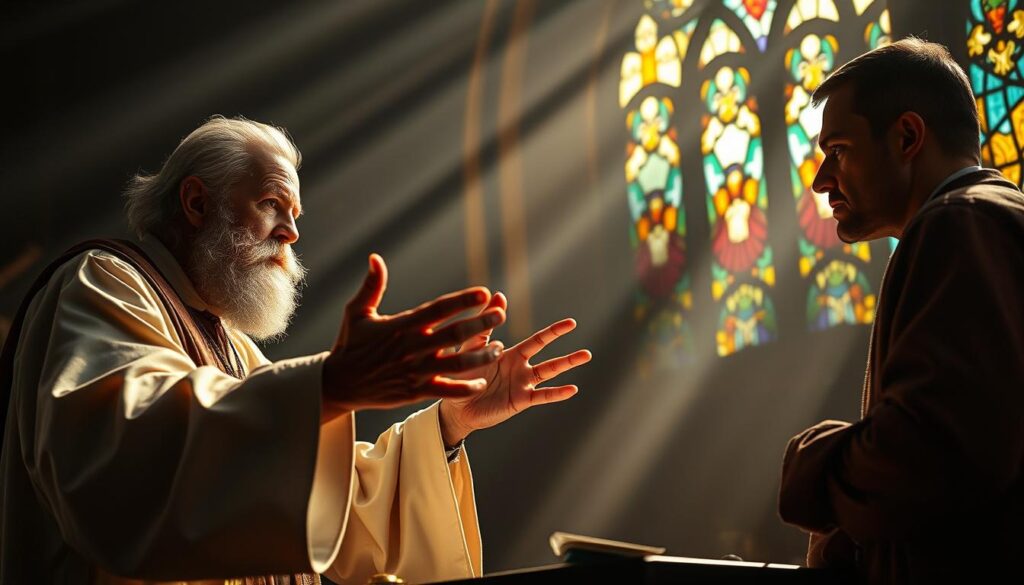
Balancing Faith and Works in Christian Life
Baptist teachings highlight grace alone as the basis for redemption. Ephesians 2:8-9 states salvation is “not of works,” emphasizing God’s gift over human effort. Good deeds, while important, flow from gratitude rather than earning favor. One pastor summarizes: “Works are the fruit, not the root, of salvation.”
Catholic doctrine presents a collaborative approach. The Council of Trent taught that faith and works together sustain grace. James 2:24’s call to “show faith by works” informs practices like sacraments and charity. For Catholics, these actions nurture spiritual growth and reflect active partnership with God.
| Aspect | Baptist View | Catholic View |
|---|---|---|
| Salvation Basis | Faith through grace | Faith + sacraments/works |
| Works’ Purpose | Evidence of faith | Means of grace |
| Scriptural Focus | Ephesians 2:8-9 | James 2:24 |
These differences shape daily spirituality. Baptist communities often prioritize personal Bible study and evangelism. Catholics integrate Mass attendance and service projects into routines. Both paths aim to honor God but through distinct expressions of devotion.
Understanding this debate helps believers navigate their spiritual journey. Whether emphasizing faith’s sufficiency or sacramental rhythms, the goal remains eternal connection with the divine.
The Problem of Christian Tribalism and Exclusivism
Unity within Christianity often faces challenges when denominational identity overshadows shared faith. Stories like a Baptist church denying communion to visitors from other traditions reveal how tribal mindsets fracture spiritual kinship. This “us versus them” mentality contradicts Jesus’ prayer for believers to “be one” (John 17:21).
Understanding Denominational Identity
While distinct beliefs matter, rigid exclusivity harms relationships. A pastor once joked, “Why did the Baptist cross the road? To start a new church—because the other one wasn’t ‘scriptural’ enough.” Humor masks deeper issues: when churches prioritize minor differences over Christ’s core message, they alienate others seeking authentic community.
Effects on Unity Within the Christian Community
Overemphasis on labels stifles collaboration. For instance, some congregations avoid joint outreach projects over doctrinal disagreements, leaving people in need underserved. This fractures the Church’s witness and contradicts its mission to reflect God’s inclusive nature.
Yet hope exists. Churches embracing diversity often thrive. One multi-denominational food bank coordinator shared, “When we focus on serving others, our differences become strengths.” Such efforts remind believers that unity isn’t uniformity—it’s celebrating shared life in Christ while learning from varied perspectives.
Addressing Common Misconceptions and Criticisms
Misunderstandings about salvation often create unnecessary divides between Christian traditions. Let’s clarify key points where confusion arises, focusing on Baptist and Catholic teachings. By separating myth from fact, we foster mutual respect while honoring scriptural truths.
Clarifying Doctrinal Errors and Misunderstandings
A common myth suggests Baptists disregard baptism entirely. In reality, they view it as a symbol of faith—not a requirement for salvation. As one pastor explains, “We baptize believers to celebrate their choice, not to earn God’s favor.”
Critics sometimes claim Catholics “work their way to heaven.” However, Catholic doctrine teaches sacraments channel grace from Jesus Christ, not replace His sacrifice. Good works express gratitude, not payment for sin.
| Misconception | Baptist Clarification | Catholic Clarification |
|---|---|---|
| Baptism saves | Symbolic act of obedience | Cleanses original sin |
| Works earn salvation | Fruit of faith | Response to grace |
| Purgatory = second chance | N/A | Purification before heaven |
Questions about death and judgment also spark debate. Baptists emphasize immediate resurrection for believers, while Catholics see purgatory as preparation. Neither view denies Christ’s centrality—they simply highlight different aspects of divine mercy.
Differences in practice don’t invalidate anyone else’s journey. Whether through sacraments or personal faith, both traditions seek to honor God’s plan for others. As scripture reminds us, “There is one body and one Spirit” (Ephesians 4:4).
The Value of Interdenominational Dialogue for Unity
Interdenominational dialogue opens doors to shared understanding and growth. When Christians from different traditions listen with humility, they discover common ground beneath theological differences. This process builds bridges, transforming potential conflicts into opportunities for collaboration.
Learning from Diverse Practices
Engaging with others’ worship styles deepens appreciation for God’s multifaceted nature. For example, joint prayer services between Baptist and Catholic congregations often reveal unexpected harmonies. One pastor noted, “Our distinct practices don’t divide—they showcase the Spirit’s creativity.”
Such exchanges enrich personal spiritual life. Attending a liturgy or Bible study outside your tradition can spark fresh insights. It also reminds believers that no single church holds a monopoly on truth.
- Shared missions: Food drives or disaster relief unite denominations around practical love.
- Respectful debates: Discussing baptism or communion fosters mutual learning.
- Cultural exchange: Blending hymns or rituals celebrates global faith expressions.
These efforts strengthen the church’s witness. A unified community reflects Christ’s heart for others, drawing skeptics toward grace. As believers prioritize relationship over rivalry, they embody the gospel’s transformative nature.
Start small: Visit a neighboring congregation’s event. You might find your spiritual life enriched—and the Body of Christ strengthened.
Conclusion
Eternal hope unites believers across denominational lines despite differing practices. While Baptists emphasize faith alone for salvation, Catholics integrate sacraments and spiritual growth. Both traditions, however, anchor their trust in Jesus Christ’s sacrifice as the bridge to heaven.
Personal conviction and communal worship each play vital roles. For some, assurance comes through scripture study. Others find strength in shared rituals. These approaches reflect diverse ways to honor the same divine promise.
Dialogue between traditions fosters mutual respect. Exploring different perspectives deepens understanding without compromising core beliefs. After all, eternity isn’t earned—it’s received through grace.
May this exploration inspire curiosity, not division. Whether through baptism as an opportunity baptized believers embrace or quiet prayer, what matters most is a heart turned toward redemption. Together, let’s celebrate the shared hope of dwelling forever in God’s presence.
FAQ
Is baptism necessary for salvation according to Baptist beliefs?
No. Baptists emphasize salvation through faith in Jesus Christ alone, not rituals. While baptism symbolizes commitment, it’s seen as an act of obedience rather than a requirement for eternal life.
How do Catholic teachings on faith and works differ from Baptist views?
The Catholic Church teaches that faith and good works together contribute to salvation. Baptists, however, stress salvation by grace through faith alone, viewing works as a response to grace, not a means to earn it.
Why don’t Baptists baptize infants?
Believer’s baptism reflects a personal decision to follow Christ. Since infants cannot consciously profess faith, Baptists reserve the practice for those who openly declare trust in Jesus.
Do Baptists believe in eternal security after salvation?
Many affirm “once saved, always saved,” trusting God’s promise to secure believers. However, lifestyles inconsistent with faith may raise questions about the genuineness of one’s commitment.
How do views of the afterlife differ between Baptists and Catholics?
Baptists teach immediate eternity in heaven or hell after death. Catholics include purgatory—a temporary state of purification—before heaven, which Baptists reject as unbiblical.
What biblical passages shape Baptist views on salvation?
Ephesians 2:8-9 and Romans 10:9-10 are central. These highlight grace through faith, not works, and confession of Christ as Lord for salvation.
How does evangelism align with Baptist doctrines?
Sharing the gospel is vital, as Baptists believe Christ’s sacrifice is the only path to heaven. This drives missions to reach those unaware of His message.
Are good works irrelevant in Baptist theology?
Not at all! Works demonstrate genuine faith but don’t earn salvation. They’re seen as fruit of a transformed heart, not a ticket to eternity.
Why do some criticize Baptist exclusivity on salvation?
Claims that only faith in Christ saves can seem narrow. However, Baptists argue this reflects Jesus’ own words in John 14:6 about being “the way, the truth, and the life.”
Can interdenominational dialogue improve unity among Christians?
Yes. Open conversations foster mutual respect, even amid differences. Understanding varied practices helps reduce division while keeping core truths intact.