For many families, witnessing a young person participate in their initial Eucharistic celebration stands as one of the most cherished moments in their spiritual growth. This sacred tradition symbolizes a child’s growing connection to their religious community and deeper understanding of shared beliefs.
The ceremony typically occurs when children reach the age of reason, usually around seven or eight years old. During this event, they publicly affirm their commitment to values taught through family and faith education. Preparation often involves months of learning through catechism classes, where participants explore the symbolism behind rituals and prayers.
Families frequently mark the occasion with intimate gatherings and meaningful tokens of support. White garments worn during the service represent purity, while gifts like rosaries or religious keepsakes serve as lasting reminders of this pivotal day. These customs help create lasting memories while reinforcing the individual’s role within their spiritual community.
Key Takeaways
- Celebrates a child’s first reception of the Eucharist in Catholic tradition
- Requires preparation through religious education and spiritual reflection
- Features symbolic white clothing representing spiritual purity
- Often accompanied by family celebrations and meaningful gift exchanges
- Strengthens connection to faith community through shared rituals
The Sacred Meaning Behind First Holy Communion
At the heart of this sacred rite lies a connection to Jesus’ final meal with his followers. The moment when a child receives the Eucharist for the first time echoes events described in scripture, creating a bridge between ancient traditions and modern faith practices.
Historical Roots in Scripture
The practice traces back to the Last Supper, where Jesus shared bread and wine with his disciples. According to Luke 22:19-20, he called these elements his “body given for you” and “blood poured out for many.” This act established what would become a central ritual for believers worldwide.
| Element | Last Supper | Modern Practice |
|---|---|---|
| Bread | Unleavened loaf | Consecrated host |
| Wine | Shared cup | Sacramental chalice |
| Significance | Memorial of sacrifice | Living remembrance |
Spiritual Sustenance Today
Through transubstantiation, ordinary bread and wine become sacred symbols of divine love. The Catechism describes this sacrament as the “source and summit of Christian life”, emphasizing its role in spiritual growth. Participants don’t just remember history – they join a chain of faith stretching back generations.
Families often find deeper meaning in the ceremony when understanding its biblical roots. The shared meal creates unity, reminding everyone present of their connection to something greater than themselves.
Preparing for the Sacrament: Steps and Traditions
Families embark on a structured journey to prepare young members for their inaugural participation in the Eucharist. This process blends formal education with personal spiritual growth, creating a foundation for lifelong faith practices.
Spiritual Preparation and Catechism Classes
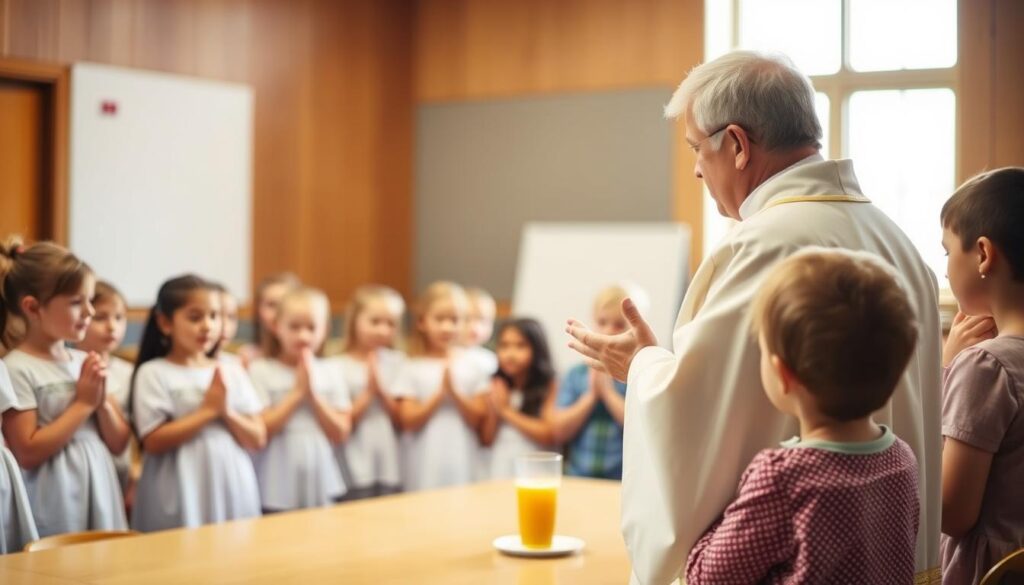
Weekly faith education sessions form the backbone of preparation. These gatherings typically run from September through May, aligning with the school calendar. Children explore core beliefs through interactive lessons and age-appropriate activities.
Parents partner with instructors to reinforce concepts at home. Discussions about sacramental symbolism help young participants grasp the difference between everyday meals and sacred rituals. Many programs include hands-on experiences like mock ceremonies to build comfort and understanding.
| Class Element | Purpose | Frequency |
|---|---|---|
| Scripture Study | Build biblical knowledge | Weekly |
| Prayer Practice | Develop spiritual habits | Daily |
| Sacrament Review | Clarify ritual meanings | Monthly |
The Importance of Confession and State of Grace
Before receiving the Eucharist, children complete their first reconciliation. This sacrament emphasizes personal accountability and spiritual renewal. Instructors gently guide participants through the process, explaining how forgiveness strengthens their connection to divine love.
The age requirement traces back to 1910 church reforms, making the sacrament accessible to younger believers. Local parishes adapt national guidelines to meet community needs while maintaining essential traditions. Most programs conclude with spring ceremonies that unite families in celebration and reflection.
Traditions and Celebrations: From Mass to Family Gatherings
The day a child participates in their inaugural Eucharistic celebration weaves together time-honored customs and heartfelt community connections. From the carefully chosen garments to the shared meals afterward, every detail carries layers of meaning that transcend generations.
Ceremonial Elements and Symbolism
White garments dominate the ceremony, reflecting spiritual renewal. Girls often wear lace-trimmed dresses with floral headpieces, while boys sport crisp suits or traditional cultural attire. As they approach the altar, many carry candles symbolizing their growing faith – a moment families frequently preserve through photography.
Churches enhance the sacred atmosphere with fresh lilies or roses near the cross. Religious medals gifted by godparents often glint beneath chapel lights during the service. These visual elements transform the space into a living tapestry of belief and heritage.
Cultural Variations in Communal Celebrations
Global interpretations add vibrant diversity to this milestone. In Mexico and Argentina, boys march in miniature military regalia with gold-trimmed sashes. German and Spanish girls process in bridal-inspired gowns, their veils fluttering like whispered prayers.
Post-ceremony gatherings burst with regional flavors. Filipino families might serve bibingka rice cakes after December services, while Italian relatives toast with spumante. Whether hosting backyard barbecues or banquet hall receptions, these celebrations unite extended family and friends in joyful affirmation of a child’s spiritual journey.
Planning Your First Communion Event: Attire, Gift Ideas, and More
Creating memorable moments for this spiritual milestone involves thoughtful preparation. Balancing tradition with personal touches ensures the day remains focused on its sacred purpose while celebrating the individual’s journey.
Choosing the Right Dress and Suit
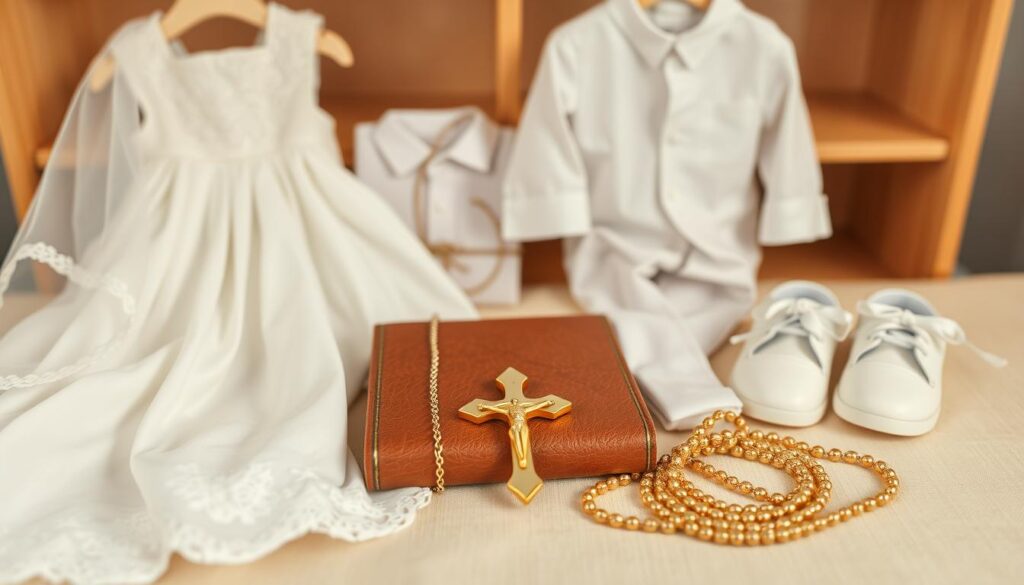
White garments carry deep symbolism, reflecting spiritual renewal. Girls often select dresses with delicate lace or embroidered accents, while boys opt for tailored suits in classic colors. Comfort remains key – itchy fabrics or tight collars can distract from the ceremony’s meaning.
Many families incorporate heirloom pieces like a grandmother’s veil or a cousin’s tie. This connects generations while honoring tradition. “The most important thing is that they’re prepared spiritually,” reminds one parish guide, emphasizing substance over style.
Thoughtful Gift Ideas and Card Messages
Meaningful presents support ongoing faith development. Consider items that grow with the child:
| Gift Type | Traditional Options | Modern Alternatives |
|---|---|---|
| Religious Items | Engraved rosaries | Interactive prayer journals |
| Keepsakes | Scripture plaques | Personalized blessing rings |
| Financial Gifts | Savings bonds | Donation to faith-based charity |
Card messages should celebrate both the person and their commitment. Try: “May this special time strengthen your connection to God’s love every day.” Pair written blessings with practical gifts that encourage daily spiritual practice at home.
Deep Dive into catholic 1st communion Rituals
The journey toward spiritual milestones involves both physical actions and heartfelt intentions. This combination shines through in the careful preparation and execution of sacred rituals surrounding the Eucharistic celebration.
Understanding the Rituals of Receiving the Eucharist
Approaching the altar requires specific etiquette taught during preparation. Children learn to walk with folded hands while joining the congregation in song, creating a unified movement toward spiritual nourishment.
The pivotal moment comes when the priest presents the consecrated host, declaring: “The body of Christ.” A confident “Amen” affirms the child’s belief in this sacred mystery. Many families practice this response using unconsecrated bread at home to build comfort.
Incorporating Parish and Family Traditions
Local customs add unique flavors to this universal sacrament. Some parishes offer both bread and wine, while others focus solely on the host. These variations highlight different theological emphases within shared beliefs.
Family participation often includes:
- Special blessings from grandparents before the ceremony
- Heirloom prayer books carried to the altar
- Post-Mass gatherings featuring faith-themed decorations
Photography sessions after services help preserve memories of this transformative experience. These images often become treasured reminders of a child’s growing connection to their spiritual community through shared sacred meals.
Conclusion
Marking a pivotal step in spiritual growth, this sacred event bridges generations through shared belief. Young participants, typically aged seven or eight, prepare through months of learning and reflection. Their journey culminates in a ceremony where they join their faith community in receiving the Eucharist for the first time.
Families and parishes come together to honor this milestone. The shared experience reinforces a child’s role within their spiritual family. Lessons about commitment and belonging take root during preparation, shaping lifelong connections to tradition.
Memories created through white garments, special gifts, and family gatherings become touchstones of faith. These moments remind everyone present of love’s enduring power within their community. May each participant carry this sacred connection forward, guided by the light of shared beliefs.
FAQ
What is the significance of receiving the Eucharist for the first time?
This sacrament marks a child’s initiation into full participation in the Church. It symbolizes their acceptance of Jesus’ body and blood, reinforcing their bond with the faith community.
How do families typically prepare for this sacrament?
Preparation often includes catechism classes, attending Mass regularly, and participating in confession. Many parishes require children to complete a faith formation program before the ceremony.
Are there specific clothing traditions for the occasion?
Girls often wear white dresses or gowns, while boys may wear suits or dress shirts with ties. These outfits symbolize purity and reverence, though styles can vary based on cultural or regional customs.
What are meaningful gift ideas for this milestone?
Popular choices include personalized Bibles, rosaries, crosses, or religious jewelry. Keepsakes like engraved photo frames or faith-themed books from brands like Hallmark or Eternal Gift also make heartfelt presents.
How do parishes incorporate family traditions into the ceremony?
Some churches allow families to present symbolic items, like candles or prayer books, during Mass. Others invite relatives to participate in readings or blessings, blending personal rituals with the official liturgy.
Why is confession important before receiving the Eucharist?
Catholics believe being in a state of grace—free from serious sin—is essential to receiving the sacrament. Confession helps children spiritually prepare and reflect on their commitment to faith.
How do cultural celebrations differ for this event?
In some communities, large family feasts follow the Mass, while others host smaller gatherings. For example, Hispanic families might include padrinos (godparents) in rituals, highlighting cultural heritage alongside religious practices.