For centuries, spiritual traditions have guided people toward moral growth. One framework that shaped Western thought comes from early Christian teachings. Ancient monks identified patterns of harmful behavior blocking personal and spiritual progress. Their insights evolved into a system now known as the seven deadly sins.
Theologians like Tertullian of Carthage first organized these concepts in the 3rd century. Later, Pope Gregory I refined the list to its current form. These vices—pride, envy, wrath, sloth, avarice, gluttony, and lust—form the acronym PEWSAGL. Unlike smaller mistakes, they’re seen as roots of deeper moral struggles.
Why do these ideas still matter today? They help us recognize habits that damage relationships and self-awareness. The framework isn’t about shame—it’s a tool for reflection. By understanding their history, we see how timeless these challenges are across cultures and eras.
Key Takeaways
- Originated from 3rd-century Christian monastic teachings
- Refined by Pope Gregory I to seven core vices
- Acronym PEWSAGL helps remember the list
- Considered “deadly” due to their ripple effects
- Focus on root causes rather than isolated actions
- Remain relevant for modern self-reflection
- Emphasize growth over condemnation
Introduction to the catholic 7 deadly sins
Ancient thinkers saw patterns in human struggles that still resonate today. Their teachings reveal how certain behaviors create barriers to inner peace. This wisdom helps us understand why some choices feel spiritually draining.
Defining the Concept and Historical Roots
The Latin term mortalis—meaning “deadly”—shapes this framework. Unlike minor mistakes, these actions sever our connection to divine love. Early believers noticed how pride or envy could poison relationships over time.
Scriptural roots go back to John’s letters, distinguishing soul-killing actions from forgivable errors. Church leaders organized these observations into a guide for spiritual health. Their work shows how timeless struggles with greed or anger truly are.
Purpose and Overview of the Ultimate Guide
This system isn’t about guilt—it’s a mirror for self-awareness. By spotting harmful patterns early, we can choose healthier paths. Each vice acts like tangled weeds choking personal growth.
You’ll discover how ancient insights apply to modern life. From workplace envy to digital-age greed, these principles help navigate today’s challenges. Think of them as warning signs pointing toward freedom, not shackles of shame.
Historical Evolution of the Deadly Sins in Catholic Tradition
Shaping moral guidance took centuries of refinement by brilliant thinkers. Their collaborative efforts transformed scattered ideas into a cohesive spiritual roadmap. This journey reveals how wisdom builds across generations.
Early Church Influences and Tertullian’s Role
Tertullian of Carthage sparked the conversation in the 3rd century. As the first Latin Christian writer, he identified seven core struggles blocking divine connection. His work became a cornerstone for later theologians.
Fourth-century monk Evagrius Ponticus expanded this framework. His Praktikos outlined eight destructive thoughts—from greed to vanity. These “logismoi” described mental patterns needing purification through prayer and discipline.
St. Thomas Aquinas and Pope Gregory the Great’s Contributions
Pope Gregory I streamlined Evagrius’ list in 590 CE. He merged pride with vanity, paired sorrow with laziness, and added envy. This created the seven-vice system still recognized today.
Centuries later, St. Thomas Aquinas deepened the analysis. His Summa Theologica ranked sins by severity and explored pride’s four expressions. This work bridged ancient wisdom with medieval philosophy.
| Thinker | Contribution | Time Period |
|---|---|---|
| Tertullian | Established seven as symbolic number | 3rd century |
| Evagrius | Identified eight wicked thoughts | 4th century |
| Gregory I | Finalized seven-vice structure | 6th century |
| Thomas Aquinas | Analyzed sin hierarchies | 13th century |
Three spiritual stages guided this evolution: purging harmful habits, embracing divine light, and achieving unity with God. Each thinker added layers to this transformative process.
Exploring Each Sin: A Closer Look at the Vices
Human struggles with moral failings reveal surprising patterns across time. Let’s examine how these timeless challenges manifest in daily life and why they demand thoughtful attention.

An In-Depth Look at Pride and Its Forms
Pride, called the “queen of vices,” twists healthy self-respect into superiority. St. Thomas Aquinas outlined four dangerous expressions:
| Form of Pride | Description |
|---|---|
| False Perfection | Claiming unearned virtues |
| Self-Made Success | Ignoring divine help in achievements |
| Entitlement | Demanding special treatment |
| Hoarding Gifts | Refusing to share talents |
“Pride leads to every other vice – it’s the fuel for envy and the shield against growth.”
Understanding Six Core Challenges
Envy makes others’ joy feel like personal failure. It whispers: “Their success diminishes yours.” Wrath often masks deep hurt – as one thinker noted, “Anger shows we still care enough to feel wounded.”
Sloth isn’t laziness but spiritual neglect. Imagine scrolling endlessly while ignoring loved ones. Avarice traps people in endless wanting – always chasing newer phones or bigger houses.
Gluttony distorts nourishment into obsession. It includes eating when bored or refusing shared meals. Lust reduces sacred connection to mere appetite, like preferring fantasy over real relationships.
Each vice starts as natural desire before spiraling out of balance. Recognizing these patterns helps redirect energy toward healthier choices.
The Theological Significance of Sin
Moral choices shape more than our actions—they mold our spiritual DNA. This framework helps us grasp why some behaviors carry heavier consequences than others. Let’s explore how ancient wisdom distinguishes between temporary stumbles and soul-deep patterns.
Mortal vs. Venial Sins in Doctrine
Early texts like 1 John 5:16-17 reveal two types of missteps. Mortal sins rupture our bond with divine love, like cutting a lifeline. They demand sacramental healing through confession. Venial sins, though harmful, resemble scratches rather than fractures—they weaken but don’t destroy grace’s flow.
| Sin Type | Consequence | Resolution | Key Verse |
|---|---|---|---|
| Mortal | Severs divine connection | Sacramental confession | 1 John 5:16 |
| Venial | Weakens spiritual vitality | Personal repentance | 1 John 5:17 |
Spiritual Growth and Divine Union
The journey unfolds in three phases:
- Purgation: Removing clutter from the soul’s doorstep
- Illumination: Embracing divine light in daily choices
- Union: Dancing in rhythm with sacred purpose
“God became human so humans could become godlike.” — Athanasius
This path transforms rule-following into sacred partnership. When our will aligns with divine love, even ordinary lives radiate extraordinary purpose. The goal isn’t perfection—it’s harmony that heals both hearts and communities.
Comparing Catholic and Protestant Perspectives on Sin
How communities address human imperfection reveals core beliefs about divine relationships. While sharing common roots, different branches of Christianity developed distinct approaches to understanding wrongdoing. These differences shape everything from daily practices to eternal hopes.
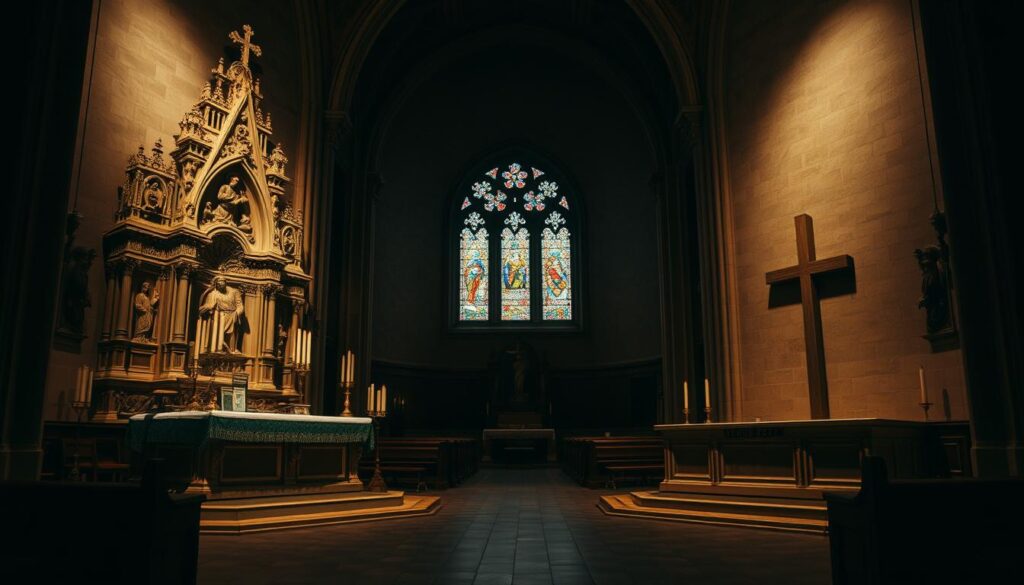
Scripture Versus Sacred Tradition
Many reformers questioned the list of seven vices, noting Proverbs 6:16-19 highlights different concerns. This biblical passage names six things God hates—like “hands shedding innocent blood”—plus a seventh He detests. Critics argue church teachings sometimes prioritize human systems over direct scriptural guidance.
Key contrasts emerge in these areas:
| Focus | Catholic View | Protestant Emphasis |
|---|---|---|
| Sin Hierarchy | Mortal vs venial | All sins equally separate from God |
| Salvation Path | Sacraments + faith | Faith alone |
| Human Condition | Wounded but redeemable | Totally depraved |
One Lutheran pastor explained: “We don’t avoid certain sins to earn heaven—we follow Christ because He already earned it for us.” This captures the Protestant focus on grace over human effort.
Debates about hell and forgiveness reveal deeper questions. Can anyone truly “balance the scales” through good deeds? Or does divine mercy rewrite the equation entirely? These perspectives continue shaping worship styles, counseling methods, and community priorities today.
Modern Relevance of the catholic 7 deadly sins
Ancient wisdom meets digital age struggles in surprising ways. Our fast-paced world amplifies age-old temptations through new channels, creating fresh obstacles for personal growth. Let’s explore how timeless principles help navigate modern complexities.

Transforming Everyday Choices
Social platforms often turn self-expression into vanity competitions. Likes become currency, while curated feeds feed comparison. This environment breeds dissatisfaction, making authentic connections harder to cultivate.
Endless shopping apps and targeted ads fuel constant wanting. Many chase temporary highs through purchases, mistaking accumulation for fulfillment. The solution lies in practicing gratitude for what we already possess.
| Modern Challenge | Healthy Alternative |
|---|---|
| Obsessive scrolling | Mindful presence |
| Online arguments | Compassionate dialogue |
| Binge-watching | Creative rest |
“The devices meant to connect us often become walls between souls.”
True nourishment extends beyond the body. Overloading on news or entertainment can starve the spirit. Setting boundaries with technology creates space for reflection and meaningful conversations.
By recognizing these patterns, we reclaim power over our attention. Small daily choices—like pausing before reacting online—build resilience against cultural currents. The path forward combines ancient wisdom with modern self-awareness.
Guidance on Sin, Grace, and Confession in Catholic Teaching
True healing begins when we stop hiding our wounds. The sacrament of confession offers a structured path to address harmful patterns, blending accountability with compassion. Unlike modern self-help trends, this practice emphasizes both personal responsibility and divine mercy working together.
Central to this process is examination of conscience—a reflective pause to spot recurring struggles. Individuals then bring these insights to confession, where grace transforms shame into empowerment. The steps are simple but profound: contrition, vocal acknowledgment, penance, and absolution.
Grace operates like spiritual oxygen, reviving withered virtues. As Augustine noted, “Our hearts remain restless until they rest in divine love.” This unearned gift helps redirect energy from destructive habits to life-giving choices.
Confession isn’t about humiliation—it’s a courageous act of hope. By naming our shadows aloud, we reclaim power over them. Regular practice builds resilience against old patterns, creating space for joy and connection to flourish.
The journey from vice to virtue hinges on one truth: growth happens through honest reflection, not perfection. Each confession becomes a stepping stone toward deeper self-awareness and lasting freedom.
FAQ
How did the list of seven vices originate in Church teachings?
Early theologians like Tertullian and Pope Gregory I shaped the framework of these moral struggles. St. Thomas Aquinas later refined their ideas, linking them to virtues like humility and charity. This helped believers identify behaviors that disrupt spiritual harmony.
Why is pride often called the "root" of other vices?
Pride distorts self-awareness by placing personal desires above divine guidance. It fuels actions that alienate individuals from grace, making it harder to embrace humility—a cornerstone of spiritual growth in many traditions.
Are sins like gluttony only about food?
No. While overeating is one form, gluttony broadly refers to excessive consumption—whether material goods, entertainment, or even attention. It reflects a lack of moderation, which can hinder one’s ability to focus on deeper purpose.
How do modern believers address struggles with envy or wrath?
Many turn to prayer, reflection, and acts of service to redirect negative emotions. Recognizing envy as discontent or wrath as unchecked anger allows individuals to replace harmful patterns with compassion and patience.
What’s the difference between mortal and venial sins?
Mortal sins sever one’s relationship with divine grace through deliberate, grave actions. Venial sins weaken spiritual bonds but don’t fully break them. Both require introspection, though mortal sins typically demand sacramental reconciliation.
Can practicing virtues counteract these vices?
Absolutely. Cultivating virtues like generosity (against greed) or kindness (against wrath) creates habits that align with spiritual ideals. This proactive approach helps individuals move closer to inner peace and communal harmony.
How do Protestant views on sin differ from traditional teachings?
Protestant traditions often emphasize biblical teachings over structured lists, focusing on faith and grace rather than specific categorizations. However, both perspectives share a goal: guiding followers toward ethical living and redemption.