For centuries, ordained ministers have shaped spiritual lives through unwavering service. These leaders commit to a lifelong journey rooted in faith, guiding communities with compassion and wisdom. Their role blends ancient traditions with modern challenges, creating a bridge between timeless teachings and contemporary needs.
Over 415,000 individuals worldwide have embraced this sacred vocation, according to 2014 records. They serve in diverse ways—leading worship, offering counsel, and strengthening communal bonds. Their work extends beyond rituals, touching education, social justice, and personal spiritual growth.
The path to this calling involves years of study and deep reflection. Aspiring clergy undergo rigorous training in theology, philosophy, and pastoral care. Ordination ceremonies mark their formal entry into this respected role, celebrated through meaningful rituals passed down through generations.
Key Takeaways
- Global spiritual leaders serve over 415,000 communities worldwide
- Roles include guiding worship, education, and social outreach
- Historical roots trace back to early Christian traditions
- Training combines academic study with hands-on ministry experience
- Sacred ceremonies formalize commitment to lifelong service
- Daily responsibilities balance ancient practices with modern needs
- Theological foundations emphasize compassion and community building
Overview of the Catholic Priesthood
Ordained ministers hold a special position rooted in sacramental commitment. Through holy orders, they dedicate themselves to guiding communities while preserving ancient traditions. This calling differs from the shared spiritual responsibilities of all believers, creating two distinct pathways of faith.
https://www.youtube.com/watch?v=34pSVZxRW8M
Core Concepts Explained
The term ministerial priesthood refers specifically to those who receive sacramental ordination. While bishops oversee regional communities, most ordained leaders work directly in local parishes. These roles trace their authority through an unbroken chain of consecration dating back to early Christian leaders.
Here’s a quick comparison of major traditions:
| Tradition | Celibacy Rule | Ordination Eligibility |
|---|---|---|
| Latin Church | Required | Unmarried men |
| Eastern Churches | Optional | Married or celibate men |
From Ancient Roots to Modern Practice
Early Christian communities developed structured leadership as they expanded. Bishops began appointing assistants to lead worship in multiple locations, evolving into today’s parish system. This historical continuity ensures each generation of leaders remains connected to foundational teachings.
Understanding these distinctions helps clarify how sacred service adapts across cultures while maintaining core principles. Whether leading rituals or fostering community bonds, ordained ministers balance tradition with contemporary needs.
Role and Responsibilities of a Catholic Church Priest
Guiding souls through life’s milestones forms the core mission of dedicated priests. Their work weaves together sacred traditions with the ever-changing needs of modern believers. From sunrise prayers to late-night emergencies, their vocation demands both spiritual depth and practical flexibility.
Daily Duties and Sacramental Functions
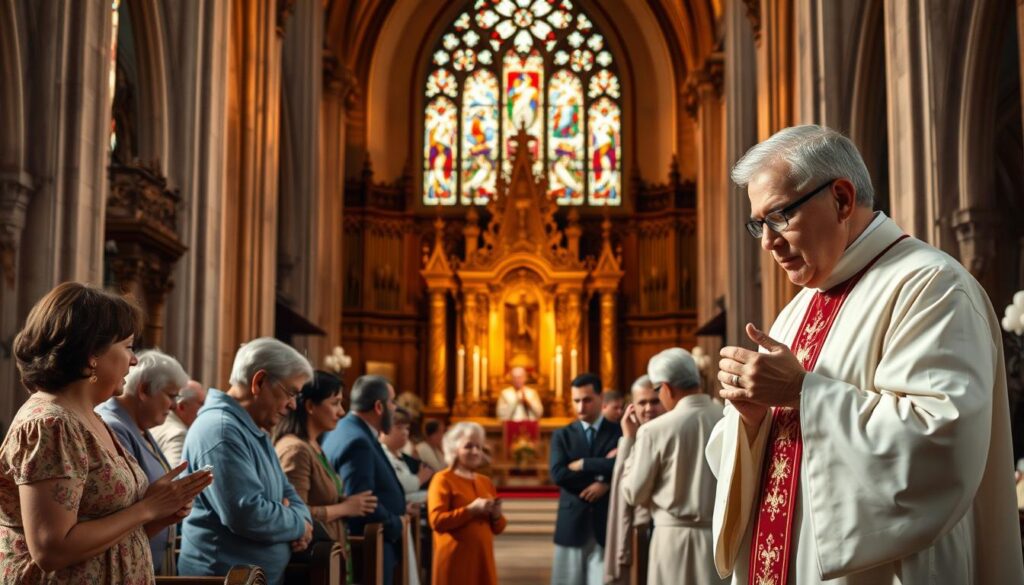
Priests typically begin their day long before the first worship service. Morning hours often involve prayer and preparing meaningful homilies. The rhythm of sacraments structures their schedule:
| Sacrament | Frequency | Community Impact |
|---|---|---|
| Eucharist | Daily | Nourishes spiritual growth |
| Reconciliation | Weekly | Promotes healing |
| Baptism/Marriage | Seasonal | Marks life transitions |
“A heart rooted in prayer becomes a wellspring of hope for others.”
This philosophy guides their approach to sacred rituals. Evening might find them comforting grieving families or blessing homes. They adapt practices to local customs while maintaining theological consistency.
Pastoral Leadership and Community Engagement
Beyond altars, priests walk alongside their communities. Hospital visits and neighborhood gatherings fill their calendars. They collaborate with youth groups and social initiatives, fostering connections through shared goals.
As spiritual counselors, they help people navigate challenges with compassion. Their open-door policy strengthens trust. Whether advising couples or coordinating food drives, priests meet individuals where they are.
Understanding Priesthood and Ordination
The path to spiritual leadership reaches its pinnacle through sacred ceremonies that bridge human dedication with divine calling. These time-honored practices transform prepared individuals into authorized guides for their communities, carrying forward traditions that shape lives.
The Rite of Ordination Explained
At the heart of this journey lies a powerful moment during Holy Mass. Candidates kneel before their community after years of preparation. A bishop asks solemn questions about their readiness to serve. Each responds with heartfelt promises to uphold sacred duties and follow spiritual guidance.
The ritual’s most moving moment comes when leaders place hands on the candidate’s head. This ancient gesture symbolizes the passing of spiritual authority from one generation to the next. “Through this act,” explains a liturgical scholar, “they become living links in an unbroken chain stretching back centuries.”
The Eucharistic and Liturgical Role
Newly ordained leaders gain the ability to perform central rituals of faith. Celebrating sacred meals stands as their primary responsibility, along with guiding personal milestones through other key ceremonies. Their hands become instruments for healing and blessing.
This transformation isn’t temporary. Once received, the spiritual imprint remains forever. Even those who later step back from active service retain this connection, though their daily roles may change.
“Ordination isn’t about power—it’s about becoming a living bridge between heaven and earth.”
These leaders balance ancient patterns with modern needs. Whether presiding over joyful celebrations or comforting the grieving, they embody timeless values through contemporary service.
Educational Pathways to Priesthood
Aspiring priests begin a transformative journey that shapes both mind and spirit. This path requires years of study, blending academic rigor with personal growth. Programs typically span six to eight years, reflecting the sacred commitment to lifelong service.
Seminary Formation and Theological Studies
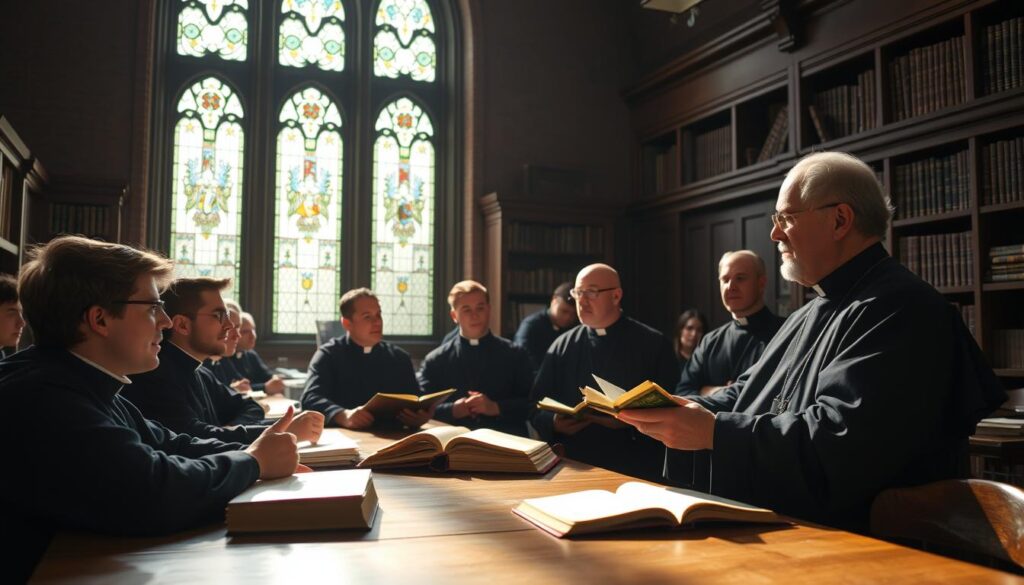
In the U.S., candidates first complete undergraduate philosophy courses. They then enter graduate-level seminaries for four to five years of theology training. Most earn a Master of Divinity degree, mastering scripture analysis and pastoral leadership.
Many programs now start with a spiritual formation year. This helps men discern their calling before tackling academic demands. As one seminary director notes, “We cultivate hearts before filling heads.”
| Region | Program Length | Key Components | Degree |
|---|---|---|---|
| United States | 6-8 years | Philosophy + Theology | Master of Divinity |
| Germany/Austria | 6 years | Integrated Theology | Magister Theologiae |
European systems take a different approach. German and Austrian candidates pursue five-year theology degrees combined with intensive spiritual preparation. Both models emphasize human development and community engagement alongside classroom learning.
The Catholic University of America exemplifies this holistic training. Its programs balance scholarly research with hands-on ministry experience. Graduates leave ready to address modern challenges while honoring timeless traditions.
This extensive preparation ensures priests dedicate their time wisely. Through study and reflection, they gain tools to guide communities with compassion and insight.
Celibacy and Clerical Discipline in the Catholic Church
Many wonder why spiritual leaders in certain traditions remain unmarried. This practice traces back to medieval Europe, where concerns about inheritance and church property shaped lasting policies. “The requirement isn’t dogma but a human-made rule,” notes religious historian Jason Berry, highlighting its adaptable nature.
Theological Rationale and Historical Context
Celibacy became standard in the Latin Church through gradual reforms. Leaders sought to prevent clergy dynasties and ensure full devotion to community service. This discipline allows ministers to mirror Jesus’ complete commitment to spiritual work rather than family life.
Modern teachings frame this choice as a sacrifice for higher purpose. As one scholar explains: “Undivided hearts can better serve diverse needs—from comforting mourners to mentoring youth.” The practice fosters unique bonds between leaders and their congregations.
| Tradition | Celibacy Requirement | Theological Emphasis |
|---|---|---|
| Latin Church | Mandatory | Imitation of Christ’s singlehood |
| Eastern Churches | Optional | Marriage as sacred covenant |
While some debate this rule today, its historical roots remain significant. Medieval documents reveal practical motivations—like keeping land under church control—alongside spiritual ideals. This blend of earthly and divine concerns still shapes discussions about religious leadership.
Understanding these layers helps explain why many communities value celibacy. It represents both ancient wisdom and ongoing dedication to serving others first. As traditions evolve, this discipline continues sparking thoughtful dialogue about faith in action.
Theology Behind the Priesthood
At the heart of spiritual leadership lies a sacred bond between ancient traditions and divine purpose. This connection traces back to biblical roots, where the role of offering sacrifices united communities with God. Modern ministers carry forward this legacy through their unique sacramental mission.
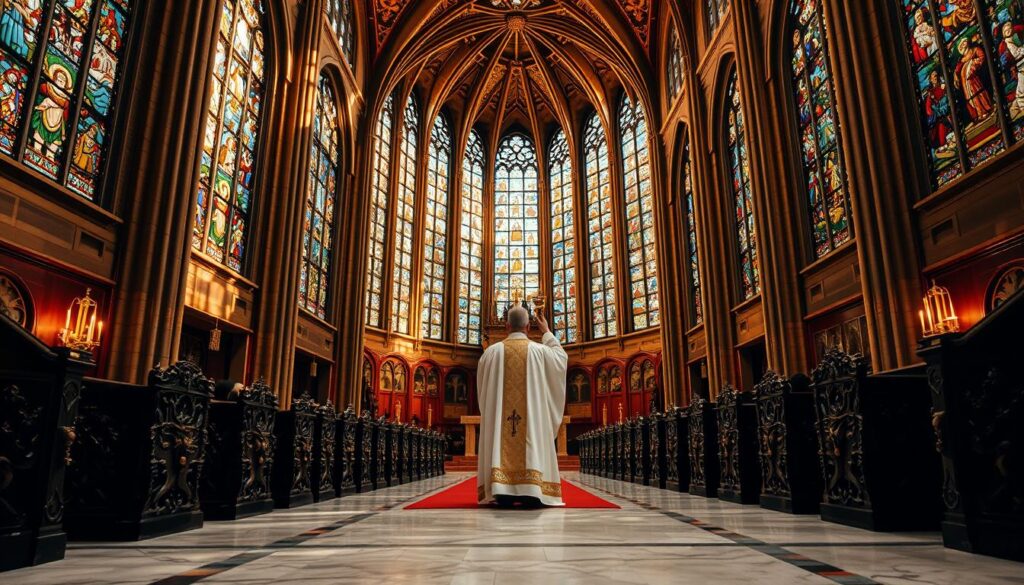
The faith community teaches that ordained leaders act “in persona Christi” during worship services. This Latin phrase means they become living channels of Christ’s eternal priesthood. Their hands bless, anoint, and consecrate—just as holy figures did millennia ago.
Central to this theology is the belief that Jesus fulfilled both priestly and sacrificial roles. As the Lamb of God, his crucifixion became the ultimate offering for the world’s redemption. Today’s ministers re-present this singular event through sacred rituals, not as repetition but as timeless renewal.
“Only Christ is the true priest, the others being only his ministers,”
Transubstantiation forms the miraculous core of this practice. When ordained leaders speak consecration words, bread and wine transform spiritually while keeping physical appearances. This doctrine underscores their role as bridges between heaven and earth.
Such profound understanding shapes daily ministry. Whether leading prayer or guiding seekers, these servants approach tasks with reverence. Their work continues a story written across centuries—one sacrifice, one blessing, one soul at a time.
Canon Law and Its Impact on Priestly Ministry
Spiritual governance thrives through structured frameworks that guide sacred vocations. Canon law forms the backbone of ministerial life, blending timeless principles with practical adaptations. This legal system ensures consistency across communities while respecting cultural diversity.
Overview of Canonical Regulations
The Code of Canon Law outlines every aspect of clerical service. Specific sections (232-264) detail formation requirements, from academic studies to spiritual growth. These rules emphasize ordination as a permanent calling, not just a career choice.
Modern Legal Reforms and Interpretations
Recent updates address contemporary challenges without compromising core values. Bishops now adapt certain guidelines to local needs, like integrating technology into seminary training. Such changes help clergy connect with digital-native congregations effectively.
By balancing tradition with innovation, canon law remains vital for nurturing devoted leaders. It quietly shapes daily ministry while safeguarding the sacred nature of spiritual service.
FAQ
What is the historical origin of the priesthood in the Catholic tradition?
The role traces back to Jesus’ apostles, who were tasked with spreading His teachings. Over centuries, structured leadership emerged, with formal ordination practices developing by the 2nd century.
What are the primary responsibilities of ordained ministers?
They lead sacraments like Mass and confession, provide pastoral care, and guide communities in faith. Their duties also include teaching, counseling, and addressing spiritual needs.
Why is the rite of ordination significant?
This sacred ceremony involves the laying on of hands and prayer, symbolizing the Holy Spirit’s empowerment. It marks a lifelong commitment to serving the Church and its members.
How does clerical celibacy align with theological principles?
Rooted in apostolic traditions, celibacy emphasizes undivided devotion to spiritual service. Early church leaders like St. Paul highlighted its value for focused ministry.
What role does seminary education play in formation?
Seminaries provide theological training, spiritual development, and pastoral skills. Programs often include philosophy, scripture study, and hands-on ministry experience.
How does Canon Law influence daily ministry?
It outlines guidelines for sacraments, governance, and discipline. Recent reforms, like those in Pope Francis’ Traditionis Custodes, adapt practices to modern needs.
What theological concepts define the priesthood?
The role is seen as acting in persona Christi (in the person of Christ), enabling sacraments. It emphasizes humility, service, and fostering communal spiritual growth.
How do Eastern Catholic Churches differ in practices?
Some allow married men to be ordained, following early Christian traditions. However, bishops must still observe celibacy, maintaining unity with global Church teachings.
What is the Eucharistic role during liturgy?
Ordained ministers consecrate bread and wine, central to Mass. They lead worship, ensuring rituals align with sacred traditions and congregational participation.
How do modern clergy balance diverse duties?
Many prioritize prayer while managing administrative tasks, outreach, and crisis support. Flexibility and collaboration with lay volunteers help address community needs.