How has one of humanity’s oldest institutions grown in a rapidly changing world? Over the past 100 years, the global Catholic community has tripled in size, surging from 291 million in 1910 to over 1.4 billion followers today. This growth isn’t just about raw numbers—it’s a story of cultural endurance and geographic transformation.
Recent analysis shows Catholics now make up 16% of Earth’s total population. What’s remarkable? This percentage has stayed steady for generations, even as the world’s population exploded. The faith maintains its position as the largest single Christian group, representing half of all Christians worldwide.
The Vatican’s 2023 report reveals a 1.15% annual growth rate, adding millions of new members yearly. But this expansion isn’t evenly spread. Once concentrated in Europe, the faith now thrives across six continents, with dramatic increases in Africa and Asia reshaping its global footprint.
Understanding these patterns helps us see beyond headlines. From Pew Research’s demographic studies to the Vatican’s meticulous records, reliable data shows how religious institutions adapt to modern challenges. These statistics don’t just reflect belief—they illuminate cultural shifts affecting billions.
Key Takeaways
- Catholic membership grew 380% since 1910, outpacing global population growth
- 1 in 6 people worldwide now identify with this faith tradition
- 2023 saw 16 million new members added through births and conversions
- Africa and Asia drive modern growth, while Europe’s share declines
- Demographic methods ensure accurate tracking across generations
Global Overview of catholicism numbers
The world’s religious map has redrawn itself dramatically since 1910. Where once European cities dominated the landscape of belief, vibrant communities now thrive across continents. This transformation reveals surprising patterns in how people practice their faith today.
Historical Growth Trends and Shifts
Europe’s share of the global Catholic population plummeted from 65% to 24% in a century. Meanwhile, Latin America and the Caribbean surged from 24% to 39% of all followers. Sub-Saharan Africa witnessed the most explosive growth – multiplying its community 170 times over since 1910.
North America’s story shows steady expansion. From 15 million adherents in 1910, the region now counts 89 million. While impressive, this growth pales next to Africa’s meteoric rise from 1 million to 171 million believers.
Modern Global Distribution Patterns
Three key regions now shape the faith’s geography:
- The Americas host 47.8% of all followers
- Brazil alone accounts for 13% of the world total
- Africa and Asia combined represent 24%
This redistribution reflects changing birth rates and migration patterns. Urbanization in developing nations and economic opportunities in the Global North continue reshaping where people worship. The Church now faces both challenges and opportunities in serving communities separated by oceans yet connected through technology.
Regional Trends & Demographic Shifts
Global religious landscapes are transforming at unprecedented speeds. While traditional strongholds evolve, new centers of spiritual vitality emerge with surprising momentum.
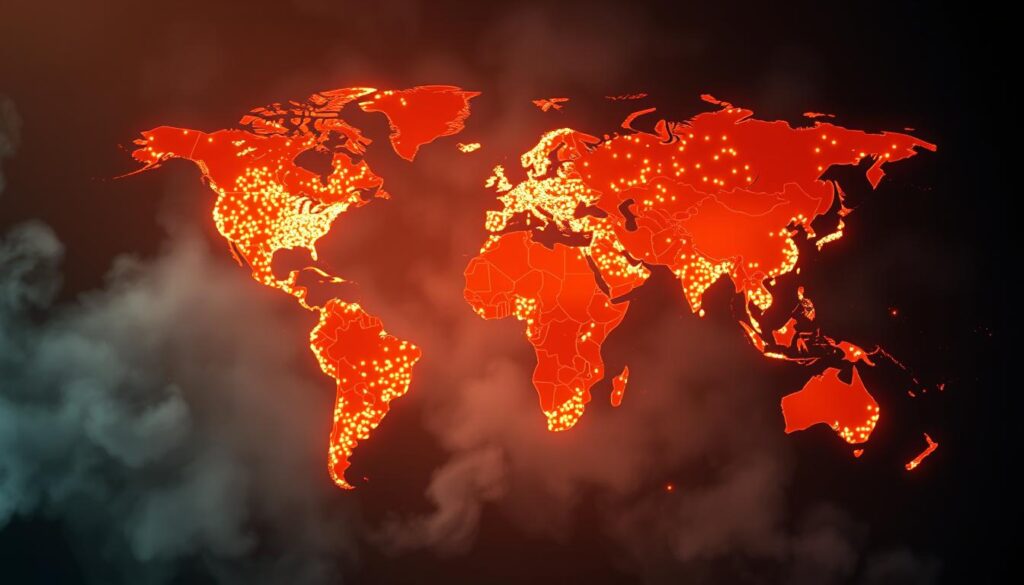
Latin America and Sub-Saharan Africa: Engines of Change
Africa’s Catholic community grew faster than any other region last year. A 3.31% surge added 9 million believers between 2022-2023. The Democratic Republic of Congo now leads with 55 million followers – more Catholics than Spain and France combined.
Latin America maintains its stronghold with 47.8% of the world total. Brazil alone accounts for 13% of global adherents. “We’re witnessing a southward shift in religious influence,” notes a Vatican demographic analyst. “By 2040, 3 in 4 Catholics may live below the equator.”
| Region | Catholic Population | Annual Growth |
|---|---|---|
| Sub-Saharan Africa | 281 million | +3.31% |
| Latin America | 618 million | +0.9% |
| Asia-Pacific | 154 million | +0.6% |
Asia’s steady growth reveals surprising hotspots. The Philippines hosts 93 million Catholics, while India’s community expanded to 23 million. Urbanization and youth demographics drive these patterns – African Catholics average 19 years old, compared to 40 in Europe.
Local leadership adaptations fuel this expansion. Nigeria now trains more priests annually than Italy. From São Paulo to Kinshasa, grassroots initiatives blend traditional practices with modern outreach strategies.
Catholic Church in the United States: A Closer Look
America’s religious landscape tells a story of constant change and cultural blending. The Catholic Church here mirrors this evolution, balancing historic roots with modern diversity.
https://www.youtube.com/watch?v=HC-ItniAeys
Immigration and Demographic Influences
New arrivals fuel much of America’s religious vitality. Over half of migrants to the U.S. identify as Catholic—a lifeline for parishes facing membership shifts. Nearly 30% of the country’s 75 million Catholics were born elsewhere.
| Immigrant Origin | Percentage |
|---|---|
| Latin America & Caribbean | 76% |
| Asia-Pacific | 10% |
| Europe | 10% |
This influx creates vibrant multicultural communities. Hispanic Catholics now make up 33% of followers, reshaping worship styles and parish programs. Bilingual Masses and cultural festivals have become common in major cities.
Impact of Religious Switching on U.S. Catholicism
While immigration boosts numbers, belief changes create challenges. One in ten American adults grew up Catholic but left the faith. Only 2% of adults convert to Catholicism yearly.
Younger generations show shifting patterns. Many cite disagreements on social issues or seek more flexible spiritual options. Yet the population remains stable due to immigrant families and higher birth rates among Hispanic members.
Urban parishes adapt through community outreach and multilingual services. As one Chicago priest notes: “Our strength lies in embracing difference while maintaining core traditions.” This balancing act defines American Catholicism’s next chapter.
Statistical Insights on Clergy and Vocational Trends
Behind every thriving spiritual community stand dedicated leaders shaping its future. Recent reports reveal fascinating patterns in religious vocations that mirror broader societal changes.
Bishops, Priests, and the Role of Deacons
The total number of bishops grew 1.5% from 2022-2023, reaching 5,410 worldwide. Priest numbers saw modest 0.3% growth, with Africa contributing 28% of new ordinations. Permanent deacons now exceed 49,000 globally – a role gaining importance in parish operations.
Fluctuations in Religious Orders and Sisters
Women’s religious communities tell a different story. The Annuarium Statisticum Ecclesiae shows sisters decreasing by 1.3% last year. However, younger orders in Asia and Africa buck this trend, blending traditional vows with modern social work.
Decline in Seminarian Numbers and Future Leadership
Seminarian enrollment dropped 3.6% globally since 2022. Europe faces the sharpest decline at 14%, while Africa maintains steady vocational interest. “This shift demands creative leadership development,” notes a Vatican official. “We’re training lay ministers to complement clergy roles.”
These trends highlight both challenges and adaptations. As the Catholic population grows, evolving leadership models aim to serve communities effectively. The coming decade will test how tradition and innovation balance in global religious practice.
FAQ
How has the global Catholic population changed recently?
The global Catholic population grew by 1.1% from 2022 to 2023, reaching 1.39 billion. While Africa and Asia saw significant growth, Europe experienced a decline. Latin America remains home to nearly 40% of Catholics worldwide, according to the Vatican’s Central Office of Church Statistics.
Which regions are driving Catholic growth today?
Sub-Saharan Africa and Latin America are key growth engines. Africa’s Catholic population surged by 2.7% in 2023, while Latin America maintains the largest regional share. Southeast Asia also shows steady increases, contrasting with shrinking numbers in Europe and North America.
What factors shape Catholicism in the United States?
Immigration from Latin America and religious switching significantly impact U.S. Catholicism. While Hispanic Catholics boost numbers, nearly 13% of American adults now identify as former Catholics. This dynamic creates both growth opportunities and challenges for dioceses nationwide.
Are there enough priests to serve Catholic communities?
Priest numbers grew globally by 0.3% to 462,388 in 2023, but distribution varies widely. Africa saw a 3.6% increase, while Europe faced shortages. The ratio of priests to Catholics remains uneven, with 1 priest per 1,773 Catholics in Africa versus 1 per 1,746 in the Americas.
Why are seminarian numbers declining?
Global seminarians decreased by 1.7% from 2022 to 2023, with Europe and the Americas seeing the sharpest drops. Cultural shifts, vocational challenges, and changing societal values contribute to this trend, raising questions about future Church leadership pipelines.
How reliable are Catholic Church statistics?
The Vatican’s Central Office of Church Statistics publishes annual data in the Annuarium Statisticum Ecclesiae, considered the most authoritative source. However, regional reporting variations and census methodology differences can affect precision, particularly in areas with limited infrastructure.