Welcome to a journey through one of Christianity’s most cherished observances. This springtime celebration marks the central mystery of Christian belief – the resurrection story that has shaped spiritual practices for millennia. Across continents, believers unite through rituals that blend ancient roots with modern expressions of devotion.
The season begins with Lent, a 40-day period of reflection leading to Holy Week. These sacred days culminate in vibrant services where candles pierce darkness and choirs proclaim victory over despair. For many, this spiritual cycle offers renewed purpose and connection to timeless truths.
From sunrise vigils to family meals, customs vary yet share common threads. Some communities create intricate flower carpets while others exchange blessed foods. These traditions all point to a shared hope – the triumph of life that echoes through generations.
Key Takeaways
- 50-day observance period from Resurrection Sunday to Pentecost
- Global practices rooted in Scripture and early Church history
- Lenten preparation enhances Easter’s joyful significance
- Cultural adaptations enrich universal core traditions
- Resurrection symbolism appears in art, music, and rituals
Whether you’re deepening your faith or exploring spiritual heritage, these enduring practices invite personal reflection. The following sections will illuminate how centuries-old customs continue to inspire modern believers.
Introduction to Catholic Easter
Spring blossoms with more than flowers—it heralds a sacred season of renewal. For millions, this period marks a spiritual journey filled with ancient symbols and modern meaning. The Church celebrates these 50 days as a unified experience, blending reflection with radiant hope.
Overview of the Easter Season
This extended celebration stretches from Resurrection Sunday to Pentecost. Unlike ordinary times on the calendar, these weeks overflow with symbolic rituals. Communities worldwide share special meals, light candles, and sing hymns passed down through centuries.
| Period | Duration | Key Focus |
|---|---|---|
| Lenten Preparation | 40 days | Reflection & sacrifice |
| Easter Season | 50 days | Resurrection joy |
| Pentecost | 1 day | Holy Spirit’s arrival |
Significance in the Catholic Faith
At its core, this season reaffirms central beliefs about life’s ultimate triumph. The resurrection story forms the bedrock of Christian faith, offering hope that transcends earthly struggles. Many find renewed purpose through rituals connecting past promises to present realities.
Families often create memory-rich traditions during these weeks. From blessing baskets of food to attending sunrise services, each custom strengthens community bonds. These practices remind participants that light always follows darkness—both in spring’s arrival and life’s challenges.
The History and Spiritual Significance of the Resurrection
Ancient texts reveal a transformative event that continues to inspire believers across generations. At the core of this mystery lies a promise that death isn’t the final chapter but a gateway to renewed existence. This truth echoes through sacred writings, shaping how communities understand hope and purpose.
The Resurrection in Scripture
Paul’s letter to the Corinthians paints a vivid picture using nature’s wisdom:
“What you sow does not come to life unless it dies… It is raised in glory and power”
(1 Cor 15:36-37, 42-49). This seed metaphor reveals a profound pattern—transformation through surrender. Just as buried grains sprout anew, the resurrection story shows how loss leads to greater fulfillment.
Early followers experienced radical change after encountering the risen Christ. Fearful fishermen became bold preachers, willing to face persecution. Their courage suggests they witnessed something undeniable—a life-altering truth that reshaped history.
Three key impacts emerge from resurrection accounts:
- Faith foundation: Without this event, Christian teachings lose meaning (1 Cor 15:14)
- Personal hope: Believers find assurance in their own spiritual renewal
- Cultural influence: Art, music, and literature reflect resurrection themes worldwide
These narratives don’t just describe past miracles. They invite modern readers to see their struggles through a lens of potential growth. Whether facing personal challenges or global crises, the resurrection message offers light that outshines darkness.
Understanding Holy Week Observances
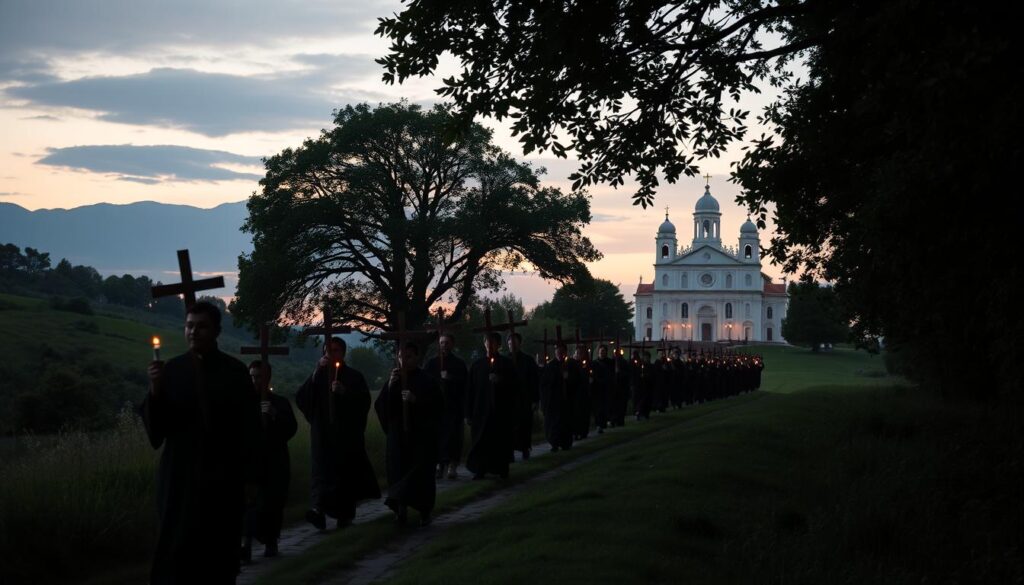
Time slows down during this sacred period as communities walk through ancient stories. The seven-day journey blends scripture readings with symbolic actions that engage all senses. From waving palm branches to sharing foot-washing rituals, each practice invites personal reflection.
The Journey From Preparation to Celebration
This spiritual marathon begins with Ash Wednesday, where foreheads receive smudged reminders of life’s brevity. Over six weeks, many reduce comforts to sharpen their focus. When Holy Week arrives, believers enter its intensity through three pivotal days:
| Day | Focus | Key Practice |
|---|---|---|
| Palm Sunday | Triumphant entry | Processions with palms |
| Holy Thursday | Last Supper | Foot washing ceremony |
| Good Friday | Sacrifice | Veneration of the cross |
Cultural flavors enrich these traditions. Filipino devotees stage street plays while Polish families craft elaborate tomb displays. Yet all share a common way of retracing foundational events through physical symbols.
The Easter Vigil serves as the week’s climax. Fire illuminates darkened churches as choirs sing ancient hymns. This multi-sensory experience mirrors the transition from sorrow to joy that defines the holy week journey.
Participating in these rituals offers more than historical recall. It creates space to process personal struggles through a lens of hope. Many find their understanding of faith deepens when lived through this annual rhythm.
Ash Wednesday and the Lenten Preparation
Smudged foreheads signal a fresh start as communities embark on a transformative spiritual adventure. This sacred season begins with ash-marked skin and ends with hearts ready to embrace renewal. The journey bridges human frailty and divine promise through intentional reflection.
Meaning of Repentance and Renewal
Ash Wednesday serves as a gentle wake-up call. The cross-shaped mark, made from burned palm leaves, whispers two truths: “Remember you are dust” and “Turn toward grace.” This ritual starts a 40-day trek mirroring Christ’s desert experience—a time to simplify, reflect, and grow.
Three core practices shape this period:
| Practice | Purpose | Impact |
|---|---|---|
| Prayer | Deepen connection | Inner clarity |
| Fasting | Reset priorities | Spiritual focus |
| Almsgiving | Share blessings | Community bonds |
Families might replace screen time with shared devotions. Others volunteer at food banks or create prayer corners. These actions create space to notice what truly matters—like spring cleaning for the soul.
The desert journey isn’t about misery but making room for growth. By temporarily setting aside comforts, believers rediscover lasting joy. As one pastor observes: “We fast from noise to feast on stillness.”
This intentional preparation makes the new life celebrated later feel earned rather than given. The hope kindled during these weeks burns brighter through conscious effort, transforming ritual into lived truth.
Palm Sunday: Symbolism and Celebration
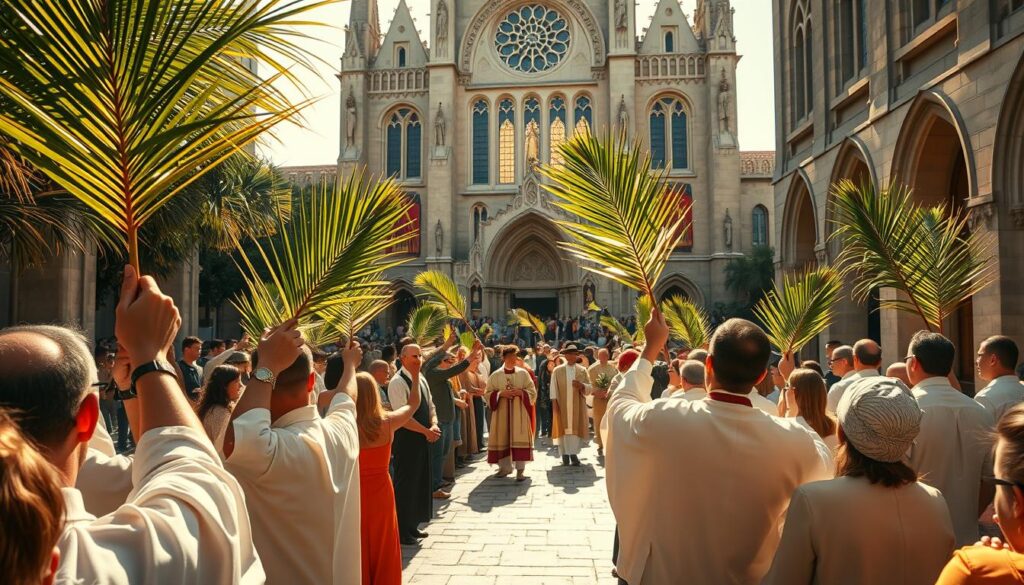
Crowds erupted in cheers as a humble figure approached the city gates, fulfilling ancient promises in unexpected ways. This palm sunday tradition marks a pivotal moment where celebration meets prophecy, blending royal symbolism with grassroots devotion.
Jesus’ Triumphant Entrance into Jerusalem
Waves of excitement swept through Jerusalem when Jesus arrived on a donkey’s colt. The prophet Zechariah had foretold this entering jerusalem moment centuries earlier:
“Rejoice greatly, Daughter Zion! Your king comes, righteous and victorious, lowly and riding on a donkey”
This choice of transport revealed Christ’s peaceful mission. Unlike warhorses favored by conquerors, the donkey symbolized humility – a king serving rather than dominating his people.
The Significance of Palm Branches
Shouts of “Hosanna!” rang out as people laid palm branches at Jesus’ feet. These fronds carried layered meanings:
| Symbol | Meaning | Biblical Connection |
|---|---|---|
| Palm Branches | Victory | Feast of Tabernacles |
| Donkey | Peace | Zechariah 9:9 |
| Crowd’s Cloaks | Royal Honor | 2 Kings 9:13 |
Modern celebrations preserve these symbols through blessed palms and processions. Many churches weave fronds into crosses, turning day-old greenery into lasting reminders of faith.
The palm sunday story still challenges expectations. True leadership, it suggests, grows from service rather than force – a message echoing through Holy Week’s unfolding drama.
Easter Vigil: The Mother of All Vigils
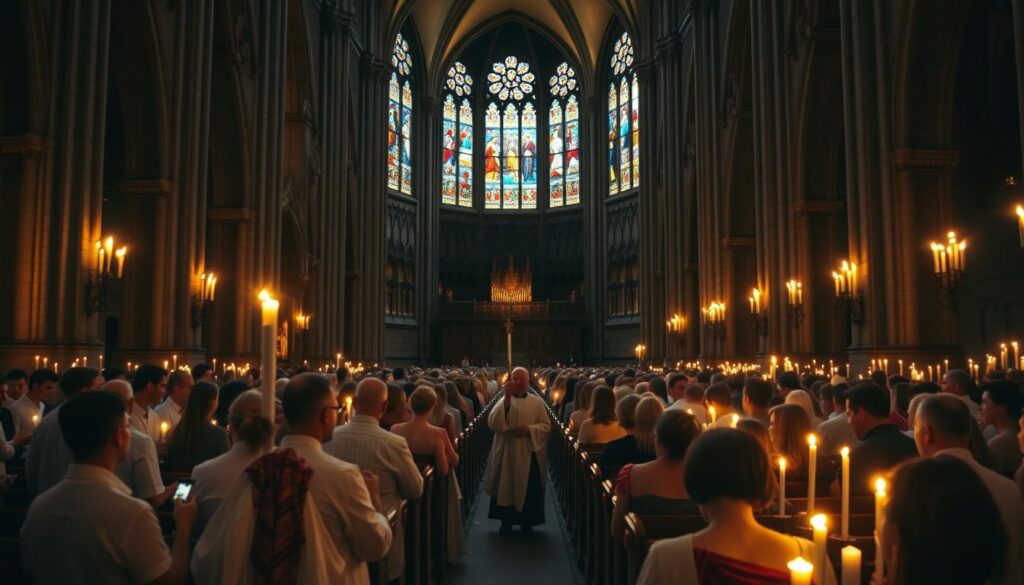
Shadows lengthen as night falls, but within the church, a single flame pierces the darkness. This easter vigil marks Christianity’s most dramatic celebration, blending ancient rituals with life-changing moments. Believers gather to relive salvation history through fire, water, and sacred storytelling.
The Paschal Candle and Its Symbolism
A towering beeswax candle becomes the night’s focal point. Artisans carve five grains of incense into its surface, representing Christ’s wounds. The words “Alpha and Omega” frame the current year, declaring divine presence across time.
Light spreads through the crowd as worshippers share flames from this central source. The candle remains lit throughout the season, its glow reminding communities of hope that outlasts hardship.
The Role of the Vigil Mass
This four-part journey transforms participants through symbolic actions:
| Part | Symbolism | Action |
|---|---|---|
| Service of Light | Victory over darkness | Blessing new fire |
| Liturgy of the Word | Salvation history | Seven scripture readings |
| Baptism Rites | New life | Blessing water, vows |
| Eucharist | Communal joy | First resurrection meal |
Adults often join the faith community here through baptism and confirmation. The vigil mass creates a bridge between grief and celebration, its songs echoing through the night until dawn’s first light.
Good Friday: The Sacrifice of Christ
A hush falls over congregations worldwide as believers confront faith’s central paradox. This solemn day commemorates ultimate love expressed through unimaginable suffering. The death of Jesus becomes a mirror reflecting humanity’s capacity for both cruelty and redemption.
John’s Gospel captures this mystery:
“God loved the world so much that he gave his only Son… not to condemn, but to save”
(John 3:16-17). These words echo through services where altars stand bare and bells remain silent.
Reflecting on the Crucifixion
Three unique elements shape Good Friday observances:
| Element | Symbolism | Participant Role |
|---|---|---|
| Passion Reading | Narrative immersion | Listen & reflect |
| Cross Veneration | Honoring sacrifice | Physical reverence |
| Stations Walk | Journey reenactment | Emotional engagement |
Many find the Stations of the Cross particularly moving. This 14-step meditation allows participants to walk alongside Jesus during his final hours. Each station becomes a window into universal struggles – betrayal, pain, and ultimate surrender.
The day’s sacrifice theme challenges modern comfort. As candles flicker during Tenebrae services, worshippers consider what they might lay down for others. This life-affirming ritual transforms grief into hope, proving darkness never gets the final word.
Easter Sunday: Celebrating New Life
Dawn breaks with triumphant bells ringing across neighborhoods, signaling a day unlike any other. This sacred Sunday marks Christianity’s brightest moment—a victory celebration where despair shatters and hope takes flight. Churches overflow with lilies and candlelight as voices unite in a powerful declaration: “He is risen!”
The choice of Sunday holds deep meaning. It honors the historical resurrection morning while connecting to ancient Passover traditions. Many services begin at sunrise, mirroring the discovery of an empty tomb at first light.
The Joy of the Resurrection
Worship reaches its peak during the Easter Sunday Mass. Forgotten alleluias burst forth in hymns, accompanied by brass choirs and floral displays. Special readings recount Mary Magdalene’s dawn encounter and Peter’s sprint to the burial site.
This day transforms grief into wonder. Where Friday’s cross stood barren, Sunday’s altar overflows with white linens and golden vessels. The contrast reminds believers that darkness always yields to light.
Families extend the celebration through shared meals and egg hunts. These customs blend spiritual meaning with playful joy, creating memories that reinforce faith’s core message. For many, this Sunday becomes a personal invitation to embrace new life through renewed purpose and community bonds.
Pentecost: The Outpouring of the Holy Spirit
Fifty days after resurrection celebrations, a rushing wind sweeps through worship spaces worldwide. This day marks the dramatic fulfillment of Christ’s promise – divine power igniting ordinary people to transform the world. Churches glow with red vestments symbolizing spiritual fire, while congregations rediscover their shared mission.
Liturgical Celebrations and Their Impact
Vibrant services feature readings from Acts 2, recounting flames resting on disciples’ heads. Many communities incorporate multiple languages during scripture readings, echoing the first Pentecost’s miraculous communication. These practices remind believers that faith transcends cultural barriers.
Three elements shape modern observances:
- Renewal of baptismal vows
- Special prayers for unity
- Commissioning rituals for service projects
The church‘s birthday celebration sparks fresh energy for daily life. Food drives often follow services, turning spiritual fervor into practical care. As sunlight lingers on this longest day of Eastertide, worshippers carry forward a timeless message – hope burns brightest when shared.
FAQ
What is the purpose of Lent leading up to Easter?
Lent is a 40-day period of prayer, fasting, and almsgiving that prepares hearts for the joy of Christ’s resurrection. It mirrors His time in the wilderness and emphasizes repentance and spiritual renewal.
Why do people receive ashes on Ash Wednesday?
Ashes symbolize mortality and penance. Receiving them marks the start of Lent, reminding believers to turn away from sin and embrace God’s mercy.
What do palm branches represent on Palm Sunday?
They commemorate Jesus’ triumphant entry into Jerusalem, where crowds laid palms at His feet. The branches signify victory, peace, and the recognition of Christ as King.
How is the Easter Vigil different from other Masses?
The Vigil Mass begins after sundown on Holy Saturday, featuring the lighting of the Paschal candle, extended Scripture readings, and baptisms. It celebrates Christ’s triumph over darkness and death.
Why is Good Friday called “good”?
Despite commemorating Jesus’ crucifixion, the day is called “good” because His sacrifice opened the path to salvation. It reflects God’s boundless love for humanity.
What role does the Paschal candle play?
Lit during the Vigil, this candle symbolizes the risen Christ as the Light of the World. Its flame is shared with congregants, representing the spread of faith and hope.
How does Pentecost connect to Easter?
Celebrated 50 days after Easter, Pentecost marks the Holy Spirit’s descent upon the apostles. It completes the Easter season by highlighting the Church’s mission to share Christ’s message.
Why do dates for Easter change each year?
Dates follow the lunar calendar, aligning with the first Sunday after the Paschal Full Moon. This tradition ties to the timing of Passover in the Scriptures.
What is the significance of baptism during the Vigil?
Baptism represents dying to sin and rising to new life in Christ. The Vigil’s sacraments emphasize rebirth and unity with the Church’s foundational teachings.
How do families celebrate Easter Sunday?
Many attend Mass, share festive meals, and exchange symbols like eggs, which represent new life. Joyful traditions reflect the resurrection’s promise of hope and renewal.