When facing life’s final moments, many find solace in time-honored spiritual practices. Among these, the sacred rituals administered to individuals nearing death hold special significance. Rooted in compassion, these traditions aim to provide peace and divine connection during profound transitions.
Often called the Commendation of the Dying, this practice combines prayer and sacramental care. It’s designed for those confronting terminal illness, severe injury, or imminent mortality. Through specific ministrations, participants receive spiritual preparation for their journey beyond earthly life.
The Church’s approach integrates multiple elements of faith. These include reconciliation, anointing, and final communion—each offering unique grace. Together, they create a holistic pathway for both the individual and their loved ones.
Misunderstandings about timing and eligibility persist, despite clear guidelines. Proper administration requires careful coordination with clergy, emphasizing the importance of advance planning. This ensures the faithful can fully embrace the tradition’s comforting power when it matters most.
Key Takeaways
- Combines prayer and sacraments to support individuals nearing death
- Includes reconciliation, anointing, and final communion as core elements
- Must be administered before death occurs
- Addresses both spiritual and emotional needs of participants
- Requires coordination with trained clergy for proper execution
- Reflects centuries of theological refinement and pastoral care
Introduction to Catholic Last Rites
In moments of profound transition, faith traditions offer structured comfort through sacred practices. The Church’s final pastoral care combines sacraments and prayers to strengthen both the dying person and their loved ones. This spiritual lifeline addresses fear, uncertainty, and the need for reconciliation through time-tested rituals.
Overview and Purpose
Central to these practices is the sacrament anointing of the sick, historically called extreme unction. Unlike common assumptions, this rite isn’t limited to final moments—the Catechism Catholic clarifies it can renew hope during serious illness. When administered near death, it becomes part of a triad:
- Confession to mend spiritual wounds
- Anointing for physical and emotional healing
- Viaticum as nourishment for the soul’s journey
Understanding the Ritual’s Intention
These prayers and sacraments create a sacred space where mortality meets divine promise. Families often find unexpected peace watching their loved one receive the anointing sick ritual. As one priest notes: “It’s not about endings—it’s the Church’s way of walking someone home.”
The ritual’s power lies in its dual focus: preparing the individual while comforting those left behind. Through oil, words, and communal support, it transforms fear into hope-filled surrender.
History and Cultural Evolution
The practice of spiritual care for the dying has shaped communities for centuries. Early Christians drew guidance from the Letter of James, where elders anointed the sick with oil while praying for healing. This simple act of faith laid the foundation for rituals that would evolve across generations.
Historical Context and Origins
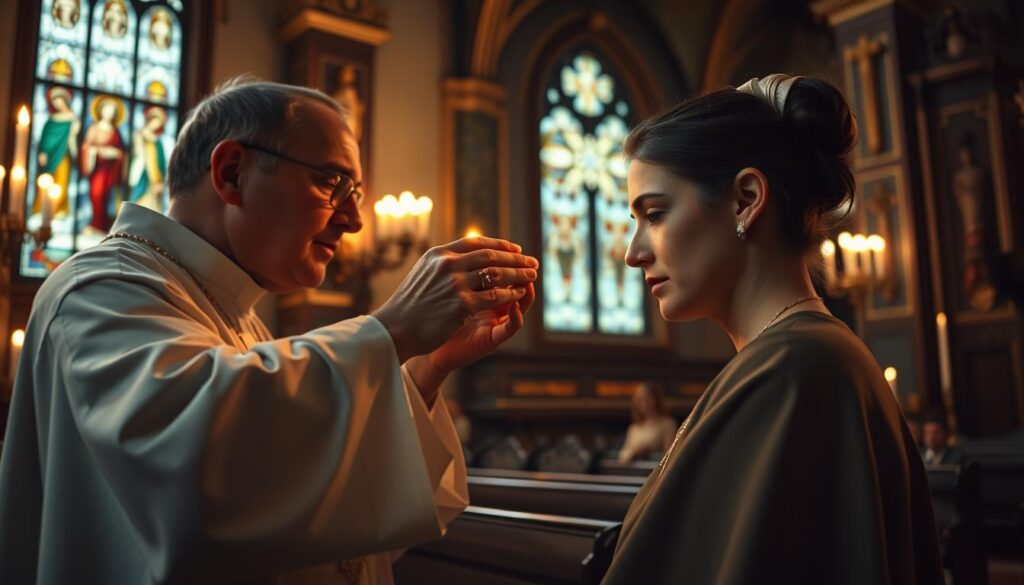
Medieval theologian Peter Lombard coined “Extreme Unction” in 1160, emphasizing final spiritual preparation. The term reflected its position as the last sacramental anointing—after Baptism and Confirmation. For centuries, priests administered it primarily to those in extremis, linking the sacrament to life’s closing moments.
Major change came during Vatican II (1962–1965). Church leaders renamed the rite “Anointing of the Sick” to highlight its broader purpose. As one bishop noted: “Healing isn’t just physical—it’s about restoring hope.” This shift expanded access beyond imminent death cases.
Development Across Different Christian Traditions
Eastern Orthodox churches maintained unique practices while sharing core beliefs. Their rituals often involve multiple anointings with blessed oil during prolonged illnesses. Western traditions streamlined the process, focusing on three key elements: confession, anointing, and final communion.
Cultural adaptations emerged globally. Some regions incorporated local prayers, while others developed special oils using native plants. Despite these variations, the sacrament’s heart remained unchanged—a tangible expression of divine compassion through human hands.
The Significance of “catholic last rites”
Divine compassion meets human vulnerability in moments of profound physical and spiritual need. The Church’s sacramental approach to end-of-life care reflects centuries of theological wisdom, offering more than ritual—it bridges earthly struggles with eternal hope.
Theological Foundations and Spiritual Impact
Rooted in the Catechism of the Catholic Church, these practices view illness as a sacred passage rather than a defeat. The sacrament anointing sick channels divine grace specifically tailored to the challenges of mortality. As one teaching states: “Through holy oil and prayer, the body becomes a vessel for spiritual renewal.”
This sacrament does more than comfort—it redefines suffering as participation in Christ’s sacrifice. Believers gain strength to face final trials, transforming fear into purposeful surrender. The ritual’s power lies in its dual action: cleansing the soul while affirming the enduring value of every human life.
Key spiritual benefits include:
- Reconciliation that mends relationships with God and others
- Fortification against despair through renewed faith
- Physical and emotional peace, regardless of medical outcomes
By uniting the dying with Christ’s passion, the Church proclaims death as the soul’s homecoming. These sacred acts remind us that grace transcends our earthly body, preparing hearts for eternal communion.
Rituals, Sacraments, and Liturgical Practices
Sacred traditions guide individuals through life’s most challenging transitions with structured spiritual support. These practices blend ancient wisdom with compassionate care, creating a roadmap for both the dying and their communities.
The Order of Sacraments: Confession, Anointing, and Viaticum
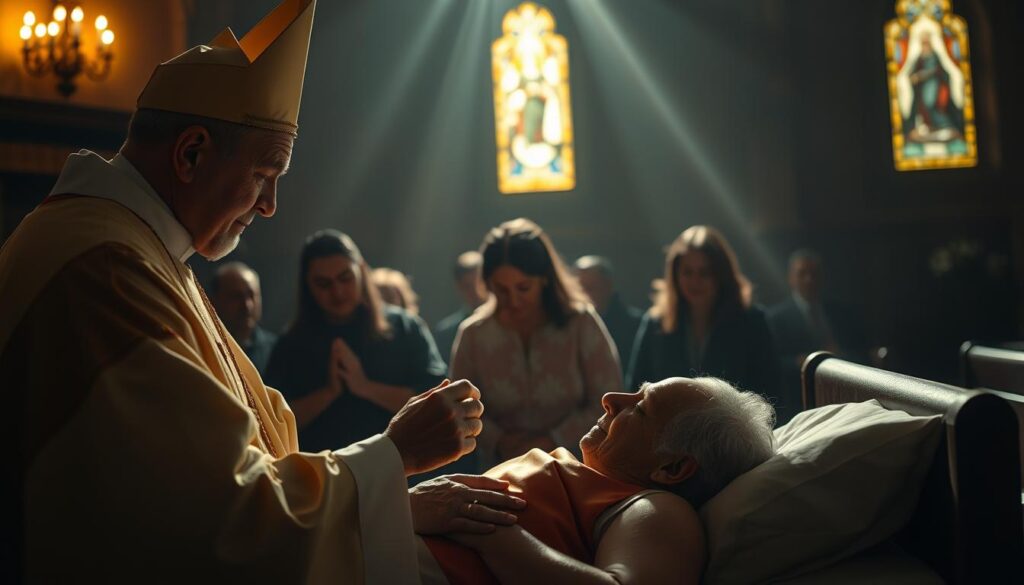
The sequence of end-of-life sacraments follows a purposeful design. First comes confession, clearing spiritual obstacles through forgiveness. Next, the anointing sick ritual uses blessed oil to strengthen body and soul. Finally, viaticum—meaning “travel provisions”—offers holy communion as nourishment for eternity.
This order matters deeply. As one chaplain explains: “We address the soul’s needs first, then fortify the person for their journey.” The process mirrors life’s spiritual progression—cleansing, healing, and ultimate union with the divine.
Variations in Eastern and Western Traditions
While Western churches typically administer sacraments individually, Eastern traditions weave them into communal ceremonies. Byzantine rites might include multiple anointings during prolonged illnesses, accompanied by chanted prayers.
| Tradition | Focus | Ritual Elements | Setting |
|---|---|---|---|
| Western | Individual preparation | Sequential sacraments | Any location |
| Eastern | Communal support | Extended ceremonies | Often churches |
Both approaches share core elements—confession, sacrament anointing, and final communion. Modern adaptations allow priests to bring these holy communion practices to hospitals or homes, ensuring accessibility during critical moments.
Providing Comfort, Hope, and Healing
Sacred traditions transform life’s hardest moments into opportunities for connection. Through tactile symbols and heartfelt words, these practices bridge earthly struggles with eternal promises.
The Role of Anointing with Oil in Enhancing Faith
Blessed oil—often olive-based—becomes a conduit for divine grace during the anointing sick ritual. Diocesan bishops consecrate this oil annually, typically during Holy Week ceremonies. When applied to forehead and hands, it carries Christ’s healing promise through physical touch.
The accompanying prayer—“May the Lord… strengthen you with the Holy Spirit”—anchors hope against despair. This tangible act links participants to James’ biblical instruction while renewing spiritual strength for life’s final journey.
Prayers, Forgiveness, and the Spiritual Impact on the Dying
Words matter profoundly in end-of-life care. Structured prayers invite peace, while sacramental forgiveness lifts emotional burdens. As the Catechism Catholic Church teaches, these acts prepare souls rather than prolong bodily life.
Families often describe witnessing renewed calm in loved ones after they receive sacrament. The rituals don’t erase pain but reframe mortality as a sacred threshold. Through oil and invocation, fear yields to quiet confidence in divine embrace.
FAQ
What is the purpose of the final sacraments in the Catholic tradition?
These sacred acts offer spiritual strength, forgiveness of sins, and peace to those nearing death. They unite the person with Christ’s mercy, preparing their soul for eternal life.
How does the anointing with oil strengthen faith during illness?
The blessed oil symbolizes healing grace, reminding the sick of God’s presence. It fosters hope, relieves spiritual burdens, and renews trust in divine love amid suffering.
Are these rituals only for those at immediate risk of death?
No. The sacrament is available to anyone facing serious illness or decline due to age. It’s encouraged long before the final moments to deepen spiritual readiness.
What role does Holy Communion play in the final rites?
Received as Viaticum, or “food for the journey,” it nourishes the soul for passage into eternal life. This act reflects Christ’s promise to accompany believers beyond death.
How do Eastern and Western traditions differ in administering these sacraments?
Eastern rites often include more elaborate prayers and communal anointing. Western practices focus on individual confession, anointing, and Viaticum, emphasizing personal reconciliation.
Can family members participate in the ceremony?
Yes. Loved ones are encouraged to join prayers, affirm forgiveness, and offer support. Their presence reinforces communal faith and comfort during the sacred transition.