When a loved one faces life’s final moments, many find solace in sacred traditions that honor both faith and humanity. Among these, the practice of final spiritual care stands as a pillar of comfort. Rooted in centuries of tradition, these sacred acts blend prayer, forgiveness, and hope to guide the soul peacefully.
This guide explores the rituals often called the “last prayers” of the Church. Far from being a single act, they include Viaticum—the final Communion—and heartfelt blessings. These rites aren’t about endings but transitions, offering strength to those nearing eternal life and their families.
Misunderstandings about timing or accessibility often cause unnecessary stress. Whether at home or in hospitals, these practices adapt to modern needs while preserving their sacred purpose. They remind us that dignity and spiritual peace remain central, even in healthcare settings.
Key Takeaways
- Final spiritual care combines Viaticum, prayers, and blessings to comfort those nearing death
- These traditions focus on forgiveness, hope, and preparing the soul for eternal peace
- Rites can be administered in various settings, including hospitals and homes
- Families often find emotional closure through these sacred practices
- Modern healthcare environments increasingly accommodate these timeless rituals
Understanding Catholic Last Rights
In moments of health struggles, spiritual practices offer strength and connection. The sacrament of Anointing of the Sick stands at the heart of these traditions, evolving to meet modern needs while maintaining its sacred purpose.
Defining the Sacrament
Formerly called “Extreme Unction,” this ritual was renamed after Vatican II to emphasize its broader role. It’s designed for anyone facing serious illness, not just those near death. As one Church document states:
“Through this holy anointing, may the Lord in his love and mercy help you with the grace of the Holy Spirit.”
A simple comparison shows how perspectives have shifted:
| Aspect | Extreme Unction | Anointing of the Sick |
|---|---|---|
| Purpose | Final preparation | Healing & strength |
| Timing | Deathbed only | Any serious illness |
| Frequency | Once | Multiple times |
Modern Relevance in Faith and End-of-Life Care
Today’s healthcare teams often work with priests to administer this sacrament in hospitals or homes. It brings three key benefits:
- Comfort during prolonged treatments
- Emotional peace for families
- Spiritual preparation for medical challenges
Over 75% of U.S. hospitals now have protocols for spiritual care requests. This ensures the sacraments remain accessible, blending ancient wisdom with contemporary compassion.
Sacramental Foundations and Biblical References
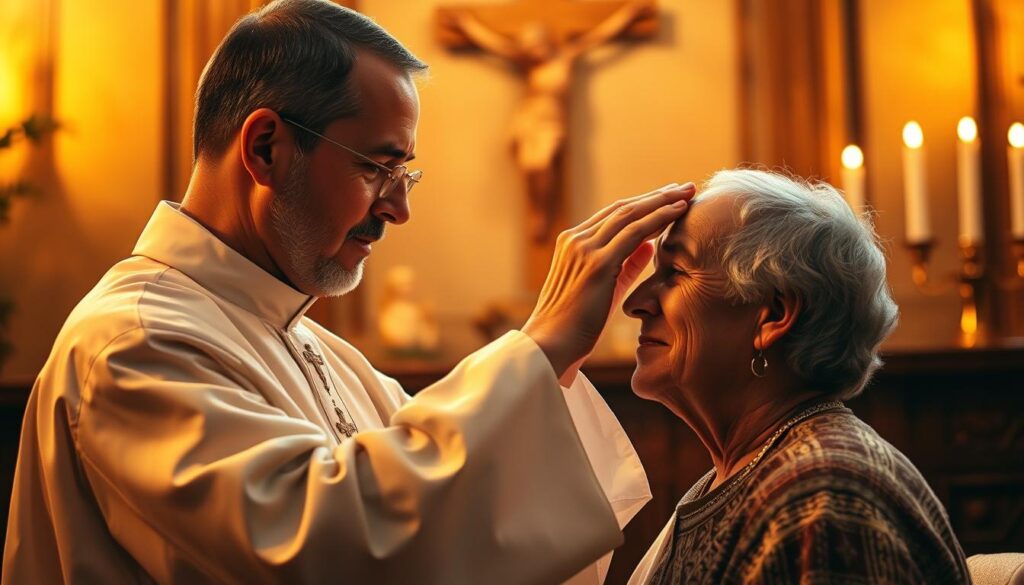
Sacred traditions draw their strength from ancient wisdom and divine promises. The sacrament of anointing finds its roots in Scripture, offering both physical and spiritual renewal. As James 5:14-15 instructs:
“Is any man sick among you? Let him bring in the priests… the prayer of faith shall save the sick man, and the Lord shall raise him up: and if he be in sins, they shall be forgiven him.”
This passage shows how prayer, oil, and priestly ministry work together. Early Christians saw this ritual as Christ’s hands reaching through time.
Biblical Passages and Scriptural Guidance
Mark 6:13 and Luke 10:8-9 reinforce this practice. Jesus’ followers anointed the ill with oil long before formal rites existed. The “anointing oil name” used today—typically olive oil blessed by a bishop—symbolizes grace flowing through creation.
Three key themes emerge from Scripture:
- Healing isn’t limited to bodies—souls need care too
- Forgiveness and hope are inseparable from physical aid
- Communal support strengthens the vulnerable
Catechism and Doctrinal Insights
The Catechism of the Catholic Church (sections 1499-1532) calls this sacrament “a gift for the journey.” It connects suffering to Christ’s Passion, transforming pain into purpose. St. John Chrysostom taught that priests wield divine authority to cleanse sins, not just bless.
Consider how perspectives shifted:
| Old Testament | New Testament |
|---|---|
| Priests offered animal sacrifices | Priests bring Christ’s healing |
| Ritual purity laws | Sacramental forgiveness |
This sacrament remains a lifeline—not just for the dying, but anyone battered by life’s storms.
Anointing the Sick: Grace, Healing, and Spiritual Comfort
In times of physical struggle, ancient rituals offer more than comfort—they bridge the human and divine. The sacrament anointing uses blessed oleum infirmorum, typically olive oil consecrated during Holy Thursday ceremonies. This sacred oil becomes a conduit for spiritual strength, applied to forehead and hands with tender care.
Spiritual Benefits and the Gift of Hope
This ritual creates three profound connections:
- Bonds the body’s suffering to Christ’s redemptive passion
- Offers supernatural courage through grace-filled prayers
- Provides forgiveness when confession proves impossible
The official prayer captures this essence perfectly:
“Through this holy anointing… may the Lord free you from sin and raise you up.”
| Spiritual Impact | Physical Consideration |
|---|---|
| Renewed hope | Possible healing if aligned with God’s plan |
| Soul purification | Comfort during medical treatments |
| Community support | Adaptable to hospital settings |
Administration and Ritual Practices
Priests bring remarkable flexibility to this sacrament anointing. Whether in ICU units or living rooms, the rite adapts while maintaining sacred integrity. Group ceremonies in nursing homes create powerful moments of shared faith.
Key administration details:
| Traditional Practice | Modern Adaptation |
|---|---|
| Oil blessed by bishop | Emergency priest blessings allowed |
| Individual ceremonies | Mass anointings in care facilities |
| Forehead/hands anointing | Gloved applications when needed |
This timeless practice meets contemporary needs, offering holy communion of spirit when persons need it most.
Diverse Christian Traditions in Last Rites
Eastern Christian communities approach life’s final journey with rituals steeped in mystical beauty. Their practices emphasize collective support and the enduring hope of resurrection, creating a spiritual tapestry that envelops both the dying person and their loved ones.
Eastern Orthodox and Eastern Catholic Practices
In Eastern Catholic Churches following the Byzantine rite, three sacred acts form the core of final spiritual care:
- Confession to cleanse the soul
- Holy Communion as viaticum for the journey
- The profound “Office at the Parting of the Soul From the Body”
This moving celebration weaves together ancient elements:
“Have mercy on me, O God, according to Thy great mercy”
Alongside the Lord’s Prayer and appeals to Mary (Theotokos), theseprayersseek divine mercy through communal intercession.
| Western Practice | Eastern Tradition |
|---|---|
| Anointing primarily near death | Holy Unction for any illness |
| Focus on final preparation | Emphasis on ongoing healing |
| Individual administration | Group ceremonies common |
For those facing prolonged suffering, alternative rites using Psalms 70 and 143 offer tailored comfort. A priest might perform an abbreviated version during urgent situations, proving the rite’s adaptability without losing its sacred essence.
These traditions remind us that spiritual care transcends cultural boundaries. Through shared sacraments and timeless rituals, Eastern Catholic churches maintain a living connection to early Christian roots while addressing modern needs.
Practical Guidance for Receiving and Administering Last Rites
Preparing spiritually requires both knowledge and timely action. Families often wonder when and how to request these sacred practices. Clear understanding helps ensure loved ones receive comfort when it matters most.

When to Call a Priest
Contact spiritual care providers when someone:
- Faces major surgery
- Experiences sudden health decline
- Enters hospice care
Don’t wait until breathing becomes labored. Many hospitals now have chaplains available 24/7. Early requests allow fuller participation in the rites.
| Situation | Recommended Action |
|---|---|
| Chronic illness | Schedule Anointing |
| Emergency surgery | Request Continuous Rite |
| Unconscious patient | Conditional absolution |
Step-by-Step Process and Expected Rituals
A typical administration flows through three stages:
- Confession or conditional forgiveness
- Anointing with blessed oil
- Receiving Viaticum
In urgent cases, priests combine these into one ceremony. Lay ministers can sometimes bring Communion if clergy aren’t available. As one hospital chaplain notes:
“We adapt the space – ICU rooms become chapels when needed.”
| Standard Practice | Emergency Variation |
|---|---|
| Separate sacraments | Combined Continuous Rite |
| Full Scripture readings | Abbreviated prayers |
| Family participation | Rapid administration |
Papal blessings with plenary indulgences may accompany the rites. These practices remind us that spiritual care adapts to life’s urgent moments while maintaining sacred depth.
Conclusion
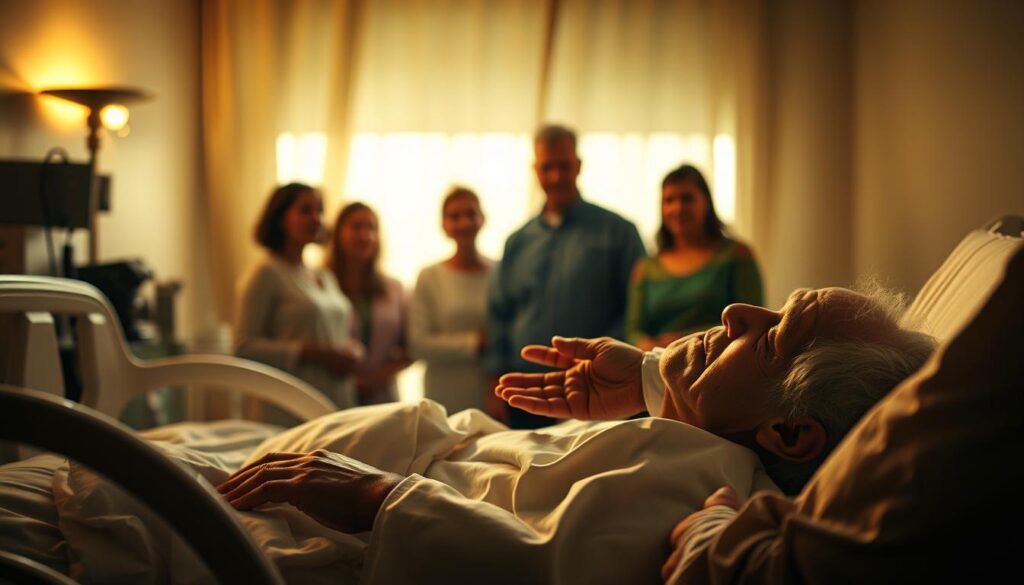
Sacred traditions surrounding life’s final journey remain vital in modern faith communities. These rituals honor the whole person—body, mind, and spirit—through symbols like blessed oil and shared prayers. They transform medical spaces into places of sacred celebration.
The sacrament offers more than comfort. It weaves together healing, forgiveness, and hope into a spiritual safety net. Families often find unexpected strength through these ancient yet adaptable practices.
Modern healthcare settings now recognize this need. Over 80% of U.S. hospice programs report incorporating spiritual care into treatment plans. Whether through quiet anointings or shared Communion, these rites affirm dignity during life’s most vulnerable time.
Ultimately, these traditions remind us that every body carries sacred worth. Through oil, prayer, and community support, they help souls transition with grace—a final celebration of a life’s journey completed in love.
FAQ
What exactly are Last Rites?
They’re a set of sacraments offered to those nearing death, including confession, anointing, and final Communion. These rituals aim to provide spiritual healing, peace, and preparation for eternal life.
Can family members request Last Rites if someone is unconscious?
Yes! A priest can administer the sacraments even if the person is unable to respond, as long as they’re in danger of death. The Church emphasizes God’s mercy in these moments.
How does anointing with oil play a role?
Blessed oil symbolizes strength and healing. The priest anoints the forehead and hands while praying for forgiveness, grace, and comfort during the person’s final journey.
Are Last Rites only for the elderly?
No. Anyone facing grave illness, surgery, or mortal danger can receive them. It’s about spiritual readiness, not just age.
What’s the difference between Eastern and Latin Church practices?
Eastern traditions often include longer prayers and additional rituals, like anointing more parts of the body. Both share the core goal of uniting the soul with Christ’s mercy.
Do Last Rites forgive mortal sins?
If the person can’t confess, the anointing itself can absolve sins. This reflects the Church’s belief in God’s boundless compassion during life’s most vulnerable moments.
How should families prepare for the priest’s arrival?
Keep a crucifix, candles, and holy water nearby. Create a calm space for prayer, and share any urgent spiritual concerns with the priest beforehand.
Is Viaticum the same as regular Communion?
Viaticum means “food for the journey.” It’s the final Eucharist, emphasizing Christ’s presence as the person transitions from earthly life to eternal union with God.