Exploring a faith’s teachings can feel overwhelming, especially when seeking clarity on centuries-old traditions. This guide simplifies core principles of a global spiritual community, offering straightforward explanations for those curious about its beliefs. Whether you’re new to these teachings or refreshing your knowledge, you’ll find insights that resonate.
At its heart, this tradition emphasizes a relationship with the divine—a bond disrupted by human imperfection but restored through sacrifice and renewal. Leaders like Bishop Erik Pohlmeier highlight how sacraments and charitable acts strengthen this connection, providing purpose and unity. The term “universal” reflects its inclusive mission: everyone is invited to embrace grace.
You’ll uncover details about rituals, historical foundations, and modern applications of doctrine here. Complex ideas are broken into digestible pieces without losing depth. Every explanation ties back to trusted sources, including the Catechism and guidance from respected clergy.
Key Takeaways
- Learn the foundational beliefs that shape this global faith community.
- Discover how sacraments and traditions foster spiritual growth.
- Understand the universal nature of its teachings and inclusivity.
- Gain clarity on rituals and practices through simplified explanations.
- Access insights rooted in official documents and expert guidance.
Exploring the Foundations of the Catholic Faith
Understanding any spiritual path begins with its core principles. This tradition’s framework combines ancient wisdom with practical guidance for daily living. Three pillars uphold its teachings: sacred writings, inherited practices, and divine assistance that transforms hearts.
Basic Beliefs and Core Doctrines
At the center lies a triune God—Father, Son, and Holy Spirit. This belief shapes every aspect of spiritual life. Jesus’ dual nature as divine and human forms the bridge between heaven and earth, while his sacrifice offers redemption to all.
Key teachings emphasize:
- Eternal life as humanity’s original purpose
- Sacraments as visible signs of grace
- The Church’s role in preserving sacred truth
The Role of Scripture, Tradition, and Grace
Sacred texts and lived practices work together like two hands holding a treasure. The Bible reveals God’s voice across generations, while Tradition safeguards teachings passed through centuries of faithful living.
Grace acts as the heartbeat of this system—a divine gift empowering people to grow in holiness. Through prayer and sacraments, believers receive strength to align their lives with spiritual truths. The Holy Spirit continually guides this process, ensuring teachings remain vibrant and relevant.
Catholic Questions and Answers: Delving Into Rituals and Practices
Rituals breathe life into beliefs through physical expressions of devotion. These time-honored practices unite communities while deepening personal connections to divine mysteries.
Understanding Mass, Baptism, and Communion
The Mass forms Christianity’s heartbeat, where believers join Christ’s eternal sacrifice. Standing for Gospel readings honors Jesus’ words, while kneeling during consecration embodies humble adoration. Through Communion, participants receive spiritual nourishment as described at the Last Supper: “This is my Body.”
Baptism marks entry into faith’s family, cleansing original sin through water’s renewing power. This sacrament initiates a lifelong journey of growing in grace and purpose.
Meaning Behind Holy Water, the Sign of the Cross, and Incense
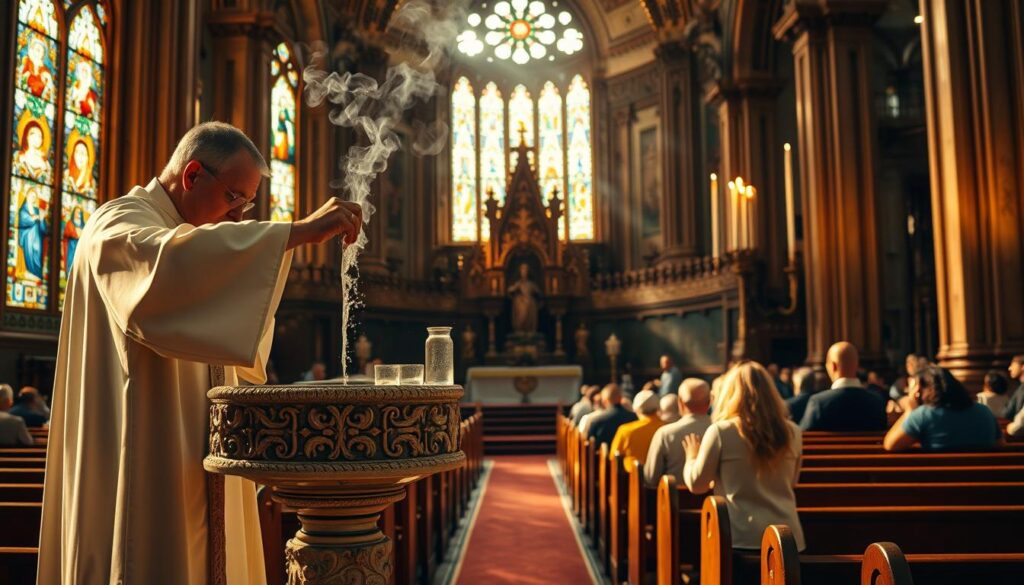
Dipping fingers in holy water upon entering sacred spaces recalls baptismal promises. Making the Sign of the Cross proclaims redemption through Christ’s crucifixion and Trinitarian belief in one motion.
Billowing incense creates multisensory worship, symbolizing prayers ascending like fragrant smoke. These tangible actions transform abstract truths into lived experiences, engaging both body and soul in spiritual life.
Insights on Church Practices and Teachings
Physical actions often bridge spiritual beliefs and daily life. From gestures of reverence to sacred rituals, these practices root abstract truths in tangible experiences that unite communities across generations.
The Significance of Genuflection and Kneeling at Mass
Bending the knee before the tabernacle isn’t just tradition—it’s a bodily declaration of faith. This act acknowledges Christ’s presence in the Eucharist, a cornerstone of worship. Kneeling during consecration deepens this connection, mirroring humility before divine mystery.
Exploring Sacraments, Confession, and Papal Authority
The seven sacraments act like spiritual fuel stations. Baptism ignites faith, Confirmation strengthens it, and Reconciliation restores it through forgiveness. During Confession, priests channel Christ’s own authority to absolve sins, continuing a chain begun with Jesus’ words: “Receive the Holy Spirit. Whose sins you forgive are forgiven.”
Papal leadership traces back to Peter, whom believers see as Christianity’s first steward. This role safeguards unity in teaching while allowing cultural diversity in practice—a balance maintained through centuries.
Veneration of Mary, Saints, and Sacred Images
Honoring Mary reflects her unique role as God’s chosen vessel, not worship. Like asking a friend to pray, believers seek her intercession, recalling how she nudged Jesus at Cana. Saints receive similar respect as heavenly mentors who’ve walked life’s path before us.
Statues and icons serve as visual reminders of these holy figures. The honor shown to images flows to whom they represent, much like treasuring a family photo while loving the person in it.
Modern Inquiries and Common Misconceptions in Catholicism
Navigating spiritual disciplines in contemporary society raises fresh considerations. Many wonder how ancient practices adapt to modern life while maintaining their sacred purpose. Let’s explore some current topics that spark curiosity and occasional confusion.
Fasting, Abstinence, and Ash Wednesday Explained
Friday meat abstinence isn’t just about sacrifice—it’s a weekly reminder of mercy. This practice unites believers in remembering Christ’s crucifixion while fostering self-discipline. During Lent, this commitment intensifies, paired with fasting that sharpens spiritual focus.
Ash Wednesday opens this solemn season with ashes marking foreheads. The phrase “Remember you are dust” echoes humanity’s mortality and heaven’s promise. These rituals aren’t empty traditions but living bridges between earthly life and eternal hope.
Yoga, Astrology, and Spiritual Boundaries
While yoga’s physical poses may seem harmless, the Church cautions against blending non-Christian spirituality into prayer life. Stretching becomes problematic if tied to Eastern religious concepts conflicting with scripture.
The table below clarifies common modern concerns:
| Practice | Church Stance | Reason |
|---|---|---|
| Astrology | Forbidden | Seeks knowledge beyond God’s revelation |
| Reiki Healing | Discouraged | Conflicts with Christian understanding of grace |
| Ouija Boards | Prohibited | Opens doors to spiritual danger |
These guidelines protect believers from practices that might cloud their relationship with divine truth. The Church’s teachings on modern issues ultimately aim to safeguard faith while encouraging thoughtful engagement with contemporary culture.
Conclusion
Seeking spiritual clarity often leads to profound discoveries about divine love and human purpose. At the heart of this journey lies grace—God’s unearned gift that transforms lives through sacraments like baptism and confession. These sacred moments bridge earthly existence with eternal hope.
Believers find strength in practices rooted in truth, from daily prayer to honoring saints. The Holy Spirit continually guides this path, helping navigate modern challenges while preserving timeless wisdom. Through confession, believers experience renewal, guided by priests who extend Christ’s mercy.
Final salvation rests in divine hands, shaped by lives lived in response to grace. As physical existence fades, the promise of heaven remains—a communion with God where justice meets compassion. Every ritual and teaching ultimately points toward this eternal embrace.
The Church’s teachings offer both anchor and compass, blending ancient traditions with relevance for today’s seekers. Whether exploring sacraments or ethical dilemmas, answers emerge through faith nurtured by grace—the heartbeat of spiritual growth.
FAQ
What are the core beliefs of Catholicism?
Central teachings include belief in the Trinity, Jesus’s sacrifice, the sacraments, and eternal communion with God. These truths guide worship and daily life.
How do Scripture and Tradition shape Catholic teachings?
The Bible and sacred Tradition work together, preserving Christ’s message. The Magisterium interprets both, ensuring clarity across generations.
Why is grace important in the faith?
Grace is God’s free gift that heals and strengthens believers. It empowers them to live virtuously and grow closer to Him.
What happens during Mass?
Mass reenacts Christ’s sacrifice at Calvary. It includes prayers, Scripture readings, and the Eucharist, uniting the faithful in worship.
What does Baptism symbolize?
It washes away original sin, initiates one into the Church, and marks a rebirth through water and the Holy Spirit.
Why do Catholics use holy water?
It represents purification and renewal. Blessing oneself with it recalls Baptism and invites spiritual protection.
Why do people kneel during worship?
Kneeling expresses humility and reverence. It acknowledges God’s presence, especially before the Blessed Sacrament.
How does Confession work?
Through this sacrament, believers confess sins to a priest, receive absolution, and restore their relationship with God.
Can Catholics practice yoga?
Physical yoga is acceptable if detached from non-Christian spirituality. Focus should remain on Christ-centered prayer.
Why are saints honored?
Saints are models of holiness who intercede for the faithful. Venerating them celebrates God’s work in their lives.