Looking for a dynamic way to explore faith teachings? This downloadable resource offers structured materials to strengthen religious knowledge through interactive formats. Designed for learners at all levels, it combines foundational doctrines with practical applications for group studies or personal reflection.
The materials draw from trusted sources like Catholic Answers, ensuring alignment with official Church teachings. Covering 130+ topics from sacraments to sacred traditions, the content supports RCIA programs and family faith formation. Its progressive structure helps users build confidence as they advance through theological concepts.
Educators will appreciate the ready-to-use format that simplifies lesson planning. Students gain immediate feedback through answer keys, making self-assessment straightforward. Whether used digitally or printed, these tools adapt to classrooms, study groups, or individual spiritual growth.
Key Takeaways
- Downloadable format enables offline access and easy printing
- Covers essential topics from Trinity to Church history
- Supports multiple learning environments and age groups
- Includes answer keys for instant self-evaluation
- Developed using authoritative doctrinal sources
Introduction to Catholic Quiz Interactives
Dynamic tools are revolutionizing how believers engage with religious teachings. These interactive materials turn complex doctrines into approachable lessons, helping users build knowledge through hands-on participation. Unlike static textbooks, they encourage immediate application of concepts like sacraments or prayer traditions.
Purpose and Educational Goals
The core aim is to deepen understanding through active exploration. By presenting theological ideas in game-like formats, learners naturally connect doctrines to daily spiritual life. For example, matching exercises clarify differences between sin types, while multiple-choice questions reinforce key events in Church history.
Reaching Diverse Learning Communities
Designed for varied age groups, these resources serve RCIA participants mastering basics and confirmation students refining their grasp of traditions. Youth ministries find them ideal for group activities, while adult study circles appreciate structured self-assessment. Answer keys enable independent progress tracking, letting users identify growth areas confidently.
Educators report higher retention rates when using interactive methods compared to lectures. One catechist noted, “Students remember 40% more concepts when they actively solve challenges rather than just hear explanations.” This approach meets modern learners where they are – seeking meaningful connections between faith and lived experience.
Historical and Theological Foundations
Seasonal observances shape spiritual rhythms through time-tested practices. These traditions anchor believers in shared stories while inviting personal reflection. From ancient rituals to modern adaptations, each element carries layers of meaning waiting to be explored.

Catholic Traditions and Celebrations
The liturgical calendar acts as a spiritual compass, guiding communities through sacred days. Advent candles mark weeks before Christmas, while Easter’s fifty-day celebration honors resurrection joy. These cycles connect modern worshippers to generations past through symbolic actions and shared prayer.
Understanding Ash Wednesday, Lent, and Holy Week
Ash Wednesday opens a 40-day journey mirroring biblical wilderness experiences. The ashes’ circular placement reminds participants of life’s cyclical nature – “dust to dust” becomes a tactile meditation. This day sets the tone for Lenten disciplines like meatless Fridays and intentional generosity.
Purple vestments during these days signal penitence, while omitted musical elements create reflective silence. Simple foods like pretzels – originally shaped as praying arms – reinforce the season’s focus. As Lent progresses, Holy Week’s Triduum marks Christianity’s central events through candlelit vigils and communal reenactments.
One catechism instructor notes: “These practices aren’t about deprivation, but making space for deeper connection.” From Shrove Tuesday pancakes to Easter’s triumphant alleluias, each tradition weaves personal transformation into collective memory.
Exploring Doctrinal Knowledge Through Quiz Questions
Understanding core beliefs becomes engaging through structured challenges that blend historical context with spiritual truths. These activities help test knowledge while revealing connections between scripture, tradition, and daily practice.
Key Biblical Events and Church History
From Moses receiving commandments to Christ’s resurrection timeline, foundational moments shape religious identity. Learners explore how 40-day floods prefigured baptismal cleansing or why Pentecost occurred 50 days after Easter. Historical milestones like Constantine’s Edict of Milan (313 AD) show faith’s evolving societal role.
Saints, Sacraments, and Sacred Symbols
Figures like Francis of Assisi model humility through service narratives. Seven sacraments form spiritual milestones – baptism erases original sin, while confirmation strengthens through the Holy Spirit’s gifts. Even simple symbols carry weight: purple vestments signal penitence, and INRI inscriptions declare Christ’s kingship.
One catechist observes: “These elements aren’t trivia – they’re living links to 2,000 years of shared belief.” By matching symbols to meanings or sequencing council decisions, users grasp how knowledge catholic traditions remain relevant today.
Interactive formats make abstract concepts tangible. When participants identify Jerusalem’s role in salvation history or name virtues opposing capital sins, they test knowledge while building confidence to discuss faith intelligently.
catholic quiz questions and answers pdf: Features and Benefits
Modern faith education thrives when materials adapt to learners’ needs. This resource combines portability with structured learning tools, offering features that enhance both group studies and personal reflection.

Downloadable Format and Accessibility
The digital-first design works anywhere – classrooms, retreats, or kitchen tables. Users instantly access materials without internet, perfect for rural areas or travel. Printed copies maintain formatting integrity, ensuring clear visuals for visual learners.
Educators save hours with ready-to-print sheets for RCIA sessions or youth groups. One teacher shared: “Having these tools cut my prep time by half while boosting student participation.” Files work across devices, from smartphones to projectors.
Interactive Content and Self-Assessment
Beyond basic testing, materials build critical thinking through:
- Cross-references to catechism paragraphs
- Historical context for doctrinal developments
- Real-life application prompts
Immediate answer checks create teachable moments. Users track progress weekly, identifying patterns like consistently missed sacramental questions. This awareness guides focused study plans.
Platforms like CatechismClass.com enhance these resources with full courses that dive deeper than quizzes. Their structured programs help adults connect teachings to modern challenges through video lessons and mentor support.
Enhancing Your Knowledge with Interactive Digital Tools
Technology bridges ancient wisdom with modern learning styles through thoughtfully designed platforms. These tools transform screen time into meaningful moments of discovery, helping users connect sacred traditions to contemporary life.
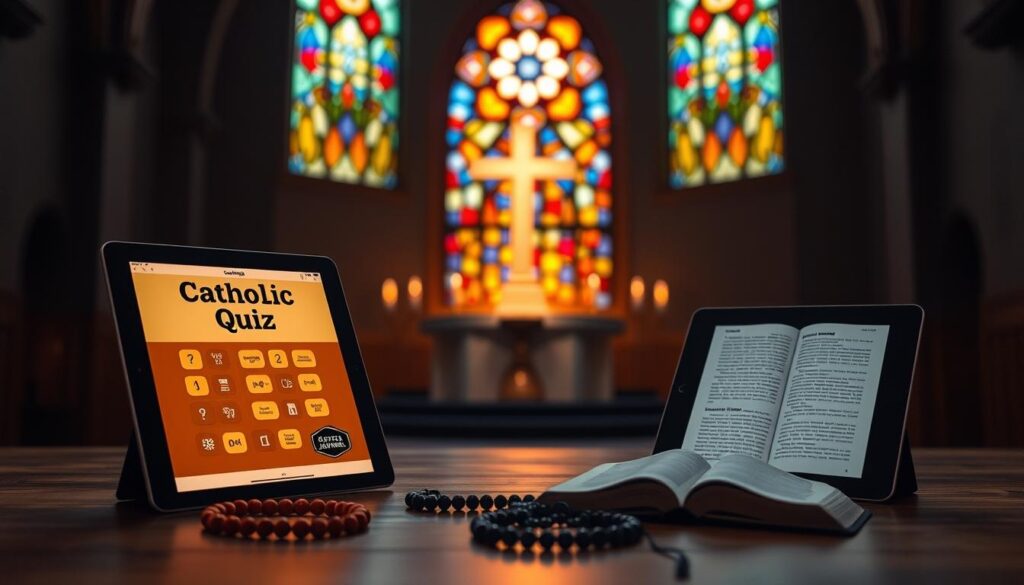
User-Friendly Design and Navigation
Intuitive layouts make exploring complex topics effortless. Dropdown menus organize content by liturgical seasons or sacraments, while search bars help locate specific prayer practices. Color-coded sections distinguish between scripture study and Church history modules.
| Feature | Traditional Learning | Digital Tools |
|---|---|---|
| Accessibility | Physical books | Any device, any time |
| Feedback Speed | Manual grading | Instant results |
| Engagement | Text-only | Audio/visual elements |
| Progress Tracking | Paper charts | Automated reports |
Integrating Quiz Results into Daily Faith Practice
Weekly summaries highlight strengths and growth areas. If someone struggles with mass symbolism, the system suggests reflection questions about sacred vessels. One user shared: “Seeing my progress chart encouraged me to start a morning prayer routine.”
Additional Resources and Further Learning
Platforms connect learners to supplemental materials explaining the meaning behind rituals. Explore why priests wear specific colors on feast days, or how holy water recalls baptismal promises. Catholic Answers’ podcast library offers deep dives into theological questions, perfect for commutes or quiet evenings.
These tools adapt to busy schedules – complete a 5-minute quiz during lunch or watch video explanations while cooking. As one educator noted:
“Digital resources meet people where they are, turning ordinary days into opportunities for growth.”
Conclusion
Faith education thrives when learners engage actively with timeless truths. These downloadable tools have guided countless men and women through structured spiritual growth, turning complex teachings into approachable lessons.
Regular use over many days builds doctrinal confidence. Users gain clarity on why beliefs matter – not just historical facts, but their impact on daily choices. This knowledge becomes armor for modern challenges.
The format’s flexibility meets people where they are. Busy parents review materials during commutes, while study groups debate concepts across kitchen tables. Learning continues through changing times, adapting to screens or printed pages.
True understanding emerges when head and heart connect. These resources do more than teach – they invite reflection on sacred traditions’ living relevance. Over many days of practice, users develop fluency in faith’s language.
In our fast-paced world, such tools preserve wisdom while embracing progress. They honor the Church’s call to lifelong learning, proving ancient truths remain vital across all times and technologies.
FAQ
What’s the purpose of faith-based quizzes?
These interactive tools aim to educate and inspire deeper engagement with spiritual teachings. They blend learning with reflection to strengthen personal faith journeys.
Who benefits most from these resources?
Anyone seeking to grow in their understanding of religious traditions—families, educators, or parish groups—will find value. The content adapts to varying knowledge levels.
How do quizzes explore seasons like Lent?
Questions often focus on themes like repentance, fasting, and renewal tied to Ash Wednesday or Holy Week. This helps users connect rituals to their daily lives.
What topics cover saints and sacraments?
Expect questions about key figures like St. Francis, the meaning behind sacraments like Baptism, and symbols such as the crucifix or Eucharistic elements.
Why choose downloadable formats?
PDFs offer offline access for study groups or personal reflection. They’re designed for easy printing and sharing to support communal learning.
Are these tools suitable for beginners?
Absolutely! Clear navigation and straightforward language make them approachable. Answers often include brief explanations to build foundational knowledge.
Can quiz results improve daily spiritual habits?
Yes! Insights from assessments can guide prayer routines, scripture reading, or participation in community events like Mass or feast days.
Where can I find extra study materials?
Many resources include links to approved articles, videos, or podcasts for deeper dives into topics like Church history or biblical stories.