Exploring a spiritual journey that has shaped lives for centuries can feel overwhelming. This guide breaks down the core principles of a global faith that connects over a billion people through shared beliefs and traditions. At its heart, this way of life centers on restoring humanity’s relationship with God—a bond strengthened through community, prayer, and service.
Rooted in Jesus Christ’s teachings, believers view the Church as a source of grace and guidance. Sacraments like baptism and communion offer strength to practice love and kindness daily. As Bishop Erik Pohlmeier explains, these practices prepare individuals for eternal unity with God while fostering harmony on Earth.
Why does this matter today? In a fast-paced world, these timeless values provide stability and purpose. Whether you’re seeking spiritual growth or simply curious, understanding these foundations helps explain why this tradition remains vital across generations.
Key Takeaways
- Centers on restoring humanity’s relationship with God through Jesus’ sacrifice
- Sacraments serve as channels for spiritual strength and growth
- Emphasizes community, charity, and preparing for eternal life
- Combines ancient traditions with modern-day relevance
- Offers a structured path for personal and collective spiritual development
Introduction to Catholicism and Its Relevance Today
In a world filled with diverse beliefs, one tradition continues to unite millions through its message of hope and belonging. The Catholic Church spans cultures and generations, offering a spiritual home to 1.3 billion people worldwide. Its enduring appeal lies in addressing life’s biggest questions while nurturing a global family rooted in faith.
What Inspired the Journey of Faith
Many find inspiration in the Church’s universal call to love. The word “Catholic” literally means “for everyone,” reflecting Jesus’ invitation to all people. This faith isn’t about rules—it’s a gift of grace that transforms hearts and connects believers across the world.
An Overview of Catholic Beliefs
Central to this tradition is the belief that God entered human history through Jesus Christ. Followers see life as a sacred journey toward eternal unity with God, supported by:
- Sacraments that mark key moments in spiritual growth
- Teachings promoting justice, mercy, and human dignity
- A living connection to saints and believers across time
In modern society, these principles guide ethical decisions and foster communities where people find purpose. As one priest notes, “The Church remains relevant because it answers our deepest hunger—for truth, love, and lasting peace.”
Catholicism 101: Core Beliefs and Practices
Believers find their foundation in a triune God who actively guides their spiritual path. This core teaching—one divine being existing as Father, Son, and Holy Spirit—shapes every aspect of faith and daily living.
Understanding the Nature of God and the Holy Spirit
The Holy Spirit serves as God’s living presence within believers. This divine helper strengthens people to live with compassion and courage. Through sacraments like baptism, Catholics receive grace—a spiritual boost to grow closer to God.
Daily prayer becomes a two-way conversation. As one nun explains, “We speak to God through words, but listen through quiet reflection on scripture.” This practice helps align actions with divine purpose.
The Role of Sacred Scripture and Tradition
Catholic teachings draw from two complementary sources:
- The Bible as God’s written word
- Sacred traditions passed down through generations
Together, they form a complete guide for living in truth. The Church’s teaching authority ensures these sources remain relevant across centuries. Regular participation in sacraments and acts of service keeps faith vibrant and practical.
“These practices aren’t ancient history—they’re tools for modern holiness.”
The Seven Sacraments: Channels of Divine Grace
Sacred moments shape our lives in ways words often can’t capture. The seven sacraments act as spiritual milestones where believers experience God’s direct intervention. These rituals transform ordinary moments into encounters with divine grace, offering strength for life’s journey.

Baptism, Confirmation, and Eucharist
Baptism marks the beginning of faith—water and prayer wash away sin and welcome new members into God’s family. Confirmation follows, deepening this bond through the Holy Spirit’s gifts like wisdom and courage. The Eucharist, celebrated at every Mass, nourishes believers with Christ’s presence. One parishioner shares, “Receiving communion feels like a hug from heaven.”
Penance, Anointing, Marriage, and Holy Orders
When mistakes weigh heavy, Penance offers healing through forgiveness. The Anointing of the Sick brings comfort during illness, reminding us we’re never alone. Marriage elevates love into a sacred promise mirroring Christ’s devotion. Holy Orders sets apart leaders who guide communities with compassion.
Together, these practices form a roadmap for spiritual growth. They meet us in joy, struggle, and everyday moments—proof that grace isn’t distant but alive in our world.
The Role of the Catholic Church: History and Global Impact
Throughout centuries, one institution has quietly shaped the course of human progress while nurturing souls across continents. The Church operates as a spiritual family spanning three interconnected realms: believers on earth (Church Militant), souls being purified (Church Suffering), and saints in heaven (Church Triumphant). This bond transcends time, creating a living network where prayers uplift both the living and departed.
From preserving ancient texts during Europe’s dark ages to building 140,000 schools worldwide today, the Church’s work impacts daily life. Its hospitals serve over 30 million patients annually, while food banks feed millions more. One bishop remarked, “We’re called to heal bodies and souls—that’s how love becomes action.”
Beyond charity, this global community influences art, science, and human rights. Gothic cathedrals inspired engineering breakthroughs, while Jesuit scholars advanced astronomy. Modern efforts focus on refugee aid and climate justice, proving ancient wisdom meets modern needs.
What makes this enduring? A faith that sees every person as sacred—worthy of care today and hope for eternity. As the world changes, this mission remains: building bridges between heaven and earth through service and prayer.
Papacy and Apostolic Succession in the Modern World
At the heart of Catholic governance lies a two-millennia-old practice ensuring continuity of sacred teachings. This unbroken chain of leadership began when Jesus named Peter the “rock” of His Church, entrusting him with spiritual authority. Today’s popes inherit this mission through apostolic succession—a sacred hand-to-hand tradition preserving divine truth across generations.
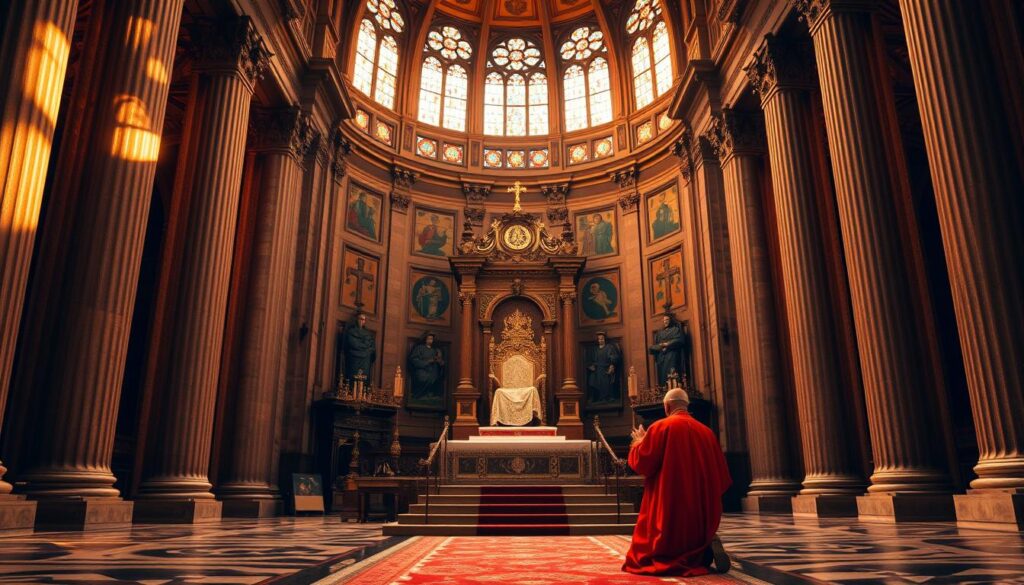
The Concept of Papal Infallibility
Many wonder how a human leader could claim error-free guidance. The answer lies in specific conditions: infallibility applies only when popes formally define matters of faith or morals ex cathedra (from Peter’s chair). As one theologian notes, “It’s not about personal perfection—it’s divine protection for core teaching.”
This power safeguards essential beliefs like the Trinity or Mary’s role. Outside these rare declarations, popes remain fallible individuals with personal views on politics or science. Modern leaders use this teaching authority to address issues like climate change while upholding timeless doctrines.
Apostolic succession extends beyond Rome. Every bishop and priest shares in this lineage through ordination rituals tracing back to Christ’s apostles. This structure creates a global network preserving authentic faith practices—from bustling cities to remote villages.
“Our unity isn’t rooted in opinion polls, but in Christ’s promise to guide His Church.”
The Power of Prayer in Strengthening Faith
Imagine having coffee with a close friend—the easy back-and-forth, the shared silence. This mirrors how prayer works in spiritual life. It’s not a monologue but a dynamic exchange where hearts align with divine purpose.
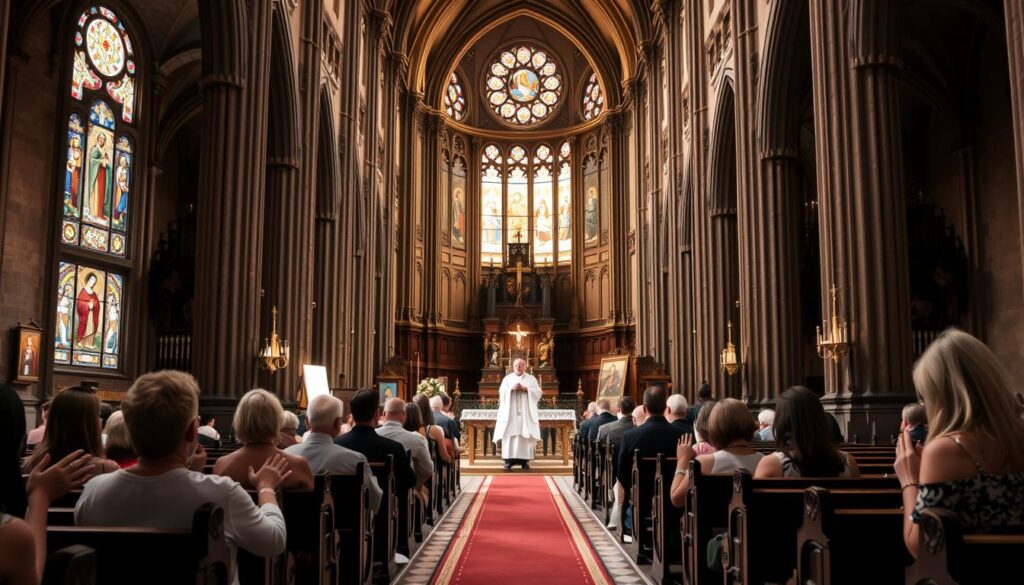
Prayer as a Conversation with God
True prayer begins by seeing life through God’s compassionate lens. As Jesuit wisdom teaches, it’s about “taking a long, loving look at the real.” This means acknowledging both joys and struggles while trusting in sacred guidance.
Three approaches help believers connect:
- Vocal prayers like the Our Father
- Meditation on scripture passages
- Contemplative silence to sense God’s presence
Listening and Speaking in Prayer
Many focus on asking for help but forget to pause. A parish volunteer shares: “I’ve learned to sit quietly after speaking my words. That’s when I feel God’s answer—sometimes as peace, sometimes as nudges to act.”
This balance transforms faith. Listening might mean noticing patterns in daily life or sudden clarity during Mass. Like any relationship, consistency deepens the bond—one honest chat at a time.
“Prayer isn’t about changing God’s mind. It’s about letting Him change our hearts.”
Experiencing Spiritual Grace: Mercy, Love, and Salvation
Life’s most profound moments often involve receiving something we didn’t earn. In faith, this unearned gift is called grace—God’s limitless love poured into human hearts. It’s not a reward for good behavior but a divine spark that awakens our capacity to live truthfully.
This grace comes in different forms. Sanctifying grace makes us holy, while actual grace guides daily choices. Sacramental grace flows through rituals like Reconciliation, where mercy becomes tangible. “Confession isn’t about shame,” a priest explains. “It’s about healing through God’s forgiveness.”
Salvation begins with this gift. While God initiates it, we participate through acts of kindness and faith. Think of grace as sunlight—it’s always there, but we must open the curtains to let it in.
Love fuels this process. When we serve others or pray sincerely, we mirror Christ’s compassion. This collaboration between heaven and earth shapes our eternal journey. As one believer shares, “Grace turns ordinary moments into steps toward salvation.”
“We don’t earn God’s love—we simply receive it and let it change us.”
Encountering Christ: Life, Death, and Resurrection
At the heart of Christian belief lies a story that reshaped history—a divine rescue mission through love’s ultimate price. Jesus Christ, both fully God and human, lived among us to show how heaven meets earth. His death wasn’t tragic defeat but deliberate victory—a bridge built across humanity’s brokenness.
Why did this sacrifice matter? Because holiness and human weakness couldn’t coexist. God’s justice demanded repair, while His mercy provided the solution. On the cross, Christ absorbed every wrong, turning pain into hope. As one theologian puts it, “Love paid the bill we couldn’t afford.”
The resurrection changed everything. When Jesus walked out of the tomb, He proved death holds no power over those who follow Him. This miracle fuels believers’ confidence in eternal life—not just someday, but starting now through acts of compassion.
Today, Catholics meet the risen Christ most intimately in the Eucharist. Bread and wine become His living presence, renewing hearts weekly. Like the first disciples, we’re invited to recognize Him—in sacred meals, quiet prayers, and hands serving others.
This story isn’t frozen in time. Through the Holy Spirit, Jesus Christ continues guiding His people, turning ordinary moments into encounters with divine love that transforms worlds.
FAQ
How does the Holy Spirit influence daily Catholic life?
The Holy Spirit guides believers through prayer, sacraments, and conscience. It strengthens faith, offers wisdom, and unites the Church as a spiritual family. Many feel its presence in moments of peace, forgiveness, or clarity during challenges.
Why are the Seven Sacraments central to Catholic practice?
Sacraments like Baptism, Eucharist, and Marriage are visible signs of God’s grace. They mark key moments in a believer’s journey, offering spiritual nourishment and deepening their relationship with Christ and the Church community.
What role does sacred tradition play alongside Scripture?
Sacred tradition preserves teachings passed down from the apostles. Alongside the Bible, it helps interpret God’s word through centuries of Church guidance, liturgy, and the lived faith of believers worldwide.
How does prayer strengthen a Catholic’s connection to God?
Prayer is a two-way conversation—sharing hopes, fears, and gratitude while listening for God’s voice. Regular prayer builds trust, invites divine mercy, and aligns hearts with Christ’s teachings, even in difficult times.
What is the significance of Christ’s Resurrection for believers today?
The Resurrection offers hope in eternal life and affirms God’s power over sin and death. It reminds Catholics that suffering has purpose and that Christ’s love remains a living force in their daily struggles and joys.
How does the Church address modern challenges while preserving its teachings?
Through apostolic succession, the Church adapts pastoral approaches without altering core truths. It emphasizes mercy, engages with global issues, and invites dialogue while upholding Scripture and tradition as timeless guides.
Why is the Eucharist called the “source and summit” of faith?
The Eucharist unites believers with Christ’s sacrifice and resurrection. Receiving His body and blood in Communion renews grace, strengthens communal bonds, and directs hearts toward heavenly union with God.