With over 1.4 billion followers globally, the Catholic Church stands as the largest organized religious group in the world. Its roots stretch back nearly two millennia, shaping art, politics, and spiritual thought across continents. But how does this ancient institution fit within modern Christian traditions?
This exploration begins with early Christian communities and traces how distinct practices developed. We’ll look at shared foundations like scripture and sacraments while acknowledging unique aspects of Catholic doctrine. The Church’s structure – 24 self-governing divisions united under papal leadership – reveals both unity and diversity.
Modern debates often focus on whether labels like “branch” or “denomination” apply to such a historic faith community. Our analysis uses historical records, theological comparisons, and current demographic data to clarify these relationships. You’ll discover how cultural shifts and interfaith dialogues continue reshaping this conversation today.
Key Takeaways
- The Catholic tradition represents the largest single body within global Christianity
- Shared origins with early Christian communities create theological connections
- Distinctive practices coexist with common Christian foundations
- 24 autonomous churches operate under papal authority
- Contemporary discussions address both unity and diversity in Christian traditions
Introduction to Catholicism and Its Christian Context
The term “Catholic” carries ancient roots, tracing back to a Greek word meaning “universal”. Saint Ignatius of Antioch first described this global faith community in 110 AD, envisioning a church spanning cultures and nations. This vision still shapes Catholic identity today.
https://www.youtube.com/watch?v=GccWLK_Xfrs
What Defines Catholicism?
Central to Catholic belief is the Nicene Creed, affirming core teachings like the Trinity and Christ’s divinity. The church claims direct lineage from Jesus’ apostles through papal succession. Seven sacraments – including baptism and communion – mark key spiritual milestones.
Sacred Tradition holds equal weight with scripture, creating a unique blend of ancient practices and evolving interpretations. This dual authority distinguishes Catholic doctrine from other Christian groups.
An Overview of Christianity
All Christians share foundational beliefs about Jesus Christ as savior. However, interpretations vary widely across 45,000+ denominations. Some prioritize scripture alone, while others value historical traditions.
Catholics see their church as Christianity’s original expression. Yet they recognize shared values with Protestant and Orthodox communities. This tension between unity and diversity fuels ongoing theological dialogues.
Historical Origins of the Catholic Church
Rooted in ancient events, the Catholic Church identifies Pentecost as its spiritual birthday. According to tradition, this moment fifty days after Jesus Christ‘s resurrection saw the Holy Spirit empower His followers to spread their message globally.
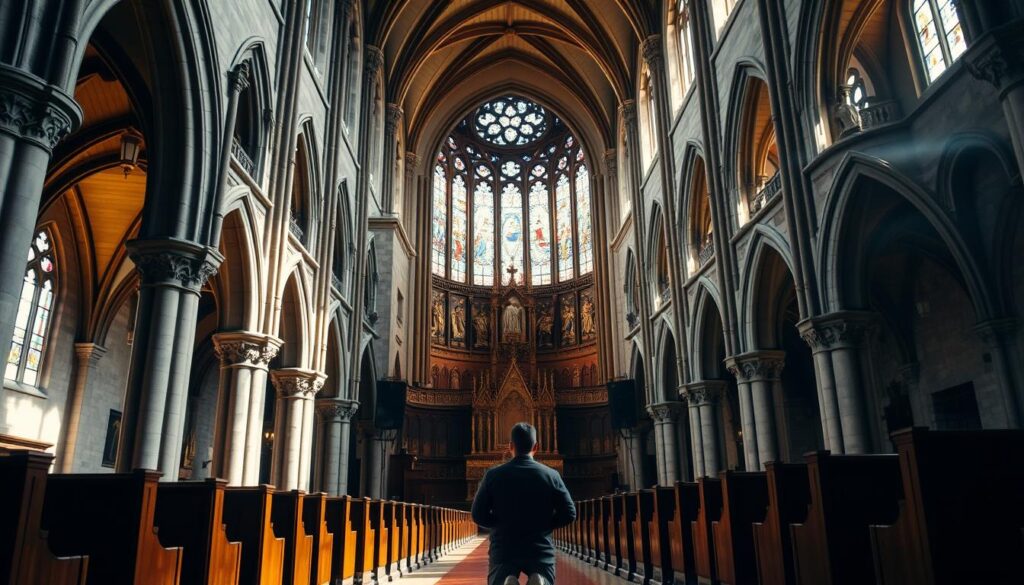
Apostolic Foundations
Early leadership centered on Peter, whom believers recognize as the first pope. The Gospel of Matthew records Jesus declaring: “You are Peter, and on this rock I will build my church.” This passage forms the basis for claims of unbroken papal authority spanning two millennia.
Apostolic succession became vital to maintaining doctrinal consistency. Leaders traced their authority through generations of bishops, creating visible continuity with the original disciples. This system helped standardize practices across growing communities.
The Evolution Through the Roman Empire
Persecution marked Christianity’s first three centuries. Everything changed when Emperor Constantine issued the Edict of Milan in 313 AD, granting legal status to believers. By 380 AD, the faith became the Roman Empire‘s official religion under Emperor Theodosius.
Imperial recognition transformed the church‘s structure. Bishops adopted administrative roles mirroring Roman governance. This blending of spiritual and civic authority shaped global outreach strategies still evident today.
Defining Catholic Doctrine and Core Beliefs
Central to understanding Catholic teachings is the Nicene Creed, a fourth-century statement summarizing essential beliefs. This ancient text unites followers through shared affirmations about the Trinity and Christ’s resurrection. Unlike some Christian groups, the Catholic Church balances scripture with Sacred Tradition – a living transmission of spiritual wisdom passed through generations.
The Nicene Creed and Doctrinal Statements
The Creed serves as a theological anchor, expressing foundational doctrine accepted by most Christians. However, Catholic teachings extend beyond this through decisions by ecumenical councils and papal declarations. The Magisterium – the church’s teaching authority – interprets divine revelation, ensuring consistency across centuries.
This system maintains that both Bible and Tradition flow from the same “sacred deposit of truth”. It allows for developing understandings while preserving core principles. For instance, doctrines about Mary’s Immaculate Conception emerged gradually before becoming formalized in 1854.
Key Dogmas Explained
Seven sacraments form the rhythm of Catholic life, from baptism to last rites. These rituals embody the belief that God’s grace works through physical signs. The Eucharist holds particular significance, with doctrine teaching that bread and wine become Christ’s actual presence during Mass.
Other distinctive teachings include purgatory’s purification process and the pope’s limited infallibility. Salvation combines divine grace with human cooperation – a “faith working through love” approach. Mary’s veneration reflects her unique role in salvation history, though not worship.
The Role and Authority of the Pope
At the heart of Catholic leadership stands a figure recognized worldwide – the Pope. This unique position blends spiritual guidance with institutional authority, tracing its origins to Jesus’ declaration to Peter: “You are Peter, and on this rock I will build my church” (Matthew 16:18). The Catholic Church views this moment as establishing an unbroken chain of leadership spanning two millennia.
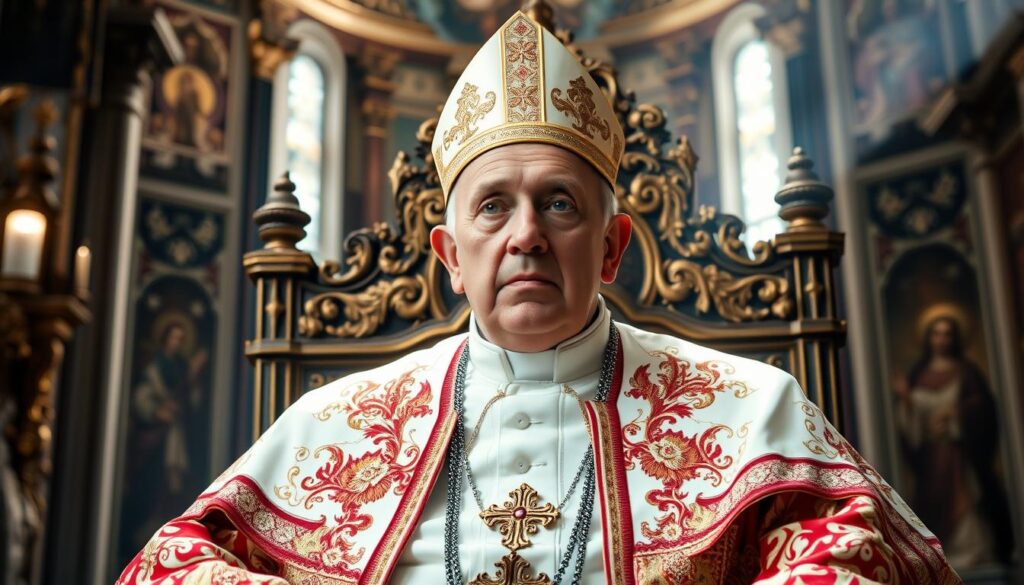
Papal Supremacy and Succession
The concept of apostolic succession forms the backbone of papal authority. Each Pope inherits what believers consider Peter’s mantle as Bishop of Rome. This succession creates a living link between modern worshipers and early Christian communities.
In 1870, the First Vatican Council clarified papal infallibility. This doctrine states the Pope cannot err when defining matters of faith ex cathedra (from the chair of Peter). Such pronouncements remain rare, with only two instances since the council.
Historical Perspectives on the Papacy
Early Roman Christian groups initially operated with multiple leaders. By the mid-2nd century, a single bishop emerged – cementing Rome’s central role as Christianity spread. Political shifts after Constantine’s conversion boosted the bishop’s influence beyond spiritual matters.
Today’s Roman Catholic leadership balances ancient traditions with modern diplomacy. While other Christian denominations favor decentralized governance, the papacy provides unified direction for 1.4 billion adherents. Recent Popes have used this platform to address global issues from climate change to economic inequality.
Structure and Organization of the Catholic Church
Global religious institutions rarely match the Catholic Church‘s intricate organizational design. This centuries-old system blends centralized leadership with regional flexibility, creating a unique balance between unity and diversity.
At its core, the Church operates through 24 self-governing communities. The Latin Church leads with 1.36 billion members, while 23 Eastern Catholic Churches preserve ancient rites like Byzantine and Maronite traditions.
Hierarchical Framework
The Roman Catholic leadership pyramid starts with the Pope, supported by 5,430 bishops worldwide. Cardinals – often archbishops – advise on global matters through the Roman Curia. This administrative hub in Vatican City manages everything from doctrine to diplomacy.
Local governance shines through 3,500 dioceses. Each bishop oversees parishes staffed by 406,996 priests and 51,433 deacons. This structure allows consistent teachings while accommodating cultural differences in worship styles.
| Role | Key Responsibilities | Global Count (2023) |
|---|---|---|
| Pope | Universal church leadership | 1 |
| Cardinals | Elect new pope, advise on policy | 223 |
| Bishops | Diocese management | 5,430 |
| Priests | Parish leadership & sacraments | 406,996 |
Unlike Protestant groups favoring local control, the Roman Catholic Church maintains this tiered system. Parish priests serve as community anchors, while the Curia ensures global coordination – proving ancient systems can adapt to modern needs.
Worship Practices and Liturgical Traditions
Imagine walking into a centuries-old cathedral as incense swirls around vibrant stained glass. This sensory experience captures the heart of Catholic worship, where ancient rituals meet modern devotion. These traditions form both spiritual nourishment and cultural identity for millions.
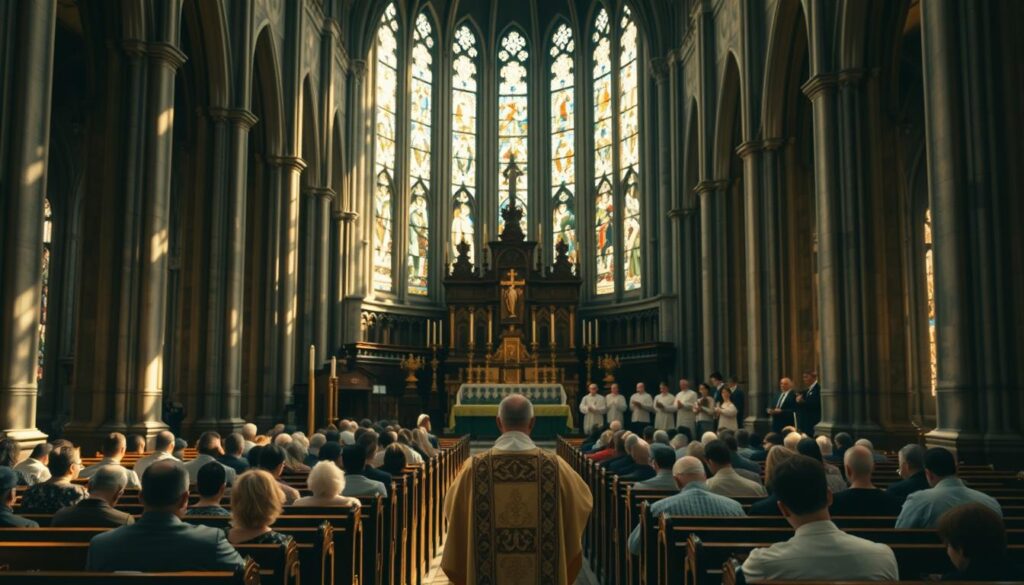
The Mass and Sacraments
At every Catholic Church service, the Eucharist takes center stage. Believers see this ritual as reliving Christ’s sacrifice through consecrated bread and wine. “This is my body,” priests recite, enacting what followers call transubstantiation.
Seven sacraments structure spiritual journeys from birth to death. Baptism welcomes newborns, while confirmation strengthens teens’ faith. Marriage unites couples, and holy orders commission clergy. Each practice uses physical elements – water, oil, rings – to signify divine grace.
Roman and Eastern Rites
While united in belief, Catholic communities celebrate differently worldwide. The Roman Rite uses Latin traditions with local languages. Eastern rites like Byzantine feature standing worship and elaborate icons.
| Rite | Primary Language | Liturgical Features | Regions |
|---|---|---|---|
| Roman | Local vernacular | Kneeling, organ music | Global |
| Byzantine | Church Slavonic | Standing worship, incense | Eastern Europe |
| Alexandrian | Coptic/Arabic | Ancient hymns, clapping | North Africa |
Daily prayer rhythms include rosary beads and morning psalms. Many followers combine communal Mass with personal meditation. These layered traditions create a unique spiritual tapestry within global Christianity.
Religious Symbols, Statues, and Places of Worship
Step into any Catholic church worldwide, and you’ll immediately notice vibrant symbols sparking contemplation. Stained glass windows bathe worshippers in colored light, while marble statues of saints stand like silent mentors. These elements form a visual language guiding believers through sacred stories.
Marian devotion shines through gold-leafed altars dedicated to Jesus’ mother. Shrines like Mexico’s Basilica of Guadalupe draw millions annually. “The faithful implore Mary’s intercession,” explains the Catechism, “not as divine worship but as maternal bond.” Rosary beads and lit candles often accompany these prayers.
Architectural features serve specific spiritual purposes. The tabernacle’s golden doors safeguard consecrated Eucharist hosts. Confessionals offer private reconciliation spaces. Walkways feature Stations of the Cross mosaics, inviting reflection on Christ’s final hours.
Unique symbols mark Catholic identity:
- Red Sacred Heart imagery emphasizing divine love
- Papal crossed keys symbolizing spiritual authority
- White liturgical vestments during Easter celebrations
This rich symbolism contrasts with many Protestant spaces favoring plain crosses. The Catholic Church maintains that images direct attention heavenward rather than receiving worship themselves. As Vatican II clarified: “The honor paid to sacred images is ‘respectful veneration’, not adoration.”
Through these tangible expressions, the church bridges earthly and divine realms. Every statue, stained glass scene, and incense swirl becomes a doorway to deeper prayer – transforming stone and pigment into spiritual compass points.
Catholic Social Teaching and Its Global Impact
Across bustling cities and remote villages, a quiet revolution of compassion unfolds daily. The Catholic Church channels ancient principles into modern action through its social doctrine. At the core lie seven corporal and spiritual works of mercy – feeding the hungry, educating the marginalized, and healing the sick.
This faith community operates over 220,000 institutions worldwide. Nearly 150,000 schools and 5,300 hospitals form the backbone of its outreach. These efforts make the church the largest non-governmental provider of education and healthcare across the world.
Volunteers and religious orders drive initiatives addressing poverty and injustice. From Manila to Milwaukee, soup kitchens and scholarship programs demonstrate practical love in action. Environmental stewardship projects now expand traditional mercy works to include care for our planet.
The Catholic Church’s global network shows how spiritual values can shape societies. By prioritizing human dignity over profit, these efforts continue reshaping communities through the church’s enduring commitment to service.
FAQ
How does the Roman Catholic Church differ from other Christian denominations?
The Roman Catholic Church emphasizes apostolic succession, papal authority, and sacraments like the Eucharist as central to faith. Unlike many Protestant denominations, it teaches that salvation involves both faith and good works, guided by tradition and Scripture.
Why does Catholicism place such importance on Mary and the saints?
Catholics believe Mary holds a unique role as the Mother of God, and saints are seen as intercessors who inspire holiness. This practice stems from early Christian traditions of honoring martyrs and seeking their prayers, rooted in the communion of saints doctrine.
What role does the Pope play in Catholic doctrine?
The Pope is considered the successor of St. Peter and the visible head of the Church. He holds authority to define teachings on faith and morals, a concept called papal infallibility, which applies only in specific, formal circumstances.
Are Catholic teachings based solely on the Bible?
Catholicism relies on both Scripture and Sacred Tradition, as outlined in documents like the Catechism of the Catholic Church. Teachings on purgatory, the Immaculate Conception, and papal authority derive from traditions passed down through centuries.
How do Catholic worship practices reflect its beliefs?
The Mass, centered on the Eucharist, embodies the belief in Christ’s real presence. Sacraments like Baptism and Confession highlight grace as transformative, while liturgical rites connect worshipers to ancient Christian rituals.
What is the Catholic stance on social issues like poverty or justice?
Catholic social teaching emphasizes human dignity, solidarity, and care for the marginalized. Encyclicals like Rerum Novarum address workers’ rights, reflecting the Church’s mission to apply Gospel values to global challenges.
Do Catholics worship statues or symbols?
No—statues, icons, or crosses are used as aids for veneration, not worship. They honor the people or truths they represent, similar to how family photos remind us of loved ones. Worship is reserved for God alone.