Religious debates often spark intense emotions, especially when questioning long-standing traditions. For centuries, discussions about spiritual authority and doctrine have divided faith communities. Some argue specific practices cross into manipulative territory, while others defend their cultural and theological significance.
This debate gained momentum during the Protestant Reformation, which challenged centralized religious power structures. Modern conversations echo these historical tensions, blending personal accounts with academic research. Stories from strict faith environments highlight concerns about control, yet scholars note key differences between mainstream religions and recognized cults.
Analyzing this topic requires nuance. Historical context, theological frameworks, and individual experiences all shape perceptions. What seems restrictive to some represents deep devotion to others. These conflicting views make blanket judgments unreliable.
The global impact of this discussion remains significant. Over a billion individuals identify with this tradition worldwide, making fair evaluation crucial. Labels affect how communities understand their spiritual identity and relationship with institutions.
Key Takeaways
- Historical religious reforms continue influencing modern debates about spiritual authority
- Personal experiences vary widely within faith communities
- Scholars identify both overlaps and distinctions with cult characteristics
- Cultural context plays a vital role in interpreting religious practices
- Objective analysis requires examining multiple perspectives
Historical Foundations and Doctrinal Roots
Faith communities evolve through centuries of tradition and conflict. The Catholic Church built its identity through theological debates and institutional reforms. Early leaders shaped practices still observed today, blending scripture with evolving interpretations.
Building Blocks of Belief
Over 1,500 years of development created a complex system of rituals and rules. Councils like Nicaea (325 CE) established core doctrine, while later decisions reinforced hierarchical authority. This structure unified diverse communities under centralized leadership.
Reformation Reactions
The 16th-century Protestant movement forced dramatic responses. At Trent, leaders doubled down on traditional teachings, rejecting reforms. Vatican II later surprised many by reaffirming these positions. As one bishop noted, “Tradition anchors us through changing tides.”
Modern scholars highlight how early decisions still influence worship styles and power dynamics. These historical choices fuel today’s debates about spiritual freedom versus institutional control.
Personal Narratives from Inside a Closed Community
Behind the walls of strict religious groups, daily life often follows patterns outsiders find difficult to comprehend. The Saint Benedict Center’s story offers a window into how shared beliefs can reshape identities and relationships.
Life at the Saint Benedict Center
Founded in 1940 as a Catholic student hub, this Boston group transformed under Father Leonard Feeney’s leadership. By 1948, members adopted uniform clothing: black suits for men and matching skirts for women. Former residents describe homes where parents surrendered children to communal care, sometimes for months at a time.
| Aspect | Practice | Impact |
|---|---|---|
| Family Structure | Children raised by assigned caregivers | Broken parent-child bonds |
| Appearance | Identical outfits for all members | Loss of personal identity |
| Communication | Restricted outside contact | Social isolation |
Emotional and Familial Impacts
Children faced harsh rules, including bans on speaking to biological parents. One survivor recalled, “We learned fear before we learned faith.” Many women and men struggled for years to rebuild fractured family ties after leaving.
The community’s 1953 collapse left lasting scars. Former members report anxiety in decision-making and difficulty trusting institutions. These stories remind us how spiritual devotion can sometimes overshadow individual wellbeing.
Examining the Debate: is catholicism a cult
Defining religious movements proves challenging when cultural familiarity colors perception. Walter Martin’s framework for identifying groups as cults emphasizes doctrinal divergence from mainstream Christianity. His 1960 work states:
“Any major deviation from orthodox Christianity relative to cardinal doctrines”

Voices from Within
Memoirs reveal patterns matching recognized cult tactics. One author describes childhood rules forbidding medical care during sacramental emergencies. Another book details confession practices used to monitor family loyalty. These accounts highlight:
- Mandatory disclosure of personal doubts
- Restricted access to external information
- Public shaming for questioning traditions
Academic Double Standards
Researchers acknowledge structural parallels with groups like Mormons while avoiding specific labels. Dr. Janja Lalich notes: “Large institutions often escape scrutiny through social acceptance.” A 2022 study found:
| Cult Criteria | Catholic Practice | Jehovah’s Witnesses |
|---|---|---|
| Exclusive salvation claims | Extra Ecclesiam nulla salus | 144,000 elect |
| Leadership authority | Papal infallibility | Governing Body |
This selective analysis raises questions about consistency in religious studies. The way communities implement doctrine matters more than membership numbers when evaluating potential harm.
Cultural and Liturgical Traditions: Misconceptions and Realities
Many modern observers mistakenly attribute Catholic traditions to pagan influences. Historical research reveals surprising connections to older spiritual practices rooted in sacred texts. Let’s explore how ancient rituals evolved into contemporary worship patterns.
The Origins of Rituals and Celebrations
Sunday worship dates back to apostolic times. Early Christians gathered on the “Lord’s Day” (Revelation 1:10) to commemorate Jesus’ resurrection. This practice began decades before Roman sun-worship gained popularity.
December 25th’s date stems from Jewish-Christian calculations rather than pagan festivals. Scholars trace it to the Annunciation celebration on March 25th – exactly nine months before Christmas. Roman sun cults actually honored their god on August 9th, not winter solstices.
Incense use in worship appears in Exodus 30:8 and Revelation 5:8. These biblical roots challenge claims of pagan borrowing. As historian Michael Hesemann notes: “First-century synagogue practices shaped many Catholic traditions.”
Modern misunderstandings often arise from confusing cultural adaptations with core beliefs. While some surface-level things changed over times, the essential faith elements remained consistent. Critical analysis separates factual history from persistent myths.
Recognizing these origins helps evaluate claims objectively. When studying religious day-to-day rituals, context matters more than surface similarities. True understanding comes from tracing traditions to their original dates and purposes.
Authority, Dogma, and the Structure of the Catholic Church
Religious institutions often balance spiritual guidance with organizational structure. The Roman Catholic Church maintains a unique framework that combines ancient traditions with modern governance. This system has drawn both admiration and criticism over centuries.
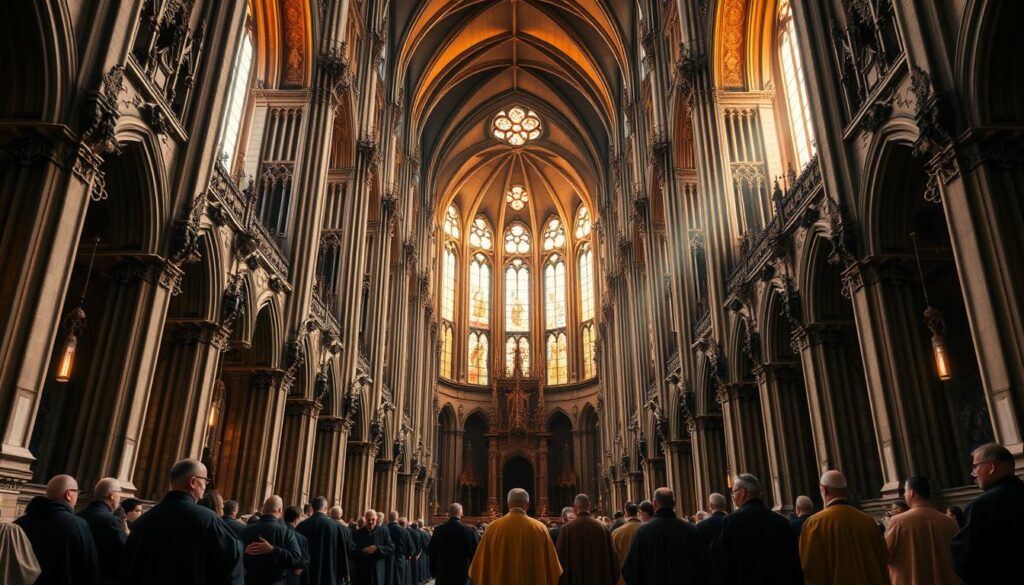
Absolute Obedience and Hierarchical Control
Canon law outlines strict expectations for members. Code 212 requires “absolute obedience” to clergy, while Canon 333 blocks appeals against papal decisions. Cardinal Ratzinger’s writings emphasize that conscience cannot override official teachings.
The Church’s Basic Catechism states sacraments are “chief means of salvation.” Baptism specifically gets called “necessary” for spiritual cleansing. Critics argue this creates reliance on institutional rituals rather than personal faith.
Comparisons with Other Religious Organizations
Many groups share similar authority models. The table below shows how different traditions approach leadership and doctrine:
| Organization | Leadership Model | Salvation Doctrine |
|---|---|---|
| Roman Catholic | Papal hierarchy | Sacraments required |
| Southern Baptist | Congregational | Faith alone |
| Mormon (LDS) | Prophet-led | Works + ordinances |
This comparison reveals varied approaches to spiritual authority. While the Roman Catholic system appears more centralized, most religions maintain some form of doctrinal structure. The key difference lies in how communities implement these frameworks.
Comparing Catholic and Protestant Traditions
Christian traditions often share more common ground than casual observers realize. While theological debates grab headlines, most worshippers experience faith through shared rituals and scriptures. This overlap becomes clear when examining core practices across denominations.

Shared Beliefs and Diverging Practices
Protestant and Catholic churches worldwide both affirm foundational Christian teachings. They worship the same Trinity and use scripture canonized by early Catholic Church councils. Many celebrate holidays like Christmas using dates established through Catholic tradition.
Key differences emerge in three areas:
- Authority: Protestant groups reject papal leadership while maintaining Catholic-derived church structures
- Sacraments: Most recognize fewer formal rituals than Catholic tradition requires
- Interpretation: Individuals often interpret scripture directly rather than through clergy guidance
This comparison opens new window into how faith communities evolve. Churches that split during the Reformation kept 78% of Catholic liturgical elements according to Yale research. Yet they reshaped these practices around local leadership models.
The global spread of Christianity shows both traditions adapting to cultural contexts. From Brazilian megachurches to German cathedrals, shared roots create unexpected connections. Understanding these links helps explain why accusations about specific groups often miss broader historical patterns.
Modern Implications: Faith, Media, and Public Perception
Digital platforms have transformed how spiritual communities engage with society. Television networks and online spaces now shape religious dialogues in unprecedented ways, creating both unity and tension among believers.
Media Narratives and Cultural Critiques
Major Christian broadcasters like TBN and CBN face scrutiny for downplaying historical divides. When networks open new windows of cooperation with Catholic groups, critics argue they erase Reformation-era sacrifices. “Martyrs died over these differences,” notes one theologian, “not mere semantics.”
Social media opens fresh debates through viral testimonies and scholarly threads. Platforms let people share personal journeys from strict traditions to modern practices. These stories reach global audiences, challenging old assumptions.
Recent years show evangelical leaders partnering with Catholic charities and schools. While some celebrate this unity, others see compromise. As one pastor observes: “True progress respects history while building bridges.”
The internet age opens a complex window into faith exploration. Young believers now access centuries-old documents alongside contemporary critiques. This dual exposure helps people form nuanced views beyond media soundbites.
These developments reveal a changing spiritual landscape. How communities navigate tradition and innovation may define religious discourse for coming years. The world watches as ancient institutions meet digital-age challenges.
FAQ
How does Catholicism differ from groups labeled as cults?
The Roman Catholic Church emphasizes a 2,000-year-old global tradition, sacraments, and structured theology. Unlike cults, it encourages critical thought, integrates with broader society, and allows members to maintain family ties while practicing faith.
What role does the Council of Trent play in Catholic doctrine?
The Council of Trent (1545–1563) clarified teachings on salvation, scripture, and sacraments during the Reformation. It solidified doctrines like transubstantiation and reinforced the Church’s authority, shaping modern Catholic identity.
Are Catholic rituals rooted in ancient practices?
Many traditions, like the Eucharist or Lent, trace back to early Christianity. These rituals evolved over centuries, blending biblical teachings with cultural influences, and remain central to worship and communal identity.
How do Catholic teachings on authority compare to other religions?
The Church’s hierarchy, led by the Pope, emphasizes apostolic succession. While similar to Orthodox or Anglican structures, it contrasts with Protestant groups that prioritize individual interpretation of scripture.
Do personal testimonies criticize Catholicism as controlling?
p>
Q: Why do media portrayals of Catholicism vary widely?
Films and books often highlight extremes—either idealized piety or scandal. Scholars argue these narratives oversimplify a diverse global community of over 1.3 billion people with varied lived experiences.
Q: What similarities exist between Catholic and Protestant worship?
Both share core Christian beliefs, like the Trinity and resurrection. Differences emerge in practices—veneration of saints, papal authority, and the role of tradition versus sola scriptura in Protestantism.