For nearly two millennia, Christian communities shared a unified stance on family planning methods. Leaders across denominations consistently opposed artificial methods of preventing pregnancy, viewing them as contradictory to divine design. This historical consensus began shifting dramatically in the 20th century, creating one of modern religion’s most complex discussions.
The 1920 Lambeth Conference marked a turning point when Anglican leaders first reconsidered traditional views. While most Protestant groups later adapted their teachings, one institution maintained its original position. This divergence raises important questions about faith, ethics, and personal choice in today’s world.
Understanding this topic requires examining ancient theological principles alongside modern healthcare realities. We’ll explore how scriptural interpretations and natural law philosophy shape current teachings about family planning. You’ll also discover how these beliefs interact with contemporary issues like medical advancements and legal debates.
Key Takeaways
- Christian traditions universally opposed artificial pregnancy prevention until the 1900s
- The Anglican Church’s 1930 policy shift created major denominational divides
- Scriptural analysis and natural law form the foundation of ongoing teachings
- Modern applications intersect with healthcare, law, and social norms
- Personal faith decisions often balance doctrine with practical life considerations
Historical Perspectives on Contraception in Christian Traditions
Until the 1900s, Protestant and Catholic leaders alike condemned artificial contraception methods. This shared stance crumbled when the Anglican Church reshaped its position contraception policies at the pivotal 1930 Lambeth Conference. What followed was one of Christianity’s most dramatic doctrinal splits.
Early Church Views and Jewish Traditions
Ancient Jewish teachings viewed procreation as sacred. Early Christians adopted this perspective, with Clement of Alexandria calling seed waste “against nature.” Augustine later described certain form contraception as “poisons” disrupting divine plans. These ideas became foundational for centuries of unified teaching.
“Onan’s sin wasn’t just disobedience – it was a perversion of life’s purpose,” wrote Martin Luther, echoing earlier thinkers.
Shifts in Protestant and Anglican Approaches
The 1930 Lambeth Conference changed everything. Anglican leaders cautiously approved some contraception uses, creating ripple effects. Within decades, most Protestant groups reversed their historical opposition. This table shows key changes:
| Denomination | Pre-1930 Stance | Post-1930 Position |
|---|---|---|
| Anglican | Prohibited | Limited approval |
| Lutheran | Condemned | Permitted |
| Presbyterian | Forbidden | Neutral |
This rapid shift left one major faith group maintaining traditional views. While others embraced widespread use of modern form contraception, certain teachings remained anchored in ancient principles.
The Catholic Church’s Teaching on Contraceptives
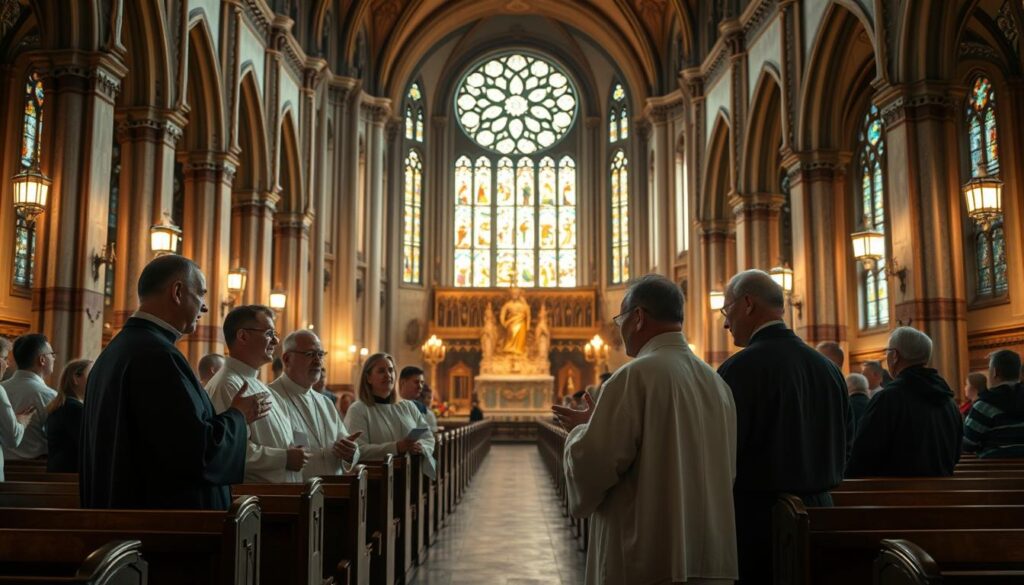
Modern religious discussions about family planning often center on one pivotal document. In 1968, Pope Paul VI released Humanae Vitae, reaffirming traditional views with new clarity. This encyclical remains the cornerstone of church teaching on marital relationships and reproductive ethics.
Foundational Encyclicals and Papal Declarations
Humanae Vitae defines contraceptives as any action interfering with conception during intimacy. The text states: “Each marital act must remain open to transmitting life.” This principle stems from the belief that humans should cooperate with natural processes rather than control them.
The Catechism of the Catholic Church supports this view, calling contraceptive use “intrinsically evil.” Church leaders emphasize this isn’t merely a rule but part of divine design. Recent popes have expanded these ideas through works like John Paul II’s teachings on marital unity.
Natural Law, Onan, and Moral Reasoning
Central to the church teaching is natural law philosophy. It teaches that intimacy serves two purposes: bonding partners and creating life. Blocking either purpose violates the act’s integrity.
“Deliberately frustrating conception mocks God’s plan for love,” explains a Vatican commentary on Humanae Vitae.
This table contrasts key concepts:
| Aspect | Contraception | Natural Methods | Church View |
|---|---|---|---|
| Purpose | Prevent conception | Track fertility | Cooperate with nature |
| Moral Status | Intrinsically wrong | Morally acceptable | Based on natural law |
| Example | Barrier methods | Cycle tracking | Approved practice |
While modern debates continue, the Catechism Catholic Church maintains these teachings as unchangeable. Pope Paul‘s vision still guides millions in balancing faith with family decisions.
Core Arguments in catholicism and birth control
Religious debates about family planning methods often return to foundational texts and ancient wisdom. Two key elements shape this ongoing discussion: scriptural analysis and centuries of theological interpretation.
Scriptural Interpretations and Biblical Narratives
The Genesis account of Onan remains pivotal in these discussions. When Judah ordered Onan to fulfill his duty to his brother’s wife, the man chose a forbidden method instead. His punishment – divine retribution – suggests more than simple disobedience.
| Biblical Passage | Required Action | Penalty for Refusal |
|---|---|---|
| Deuteronomy 25:7-10 | Levirate marriage | Public shame |
| Genesis 38:8-10 | Same requirement | Death |
This contrast highlights why scholars view Onan’s act as uniquely sinful. Early Christian thinkers like Augustine argued his form of contraception violated creation’s natural order.
Apostolic Tradition and Early Christian Thought
Church leaders consistently condemned intentional seed waste. Clement of Alexandria called it “defying nature’s purpose,” while Jerome linked it to moral corruption. Their views became bedrock for later teachings.
“What Onan did transformed a sacred act into selfishness,” wrote Martin Luther centuries later. “No wonder heaven’s wrath followed.”
These perspectives united Christian traditions until modern times. The law of fruitfulness, they believed, applied to all marital relationships – not just special cases involving a dead brother.
Modern Applications and Natural Family Planning Methods
Scientific advancements have transformed traditional approaches to managing fertility. Today’s natural family planning methods combine biological insights with digital tools, creating solutions that respect religious principles while matching modern lifestyles.

Effectiveness and Scientific Developments
Modern methods track multiple fertility indicators for precision. Users monitor:
- Basal body temperature patterns
- Cervical mucus consistency changes
- Urinary hormone levels via test strips
A 2007 Human Reproduction study found these techniques equally effective as the contraceptive pill when properly applied. Researchers noted a 99% success rate in avoiding pregnancy among committed users.
Designing Marriages Around Natural Family Approaches
Couples report unexpected benefits from shared responsibility. “Tracking cycles together improved our communication,” shares Emily, a mother of three from Ohio. “We’re partners in every decision now.”
University of Chicago data reveals divorce rates under 1% among married couples practicing these methods. This contrasts sharply with national averages exceeding 40%. The approach fosters:
- Mutual understanding of reproductive health
- Scheduled intimacy that builds anticipation
- Joint accountability for family goals
“Switching from hormonal options helped me reconnect with my body and my spouse,” says Sarah, 34. “It’s about teamwork, not just biology.”
Legal and Ethical Considerations Surrounding Contraceptive Use

Legal battles over contraceptive rights have reshaped healthcare policies and religious freedoms in the U.S. Landmark Supreme Court rulings established privacy protections while creating tensions with faith-based institutions. These decisions continue to influence how medical professionals balance patient needs with organizational values.
Key Court Cases and Privacy Rights
Three pivotal cases transformed access to family planning resources. Griswold v. Connecticut (1965) first recognized contraception as a private marital decision. Later rulings extended these rights to unmarried women and older minors, forming a legal safety net.
| Case | Year | Impact |
|---|---|---|
| Griswold v. Connecticut | 1965 | Established marital privacy rights |
| Eisenstadt v. Baird | 1972 | Extended access to single adults |
| Carey v. Population Services | 1977 | Protected minor access (16+) |
Healthcare Ethics in Faith-Based Settings
Catholic medical institutions follow strict guidelines prohibiting contraceptive prescriptions. Employees face tough choices when patients request these services. “I took an oath to help people,” shares a nurse from a Chicago hospital, “but our policies limit certain care options.”
The principle of double effect allows limited exceptions. Providers may prescribe hormone treatments for acne while acknowledging potential contraceptive side effects. However, direct use for pregnancy prevention remains forbidden.
“Our mission heals bodies and souls,” explains a Catholic hospital administrator. “We refer patients elsewhere for services conflicting with our beliefs.”
This approach helps institutions maintain religious integrity while acknowledging diverse community needs. Still, critics argue it creates barriers for women relying on faith-based healthcare networks.
Impact on Family Dynamics and Societal Norms
Family planning choices shape homes and communities in unexpected ways. While modern methods offer new freedoms, they’ve also reshaped expectations about relationships and responsibility. These changes carry deep implications for how we understand commitment and care.
The Role of Contraception in Marital Stability
Access to pregnancy prevention transformed how couples approach marriage. Some studies suggest separating sex from procreation altered perceptions of lifelong commitment. Partners now face complex decisions about timing children while maintaining emotional bonds.
Pope Paul VI’s 1968 warnings predicted strained relationships when intimacy loses its natural purpose. Data shows divorce rates tripled between 1960-1980 as contraceptive use became widespread. Yet many women report feeling empowered to choose when to start families.
Societal Consequences and Shifts in Family Structure
Broader cultural changes followed reproductive innovations. U.S. abortion rates climbed 128% between 1973-1990 despite contraceptive availability. Family sizes shrank as dual-career households became common, altering traditional roles for men and women alike.
These shifts raise questions about valuing life across generations. Smaller families often mean more resources per child, but fewer siblings to share caregiving duties later. Society continues grappling with balancing personal freedom and collective responsibility.
FAQ
What’s the Catholic Church’s stance on using contraceptives?
The Church opposes artificial methods, emphasizing natural law and the belief that sex must remain open to life. Documents like Humanae Vitae (1968) reinforce this teaching, promoting natural family planning as the only acceptable option for married couples.
How do Protestant views differ from Catholic teachings on contraception?
Many Protestant denominations, including the Anglican Church, shifted positions after the 1930 Lambeth Conference, allowing contraceptive use within marriage. This contrasts with Catholicism’s unwavering stance against artificial methods.
What biblical stories influence the Church’s opposition to birth control?
The story of Onan (Genesis 38:8–10) is often cited, where his refusal to fulfill a levirate marriage duty is interpreted as a condemnation of interfering with procreation. Early Church Fathers also linked this narrative to moral arguments against contraception.
Is natural family planning effective compared to other methods?
When practiced correctly, natural family planning (NFP) can be 97–99% effective. Modern tools like fertility trackers and hormone monitors have improved accuracy, though it requires commitment and education for couples.
How does Catholic teaching address contraception in healthcare settings?
Institutions adhering to Ethical and Religious Directives often prohibit prescribing contraceptives. This creates ethical dilemmas, such as in cases where maternal health risks clash with doctrinal policies.
Has contraception use affected societal views on marriage?
Studies suggest widespread contraceptive access correlates with shifts in family structure, including delayed parenthood and smaller families. Critics argue it challenges traditional marital stability, while supporters highlight autonomy for women.
What role does apostolic tradition play in this debate?
The Church Fathers, like Augustine, condemned practices seen as obstructing life. These teachings became codified through encyclicals and the Catechism of the Catholic Church, framing contraception as a violation of divine design.
Are there exceptions for contraceptive use in Catholic doctrine?
Exceptions are rare. The Church permits methods like NFP to space pregnancies for “serious reasons,” but strictly forbids abortion, sterilization, or barrier methods. Medical treatments with unintended contraceptive effects may be allowed under the principle of double effect.