For believers around the world, the weeks leading to December 25th mark a sacred journey of hope and reflection. This season centers on celebrating the birth of Jesus Christ—a cornerstone of faith that unites families through timeless rituals. The Church’s calendar places this celebration second only to Easter, emphasizing its profound spiritual significance.
Rooted in centuries of history, these customs blend prayer, community, and symbolic gestures. Many begin with Advent, a four-week period of preparation filled with candlelit wreaths, scripture readings, and acts of kindness. These practices create anticipation, turning homes into spaces of reverence even amid modern life’s hustle.
From midnight Mass to Nativity displays, each tradition carries layers of meaning. Families often adapt rituals to fit today’s world while preserving their core purpose: honoring the miracle of God’s love made tangible. This guide explores how these enduring practices deepen faith and strengthen bonds during the year’s most joyful season.
Key Takeaways
- The Christmas season holds deep spiritual importance, focusing on Jesus’ birth as a central event in the Church year.
- Advent traditions like wreaths and daily reflections help families prepare their hearts for the celebration.
- Historical customs blend with modern adaptations to keep rituals relevant and meaningful.
- Community gatherings, especially liturgical services, reinforce shared beliefs and unity.
- Simple home practices can create lasting memories while maintaining the season’s sacred focus.
The Sacred Meaning Behind Catholic Christmas
At the heart of this season lies a truth that reshapes history: the Creator entering creation as a child. This event—called the Incarnation—reveals a divine desire to walk alongside humanity. It’s not just a story from long ago but a living reality that continues to transform lives today.
Reflecting on the Incarnation
The feast commemorating Jesus’ arrival bridges heaven and earth. By taking human form, God showed that every life holds infinite value. This act of love wasn’t temporary—it echoes in each Mass, where bread and wine become His presence anew.
Families often ponder this mystery through Nativity scenes. The manger’s simplicity reminds us that holiness thrives in humble spaces. Just as Mary welcomed the mother God chose, believers are called to nurture faith in everyday moments.
Symbolism in Catholic Celebrations
Stars guiding shepherds, angels singing peace—these symbols point to deeper truths. The Christmas star, for instance, represents hope piercing darkness. Candles lit during services mirror the light Christ brought to the world.
These traditions aren’t mere decorations. They invite reflection on how divine love took flesh to redeem and unite. By embracing these symbols, households keep the birth Christ’s message alive across generations.
Advent: The Start of a Holy Season
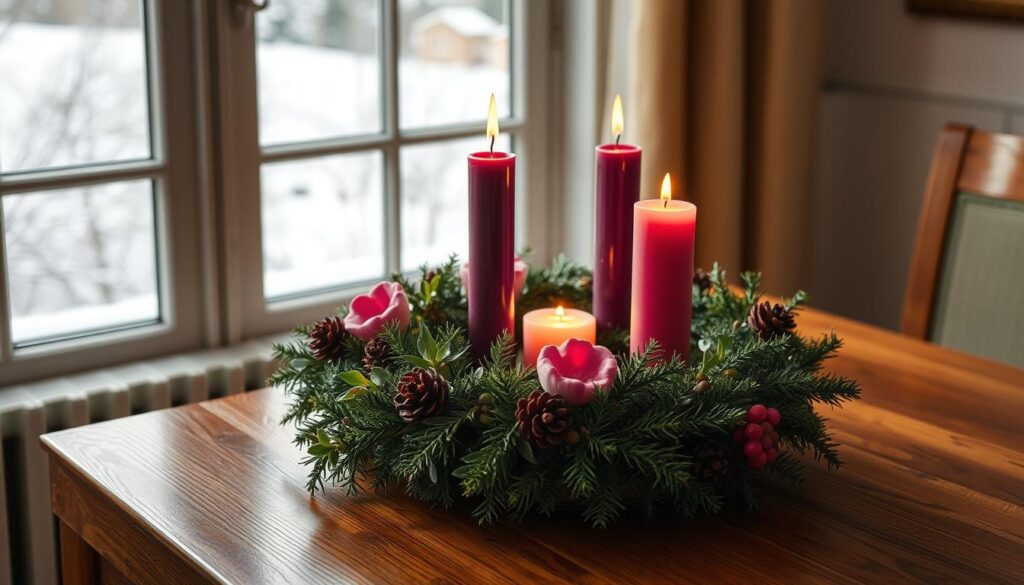
As autumn leaves fall, many households begin a spiritual countdown marked by candlelight and quiet reflection. This four-week period serves as a sacred bridge between ordinary days and divine celebration. Families gather around evergreen wreaths, their flickering flames cutting through the early winter darkness.
Lighting the Advent Wreath
The circular wreath’s endless shape mirrors God’s eternal love. Each Sunday, a new candle joins the growing light. The progression from one flame to four creates a tangible connection between waiting and fulfillment.
| Candle | Theme | Color |
|---|---|---|
| First | Hope | Purple |
| Second | Peace | Purple |
| Third | Joy | Rose |
| Fourth | Love | Purple |
Prayers and Reflections During Advent
Daily practices help hearts stay focused. Many use devotional booklets or scripture passages. These moments of pause counteract holiday stress, creating space for gratitude.
Children often participate through simple acts. Placing straw in manger scenes or performing kindnesses teaches that preparation involves both prayer and action. This tradition roots excitement in spiritual growth rather than material anticipation.
The season’s rhythm invites everyone to slow down. Whether through shared meals or evening prayers, families find their own ways to honor this time of sacred waiting. These christmas traditions transform homes into sanctuaries of hope.
Creating a Nativity Scene at Home
Setting up a nativity display transforms any room into a sacred space of reflection and joy. This visual retelling of Jesus’ birth invites households to center their celebrations on faith’s deepest truths. By arranging figures and symbols, families create a living story that transcends time.
Designing a Meaningful Display
Start with a simple stable or manger as the foundation. Place the holy family—Mary, Joseph, and baby Jesus—at the heart of the scene. Surround them with figures that reflect the biblical account, each adding layers of meaning.
| Figure | Symbolism | Placement Tip |
|---|---|---|
| Shepherds | Humility | Near the manger |
| Wise Men | Seeking truth | Approaching from afar |
| Angels | Divine joy | Above the stable |
| Animals | Creation’s witness | Clustered around Jesus |
Key Figures and Their Significance
Mary’s posture often shows quiet devotion, embodying trust in God’s plan. Joseph stands protectively nearby, modeling steadfast care. The Christ child’s manger reminds us that greatness often begins in simplicity.
Shepherds represent those who respond immediately to hope. Wise men symbolize lifelong spiritual seeking. Together, they illustrate how all are welcome in this story of redemption.
Place your nativity where daily life unfolds—a kitchen counter or living room shelf. This ensures the holy family’s presence becomes part of your family’s rhythm, turning ordinary moments into reminders of divine love.
Journey Through Salvation: The Jesse Tree
During Advent, many households bring biblical history to life through a unique visual story. The Jesse Tree, named after King David’s father, transforms scripture into a hands-on experience. Its roots lie in Isaiah’s prophecy: “A shoot shall sprout from the stump of Jesse…” (Isaiah 11:1). This living symbol connects Old Testament promises to Jesus’ birth, making ancient truths tangible for all ages.
Tracing Biblical Lineage
Each ornament on the Jesse Tree represents a chapter in salvation’s grand narrative. From Adam’s apple to David’s staff, symbols reveal how God’s plan unfolded across generations. Families explore key figures like Noah, Abraham, and Ruth, discovering how their lives paved the way for the Messiah.
| Symbol | Figure | Meaning |
|---|---|---|
| Rainbow | Noah | Promise of hope |
| Ladder | Jacob | Heaven’s connection |
| Stone Tablets | Moses | Guidance through law |
| Lion | Daniel | Faith under pressure |
DIY Jesse Tree Ornament Ideas
Creating ornaments becomes a cherished family ritual. Use simple materials like salt dough, felt, or wood slices. Carve a tiny ark for Noah or paint a star for Abraham. As children craft, share how each piece fits into Jesus’ lineage.
Display the Jesse Tree where daily activities happen—kitchen tables or living rooms work perfectly. This tradition turns December into a walk through scripture, blending creativity with spiritual growth. By Christmas Eve, the bare branch overflows with reminders of God’s faithful love.
Honoring Saints: Feast of St. Nicholas
December brings more than cold winds—it carries forward a legacy of secret generosity. On December 6th, believers celebrate the feast day of a fourth-century bishop whose life reshaped how we view giving. St. Nicholas’s story begins with radical compassion: he inherited wealth but chose to distribute it anonymously to protect dignity.

Traditions of St. Nicholas Day
Children polish their shoes each December 5th, placing them by windows or doors. Overnight, these empty vessels fill with oranges, coins, or small gifts—echoing the saint’s habit of tossing gold through open windows. Some families add handwritten notes praising kind acts observed that year.
Acts of Generosity Inspired by St. Nick
Modern celebrations extend beyond treats. Many households bake cookies for neighbors or donate coats to shelters. These ways of serving mirror Nicholas’s belief that true joy comes from lifting others quietly.
Parents often share his story: how he saved girls from poverty by funding dowries or fed villages during famines. These tales turn historical facts into sparks for modern kindness. By blending fun with purpose, the feast st. Nicholas bridges ancient faith and today’s world.
Embracing Diverse Catholic Christmas Traditions
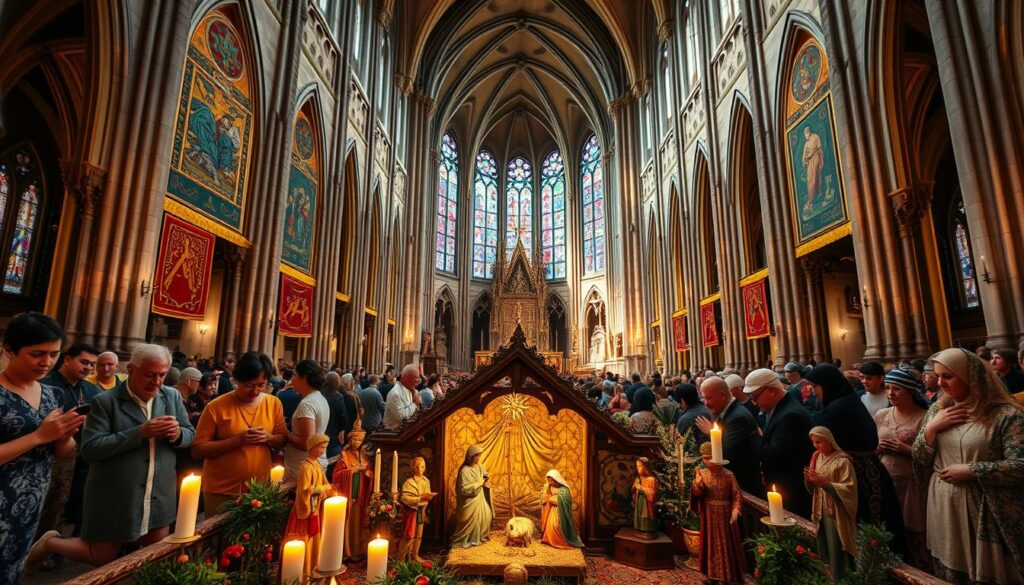
From bustling cities to quiet villages, the season’s joy takes shape through countless cultural lenses. While core beliefs remain unchanged, local customs add vibrant threads to the Church’s global tapestry. This rich variety shows how faith flourishes within every community’s unique story.
Cultural Variations in Celebration
In the Philippines, dawn breaks with Simbang Gabi—nine early morning Masses leading to Christmas Eve. Families brave the dark, their devotion mirrored in flickering candlelight. This practice blends sacrifice with anticipation, creating lasting spiritual memories.
Mexico’s tradition of Las Posadas turns neighborhoods into living scriptures. Neighbors reenact Mary and Joseph’s search for shelter, ending each night with song and sweet tamales. The ritual transforms ancient history into shared experience.
| Region | Custom | Meaning |
|---|---|---|
| Poland | Sharing oplatek wafer | Unity and forgiveness |
| Italy | Feast of Seven Fishes | Abundance through community |
| Ethiopia | Ganna fasting & games | Joy in simplicity |
European Advent markets fill town squares with handmade crafts and spiced treats. These gatherings mix fellowship with preparation, reminding visitors that celebration begins in hopeful waiting. Each stall whispers of centuries-old ways to honor the season.
By exploring these global christmas traditions, families discover new depth in familiar beliefs. Whether adding Swedish star lanterns or Lebanese date desserts, blending customs can make the world feel a little more like home—and heaven a little nearer to earth.
Understanding Liturgical Celebrations and Mass
As twilight deepens on December 24th, churches glow with candlelight and song. The liturgical season opens with vigil Masses, marking a sacred transition from waiting to wonder. This period stretches beyond Christmas Day, inviting reflection on how divine love entered human history—and hearts.
Christmas Eve Vigil and Midnight Mass
The night before the feast brims with anticipation. Services often begin in near-darkness, echoing the world before hope’s arrival. Readings trace salvation’s story, while carols like “O Holy Night” swell as midnight nears. This moment celebrates light breaking through darkness, both literally and spiritually.
The Significance of Christmas Day Mass
Morning services radiate joy, focusing on the Incarnation’s reality. Families gather in festive attire, their day anchored in gratitude. The Eucharist becomes the ultimate celebrate feast, uniting global believers in one timeless mystery.
From hushed vigils to sunlit services, these rituals remind us that celebrate Christmas means more than memories—it’s living the story anew. Whether through shared hymns or quiet prayer, each act weaves faith into life’s fabric.
FAQ
Why is the Advent wreath important in Catholic tradition?
The Advent wreath symbolizes hope, peace, joy, and love as believers prepare for Christ’s birth. Lighting its candles each week fosters reflection and unity during the holy season.
How does the Nativity scene deepen the meaning of Christmas?
Displaying figures like Mary, Joseph, and the infant Jesus reminds families of humility and God’s presence in everyday life. It visually connects the story of salvation to the home.
What role do saints like St. Nicholas play in Christmas celebrations?
St. Nicholas inspires acts of generosity, reflecting Christ’s love. Traditions like secret gift-giving honor his legacy of compassion and service to those in need.
Why is Midnight Mass central to Catholic Christmas?
Attending Mass on Christmas Eve or Day celebrates Jesus’ birth as the fulfillment of God’s promise. It unites communities in worship and gratitude for the gift of salvation.
How does the Jesse Tree connect to the Christmas story?
By tracing biblical figures through ornaments, the Jesse Tree highlights God’s plan across generations. It helps families explore Scripture while anticipating the Nativity.
Are there cultural traditions tied to Catholic Christmas?
Yes! From Mexican posadas to Filipino Simbang Gabi, diverse customs enrich celebrations while honoring shared beliefs about Christ’s birth and the hope it brings.
What makes the Feast of the Holy Family significant?
Celebrated shortly after Christmas, this feast emphasizes love, faith, and unity within families. It encourages imitating Mary and Joseph’s trust in God’s guidance.