For centuries, the Catholic Church held strong views about honoring the departed. Traditional teachings emphasized burial as the only acceptable way to respect the human body, seen as a sacred creation. This stance stemmed from ancient theological principles and a desire to distance the faith community from pagan rituals that involved burning remains.
Attitudes began shifting in 1963 when the Church updated its position. While still preferring burial, it allowed cremation under specific conditions. This change reflected modern realities like limited cemetery space and evolving family preferences. Today, many followers choose this option while striving to align it with their religious beliefs.
Current guidelines emphasize treating ashes with reverence. The Church insists they be stored in sacred spaces, not scattered or kept at home. These rules aim to maintain respect for the body’s role in spiritual teachings about resurrection and eternal life.
Key Takeaways
- The Church transitioned from banning cremation to allowing it in 1963
- Traditional teachings link bodily integrity to resurrection beliefs
- Ashes must be treated with dignity and placed in consecrated ground
- Modern acceptance balances practical needs with theological values
- Families should consult local parishes when planning arrangements
Historical Perspectives on Cremation in the Catholic Church
The relationship between the Catholic Church and cremation has evolved significantly over hundreds of years. Early teachings prioritized traditional burial as the sacred way to honor the deceased, rooted in resurrection theology. This approach also countered pagan Roman practices that mocked Christian martyrs.
Traditional Beliefs and Early Opposition
For centuries, the Church viewed cremation as incompatible with core beliefs. Ancient Romans burned Christian martyrs’ bodies to challenge their hope in bodily resurrection. This history made burial a powerful symbol of faith – preserving the body for its promised renewal at the end of time.
Church leaders emphasized that intact remains best reflected spiritual teachings about life after death. Cremation became associated with pagan rituals and denial of resurrection, leading to its outright ban for members.
Evolution of Church Teachings and the 1963 Shift
A major shift occurred when the Vatican updated its stance in 1963. Practical challenges like limited cemetery space and rising costs prompted reconsideration. The Church now permits cremation if chosen for practical reasons – not to reject resurrection beliefs.
This change balanced ancient teachings with modern needs. Guidelines require ashes to be treated with the same respect as full remains, stored in consecrated locations. The update showed how timeless teachings could adapt to new realities while maintaining theological integrity.
Catholicism on Cremation: Modern Guidelines and Practices
Modern Catholic practices blend ancient traditions with contemporary needs. Updated rules allow families to make practical choices while honoring spiritual values. The Church’s approach balances respect for the human body with compassion for modern realities.
Understanding the Official Church Stance
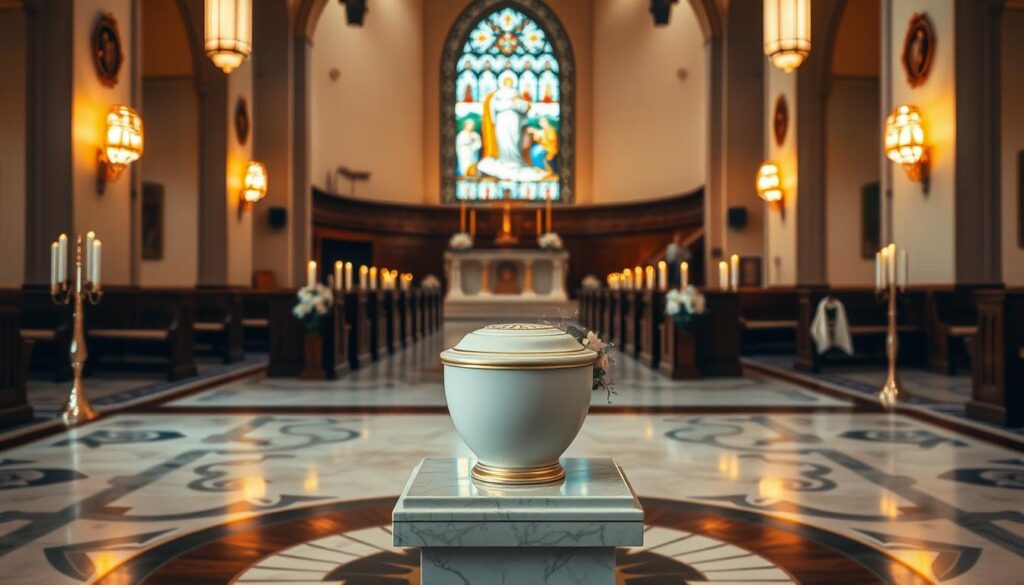
The 1983 Code of Canon Law clarified that choosing cremation doesn’t conflict with Christian beliefs. Leaders emphasize this practice doesn’t hinder God’s power to resurrect the body. A 2016 Vatican document reaffirmed burial as the preferred option but permitted cremation when done respectfully.
| Aspect | Traditional Burial | Cremation Guidelines |
|---|---|---|
| Church Preference | Strongly encouraged | Permitted with conditions |
| Handling of Remains | Buried intact | Ashes stored in sacred space |
| Permitted Reasons | N/A | Cost, space, family needs |
Adapting to Contemporary Funeral Needs
Many families choose cremation today due to limited cemetery space or financial concerns. The Church allows this provided decisions reflect faith in resurrection rather than reject it. Ashes must be placed in consecrated ground – never scattered or kept at home.
Local parishes help navigate these guidelines while respecting personal circumstances. This flexibility shows how timeless teachings adapt to new challenges without compromising core values.
Funeral Rites and Ceremonial Traditions
Catholic funeral traditions provide a sacred framework to honor loved ones while affirming beliefs about eternal life. These time-honored practices guide families through grief while celebrating the deceased’s spiritual journey.
The Structure of a Traditional Catholic Funeral
The Church organizes funeral rites into three meaningful stages. The Vigil, often called a wake, allows family members to gather for prayers and shared memories. This initial step creates space for emotional healing within the faith community.
Central to the process is the Funeral Mass, celebrated in the parish church. The body present or cremated remains rest near the altar, covered with a white pall symbolizing baptismal purity. Scripture readings and Eucharistic celebration anchor this solemn service.
Role of the Funeral Mass and Committal Service
During the Mass, priests emphasize Christ’s victory over death through Gospel messages. Family members often participate through readings or bringing offerings to the altar. This active involvement strengthens communal bonds while honoring the departed.
The final service occurs at the burial site, where prayers accompany the body or ashes to their resting place. This committal ritual provides closure while reaffirming hope in resurrection – a cornerstone of Catholic teaching about eternal life.
Respectful Handling and Preservation of Cremated Remains
Honoring loved ones extends beyond memorial services to how we care for their physical remains. The Church provides clear directions to maintain dignity while addressing modern preferences. These guidelines help families make choices aligned with spiritual values.
Practices for Sacred Resting Places
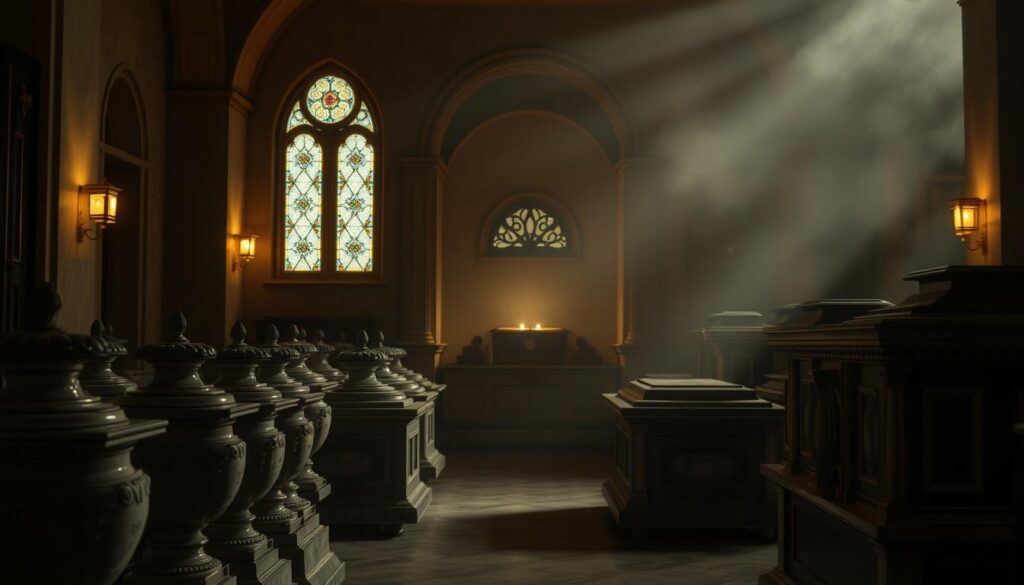
Cremated remains must be placed in consecrated locations like Catholic cemeteries or church columbarium niches. These sacred places ensure ongoing respect through community remembrance and proper upkeep. Many parishes now offer dedicated spaces for urns, blending tradition with space-saving solutions.
Prohibited Practices and Guidelines for Ashes
The Church strictly forbids scattering ashes or dividing them among family members. A 2023 update allows keeping a tiny portion in places of personal significance – like ancestral homes – with bishop approval. This rare exception requires avoiding any non-religious symbolism.
| Permitted Practices | Prohibited Actions |
|---|---|
| Burial in cemetery plots | Scattering remains |
| Columbarium placement | Home display (most cases) |
| Minimal keepsakes (with approval) | Making memorial jewelry |
Keeping ashes at home remains discouraged except in special cultural situations. Church leaders emphasize that proper interment shows respect for the body’s role in resurrection beliefs. Always consult local clergy when planning final arrangements.
Conclusion
Navigating end-of-life decisions within the Catholic faith requires balancing time-honored beliefs with today’s realities. The Church’s guidance on honoring the human body—viewed as a sacred vessel—remains central, even when families choose cremation.
Modern practices allow flexibility while upholding core teachings about resurrection and eternal life. By requiring ashes to rest in consecrated spaces, the Catholic Church maintains reverence for the body’s role in spiritual journey.
Families planning memorials should consult their local parish to align arrangements with faith traditions. This ensures funeral rites reflect both personal needs and communal beliefs about life’s sacred purpose.
The Church’s evolving stance demonstrates how ancient truths adapt to contemporary challenges. Whether through burial or cremation, Catholic teachings affirm dignity in death and hope in Christ’s promise of renewal.
FAQ
Why did the Catholic Church historically oppose cremation?
Early teachings emphasized burial to honor the body as a temple of the Holy Spirit. The Church also sought to distance itself from pagan rituals that involved burning remains. Belief in bodily resurrection reinforced the preference for traditional burial.
When did the Church begin permitting cremation?
The 1963 Vatican II reforms allowed cremation if it didn’t deny Christian beliefs about eternal life. Guidelines were later refined in 1997 and 2016, emphasizing respectful treatment of ashes and proper burial practices.
Can cremated remains be present during a Funeral Mass?
Yes. Since 1997, the Church permits cremated remains at funeral rites, provided they’re in a dignified container. The focus remains on honoring the deceased’s dignity and faith in resurrection.
Are there restrictions on storing or scattering ashes?
The Church requires ashes to be kept whole in a sacred place, like a cemetery or columbarium. Scattering, dividing remains, or keeping them at home is prohibited to uphold respect for the body’s sacred role.
How does cremation align with belief in resurrection?
Catholic teachings affirm that God’s power transcends physical decay. Whether buried or cremated, the faithful trust in divine restoration of the body and soul in eternal life.
Can families choose cremation for practical reasons?
Absolutely. Financial constraints, environmental concerns, or family preferences are valid reasons, as long as practices follow Church guidelines. Discussing plans with a priest ensures alignment with faith traditions.