Marriage holds a sacred place in the Catholic faith, seen as a lifelong commitment between partners. While the Church teaches that this bond cannot be broken, many believers face challenges when relationships become strained. This guide explores how faith communities address marital difficulties while upholding their core values.
Research shows that 34% of American Catholics have experienced divorce, though regular churchgoers report lower rates. The Church recognizes that separation may sometimes be necessary for safety or well-being. This nuanced approach balances doctrine with compassion, offering support even in complex situations.
You’ll learn how teachings about marriage shape community practices and what options exist for those navigating broken relationships. We’ll clarify common misunderstandings and highlight resources available through parishes. Every story matters, and this article aims to help you stay connected to your spiritual home during life’s toughest moments.
Key Takeaways
- The Church views marriage as permanent but acknowledges practical realities
- Pastoral support remains available even after marital breakdown
- Separation is permitted in cases involving harm or danger
- Regular church attendance correlates with lower divorce rates
- Faith communities provide guidance for maintaining spiritual connections
- Legal divorce doesn’t automatically affect participation in Church life
Overview of catholicism divorce
Many Catholic couples enter marriage with unwavering dedication, yet life’s complexities sometimes unravel even the strongest bonds. The Church’s teachings emphasize permanence, but modern relationships face pressures unseen in previous generations.
Defining the Main Issues
At the heart of this challenge lies a delicate balance. Church doctrine maintains that valid marriages are indissoluble, while recognizing that separation might be necessary for safety or emotional health. This creates practical questions for those navigating broken relationships:
| Aspect | Civil Divorce | Church Perspective |
|---|---|---|
| Legal Status | Recognized by state | Doesn’t dissolve sacramental union |
| Remarriage | Permitted | Requires annulment process |
| Community Role | No restrictions | Full participation allowed |
Confusion often arises about sacraments and social standing. A parish priest recently shared:
“We walk with people through their pain, not away from them. Your place in our faith family remains secure, even when marriages don’t.”
Why This Topic Matters Today
Modern Catholics juggle traditional values with 21st-century realities. Nearly 1 in 3 marriages end in legal separation nationwide, creating pastoral needs that demand thoughtful responses.
Parishes now offer specialized support groups and annulment guidance teams. These resources help individuals reconcile their spiritual identity with personal circumstances. Open dialogue fosters understanding, replacing stigma with compassionate solutions.
As family structures evolve, the Church’s approach demonstrates how timeless truths can meet contemporary challenges. This balance helps maintain both doctrinal integrity and a welcoming community for all believers.
The Biblical and Historical Foundation of Marriage
The concept of lifelong union finds deep roots in sacred texts and early Christian traditions. These sources shaped how communities understand commitment through changing times.
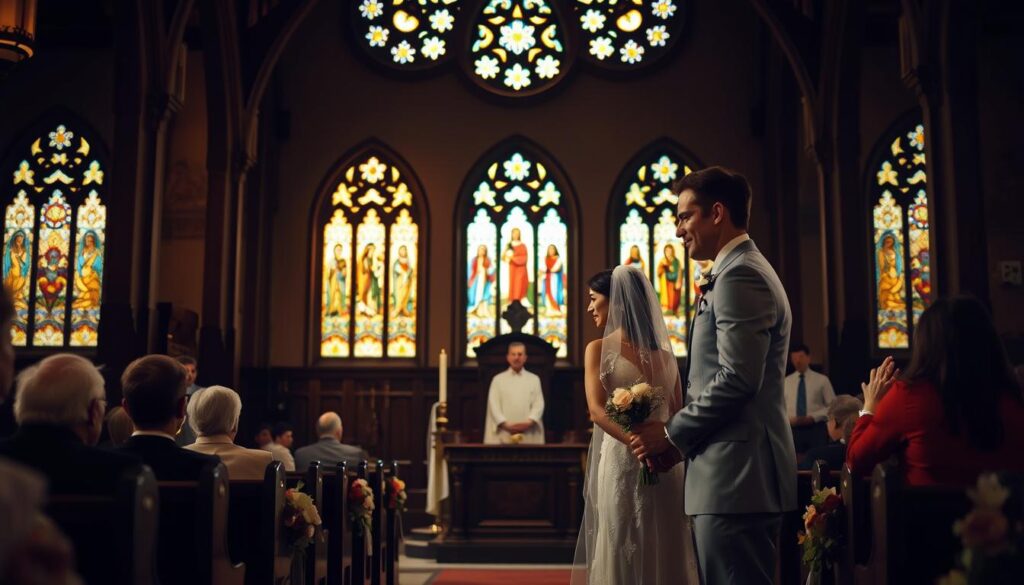
Scriptural Insights on Marriage Permanence
Jesus’ teachings in Matthew’s Gospel set the cornerstone: “What God has joined together, let no one separate” (Matthew 19:6). This echoes Genesis’ vision of two becoming “one flesh” – a union surpassing legal contracts.
Early followers faced practical challenges. Paul’s letters urged couples to seek reconciliation, even in strained relationships. The message stayed clear: marriage reflects divine love’s unbreakable nature.
The Role of Early Church Teachings
By the 3rd century, leaders like Tertullian condemned separation practices. Councils later formalized these views, as shown below:
| Biblical Reference | Key Teaching | Historical Impact |
|---|---|---|
| Matthew 19:6 | Indissolubility | Basis for annulment process |
| Genesis 2:24 | Unity principle | Shaped sacramental theology |
| 1 Corinthians 7:10-11 | Reconciliation focus | Reduced divorce rates by 900 AD |
A 10th-century bishop noted:
“Marriage mirrors Christ’s bond with His church – steadfast through all trials.”
These foundations explain why the church maintains its stance today. Historical documents like the Council of Florence’s 1439 decree reinforced marriage as a sacred practice, blending spiritual truths with communal wisdom.
Catholic Church’s Teaching on Marriage as a Lifelong Bond
The Catholic Church teaches that marriage forms an unbreakable spiritual bond, creating a single entity from two individuals. This concept originates in Genesis, where Scripture describes spouses becoming “one flesh” through divine design. The Council of Florence’s 1439 declaration solidified this view, defining marriage as a sacrament mirroring Christ’s eternal union with His Church.
Understanding this distinction helps clarify why the Church maintains its position:
| Aspect | Sacramental Union | Civil Marriage |
|---|---|---|
| Origin | Divine covenant | Legal agreement |
| Dissolution | Ends only at death | Dissolvable by court |
| Purpose | Reflects Christ-Church bond | Social/legal partnership |
A parish priest from Chicago explains:
“We don’t abandon people in difficult marriages – we help them find grace in the struggle.”
The Roman Catholic Church emphasizes that valid marriages require free consent and understanding. Even separated couples remain sacramentally united. This teaching encourages partners to seek reconciliation while providing pastoral care during hardships.
Though civil divorce addresses legal matters, it doesn’t erase the spiritual connection. The Church’s stance protects the sacredness of marital vows while offering compassionate support. Families facing challenges often find strength through parish-based counseling and prayer communities.
Understanding Civil Divorce vs. Catholic Annulment
Legal separations and spiritual resolutions often get tangled in confusion. Let’s untangle these distinct paths with clarity and care.
Key Differences Between the Two Processes
Civil divorce handles practical matters like property splits and custody. It’s a government action that changes your legal status but leaves spiritual questions unanswered.
| Factor | Civil Divorce | Catholic Annulment |
|---|---|---|
| Authority | State courts | Church tribunal |
| Focus | Legal separation | Sacramental validity |
| Outcome | Ends legal union | Declares no marriage existed |
The annulment process digs deeper than court papers. Church tribunals check if both partners truly understood their vows when exchanging rings. Were they free from hidden fears or pressures?
“We’re not erasing history – we’re examining whether all marriage essentials were present from day one,” explains a tribunal advocate from Ohio.
You can complete civil divorce first without Church penalties. But remarrying in the Church requires that declaration of nullity. This safeguard protects the sacredness of vows while offering hope for new beginnings.
The Catholic Annulment Process Explained
Understanding Church procedures helps individuals navigate complex marital situations with clarity. The annulment process examines whether a marriage met essential spiritual requirements from its start.
Essential Requirements for a Valid Marriage
Church law outlines specific conditions for sacramental unions. Five elements must be present for a Catholic marriage to be binding:
| Requirement | Purpose | Common Issues |
|---|---|---|
| Free Consent | No pressure or deception | Coerced agreements |
| Understanding | Grasp lifelong commitment | Hidden addictions |
| Openness to Children | Accept parental role | Secret birth control |
A tribunal advocate notes:
“We’re detectives of the heart, not judges. Our goal is truth, not blame.”
Clarifying Common Misconceptions
Many fear annulments invalidate shared memories or children’s legitimacy. Neither is true. The process simply determines if all marriage essentials existed initially.
Contrary to rumors, Church tribunals don’t favor wealth or status. Each case undergoes rigorous review with witness interviews and document checks. Most processes take 12-18 months, ensuring thorough evaluation.
Remember: Civil divorce handles legal matters, while annulment addresses spiritual validity. Both can coexist without conflict in Church teaching.
Navigating the Tribunal Process: What to Expect
Beginning the annulment journey can feel overwhelming, but knowing the roadmap eases anxieties. The Church designed this process to carefully examine marriages while supporting individuals spiritually. Start by contacting your parish office or local diocesan tribunal – they’ll provide forms and explain next steps.
Steps in the Tribunal Process
You’ll first complete detailed questionnaires about your relationship history. These forms explore your courtship, wedding preparations, and challenges during marriage. Honest answers help tribunals assess whether essential marriage elements were present.
| Phase | Key Action | Timeline |
|---|---|---|
| Initial Contact | Submit petition & witness list | 1-4 weeks |
| Documentation | Complete marriage history forms | 2-6 months |
| Review | Tribunal examines evidence | 6-12 months |
| Decision | Bishop approves outcome | 1-3 months |
A “defender of the bond” ensures fair evaluation by arguing for the marriage’s validity. Your former spouse receives notification but doesn’t need to participate. Witnesses who knew you both provide crucial perspectives through written statements or interviews.
“We’re not here to judge lives – we’re seeking truth with compassion,” shares a tribunal coordinator from Texas.
Most cases take 12-24 months, with fees often scaled to income. If denied, you can appeal or reapply with new evidence. Remember, this process honors your spiritual journey while upholding the Church’s teachings on sacred unions.
Can a Divorced Catholic Remarry?
Finding hope after marital breakdown remains a pressing concern for many faithful individuals. The Church provides clear guidelines while offering compassionate support for those seeking new beginnings.
Paths to Sacramental Unions
Civil remarriage is legally possible, but sacramental unions require specific conditions. Without an annulment, Catholic ceremonies remain unavailable. This process examines whether essential elements were missing in the original vows.
A declaration of nullity allows remarriage within the Church, as if the previous union never existed sacramentally. Start this process early – parishes recommend beginning before planning new commitments. Tribunals typically need 12-24 months to review cases thoroughly.
Those who remarry without annulments face no expulsion from faith communities. While considered irregular under Church teaching, they’re still welcomed with open arms. Many dioceses now offer specialized ministries to help navigate these complex situations.
Remember: Annulments don’t erase shared memories or children’s legitimacy. They simply assess whether the marriage met spiritual requirements from the start. With proper guidance, individuals can rebuild lives while maintaining their spiritual home.
FAQ
How does the Catholic Church view divorce?
The Church teaches that marriage is a lifelong sacramental bond. While civil divorce may address legal matters, it doesn’t dissolve the spiritual union. Members are encouraged to seek guidance from their parish or tribunal for support.
What’s the difference between civil divorce and a Catholic annulment?
A civil divorce ends a legal marriage, but an annulment examines whether the union met sacramental requirements from the start. The process involves a tribunal review under the Code of Canon Law to determine validity.
Can someone who’s divorced receive holy communion?
Divorced individuals who haven’t remarried or entered a new relationship may receive communion. Those in subsequent unions without an annulment are asked to abstain, but pastoral care is available to explore options.
What role does the community play in supporting divorced members?
Parishes often offer ministries, counseling, or groups like DivorceCare to provide emotional and spiritual care. The Church emphasizes compassion while upholding its teachings on marriage.
Are children affected by an annulment considered illegitimate?
No. An annulment doesn’t impact the legitimacy of children, who remain recognized and loved within the faith community. The process focuses solely on the marriage’s sacramental validity.
How long does the annulment process take?
Timelines vary, but most cases take 12–18 months. Factors like case complexity, diocese resources, and witness cooperation influence this. Your parish priest or tribunal can provide local estimates.
Can a divorced Catholic remarry in the Church?
Yes, if an annulment is granted or the previous spouse has passed away. Remarriage without these steps isn’t permitted, but pastors can help navigate paths toward healing and sacramental participation.
What if a couple married outside the Church seeks annulment?
Non-Catholic marriages may still require a declaration of nullity if one or both parties were baptized. The tribunal evaluates factors like free consent and understanding of vows.