When you hear the word “Halloween,” spooky costumes and candy might come to mind. But this festive tradition has roots far deeper than trick-or-treating. The term itself comes from All Hallow’s Eve, the night before All Saints Day—a sacred celebration honoring every saint in heaven, known and unknown.
Many families today feel torn between seasonal fun and faith values. What most don’t realize is that this holiday originated as a holy preparation for one of the Church’s most important feasts. Like Christmas Eve leading into Christmas, October 31st serves as a spiritual gateway to a day of reverence.
The connection becomes clearer when we explore the word “hallow.” Derived from Old English, it means “holy”—the same term used in the Lord’s Prayer. This linguistic link reveals how cultural traditions often grow from sacred soil, even when their modern forms seem secular.
Reclaiming this history offers families meaningful ways to blend celebration with faith. Through simple practices like discussing saints’ stories or attending Mass, the season transforms into a chance to teach lasting spiritual lessons. Let’s uncover how this vibrant tradition became a bridge between joy and devotion.
Key Takeaways
- Halloween originates from All Hallow’s Eve, the vigil before All Saints Day
- The term “hallow” connects directly to sacred language in the Lord’s Prayer
- Modern celebrations often overlook the holiday’s liturgical significance
- Families can blend tradition with faith through intentional celebrations
- October 31st serves as spiritual preparation like Christmas Eve does for Christmas
Tracing the Origins of Catholicism and Halloween
Long before pumpkin carving became popular, autumn nights held deeper meaning in Rome. Two medieval popes reshaped how believers honor saints, creating traditions that still echo today.
Historical Background of All Hallows’ Eve
In 731 AD, Pope Gregory III made a lasting decision. He moved the Feast of All Saints from May 13th to November 1st after dedicating a chapel to saints in St. Peter’s Basilica. This established October 31st as the vigil day – a time for spiritual preparation common before major celebrations.
Nearly a century later, Pope Gregory IV expanded this local Roman practice. He declared November 1st a universal feast day for the entire Church. This papal decree transformed what began as a city tradition into a global observance.
Papal Influences on the Liturgical Calendar
The date change wasn’t about replacing older festivals. Church leaders prioritized practical needs – aligning celebrations with harvest seasons and travel-friendly weather. Evening prayers before feast days became customary, blending worship with community gatherings.
Three key impacts emerged:
- Medieval believers saw October 31st as natural preparation time
- Local cultures developed unique vigil practices
- Immigrants later carried these traditions worldwide
This liturgical foundation explains why many modern customs – from candle lighting to remembering loved ones – carry traces of ancient faith practices.
The Significance of All Saints Day in Catholic Tradition
Imagine a celebration where millions honor both famous and forgotten holy lives. This vibrant reality unfolds every November 1st during All Saints Day, a holy day of obligation requiring Mass attendance like Sundays. The Church invites believers to celebrate spiritual superheroes – from household names like St. Peter to unsung heroes who lived quiet lives of radical love.
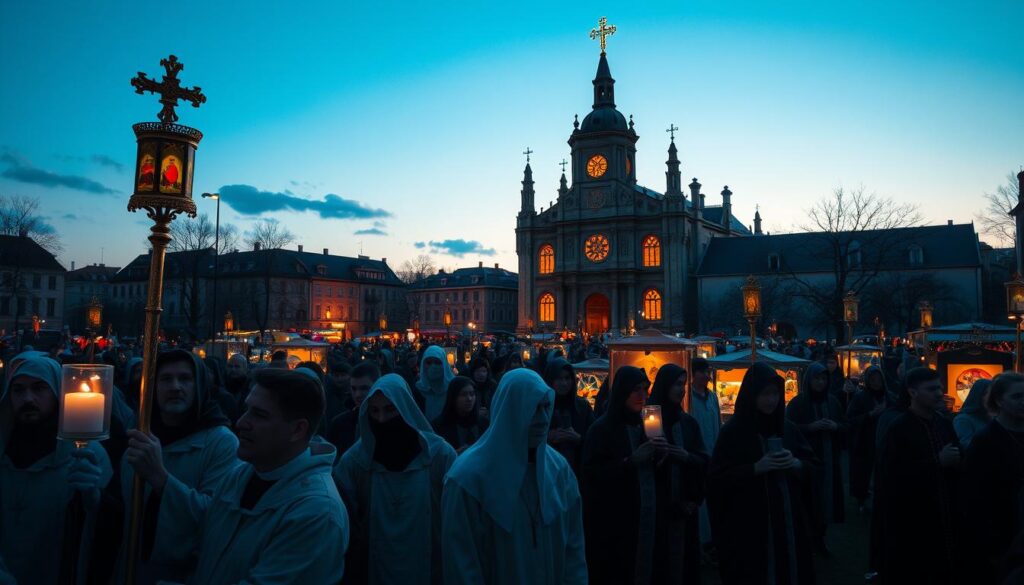
Honoring Saints and the Communion of Saints
This feast day reveals Christianity’s beautiful paradox: ordinary people achieving extraordinary holiness. As one early Christian writer noted:
“The saints were human like us – they simply loved God more than their weaknesses.”
The celebration connects three dimensions of faith through the Communion of Saints:
| Church Group | Description | Role in Allhallowtide |
|---|---|---|
| Militant (Living) | Believers on earth | Pray for others |
| Triumphant (Saints Heaven) | Holy souls in glory | Intercede for us |
| Suffering (Purgatory) | Souls being purified | Receive our prayers |
This holy day does more than remember the past. It offers living hope – if grocery clerks and teachers can become saints, so can we. Families often share stories of patron saints during meals, making heavenly realities feel personal and achievable.
The tradition also answers a deep human longing. As Pope Francis once observed: “We weren’t made for comfort – we were made for greatness.” All Saints Day redefines that greatness not as fame, but as faithful love shining through daily life.
Pope Gregory III and the Transfer of Feast Days
An eighth-century chapel renovation sparked a tradition lasting over 1,300 years. Pope Gregory III changed Christian history in 731 AD by moving the Feast of All Saints to November 1st. This shift honored his new chapel in St. Peter’s Basilica dedicated to all heavenly saints—a decision still shaping autumn celebrations today.
From May 13th to November 1st
Why abandon May’s spring date? November offered practical advantages. Cooler weather eased travel for pilgrims visiting Rome. Harvests provided ample food for communal feasts. Most importantly, the new date aligned with the chapel’s dedication—a spiritual milestone for medieval believers.
Gregory III’s nine-year papacy strengthened Church unity through such reforms. Fixing the feast on the day November 1st created consistency across growing Christian territories. This move also birthed Allhallowtide—the three-day observance starting October 31st.
Rome’s Role in Shaping Religious Celebrations
As Christianity’s headquarters, Rome dictated how feasts evolved globally. Pope Gregory transformed a local tradition into universal practice. By 835 AD, November 1st became mandatory for all churches—showcasing papal authority to standardize worship.
This timing disproves later myths about pagan influences. Since Gregory III’s decree came 300 years before Norse autumn festivals, it confirms the feast’s purely Christian roots. His chapel remains a physical reminder of how one decision shaped centuries of sacred tradition.
European Traditions and Their Impact on Modern Celebrations
Modern Halloween celebrations mirror a vibrant tapestry of old-world practices. Three European cultures wove their unique customs into what we now recognize as seasonal staples.
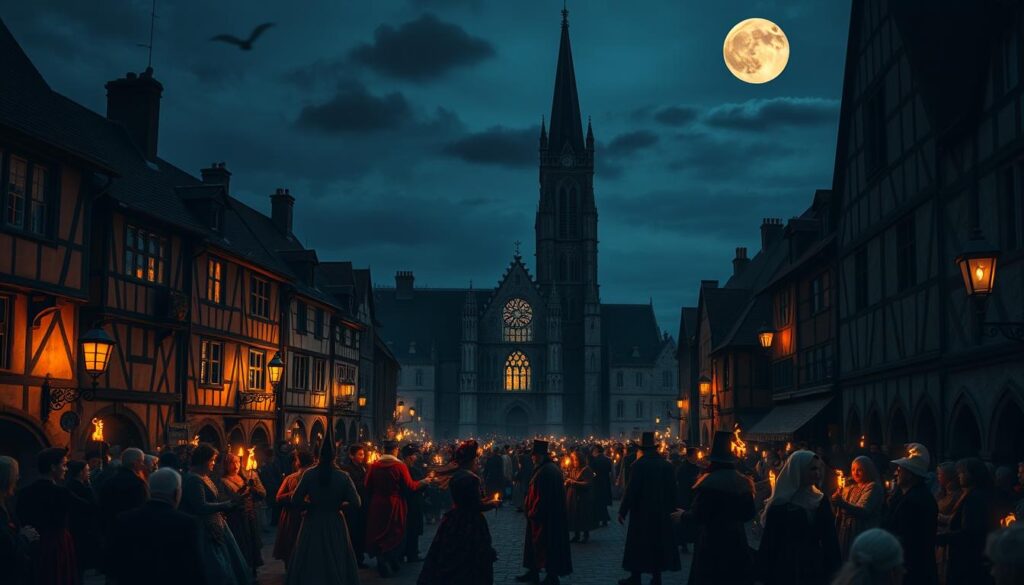
Costume Customs and the Origins of Trick-or-Treating
French believers started dressing as saints during Allhallowtide processions. This religious costume tradition evolved into playful disguises when immigrants reached American shores. Children began embodying both holy figures and imaginative characters.
Irish families carved turnips to guard against restless spirits. The glowing faces symbolized prayers for souls in purgatory. Pumpkins replaced turnips in America’s fertile soil, blending practicality with creativity.
| Tradition | Origin | Modern Practice |
|---|---|---|
| Costumes | French saintly processions | Creative character outfits |
| Jack-o’-Lanterns | Irish turnip carvings | Pumpkin decorations |
| Treating | English soul cake requests | Candy exchanges |
England’s “souling” practice inspired today’s trick-or-treating. Villagers promised prayers for the dead in exchange for baked goods. This sacred barter system became America’s candy-fueled tradition through cultural blending.
These customs merged seamlessly in 19th-century immigrant communities. While adapting to new surroundings, families preserved their faith’s core values. What began as spiritual practices now spark joy across generations.
The Intersection: catholicism and halloween in Contemporary Faith
In a world where plastic skeletons outnumber prayer cards, many believers wrestle with embracing October 31st. The key lies in rediscovering the holiday’s sacred heartbeat—a call to celebrate eternal truths through joyful traditions.
Reclaiming a Holy Celebration
Families can honor their heritage by blending faith with fun. Start by attending All Hallows’ Eve Mass—a powerful way to anchor the night in worship. One parish priest suggests:
“Light a candle after trick-or-treating. Name each flame after a saint who inspires your family.”
Three practical strategies help distinguish sacred roots from secular noise:
- Choose costumes reflecting holy figures or virtues
- Share stories of patron saints during candy sorting
- Visit gravesites to pray for departed loved ones
Many Catholics celebrate Halloween unaware of its liturgical depth. By explaining how jack-o’-lanterns symbolized Christ’s light defeating darkness, parents transform pumpkin carving into faith formation. Community events like saint-themed parties or prayer walks offer alternatives to commercialized festivities.
When Catholics celebrate intentionally, they reclaim October 31st as spiritual preparation—not a night to fear. As one grandmother shared: “We bake soul cakes while discussing heaven’s heroes. The kids learn that joy and holiness go hand-in-hand.”
Debunking Misconceptions and Clarifying the Myths
Many assume spooky traditions connect to ancient pagan festivals. Let’s untangle fact from fiction using historical evidence.
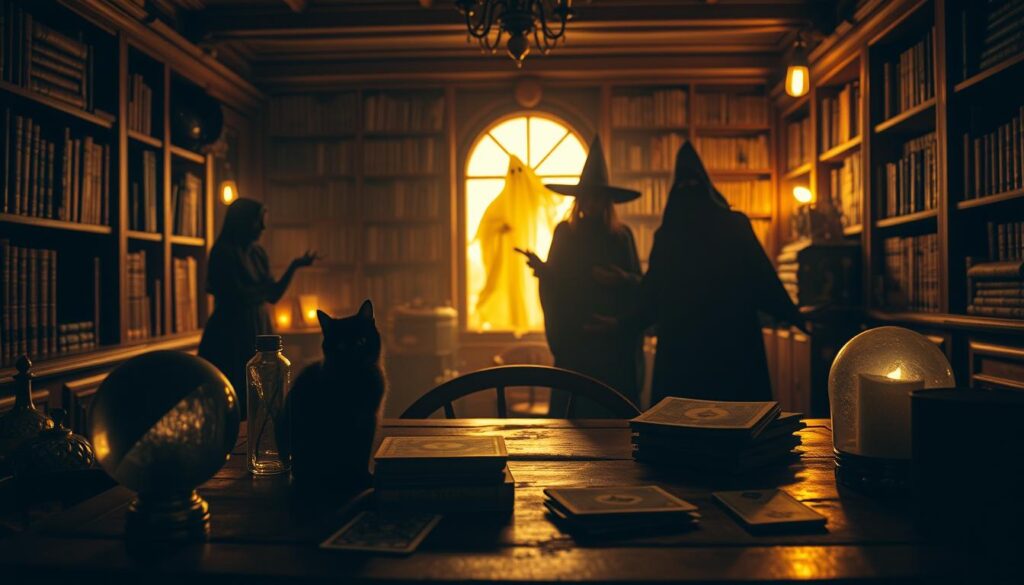
Separating Pagan Myths from Catholic Truths
The idea that October 31st borrows from Celtic festivals crumbles under scrutiny. All Saints Day existed for 300 years before any written claims about pagan links appeared. As church historian Fr. Augustine Thompson notes:
“The November 1st date was chosen for practical reasons—not spiritual compromise.”
Anti-Catholic groups during the Reformation spread false origins stories to discredit believers. These myths gained traction when Irish immigrants faced prejudice in 19th-century America. Their harmless traditions—like carving vegetables—were wrongly labeled “occult.”
Addressing Secular Influences on the Holiday
Modern distortions emerged as commercialization grew. Stores began selling horror-themed decor in the 1970s, shifting focus from spiritual preparation. Yet the faith’s core remains untouched.
Three ways secular culture altered perceptions:
- Movies replaced saint stories with slasher films
- Candy companies prioritized sales over symbolism
- Schools removed religious context from activities
Understanding these shifts helps families reclaim the holiday’s true origins. Simple ways to counter secular influences include discussing All Saints’ Eve traditions or hosting light-themed parties. Truth outlasts trends when we honor history with intention.
A Step-by-Step Guide to a Faithful Halloween Celebration
Transform October 31st into a meaningful spiritual journey with simple faith practices. These traditions help families honor sacred roots while enjoying seasonal fun. Begin by viewing the evening as joyful preparation for November’s holy days.
Start With Worship
Many parishes offer evening Mass on All Hallows’ Eve. Attending as a family grounds the night in community prayer. This practice mirrors how Christmas Eve services precede December 25th celebrations.
Bring children in costumes reflecting saints or virtues. After Mass, discuss how these holy figures faced fears with faith. This connects modern dress-up to timeless values.
Create Prayer Moments
Set up a home altar with candles and saint images. Light one while sharing stories of departed loved ones. Simple phrases like “St. Michael, pray for us” teach kids to seek heavenly help.
End the night with a family blessing. Pray: “May we walk with the saints in light.” These small acts turn candy-filled hours into encounters with eternal hope.
FAQ
How did All Hallows’ Eve become linked to Catholic traditions?
All Hallows’ Eve (October 31) originated as the vigil before All Saints Day, a holy day established by Pope Gregory III in the 8th century. It was a time to honor saints and pray for departed loved ones, blending faith with cultural customs over time.
Why is All Saints Day important in Catholic practice?
All Saints Day (November 1) celebrates the communion of saints—those in heaven and the faithful on earth. It’s a reminder to seek their intercession and reflect on living a holy life, rooted in the Church’s teachings.
Did Pope Gregory III change the date of a major feast?
Yes! Pope Gregory III moved the feast honoring saints from May 13 to November 1, dedicating a chapel in Rome to all saints. This shift helped merge existing autumn traditions with Catholic liturgy.
Are Halloween costumes connected to Catholic history?
Some European customs, like wearing disguises, may have roots in medieval practices where people dressed as saints or spirits to symbolize the battle between good and evil. Over time, this evolved into playful costumes.
Can Catholics celebrate Halloween in a faith-focused way?
Absolutely! Many attend Mass for All Saints Day, pray for departed souls, or host gatherings that blend fun with reminders of eternal life. It’s about balancing joy and reverence.
Is Halloween inherently pagan?
No—the holiday’s core ties to All Saints Day are deeply Catholic. While secular influences exist, the Church’s focus remains on celebrating saints and remembering the faithful departed.
How does All Souls Day differ from Halloween?
All Souls Day (November 2) specifically prays for souls in purgatory, while Halloween serves as the festive vigil before honoring saints. Both days emphasize prayer and eternal hope.
What role did Rome play in shaping these celebrations?
Rome’s liturgical calendar reforms, like moving feast days, helped unify Christian practices across Europe. Local traditions blended with these changes, creating rich, layered celebrations.
How can families incorporate prayer into Halloween?
Lighting candles for loved ones, sharing stories of saints, or praying the Rosary for the departed are simple yet meaningful ways to keep faith central during festivities.