Planning a religious union in the Catholic Church involves more than choosing flowers or a reception menu. For those preparing to get engaged, understanding the sacramental significance of this lifelong promise is essential. The Church sees this bond as a sacred covenant, rooted in faith and supported by grace.
In the United States, Catholic weddings blend spiritual and legal elements seamlessly. Priests or deacons officiate ceremonies recognized by both the Church and state. This means couples don’t need separate civil paperwork—a unique convenience many appreciate.
Preparation often takes six months or longer. Family and friends might be surprised by the required steps: pre-marriage courses, spiritual counseling, and document verification. These ensure couples grasp the depth of their commitment and align their values with Church teachings.
The ceremony itself reflects centuries of tradition. Vows are exchanged within Mass or a standalone liturgy, emphasizing God’s role in the partnership. This approach helps members of the faith community witness and support the couple’s journey from day one.
Key Takeaways
- Catholic weddings are both legally binding and spiritually significant in the United States
- Preparation includes mandatory courses and documentation filed months in advance
- Ceremonies emphasize faith traditions over personal or cultural preferences
- Priests or deacons officiate, eliminating the need for separate civil proceedings
- The sacrament requires couples to prioritize spiritual readiness
Planning Your catholicism marriage: First Steps
Your journey to a sacred union begins with one critical step: contacting your parish before making any other arrangements. Many excited couples rush to book venues or send invitations, but Church guidelines require prioritizing spiritual preparation over logistics.
Setting Your Wedding Date and Venue Priorities
Popular churches often fill their calendars 2-3 years ahead, especially for summer ceremonies. Don’t be surprised if your desired wedding date isn’t available—flexibility helps secure a meaningful location. Some parishes only host ceremonies for registered members, so verify requirements early.
Most churches mandate at least six months of preparation, mirroring the care taken in priestly training. This timeframe allows for prenuptial interviews, document collection, and spiritual courses. View this as an investment in your future spouse relationship rather than a bureaucratic hurdle.
Putting God First in Your Planning Process
The Church’s process emphasizes spiritual readiness over reception details. While florists and caterers operate on your schedule, sacramental preparation follows divine timing. Many couples find this shift in priorities strengthens their bond before exchanging vows.
Family expectations might clash with parish guidelines, like limited decoration options or music restrictions. Approach these differences as opportunities to deepen your shared faith. Remember: the wedding ceremony’s sacred purpose outweighs temporary aesthetic preferences.
Contacting Your Church and Scheduling a Meeting
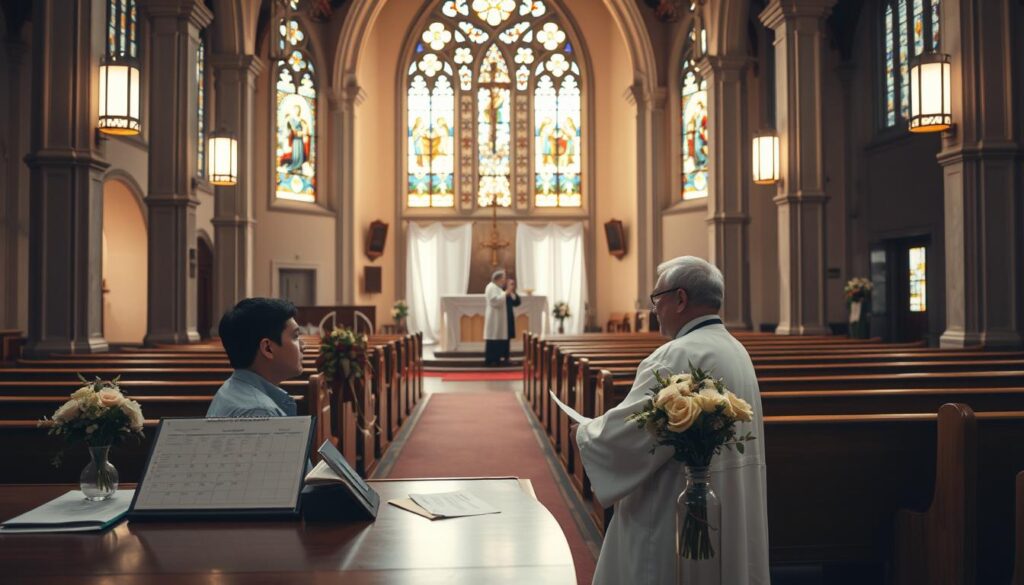
The moment you decide to get married in the Catholic Church, your phone becomes your most important tool. Unlike booking secular venues, securing a wedding date requires direct communication with parish staff. Start this process early—some popular churches book events 3 years ahead.
Why Early Church Contact Matters
Parishes often limit ceremonies during peak seasons like June. If you want get married on a Saturday afternoon, act fast. Many require at least six months notice for sacramental preparation. This timeframe lets you complete required courses while handling paperwork.
Choosing the Right Church for Your Wedding
You might prepare at one parish but get married at another. This helps couples living far from family churches. Always confirm with the priest overseeing your ceremony—they’ll transfer documents between locations.
| Factor | Home Parish | Destination Church |
|---|---|---|
| Preparation Location | Local courses | Remote options |
| Ceremony Flexibility | Priority dates | Limited availability |
| Communication Style | In-person meetings | Phone/email preferred |
Persistent calls work better than emails for scheduling. Treat each meeting request like visiting relatives—respect their house rules while sharing your hopes. Some churches restrict decorations or music choices, so ask about guidelines upfront.
Understanding Church Requirements and Sacramental Preparation
Navigating the path to a sacramental union requires careful attention to administrative and spiritual details. The Church prioritizes both practical readiness and faith formation, creating a balanced approach to lifelong commitment.
Documentation Needs: Baptismal Certificates and More
Your parish will request updated baptismal certificates issued within six months of your ceremony. This rule ensures accurate records of sacramental status. Childhood certificates won’t work—contact your baptism parish directly for fresh copies.
“Proper documentation isn’t about bureaucracy—it’s about honoring sacramental truth,” explains Father Mark, a Chicago-based priest.
Some dioceses require additional steps:
| Requirement | Purpose | Timeline |
|---|---|---|
| Confirmation records | Verify sacramental completion | Submit with initial paperwork |
| Witness affidavits | Assess relationship stability | 6-8 weeks before wedding |
| Pre-Cana completion | Ensure spiritual preparedness | 3-4 months prior |
The Importance of Confirmation and Other Sacraments
While confirmation isn’t mandatory, most priests encourage completing this sacrament first. It strengthens your spiritual foundation and unlocks full sacramental graces. Couples often discover new insights during preparation programs:
- Engaged Encounter weekends foster communication skills
- Online courses adapt to busy schedules
- Parish-based workshops build community connections
These programs help couples align their expectations with Church teachings. Remember: the process isn’t about jumping through hoops—it’s about building unshakable foundations.
Navigating Interfaith and Non-Catholic Spouse Considerations
Building a life together across faith traditions requires open hearts and clear communication. The Church welcomes getting married catholic with partners of other beliefs, focusing on shared values rather than uniformity.
Addressing Conversion Myths and Responsibilities
Your future spouse doesn’t need to change their faith to marry you. Conversion only matters if it’s a personal response to God’s calling—not family pressure. Baptized non-Catholics still create sacramental unions filled with grace.
Couples often choose a Liturgy of the Word ceremony instead of Mass. This thoughtful option lets both partners fully participate without communion conflicts. Your priest will guide this process during planning meetings.
Raising Children in the Catholic Faith
The Catholic partner makes a solemn promise to nurture children’s faith through baptism and religious education. This doesn’t erase the other parent’s role. Many families blend traditions, celebrating holidays from both faiths.
Open discussions about spiritual life create stronger bonds. Your parish can suggest resources for interfaith households, helping kids appreciate diverse beliefs while grounding them in Catholic teachings.
FAQ
How early should we contact our church before the wedding?
Reach out to your parish at least 6–12 months in advance. This allows time for sacramental prep, paperwork, and scheduling. Many churches have busy calendars, especially during popular seasons like spring or fall.
What documents do we need for a Catholic ceremony?
You’ll need updated baptismal certificates, confirmation records, and a marriage license. If either partner was previously married, additional annulment or divorce paperwork may be required. Your priest or deacon will guide you.
Can we marry in the Church if one of us isn’t Catholic?
Yes! Interfaith weddings are possible with a dispensation from Canon Law. The non-Catholic partner doesn’t need to convert, but both must agree to raise future children in the Catholic faith. Open communication with your priest is key.
Do we need to attend marriage prep programs?
Most dioceses require couples to complete a pre-Cana course or retreat. These programs focus on communication, faith, and lifelong commitment. Some churches also offer mentoring with married couples.
What if we’re already civilly married?
The Church offers a convalidation ceremony to bless your union sacramentally. This process involves meetings with a priest and fulfilling standard sacramental requirements, like baptismal records.
Can we personalize our Catholic wedding Mass?
While the liturgy follows a set structure, you can choose readings, hymns, and cultural traditions (with approval). Discuss options like unity candles or ethnic rituals with your priest early in the planning process.