For centuries, many Christians have turned to holy figures who lived exemplary lives for guidance and support. This tradition, deeply rooted in faith, reflects a belief in spiritual unity that transcends time and space. It’s not about worship but about seeking companionship from those who’ve walked the path of devotion before us.
Historical records show this practice began in the early church. Followers saw these revered individuals as powerful allies, capable of bringing their needs closer to God. Eastern Orthodox, Anglicans, and other Christian groups still share this view today, though interpretations vary.
Central to this concept is the idea of the Communion of Saints—a bond linking believers across heaven and earth. Think of it like asking a trusted friend to pray for you, but on a cosmic scale. This connection emphasizes community rather than isolation in one’s spiritual journey.
Some modern Christian traditions question this approach, often due to misunderstandings. However, Catholic teaching clearly distinguishes between honoring saints and worshiping God. The latter remains reserved solely for the Divine Trinity.
Key Takeaways
- This tradition spans nearly 2,000 years and unites multiple Christian denominations
- Seeking saintly intercession differs fundamentally from divine worship
- The Communion of Saints doctrine supports spiritual connections between believers
- Common concerns often stem from misinterpretations of Catholic teachings
- Many find this practice deepens their relationship with God through communal prayer
Historical Foundations of Praying to the Saints
Long before grand cathedrals or formal liturgies, followers of Christ found strength in community—both earthly and heavenly. This spiritual bond with holy figures traces back to ancient traditions, blending Jewish roots with emerging Christian beliefs.
Seeds of a Spiritual Tradition
The practice of seeking heavenly allies began with those who died for their faith. Early believers saw martyrs as living bridges to God, their sacrifice granting unique spiritual access. Third-century writings reveal prayers like: “Holy Perpetua, intercede for us in our struggles.”
“Their prayers now achieve more than their words ever could.”
From Tombs to Theology
As Christianity spread, believers gathered at burial sites seeking connection. By the 300s, thinkers like Jerome systematized these traditions, creating frameworks still used today. The table below shows key developments:
| Time Period | Development | Impact |
|---|---|---|
| 1st Century | Jewish angelic intercession beliefs | Laid groundwork for saintly prayer concepts |
| 3rd Century | First written prayers to martyrs | Established documented tradition |
| 4th Century | Church Fathers’ theological works | Solidified doctrinal foundations |
This evolution wasn’t about inventing new ideas but nurturing an unbroken chain of spiritual kinship. What began as whispered requests at gravesides became a timeless expression of communal faith.
Biblical References and Scriptural Evidence
The Bible offers vivid imagery that shapes our understanding of spiritual connections between believers. Its pages reveal how those in heaven remain actively engaged with earthly prayers, creating a tapestry of divine communication.

Revelation’s Golden Bowls
John’s vision in Revelation 5:8 shows twenty-four elders holding golden bowls filled with incense—explicitly called “the prayers of the saints.” This symbolic scene demonstrates how heavenly figures present our petitions to God. Later, Revelation 8:3-4 describes an angel mixing incense with prayers at heaven’s golden altar.
Ancient Patterns of Intercession
Scripture contains early examples of seeking spiritual support:
| Scripture | Intercession Example | Significance |
|---|---|---|
| Genesis 20:7 | God tells Abimelech to seek Abraham’s prayer | Shows value of righteous intercessors |
| Job 42:8 | God instructs Job to pray for friends | Affirms mutual prayer responsibility |
| 1 Timothy 2:1 | Paul urges prayers for all people | Establishes communal prayer practice |
These passages reveal a consistent pattern. From Old Testament patriarchs to New Testament apostles, seeking intercession appears as natural as asking a neighbor for help. As Paul writes: “Help us by your prayers” (2 Corinthians 1:11), modeling how spiritual support transcends earthly limits.
Jesus Himself emphasized praying for others, even enemies. This foundation makes seeking heavenly allies’ prayers an extension of biblical community—not a departure from it. The practice mirrors how early Christians understood their connection to heaven’s faithful.
Understanding catholicism praying to saints
At the heart of Catholic spiritual practice lies a profound connection that bridges heaven and earth. This bond isn’t limited by physical existence but thrives through shared faith in Christ’s eternal promise. The Communion of Saints doctrine illuminates how believers—past and present—form one spiritual family.
The Doctrine of the Communion of Saints
The Catholic Church teaches that baptism unites all Christians into a single mystical Body. This includes those who’ve passed into eternal life. As St. Paul wrote: “Whether we live or die, we belong to the Lord” (Romans 14:8). Saints remain active members of this spiritual network, capable of supporting earthly believers through prayer.
Key aspects clarify this teaching:
- Intercession differs completely from worship, which honors God alone
- Asking saints for help mirrors requesting prayers from friends
- Eternal life in Christ Jesus ensures saints stay connected to the Church
“The communion of saints is the Church’s spiritual solidarity… between pilgrims on earth and those entering heavenly glory.”
This perspective transforms grief into hope. Death becomes a doorway to deeper unity rather than permanent separation. When Catholics seek a saint’s intercession, they’re tapping into a living network of faith that transcends time and space.
The Role of Christ as the Sole Mediator
At the center of Christian belief stands a truth that shapes every spiritual practice: Christ Jesus alone bridges heaven and earth. This foundational concept anchors how believers understand their relationship with God and each other.
Scriptural Argument: 1 Timothy 2:5 and Related Texts
Paul’s letter cuts through confusion: “There is one God, and one mediator between God and men, the man Christ Jesus” (1 Timothy 2:5). Yet in the same breath, the apostle urges believers to offer prayers for everyone—showing these ideas aren’t rivals but partners.
Consider the context:
- Four verses earlier, Paul calls intercession “good and pleasing to God”
- Christ’s unique role stems from being fully divine and human
- Asking others to pray mirrors how early churches operated
“The saints’ intercession is their highest service to God’s plan. We do not obscure Christ’s mediation but proclaim it.”
Clarifying Misconceptions About Mediation
Some worry seeking heavenly help undermines Christ’s position. But think of it like teamwork—one mediator leads while others assist. Jesus remains the only bridge between mediator God and humanity because He alone conquered sin through His sacrifice.
Key distinctions:
- Saints present requests to Christ, not instead of Him
- All grace flows through Jesus’ mediation
- This practice echoes biblical patterns of communal prayer
Understanding this stops false either/or choices. Honoring Christ Jesus as mediator God men need doesn’t exclude asking friends—earthly or heavenly—to join your prayers.
Intercession of Saints: Faith Practice vs. Superstition
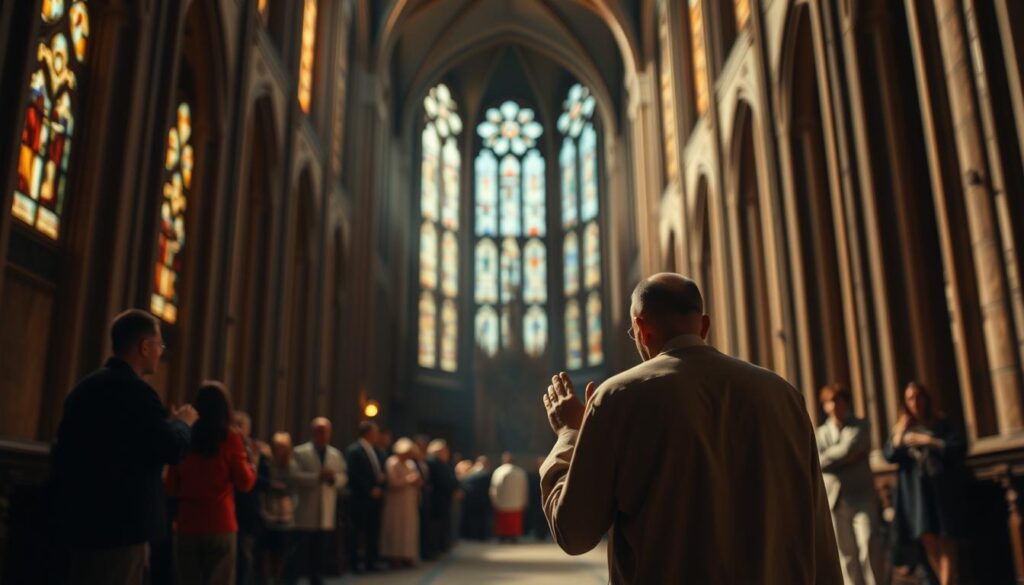
Understanding the line between spiritual devotion and forbidden practices requires clarity. Many wonder how asking heavenly allies for help differs from occult activities. The answer lies in intention, theology, and the nature of eternal life.
What True Intercession Looks Like
Authentic spiritual support mirrors everyday friendships. Just as you might text a friend for prayers, believers ask saints to bring needs to God. The Church emphasizes this is about collaboration, not control.
Key markers distinguish healthy practice:
- Focus remains on God’s will, not personal demands
- No rituals or tools required beyond simple requests
- Trust in saints’ ongoing care replaces need for signs
“Superstition is by its nature a mortal sin.”
Separating Fact From Fiction
Common myths confuse holy intercession with forbidden acts. The table below clarifies differences:
| Practice | Purpose | Church Stance |
|---|---|---|
| Asking saints for prayers | Seeking spiritual support | Encouraged |
| Conjuring spirits | Forcing communication | Condemned |
| Visiting relics | Honoring holy lives | Approved |
| Seances | Contacting the dead | Forbidden |
Believers don’t need visions to feel heard. As one theologian noted: “Faith bridges the gap where senses fail.” This trust in eternal bonds keeps the practice grounded in hope, not fear.
The Significance of Relics and Images in Devotion
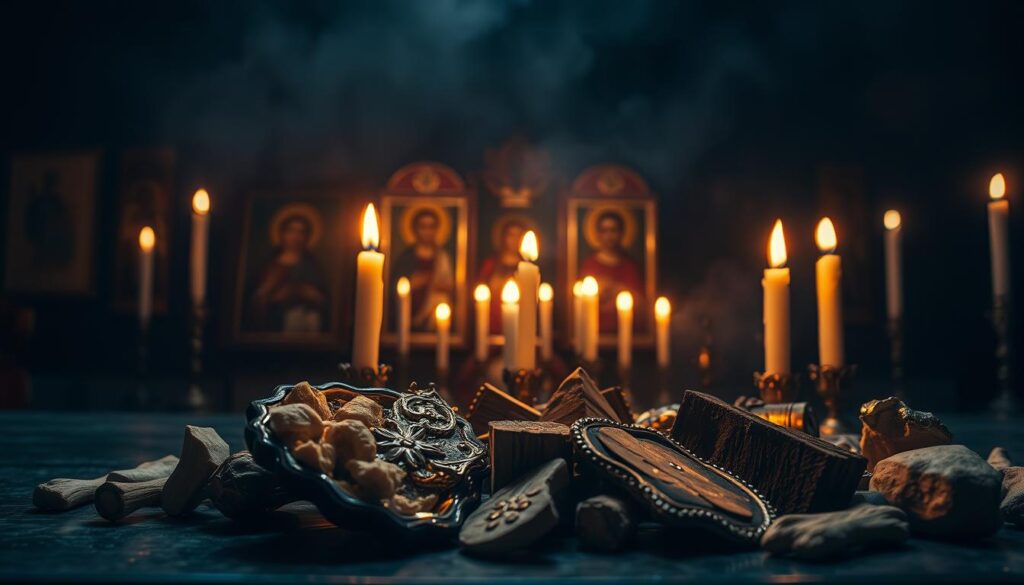
Sacred objects have always helped people connect with what they hold dear. From weathered statues to centuries-old bones, these items aren’t magic—they’re memory keepers. The Church teaches that such objects point beyond themselves to greater spiritual truths.
Historical Use and Spiritual Meaning
The Council of Trent (1545-63) made it clear: “Honor shown to images refers to their prototypes.” This built on biblical precedents like Moses’ bronze serpent and Solomon’s temple carvings. As the Baltimore Catechism explains: “We honor saints through symbols, not the symbols themselves.”
| Object Type | Spiritual Purpose | Biblical Parallel |
|---|---|---|
| Relics | Connect to holy lives | Elijah’s mantle (2 Kings 2:14) |
| Icons | Focus prayer | Ark cherubim (Exodus 25:18) |
| Statues | Inspire imitation | Bronze serpent (Numbers 21:9) |
Modern Perspectives on Devotional Art
Today’s Catholics use religious art like photo albums—to remember spiritual family. A pocket saint medal or home altar isn’t about worship but presence. As one believer noted: “My grandmother’s rosary helps me feel connected to her faith journey.”
“Sacred images are like windows—they let light in but aren’t the source of light.”
These traditions balance devotion with clarity. They use physical form to touch eternal realities, much like hugging a loved one’s sweater brings comfort. The key lies in looking through the artwork, not at it.
Comparative Perspectives Across Denominations
Christian unity and diversity collide in debates over saintly intercession. While some see it as a cherished tradition, others view it through theological caution. This tension reveals how different groups interpret scripture and spiritual community.
Catholic, Orthodox, and Anglican Interpretations
The Catholic Church shares this practice with Eastern Orthodox and some Anglican communities. These groups see saints as living links in a timeless chain of faith. As one Orthodox theologian notes: “The departed remain active members of Christ’s body—death can’t silence their love.”
Anglican views have shifted over time. Early documents supported honoring holy figures, but later reforms discouraged direct requests. Today, some Anglicans light candles at shrines, while others avoid the practice entirely.
Protestant Critiques and Their Counterarguments
Reformers like John Calvin argued that seeking saints‘ prayers distracts from Christ’s sole mediation. The table below shows key denominational stances:
| Tradition | Position | Scriptural Basis |
|---|---|---|
| Lutheran | Saints pray for the Church but shouldn’t be addressed | 1 Timothy 2:5 |
| Reformed | Forbidden as idolatry | Exodus 20:3 |
| Methodist | No biblical support for intercession | Hebrews 4:16 |
“Christ alone is the advocate—we need no other helpers.”
These differences remind people that shared beliefs often come with diverse expressions. While practices vary, the desire to connect with divine love remains universal.
Practical Guidelines for Praying to Saints
Connecting with spiritual mentors doesn’t require grand gestures—just an open heart. Start by focusing on intention rather than perfection. Many find that simple, consistent habits create meaningful connections across the veil of eternity.
How to Request Intercession in Daily Life
Choose a holy figure whose story resonates with your journey. Keep requests natural, like “St. Francis, guide me in caring for creation today.” Some light candles as visual reminders of their faith legacy.
Pair these moments with Scripture reading to ground your practice. Journaling reflections helps track how these interactions shape your spiritual growth. Remember, it’s about building relationship, not reciting rigid formulas.
For those new to this tradition, start small. A morning whisper for courage or an evening thank-you note fosters devotion without overwhelm. As one believer shared: “It’s like adding friends to my prayer group—just ones who’ve already finished the race.”
FAQ
Why do some Christians ask saints in heaven to pray for them?
Believers view saints as part of the spiritual family, alive in God’s presence. Just as you might ask a friend to pray for you, requesting a saint’s intercession reflects trust in their closeness to Christ. This practice aligns with the Communion of Saints, a bond uniting all followers of Jesus across time and space.
Doesn’t the Bible say Jesus is the only mediator?
Yes! Scripture clearly states Christ is the one mediator between God and humanity (1 Timothy 2:5). Catholics affirm this truth. Asking saints to pray with you doesn’t replace Christ’s role but acknowledges that all believers—on earth and in heaven—can support one another through prayer.
Is praying to saints considered worship?
No. Worship is reserved for God alone. Honoring saints is like showing respect to a hero of the faith. Prayers to saints are requests for their help, not acts of adoration. The distinction mirrors how early Christians venerated martyrs without confusing them with divine beings.
How do relics or images connect to this practice?
Relics (like bones or belongings of saints) and art serve as tangible reminders of holy lives. They’re not magical but point to God’s work through ordinary people. Think of them like family photos—tools to inspire gratitude and focus during prayer.
Do other Christian groups share this belief?
Orthodox and Anglican traditions also honor saints, though practices vary. Many Protestant denominations emphasize direct prayer to God, viewing saintly intercession as unnecessary. These differences often stem from how groups interpret Scripture’s teachings about the afterlife and community.
Can anyone become a saint?
In Catholic teaching, all believers are called to holiness. Official canonization recognizes individuals who lived extraordinary faith. This process ensures their example aligns with Church doctrine, offering trustworthy models for others to follow.
How do I start incorporating saintly intercession into prayer?
Begin by learning about a saint whose life resonates with yours. Simply talk to them, asking for guidance or prayers. Many use phrases like, “St. Francis, pray for me as I care for creation.” It’s about building relationships, not rituals.