Over 1.2 billion people worldwide belong to a faith tradition that shapes lives through ancient teachings and modern practices. In America alone, more than 70 million members gather in parishes from coast to coast. Yet today, many face new questions about how traditional beliefs intersect with evolving understandings of human identity.
This conversation touches hearts in pews and pulpits alike. While official documents don’t directly address gender diversity, many wonder how to balance doctrine with compassion. Families share stories of loved ones seeking acceptance without abandoning cherished spiritual homes.
Across the country, faith leaders are exploring ways to support their entire community. Some parishes now host listening sessions, while others train staff on inclusive language. These efforts aim to honor both religious teachings and the dignity of every person walking through church doors.
Key Takeaways
- The global faith community faces complex questions about identity and belonging
- Many religious institutions are developing new approaches to pastoral care
- Personal stories highlight both challenges and opportunities for understanding
- Practical solutions are emerging at local levels across the country
- Open dialogue helps balance tradition with contemporary realities
Through respectful conversation, communities can build bridges where doctrine meets daily life. This journey requires patience, empathy, and a shared commitment to walking together in faith.
Understanding the Historical and Doctrinal Context
For nearly two thousand years, the church’s structure has shaped how communities live their faith. From local parishes to global leadership, this framework guides decisions affecting millions. Let’s explore how historical roots influence modern conversations about identity.
The Roots of Catholic Church Structure and Teachings
The church traces its leadership to St. Peter, with the Pope overseeing 33 provinces and 195 U.S. dioceses. Bishops carry out teachings through local policies, creating varied approaches across regions. This system balances ancient traditions with contemporary needs.
Key documents like the Catechism provide doctrinal foundations. Updated regularly, they address moral questions while honoring centuries-old theology. As one bishop noted, “Our role is to interpret, not invent.”
Doctrinal Stances on Gender and Sexual Orientation
Traditional teachings view gender as determined at birth, linking biological sex to spiritual identity. The Catechism describes same-sex attraction as “objectively disordered,” while urging compassion. These positions spark ongoing debates about inclusion.
| Document | Key Point | Impact |
|---|---|---|
| Catechism (1994) | Defines marriage as male-female union | Guides sacramental policies |
| 1986 Letter | Calls same-sex attraction “disordered” | Shapes pastoral care methods |
| 2015 Vatican Decision | Denied transgender godparent role | Highlighted policy tensions |
Pope Francis’s “Who am I to judge?” remark softened the tone but didn’t change doctrine. Today, many parishes seek ways to welcome diverse members while honoring teachings. The challenge remains balancing timeless truths with evolving understandings.
Community Experiences and Personal Narratives
Behind every theological discussion lie human stories that shape our understanding of belonging. These accounts reveal how individuals reconcile personal truths with spiritual traditions.

Real-Life Stories of Faith and Transition
One religious leader’s journey began when his child attempted suicide during high school. “We faced an impossible choice,” he shared. Years of prayer led them to realize their child’s authentic self wasn’t lost – just expressed differently.
Many young people describe feeling trapped between self-expression and community acceptance. A Georgetown University student’s experience shows how embracing identity can rebuild fractured relationships. “When I stopped hiding, my parents saw the real me,” she explains.
Family Perspectives and Lived Challenges
Parents often describe initial shock turning into fierce advocacy. One mother recalls: “Our parish became our lifeline when we learned to separate fear from faith.” Families frequently discover deeper connections through these journeys.
Practical challenges emerge in daily life. Some parents worry about children’s safety in faith spaces, while others navigate healthcare decisions. Yet countless stories show how love bridges divides – one conversation at a time.
These narratives prove that supporting loved ones doesn’t weaken spiritual bonds. Instead, they reveal how compassion strengthens communities when people choose understanding over judgment.
Exploring Issues in catholicism transgender Encounters
Faith communities across America face pressing questions about inclusion and tradition. How religious institutions address these matters impacts both spiritual lives and community bonds. Let’s examine three critical areas shaping current discussions.
Church Policies and Institutional Challenges
Religious organizations navigate complex terrain between doctrine and modern realities. While some dioceses promote welcoming environments, others enforce strict membership rules. Recent cases show teachers losing jobs after legal marriages, highlighting policy inconsistencies.
This patchwork approach leaves many members uncertain about their standing. As one advocate notes, “People deserve clarity about where they belong.” Leadership teams often struggle to interpret broad guidelines for local contexts.
Experiences within Parishes and Ministry Programs
Many faith groups now develop creative outreach through specialized ministries. These programs help individuals feel valued while honoring tradition. Some parishes host support circles, while others train volunteers in compassionate communication.
Health care remains a key concern for families. Catholic medical centers sometimes clash with professional standards when providing gender-related services. This tension affects both patients and caregivers seeking ethical solutions.
Insights on Health Care, Support, and Advocacy
Over 50% of religiously-affiliated youth seeking gender care report discrimination fears. Progressive organizations work to bridge this gap through education and resource sharing. Their efforts help communities balance spiritual values with essential support needs.
Key initiatives include:
- Training programs for clergy on mental health first aid
- Partnerships with medical professionals following WPATH guidelines
- Legal advocacy protecting members’ rights in faith-based institutions
These practical steps demonstrate how communities can uphold traditions while growing in understanding. Through open dialogue and shared compassion, many find paths forward that honor both faith and human dignity.
Navigating Theology, Doctrine, and Gender Identity
Theological discussions about identity often spark deep reflection within faith communities. These conversations challenge long-held assumptions while revealing new ways to interpret sacred texts. Let’s explore how ancient wisdom meets modern understandings of human diversity.
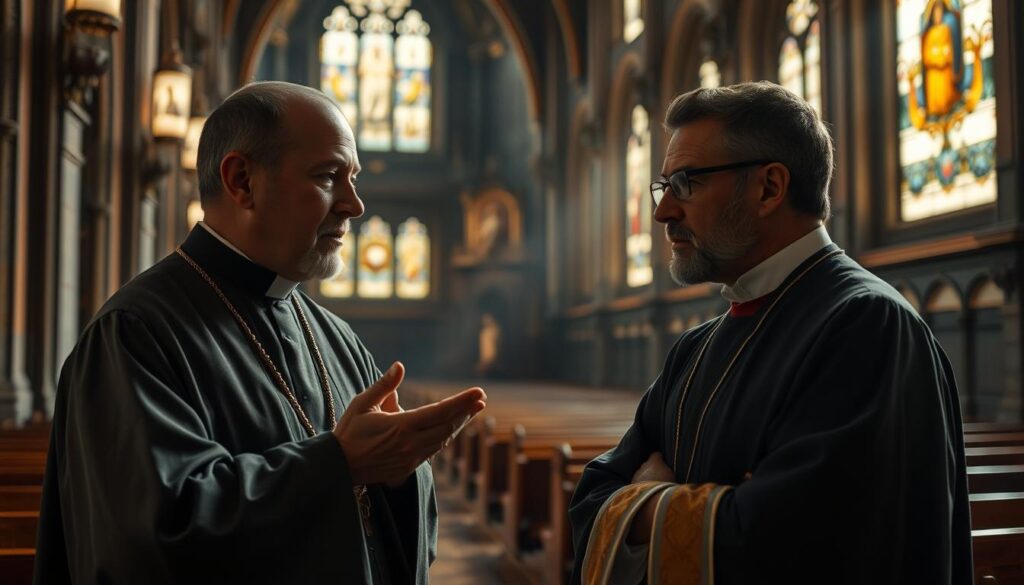
The Impact of Traditional Teachings on Modern Transgender Issues
Many religious teachings view gender as determined at birth, creating tension with contemporary insights. This perspective stems from interpretations of creation narratives and natural law principles. Some leaders argue these views protect family structures, while others see exclusionary impacts.
| Traditional View | Progressive Response | Common Ground |
|---|---|---|
| Binary gender model | Recognition of diverse identities | Human dignity focus |
| Biological determinism | Brain science findings | Compassionate care |
| Doctrinal preservation | Pastoral flexibility | Community unity |
Emerging Theological Interpretations and Progressive Voices
New perspectives are reshaping conversations about faith and identity. “God’s creation includes spectrum, not just categories,” suggests theologian Dr. Maria Sanchez. These approaches honor both tradition and scientific understanding of gender identity development.
Medical research shows brain structures may influence self-perception. Historical records reveal people living outside binary norms for centuries. This evidence challenges notions of “gender ideology” as modern invention.
Many communities now emphasize core values like love and acceptance. “Our faith calls us to walk with, not judge,” shares a parish outreach coordinator. These efforts help individuals feel valued while maintaining spiritual connections.
Conclusion
At the heart of every faith journey lies the courage to embrace both tradition and transformation. Progressive voices within religious communities affirm what DignityUSA’s declaration states: every person reflects divine love through their authentic self. Over 400 Catholic organizations now echo this message of radical acceptance.
Families navigating these paths show how love strengthens faith rather than weakens it. Medical experts confirm that compassionate care for trans individuals aligns with ethical health practices. Many parishes now use this knowledge to create safer spaces through updated policies and support groups.
Pope Francis’s emphasis on mercy inspires creative solutions. Some churches train ministers in inclusive language, while others host dialogues about identity. These efforts help communities honor timeless values while addressing modern realities.
The road ahead requires patience, but countless stories prove change happens one open heart at a time. When faith communities choose understanding over fear, they build bridges that uplift everyone’s spiritual life.
FAQ
What is the Catholic Church’s official stance on gender identity?
The Church teaches that every person is created in God’s image and deserves dignity. However, it upholds traditional teachings on binary gender tied to biological sex. Some parishes and ministries, like New Ways Ministry, advocate for broader inclusion of transgender individuals.
How do transgender Catholics navigate faith communities?
Many find support through affirming parishes or organizations such as DignityUSA. Others face challenges, including exclusion from sacraments. Personal stories often highlight resilience in balancing faith with gender identity.
Has Pope Francis addressed transgender issues?
Pope Francis emphasizes compassion, urging the Church to avoid discrimination. In 2023, he approved allowing transgender individuals to be baptized under certain conditions, signaling a nuanced approach while maintaining doctrinal boundaries.
Can transgender individuals access healthcare in Catholic institutions?
Policies vary. Some Catholic hospitals provide gender-affirming care, while others follow ethical guidelines restricting it. Advocacy groups like Catholic Health Association encourage dialogue on balancing care with religious teachings.
How do families reconcile faith with a child’s gender transition?
Families often seek guidance from inclusive ministries or therapists. Organizations like Fortunate Families offer resources to navigate acceptance, spiritual growth, and community support without compromising core beliefs.
Are there theological debates about gender identity in Catholicism?
Yes. Scholars like Fr. James Martin call for greater LGBTQ+ inclusion, while traditionalists stress alignment with natural law. Emerging voices explore Scripture and tradition to reinterpret gender within faith contexts.
Do transgender Catholics face barriers in parish life?
Some report rejection in ministries or sacramental participation. However, dioceses like San Diego and Chicago have implemented outreach programs to foster belonging while respecting doctrine.