Millions of Americans today seek ways to connect physical wellness with spiritual growth. One practice sparking thoughtful conversations combines gentle movement with mindful breathing – a tradition with ancient roots now embraced worldwide. For those balancing religious devotion with holistic health, questions often arise about compatibility.
Recent data shows over 36 million people in the U.S. participate in this activity, drawn to its stress-relief benefits and flexibility training. Faith communities increasingly explore how physical disciplines can deepen prayer life while honoring core beliefs. Spiritual leaders emphasize the importance of discernment when blending practices from different traditions.
This exploration isn’t about simple answers but understanding nuances. Some worshippers find harmony through modified approaches that align with their values. Others discover renewed appreciation for their own faith’s rich history of contemplative practices. Experts suggest thoughtful reflection helps individuals make choices that nurture both body and soul.
Key Takeaways
- Over 36 million Americans participate in yoga-related activities annually
- Spiritual leaders emphasize discernment when combining practices
- Modified approaches help align physical discipline with faith values
- Historical contemplative traditions exist within many belief systems
- Personal reflection aids in balancing wellness and religious identity
Embracing the Journey: An Introduction to Faith and Movement
As stress levels rise, seekers are turning to ancient traditions that unite motion and meditation. This exploration goes beyond trendy workouts—it’s about rediscovering how physical awareness can open doors to sacred connection.
Setting the Context in Modern Spirituality
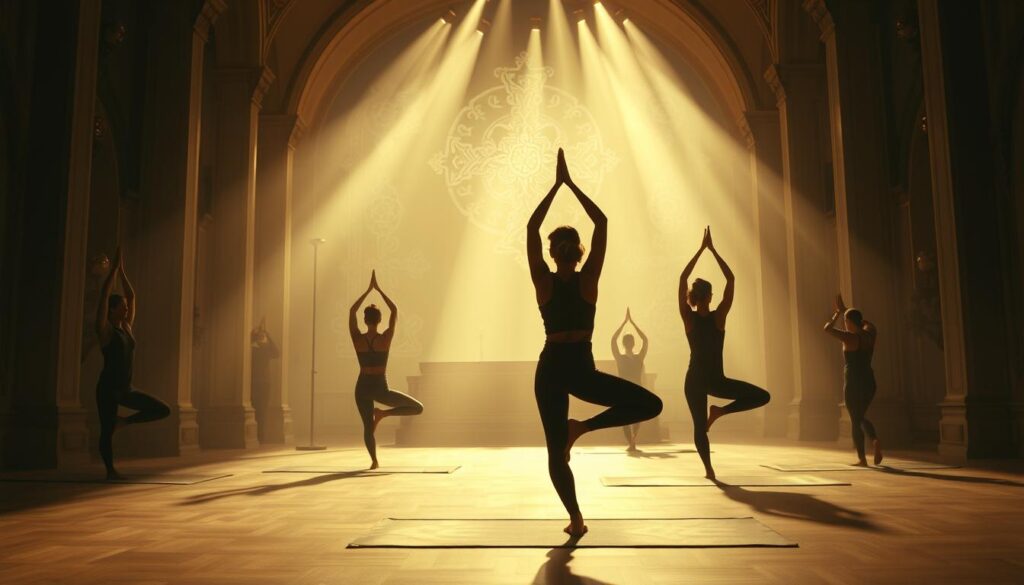
Modern spiritual explorers often crave practices that engage both body and soul. A theology professor recently shared how leading sessions in a university chapel revealed surprising harmony: “The sacred space amplified our focus—participants felt their stretches became prayers in motion.”
Reflections on the Role of Physical and Spiritual Practice
Historical roots matter. For centuries, faith traditions have used movement—like pilgrimage walks or kneeling prayer—to deepen devotion. Today’s adaptations honor this legacy while addressing modern needs:
- Intentional breathing exercises that mirror contemplative prayer rhythms
- Flowing sequences that encourage gratitude for the body’s capabilities
- Moments of stillness that create space for divine dialogue
Institutions now blend these approaches, recognizing that physical practices can enrich traditional worship. As one practitioner noted: “When I move with purpose, my mind quiets—that’s when I feel most connected to something greater.”
Catholicism and Yoga: Bridging Faith and Practice
In an era where 60% of adults blend spiritual practices from multiple traditions, thoughtful dialogue emerges about aligning physical disciplines with religious identity. This journey requires examining roots while honoring personal convictions.
Ancient Roots Meet Modern Faith
The Sanskrit word “yoke” carries dual meaning—linking spiritual unity and physical effort. Second-century texts like Patanjali’s Sutras outline eight pathways toward union, including ethical living and meditation.
Some theologians question whether this yoke concept aligns with Christian teachings about surrendering to divine will. “Christ’s invitation in Matthew 11 isn’t about effort—it’s about grace,” notes a seminary professor.
Movement as Sacred Language
Certain postures originate from stories about Hindu gods, like Warrior poses tied to Shiva’s mythology. This symbolism raises questions for those prioritizing doctrinal clarity.
Many modern practitioners adapt flows, focusing on breathwork over spiritual narratives. A retreat leader shares: “We rename poses—‘Mountain’ becomes ‘Praying Hands’—to foster Christ-centered mindfulness.”
Living the Dialogue Today
Groups like Ignatian Spirituality & Yoga reimagine ancient teachings through a Christian lens. Their sessions pair meditation on Scripture with gentle stretches.
Critics argue that consciousness-merging goals conflict with preserving individual identity in divine relationships. Yet supporters highlight parallels with mystics like St. Teresa of Ávila, who described union as “two candles becoming one light.”
Balancing Tradition, Theology, and Modern Practice
As holistic health gains popularity, questions arise about maintaining religious integrity. Spiritual disciplines now face fresh scrutiny through theological lenses. How do physical routines interact with sacred beliefs? The answer lies in thoughtful examination of actions and intentions.
Navigating Critiques & Spiritual Authenticity
St. Thomas Aquinas observed that actions carry inherent meaning beyond personal goals. This principle challenges modern approaches to ancient exercises. A 2021 study revealed 43% of participants experienced unexpected spiritual shifts during fitness programs originally pursued for flexibility.
Comparing Contemplative Prayer and Yogic Meditation
Christian traditions offer rich alternatives for unifying body and soul. Ignatian spirituality’s Examen prayer mirrors meditative focus while anchoring thoughts in Scripture. Consider these distinctions:
| Aspect | Contemplative Prayer | Meditative Practice |
|---|---|---|
| Focus | Divine presence | Universal consciousness |
| Posture | Kneeling/sitting | Asana sequences |
| Goal | Communion with God | Self-realization |
| Framework | Sacramental theology | Eastern philosophy |
Programs like Pietra Fitness demonstrate how movement can align with specific belief systems. Their modified flows replace traditional terms with faith-based language, addressing concerns about symbolic meanings.
Conclusion
Modern seekers face thoughtful choices when blending physical disciplines with spiritual commitments. The path forward remains deeply personal—a balance between honoring tradition and embracing wellness. Some find harmony through modified programs focusing solely on breathing and movement, while others prefer faith-based alternatives.
Discernment proves essential. Consulting trusted mentors helps align practices with core beliefs. Many discover value in exploring both supportive perspectives and thoughtful critiques within their community.
New options emerge regularly, from Scripture-centered exercise routines to meditation programs rooted in sacred texts. These adaptations allow individuals to strengthen their bodies while deepening spiritual connections.
Ultimately, the goal transcends any single method. Whether through modified classes or alternative regimens, the focus remains on holistic growth—nurturing physical health while cultivating a richer relationship with the divine.
FAQ
Can physical postures enhance spiritual growth in a faith-based context?
Movement and posture can serve as tools to deepen focus, calm the mind, and create space for reflection. Many find that intentional physical practices, when aligned with prayer or meditation, foster a stronger connection to their spiritual journey.
How do contemplative traditions in prayer compare to meditative practices?
Both emphasize stillness, inner awareness, and seeking union with the divine. While methods may differ—such as centering prayer’s focus on sacred words versus mindfulness of breath—the shared goal is transcending distractions to encounter deeper truths.
Are there theological concerns about blending movement with worship?
Some traditions emphasize discernment to ensure practices align with core beliefs. Open dialogue with spiritual leaders and intentional adaptation of exercises can help maintain harmony between physical discipline and faith values.
Can mindfulness coexist with a life rooted in religious tradition?
Yes. Mindfulness, when framed as cultivating presence and gratitude, complements many teachings about stewardship of the body and living intentionally. It becomes a bridge between daily actions and sacred purpose.
What role does community play in integrating movement and spirituality?
Shared practices—like group prayer walks or guided retreats—strengthen bonds and provide accountability. They also create opportunities to explore how collective energy uplifts individual and communal devotion.
How do modern believers navigate historical critiques of non-traditional practices?
Education and discernment are key. Understanding the origins of practices, filtering them through theological lenses, and prioritizing personal conviction help reconcile external methods with internal faith commitments.