Welcome to an exploration of one of the world’s most enduring spiritual traditions. For nearly 2,000 years, this global faith community has shaped art, laws, and cultural values across continents. At its heart lies a remarkable connection to ancient roots – a direct lineage tracing back to Jesus’ original followers.
What makes this religious tradition unique? Unlike other Christian branches, it maintains a centralized structure led by the Pope in Rome. This living institution balances timeless rituals with modern social teachings, addressing issues from climate change to economic justice.
You’ll discover how shared practices create unity among 1.3 billion members worldwide. From Sunday Mass in Chicago to street processions in Manila, common threads weave through diverse cultures. These traditions aren’t just historical artifacts – they actively guide personal decisions and community actions today.
Key Takeaways
- World’s largest Christian denomination with 1.3 billion followers
- Central leadership through the Pope and Vatican City
- Blends ancient rituals with modern social teachings
- Significant influence on Western art and culture
- Practical guidance for daily life and global issues
- Connects believers across 200+ countries through shared practices
Our guide breaks down complex ideas into clear, relatable concepts. Whether you’re curious about sacraments or social justice teachings, we’ll walk through each aspect step by step. You’ll gain new appreciation for how this vibrant faith continues shaping lives in our modern world.
Overview of catholicism beliefs
At the heart of Roman Catholic teachings lies a vibrant fusion of ancient wisdom and modern application. This global church maintains its identity through foundational principles while adapting to contemporary challenges.
Key Tenets and Modern Interpretations
Central to Roman Catholic doctrine is the Holy Trinity – one God expressed through three persons. Followers celebrate Christ’s dual nature as divine and human, reflected in sacraments like the Eucharist where bread and wine become sacred through transubstantiation.
The Second Vatican Council reshaped modern perspectives, encouraging dialogue with other Christian groups. While maintaining core traditions, this shift acknowledged diverse paths to spiritual life beyond the church’s formal structure.
Cultural Impact and Global Relevance
Roman Catholic teachings influence everything from Renaissance art to urban food banks. Seven sacraments guide major life events, creating shared rituals across 200+ countries.
Social justice initiatives address pressing world issues like climate change and income inequality. Through schools, hospitals, and community programs, the church demonstrates how age-old faith principles meet 21st-century needs.
Historical Evolution of the Catholic Church
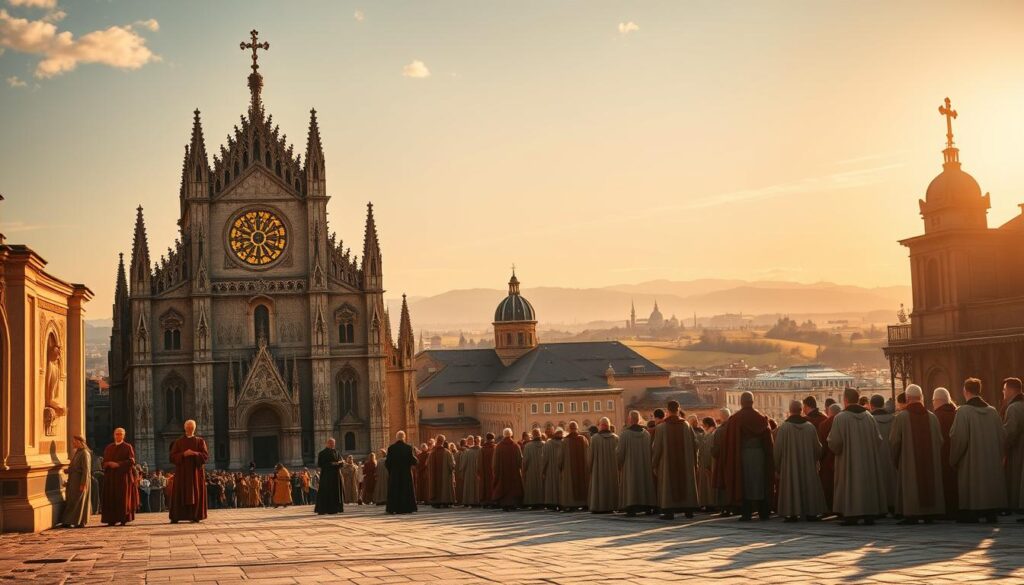
From humble beginnings in Jerusalem, the Roman Catholic Church grew into a global institution through centuries of evolution. Its story starts with Jesus Christ and twelve followers who spread his teachings across the Roman Empire. Early believers faced persecution but built tight-knit communities that kept their message alive.
From Apostolic Origins to Medieval Power
By the second century, church leaders like St. Irenaeus shaped Roman Catholic identity. He established three pillars of authority: New Testament writings, bishops tracing lineage to apostles, and sacred tradition. This framework helped unify scattered Christian groups into one church structure.
The phrase “And thus we came to Rome” from Acts marked a turning point. It signaled the faith’s expansion beyond Jewish roots, embracing diverse cultures. By 300 CE, Roman Catholicism became the empire’s official religion, blending spiritual mission with political influence.
The Emergence of Catholic Christianity
Persecution and debates over doctrine actually strengthened the church’s identity. Leaders clarified teachings about Christ’s nature and standardized worship practices. The emergence of Catholic Christianity as a distinct tradition became clear through:
- Established hierarchies with bishops overseeing regions
- Uniform sacraments like baptism and Eucharist
- Shared liturgical calendars across continents
This period laid foundations for medieval Europe’s religious landscape. The Roman Catholic Church preserved knowledge through monasteries while shaping laws and art – proving ancient roots could nurture new growth.
Foundational Doctrines and Distinctive Teachings
Central to Roman Catholic identity are sacred texts and time-honored practices passed down through generations. These elements form a spiritual blueprint guiding everything from Sunday services to life’s biggest decisions.
Scriptural Foundations and Apostolic Tradition
The Roman Catholic Church views scripture and tradition as twin pillars of divine revelation. While the Bible remains primary, oral teachings from early church leaders carry equal authority. This dual approach ensures continuity with the original apostles’ message.
Seven sacraments demonstrate this balance. Baptism rituals still use the Apostles’ Creed – an ancient summary of core teachings. Parents and godparents renew these promises during infant ceremonies, linking modern families to 2,000 years of practice.
Understanding Transubstantiation and Doctrinal Nuances
During Mass, Catholics experience one of their most mysterious doctrines. When the priest speaks Jesus Christ’s words from the Last Supper, believers affirm the bread and wine become his body and blood. This change – called transubstantiation – maintains physical appearances while transforming spiritual reality.
Mary’s special role highlights another unique aspect. The Roman Catholic tradition honors her as both mother and model of faith. These teachings about her sinless conception and heavenly intercession shape personal devotions worldwide.
From baptismal vows to communion rituals, these practices create shared spiritual DNA. They help millions navigate modern life while staying rooted in ancient wisdom.
Organizational Structure and Hierarchy
The Roman Catholic Church maintains a distinctive organizational framework that has guided its global community for centuries. This structure combines spiritual leadership with administrative precision, creating a unified system across diverse cultures and nations.
The Papacy, Roman Curia, and Ecclesiastical Leadership
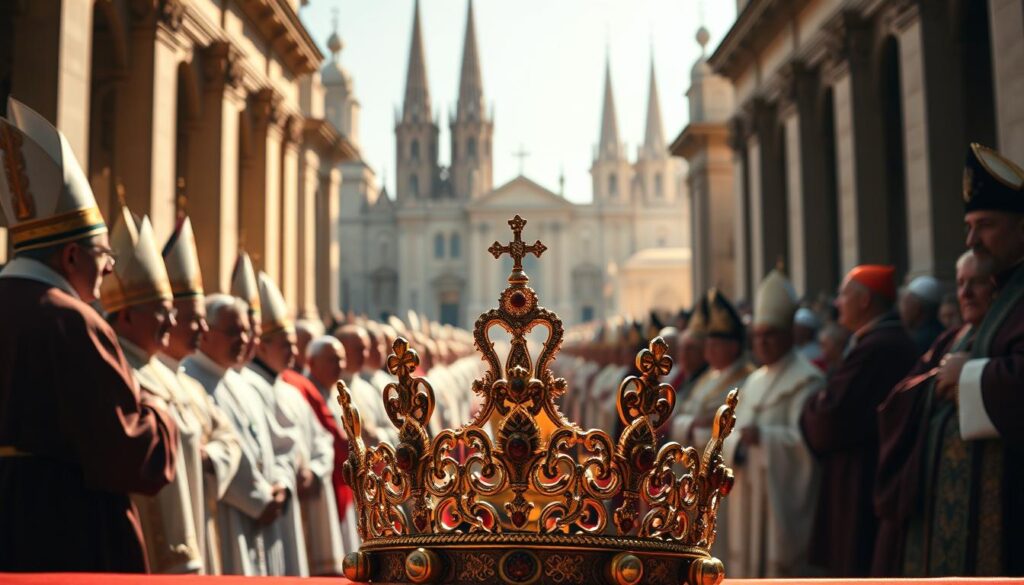
At the structure’s peak stands the Pope, considered the successor to St. Peter and holder of supreme teaching authority. Cardinals – appointed by the Pope – form a sacred college responsible for electing new leaders during papal conclaves. Their distinctive red attire symbolizes willingness to defend the church “even to the shedding of blood.”
The Roman Curia acts as the Vatican’s operational engine, with departments like the Dicastery for Evangelization overseeing global missions. This administrative body ensures consistent application of church teachings across 3,000 ecclesiastical territories worldwide.
Roles of Clergy, Priests, and the Laity
Three holy orders shape ministerial service:
- Deacons assist in sacraments and community outreach
- Priests lead parishes and celebrate Mass
- Bishops shepherd dioceses and maintain apostolic succession
Since the Second Vatican Council, laypeople have played expanded roles in education and social ministries. However, the priesthood remains reserved for celibate men, reflecting Jesus’ model of total dedication to spiritual service.
This carefully maintained hierarchy enables the Roman Catholic Church to address modern challenges while preserving continuity with ancient traditions. From papal encyclicals to parish food drives, every level contributes to the faith’s living legacy.
The Role of Sacraments and Traditions
Sacred rituals form the heartbeat of spiritual practice in Roman Catholicism. These tangible acts bridge daily life with divine connection, creating moments where ordinary materials like water or oil become channels for extraordinary grace.
Exploring the Seven Sacraments
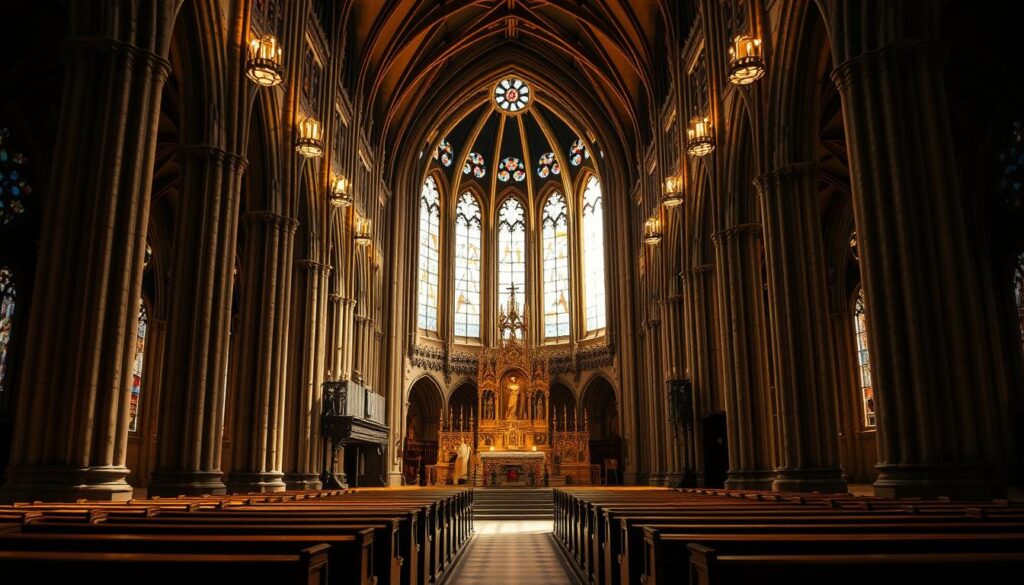
Seven transformative ceremonies guide Catholics through life’s milestones. Baptism welcomes infants with water and sacred oils, while confirmation strengthens teens through the Holy Spirit’s gifts. The Eucharist – celebrated at every Mass – renews believers as they receive what Roman Catholicism teaches is Christ’s actual presence.
Adults encounter reconciliation’s healing power through confession, and couples exchange lifelong vows in marriage rites. Holy orders set apart clergy for service, and anointing brings comfort during illness. Each sacrament follows Jesus’ teaching to make spiritual realities physically present.
Marian Devotion and Liturgical Rites
Mary’s unique role shines through practices like May crownings and rosary recitations. Pilgrims flock to sites like Lourdes, seeking her intercession. The liturgical calendar structures worship with seasons:
- Advent’s hopeful waiting
- Lent’s reflective fasting
- Easter’s joyful celebrations
These rites unite global communities through shared rhythms. From baptismal fonts to wedding altars, Roman Catholicism’s sacramental vision transforms everyday moments into encounters with the sacred.
Contemporary Social Teachings and Modern Challenges
Modern Roman Catholic communities tackle today’s pressing issues while honoring centuries-old principles. This dynamic approach helps bridge timeless values with urgent world needs, creating meaningful action across diverse societies.
Social Justice, Ethical Practices, and Global Outreach
Church leaders champion climate action and migrant support through Second Vatican renewal principles. Food security programs and fair wage campaigns reflect core teachings about human dignity. Over 140,000 schools worldwide demonstrate how education drives social change.
Global partnerships address healthcare gaps and conflict resolution. These efforts show how faith communities can influence policy while maintaining spiritual foundations. Ethical investment guidelines now steer church finances toward sustainable life practices.
Balancing Tradition with Modernity in the United States
American parishes navigate complex debates on technology and bioethics. Many United States dioceses blend traditional liturgy with contemporary outreach like addiction recovery networks. Youth ministries use digital tools while preserving sacramental roots.
The Roman Catholic Church in America faces unique tests – from immigration reforms to shifting family structures. Through dialogue and Second Vatican insights, communities find fresh ways to honor heritage while serving modern life realities.
FAQ
What are the core teachings that define Roman Catholicism?
Central teachings include faith in Jesus Christ’s resurrection, the authority of the papacy, and the seven sacraments. These practices emphasize grace, community, and continuity with apostolic tradition.
How does the papacy influence the Church’s global operations?
The pope, as the successor of Saint Peter, guides doctrine and unity. The Roman Curia supports administrative tasks, while bishops oversee regional dioceses, creating a structured yet adaptable hierarchy.
Why are sacraments like Communion and Baptism essential?
Sacraments symbolize spiritual milestones, such as initiation (Baptism) and unity (Eucharist). They reflect Jesus’ teachings and strengthen believers’ connection to divine grace through tangible rituals.
How does the Church address modern social issues in the United States?
Catholic social teaching promotes human dignity, charity, and justice. Efforts include advocating for immigrants, opposing abortion, and balancing traditional values with contemporary ethical debates.
What role does Mary play in liturgical practices?
Marian devotion honors her as the Mother of God through prayers like the Rosary and feast days. These traditions highlight her intercessory role and model of faith in global Catholic culture.
How did the Second Vatican Council change Catholic practices?
Vatican II modernized liturgy, allowing vernacular languages instead of Latin. It encouraged lay participation and interfaith dialogue, reshaping the Church’s approach to global engagement.
What distinguishes transubstantiation from other Christian beliefs?
Roman Catholicism teaches that during Mass, bread and wine become Christ’s body and blood while retaining their appearance. This differs from symbolic interpretations in some Protestant traditions.
How do clergy and laity collaborate in parish life?
Priests lead sacraments and spiritual guidance, while laypeople participate in ministries, education, and outreach. This partnership fosters vibrant, service-oriented communities worldwide.