Have you ever felt weighed down by life’s challenges, longing for a fresh start? Many find unexpected comfort through a time-honored spiritual practice rooted in grace and compassion. This ancient tradition offers more than ritual—it’s a bridge to emotional freedom and inner peace.
Communities worldwide celebrate this transformative experience, where individuals reconnect with their beliefs. Participants often describe overwhelming relief, as if burdens they’ve carried for years suddenly lift. One person shared, “It felt like coming home after a long journey.”
The beauty lies in its accessibility. Whether it’s been months or decades, the door remains open. Leaders emphasize that perfection isn’t required—only sincerity. As one guide puts it, “This isn’t about judgment; it’s about healing through divine mercy.”
Known by several names—from Reconciliation to Penance—each title reveals different facets of its purpose. At its core, it fosters personal growth while strengthening bonds with others. Regular practice helps many maintain clarity and purpose in their daily lives.
Key Takeaways
- This spiritual practice provides emotional relief and renewed perspective
- Communities welcome all participants, regardless of time since last involvement
- Multiple names reflect its focus on healing, forgiveness, and connection
- Regular engagement supports ongoing personal and spiritual development
- Emphasis on compassion over perfection creates safe space for growth
Preparing for a Meaningful Confession
Finding clarity in our spiritual lives begins with intentional preparation. Like tending a garden, nurturing your inner life requires attention and care before moments of renewal.
Preparing Your Heart and Mind
Start by creating quiet space to reflect. A simple prayer like “Come, Holy Spirit” invites divine guidance to reveal what needs healing. This practice helps untangle complex emotions and sharpens self-awareness.
Many find it helpful to journal thoughts or revisit key moments from their day. As one spiritual guide notes:
“Grace grows where humility takes root.”
This mindset shift transforms preparation from obligation to opportunity.
Examination of Conscience and Spiritual Readiness
Daily reflection builds spiritual muscle memory. Before sleep, spend five minutes reviewing:
- Kind acts performed
- Missed chances to show love
- Patterns needing improvement
Modern distractions make it easy to overlook small choices. Regular examination of conscience acts like a compass, keeping us aligned with our values. Over time, this habit reveals growth areas while celebrating progress.
Remember—this isn’t about perfection. It’s about showing up honestly and trusting the process. With consistent practice, what feels challenging today becomes tomorrow’s path to peace.
Understanding catholicism confession and Its Significance
At the heart of this sacred practice lies a dual gift: divine mercy and communal healing. It bridges personal renewal with collective spiritual health, offering more than individual relief.
Definition and Sacred Purpose
This sacrament confession serves two vital roles. First, it restores one’s bond with God through pardon. Second, it repairs relationships within the faith community. As one leader explains:
“We’re not just addressing wrongs—we’re rebuilding connections.”
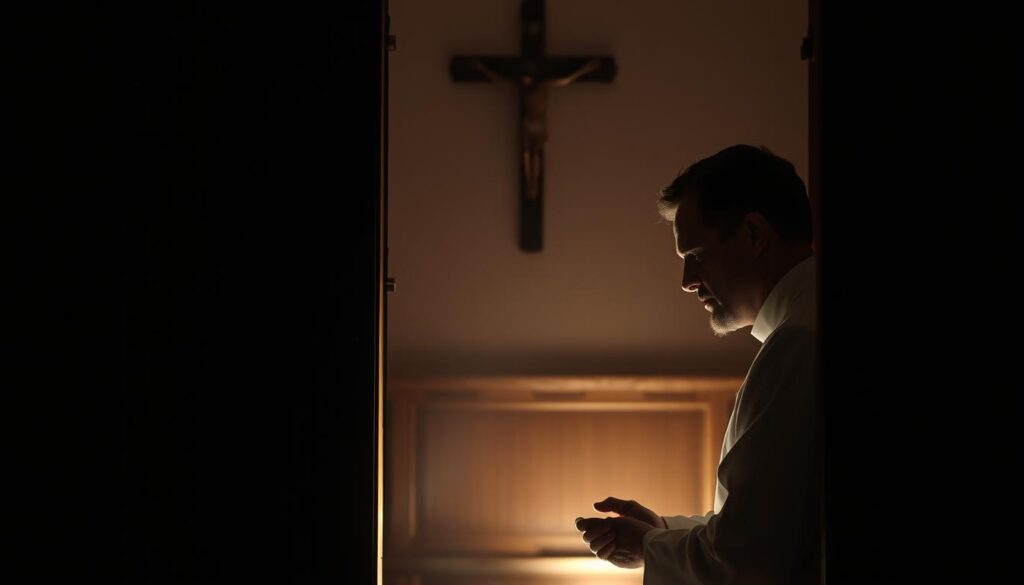
The process mirrors the prodigal son’s return—sincere repentance opens doors to grace. Participants acknowledge their sins not to dwell on failure, but to embrace transformative forgiveness.
The Role of the Priest in the Sacrament
Priests act as both guides and channels in this sacred exchange. They don’t judge but instead offer Christ’s healing words:
- Listen with compassion
- Provide spiritual counsel
- Pronounce absolution using divine authority
When a priest says, “I absolve you from your sins”, it’s more than ritual—it’s a restoration of spiritual wholeness. This unique role balances human understanding with holy purpose.
| Aspect | Personal Impact | Community Impact |
|---|---|---|
| Divine Forgiveness | Clears conscience | Strengthens unity |
| Priest’s Guidance | Offers clarity | Maintains tradition |
| Words of Absolution | Restores grace | Renews collective faith |
Through this sacrament, individuals find peace while contributing to their community’s spiritual vitality. It’s a way to grow personally and strengthen bonds that transcend individual experience.
The Process and Steps to Make a Good Confession
Taking steps toward spiritual renewal can feel daunting, but knowing what to expect transforms anxiety into hope. This sacred exchange follows a rhythm of honesty, guidance, and commitment—a path walked by millions seeking peace.
Steps to Approach the Confessional
Begin by choosing between speaking through a screen or face-to-face—both options offer grace. Start with the sign of the cross and say: “Bless me Father, for I have sinned. It has been [time period] since my last confession.” Share your sins simply, including situations that shaped your choices. One priest advises:
“Details help us address patterns, not just actions.”
Utilizing Prayers and Acts of Contrition
After sharing, listen to the priest’s counsel. Then recite the Act of Contrition:
“Oh my God, I am sorry for my sins with all my heart… I firmly intend to avoid whatever leads me to sin.”
These words express both sorrow and resolve, creating space for healing.
Following Penances and Spiritual Guidance
Accept your penance—like prayers or kind acts—with openness. Complete it soon as possible to seal your renewal. The priest concludes with: “Give thanks to the Lord, for He is good.” Respond “For His mercy endures forever,” then leave with the assurance: “Go in peace.”
Though formal at first, this process becomes a lifeline. As one participant shared: “Every step felt like shedding heavy armor.”
Embracing the Benefits and Experiencing Spiritual Renewal
Imagine carrying a heavy backpack that suddenly lightens—this is the relief many feel after spiritual renewal. Through this sacred practice, people discover freedom from hidden burdens and rediscover their capacity for joy.
Finding Peace, Forgiveness, and Healing
Guilt acts like static noise in the soul, disrupting inner harmony. The sacrament’s mercy silences this chaos, replacing it with clarity. As one participant shared: “It’s like finally exhaling after holding your breath for years.”
Five key benefits transform lives:
| Benefit | Impact |
|---|---|
| Self-Knowledge | Reveals growth areas with compassion |
| Grace-Powered Change | Breaks stubborn habits |
| Inner Peace | Restores emotional balance |
| Christ-Like Growth | Develops virtue and love |
| Stronger Will | Resists temptations effectively |
Transforming Your Life through Regular Practice
Monthly participation works like spiritual exercise—strengthening your conscience muscle. Unlike yearly check-ins, regular practice helps spot patterns early. Married couples often focus on:
- Honoring commitment to their spouse
- Respecting boundaries in relationships
- Practicing kindness in daily actions
Understanding sin types matters too. Mortal sin severs divine connection through serious wrongs done knowingly. Venial sins weaken bonds but respond quickly to correction. As a spiritual coach notes:
“Frequent renewal keeps your soul’s windshield clean.”
This journey isn’t about perfection—it’s about progress. Each visit builds resilience, making wise choices feel more natural over time. The power to change grows when we show up consistently.
Conclusion
Every moment offers a new chance to embrace healing. This sacrament welcomes every sinner with open arms—no perfect résumé required. Jesus waits patiently, ready to replace guilt with grace when we simply ask.
Don’t let another day pass without experiencing this liberation. Regular practice reshapes your life, turning small steps into lasting change. God’s forgiveness isn’t just a one-time gift—it fuels daily growth in peace and joy.
Make good use of your time by weaving this practice into your routine. Let it refine your thoughts and actions, guiding you toward deeper love for others. The help you receive becomes a light to share, inviting friends to discover the same renewal.
Through consistent participation, you’ll grow as God’s cherished son or daughter. Each visit strengthens your faith, transforming not just your heart—but your entire world. Why wait? Your fresh start begins now.
FAQ
Why do I need to confess to a priest instead of praying directly to God?
The priest acts as a guide and mediator, offering Christ’s forgiveness through the sacrament. This practice reflects Jesus’ teaching to His apostles: “Whose sins you forgive are forgiven them” (John 20:23). It also provides accountability and spiritual healing through tangible grace.
What’s the difference between mortal and venial sins?
Mortal sins sever your relationship with God through grave actions committed with full knowledge and consent. Venial sins weaken that bond but don’t destroy it. Both require repentance, but mortal sins must be confessed for full reconciliation.
How do I prepare my heart before entering the confessional?
Start with prayer, asking the Holy Spirit for honesty and humility. Reflect on your actions using an examination of conscience—a tool to review moral choices. Sincere sorrow and a desire to change are key to a meaningful experience.
What if I forget to mention a sin during confession?
If unintentionally forgotten, the sin is still forgiven. Simply mention it in your next confession. Honesty matters, but God’s mercy covers human imperfection. Focus on sincerity rather than perfection.
Why is penance assigned after confessing?
Penance repairs harm caused by wrongs and strengthens spiritual growth. It might include prayers, acts of kindness, or other steps to renew your heart. Completing it shows commitment to healing and transformation.
Can I receive absolution if I’m not ready to change a sinful habit?
Absolution requires genuine sorrow and a firm purpose of amendment—even if progress is gradual. If you’re unwilling to try, the sacrament’s grace may not fully take root. Discuss struggles with the priest for guidance.
How does regular confession improve daily life?
It fosters self-awareness, humility, and reliance on God’s mercy. Over time, this practice deepens virtues like patience and love, helping you respond to challenges with grace. Many find lasting peace through this spiritual reset.