Welcome to your guide on one of the most meaningful milestones in spiritual growth. This sacred practice, often received during adolescence, marks a deeper commitment to faith and community. It’s not just a ceremony—it’s a lifelong connection to values and traditions that shape believers’ lives.
At its core, this sacrament strengthens individuals through the Holy Spirit, empowering them to live their beliefs courageously. Many see it as the final step in Christian initiation, following baptism and first communion. Unlike other rituals, it emphasizes personal choice and maturity in faith.
Throughout this article, you’ll explore how this tradition has evolved while staying rooted in ancient teachings. We’ll break down its biblical foundations, modern-day practices, and practical tips for preparation. Whether you’re seeking clarity for yourself or a loved one, we’ve got you covered.
Key Takeaways
- Strengthens spiritual identity through the Holy Spirit
- Completes the process of Christian initiation
- Requires personal commitment and preparation
- Connects believers to 2,000 years of tradition
- Involves community support and mentorship
Introduction to the Sacrament
Taking the next step in faith often begins with understanding sacred traditions. For many believers, this journey includes a special sacrament received after baptism. Known as confirmation, it deepens one’s bond with the Church and invites the Holy Spirit’s guidance.
Those baptized in the name of the Lord are called to this practice when ready to affirm their faith publicly. Unlike baptism, which cleanses original sin, confirmation focuses on strengthening spiritual gifts. It’s designed for individuals in a state of grace, emphasizing growth rather than forgiveness.
This sacrament marks a conscious choice to embrace lifelong spiritual maturity. As one Church teaching states:
“The Holy Spirit enriches the soul with divine grace, equipping believers for active discipleship.”
Here’s how baptism and confirmation work together:
| Aspect | Baptism | Confirmation |
|---|---|---|
| Primary Focus | Spiritual birth | Faith strengthening |
| Required State | None | State of grace |
| Symbolic Element | Water | Chrism oil |
Through this sacrament, individuals renew their baptized name and commit to living their beliefs. The Holy Spirit provides courage to uphold these promises, creating lasting connections to faith communities.
Overview of the Sacrament of Confirmation
Sacred practices often carry layers of meaning waiting to be uncovered. The sacrament of confirmation stands as one of seven core rituals in the Church, completing a believer’s initiation alongside baptism and Eucharist. Rooted in ancient traditions, it bridges personal faith with communal belonging.
Defining the Sacrament
The Council of Trent clarified this practice isn’t just symbolic but a true sacrament instituted by Christ. Unlike baptism’s focus on spiritual birth, confirmation strengthens existing grace through the Holy Spirit. It’s often described as “the sacrament of maturity” because recipients consciously affirm their beliefs.
The Spiritual Significance
This sacred act leaves an indelible mark on the soul, much like baptism. Once received, it cannot be repeated—a testament to its lasting impact. Through chrism oil and prayer, individuals gain courage to live their faith boldly. As one bishop explained:
“It’s not about becoming perfect, but becoming prepared to face life’s challenges with spiritual resilience.”
The two sacraments of initiation—baptism and confirmation—work together to shape believers. While water cleanses, sacred oil empowers. This combination reflects the Church’s teaching that faith requires both purity and active commitment.
Historical Evolution of Confirmation
Tracing the roots of sacred traditions reveals how faith adapts across generations. The sacrament we now recognize has shifted in practice while preserving its spiritual core. Early Christian communities saw initiation as a unified journey, blending rituals we now separate.
Early Church Practices and Apostolic Origins
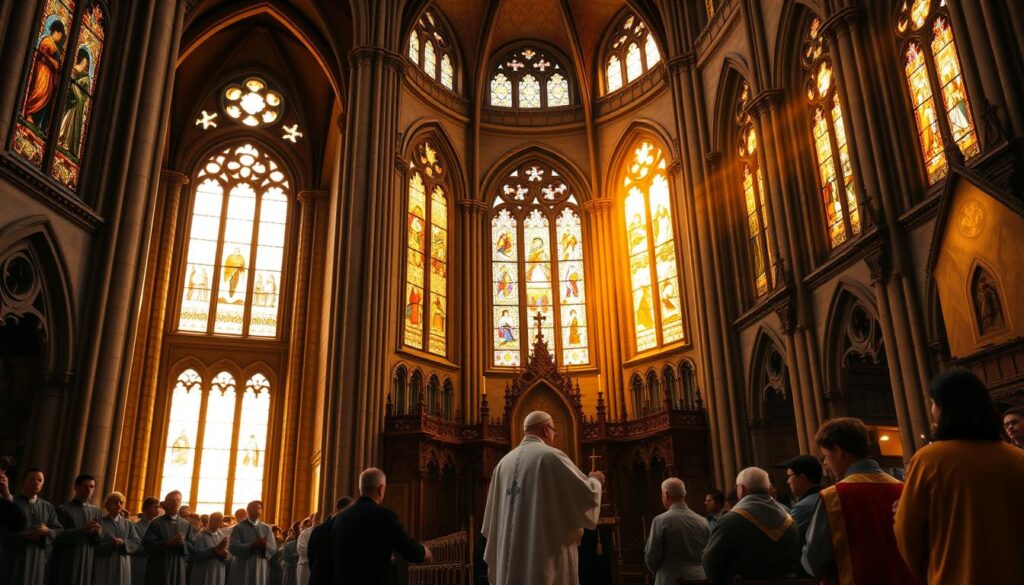
In the first centuries, believers received baptism, chrismation (anointing with oil), and Eucharist together. Bishops oversaw these rites, emphasizing unity in spiritual rebirth. As congregations grew, practical needs led to changes:
- Priests began baptizing infants outside major cities
- Confirmation became a separate practice reserved for bishops’ visits
- The Western Church formalized this split by the 5th century
Medieval Developments and the Council of Trent
By the Middle Ages, theologians debated what made the sacrament unique. Some focused on the oil’s blessing, others on the bishop’s role. The Council of Trent (1545–1563) settled key questions while allowing flexibility:
“This holy sacrament confirms baptismal grace, perfecting what water began.”
Though Trent affirmed its divine origin, local churches kept varied traditions. Today’s practices honor both ancient roots and evolving church history.
Biblical Foundations and Scriptural Insights
Scripture lights the path for understanding sacred practices. The roots of this sacrament stretch back to pivotal moments in the New Testament, where early believers experienced spiritual empowerment through apostolic guidance. Let’s explore how these ancient texts shape modern faith journeys.
Examining Acts and Hebrews
In Acts 8:14-17, Peter and John travel to Samaria after hearing new believers were baptized in the name of the Lord Jesus. Though already baptized, they hadn’t received the Holy Spirit fully. The apostles laid hands on them, completing their spiritual initiation:
“Then they laid hands on them, and they received the Holy Spirit.”
Another key moment occurs in Acts 19. Paul meets disciples who only knew John’s baptism. After being baptized in the name of the Lord, Paul laid hands on them, and they spoke in tongues. This shows two distinct steps: water baptism and Spirit-filled confirmation.
Hebrews 6:2 reinforces this pattern, listing “instruction about baptisms and laying on of hands” as core teachings. These passages reveal a consistent practice:
| Scripture | Action | Result |
|---|---|---|
| Acts 8:14-17 | Apostles lay hands | Holy Spirit received |
| Acts 19:1-6 | Rebaptism + hands | Spiritual gifts manifested |
| Hebrews 6:2 | Doctrine taught | Foundation established |
Through these accounts, we see how laying hands became a sacred bridge between baptism and deeper spiritual maturity. It wasn’t just ritual—it was divine connection.
The Role of the Holy Spirit
At the heart of every spiritual journey lies a moment of divine empowerment. This sacrament amplifies believers’ connection to the Holy Spirit, creating a sacred partnership that fuels courage and clarity. Unlike ordinary rituals, it’s designed to awaken spiritual potential through tangible grace.
Gifts of the Holy Spirit
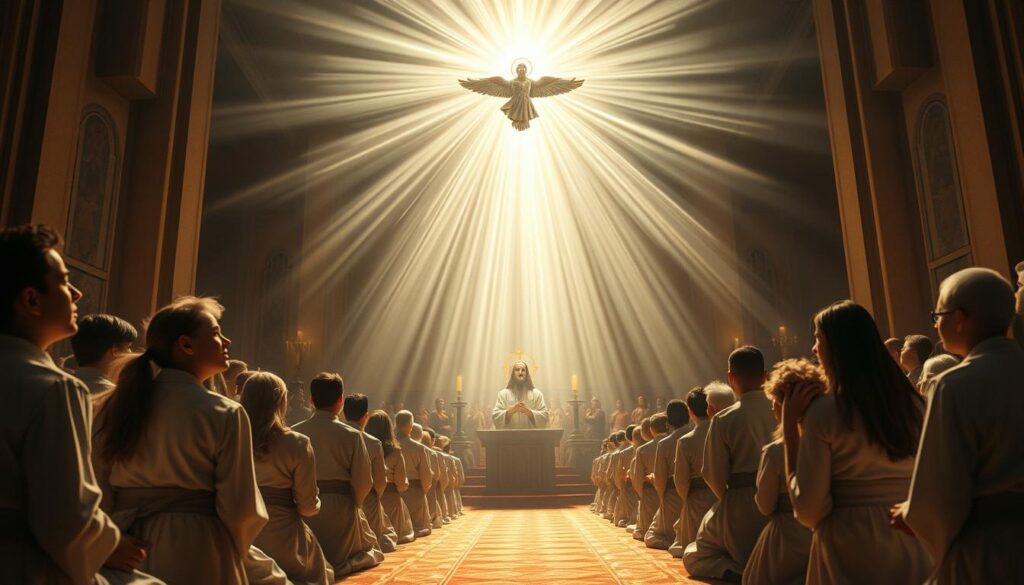
Seven unique strengths emerge through this practice: wisdom, understanding, counsel, fortitude, knowledge, piety, and reverence. These gifts aren’t abstract ideas—they’re practical tools for navigating life’s complexities. As the Catechism teaches:
“Confirmation increases the gifts of the Holy Spirit in us, perfecting what began at baptism.”
Those who receive holy graces gain supernatural resilience. Imagine facing tough choices with unshakable confidence or speaking your beliefs without hesitation. That’s the transformative power at work here.
This sacrament doesn’t just renew faith—it equips believers for action. Whether comforting a friend or standing up for justice, the Holy Spirit provides exactly what’s needed. It’s like having a spiritual toolkit that grows sharper with prayer and service.
Many notice lasting changes after this experience. Relationships deepen, purpose becomes clearer, and challenges feel manageable. Why? Because divine grace isn’t a one-time gift—it’s a lifelong source of strength.
Catechesis and Spiritual Preparation
The journey to spiritual maturity is paved with intentional learning and community support. Proper formation helps candidates grasp what they might receive through this sacred encounter—holy grace that fuels lifelong commitment. It’s not just about memorizing facts but nurturing a living relationship with God.
The Process of Instruction
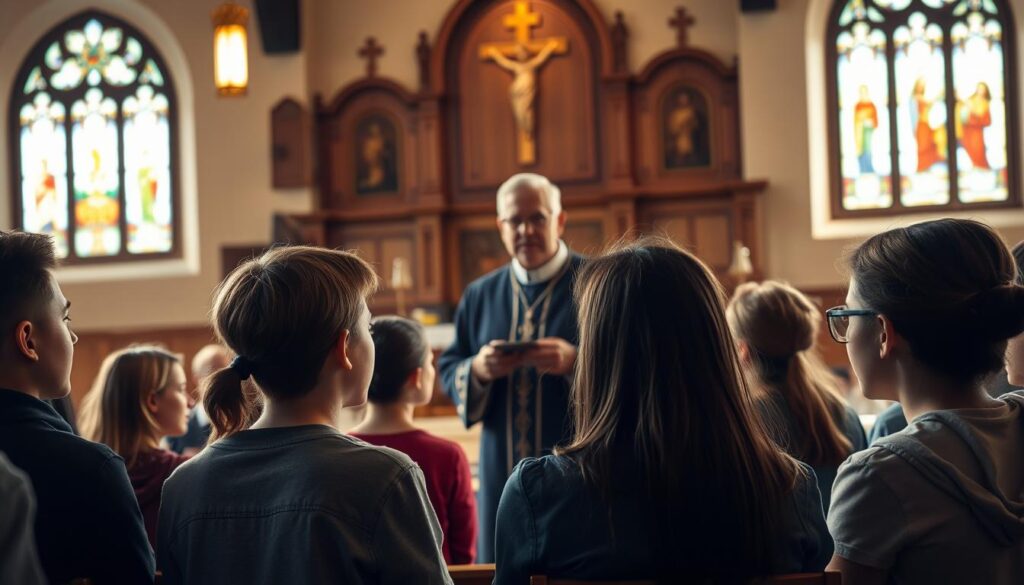
Preparation blends classroom learning with hands-on practice. Programs typically include:
- Scripture studies connecting biblical truths to modern life
- Discussions about moral decision-making
- Prayer workshops teaching diverse spiritual practices
As the Council of Trent taught, this sacrament shouldn’t be given before a person demonstrates understanding. Modern programs honor that wisdom through age-appropriate curricula emphasizing a person’s grasp of faith over rote repetition.
Community and Parental Involvement
Families and sponsors serve as living examples of faith in action. Their roles include:
- Attending retreats that strengthen intergenerational bonds
- Guiding children through service projects like food drives
- Sharing personal stories of spiritual growth
Parishes often require candidates to demonstrate readiness through both knowledge assessments and acts of service. This dual focus ensures recipients appreciate the gifts they’ll receive while understanding their role in the Church’s mission.
The Ministerial Role in Confirmation
Sacred leadership shapes how communities experience key moments of faith. The sacrament’s administration follows strict guidelines rooted in centuries of tradition. According to the Council of Trent, bishops hold primary responsibility as ordinary ministers, linking the ritual to apostolic succession.
Guardians of Tradition
A bishop confirms believers across dioceses, even outside their jurisdiction. However, they must seek local approval when acting in another region. This rule preserves unity while honoring each community’s autonomy.
When Exceptions Apply
In rare cases, priests may serve as ministers with papal permission. These extraordinary ministers ensure access when bishops can’t attend. Such flexibility balances reverence for tradition with practical needs.
This structure reminds us that spiritual growth thrives under wise guidance. Whether through a bishop’s anointing or a delegated priest, the sacrament maintains its power to strengthen faith communities.
FAQ
What is the purpose of Confirmation in the Catholic Church?
Confirmation strengthens the grace received at Baptism, deepening a person’s bond with the Church. It empowers individuals with the Holy Spirit’s gifts to live out their faith courageously.
Why is a bishop usually the one to administer Confirmation?
Bishops, as successors of the apostles, serve as the ordinary ministers to highlight the sacrament’s connection to the universal Church. In special cases, priests may be authorized to perform it.
What role does the Holy Spirit play in this sacrament?
The Holy Spirit enriches the confirmed with wisdom, understanding, and courage. These gifts help them witness Christ’s teachings and grow in spiritual maturity.
At what age do Catholics typically receive Confirmation?
In the United States, many dioceses celebrate Confirmation between ages 12 and 18. This varies globally, with some traditions linking it to Baptism or First Communion.
How does Confirmation connect to early Christian practices?
Early Christians linked Confirmation to Baptism, often through anointing and laying hands. Over time, it became a separate rite to emphasize the Spirit’s role in mission.
Are there biblical references supporting Confirmation?
Yes! Acts 8:14-17 describes apostles laying hands on the baptized to impart the Holy Spirit. Hebrews 6:2 also mentions foundational teachings about sacraments.
What’s involved in preparing for Confirmation?
Preparation includes catechesis, prayer, and service. Candidates often choose a saint’s name as a model and participate in retreats to deepen their commitment.
Can someone be re-confirmed if they leave the faith?
No—Confirmation, like Baptism, leaves an indelible spiritual mark. Returning Catholics focus on reconciliation and renewing their commitment rather than repeating sacraments.