More people than ever are discovering a faith that reshapes their lives. Recent reports show parishes across America welcoming waves of new members, with some dioceses seeing over 70% growth in just one year. Young adults, in particular, are finding meaning in ancient traditions that offer both intellectual depth and spiritual nourishment.
Take Sydney Johnston, who explored countless denominations before embracing this path. Or Adrian Lawson, whose late-night YouTube deep dives led to a life-changing decision. Their stories reflect a broader trend: a hunger for authentic connection in our fast-paced world.
What draws so many? For starters, the gift of community that’s stood strong for two millennia. There’s also the structured approach to faith that helps people make sense of modern challenges. Unlike fleeting trends, this journey requires real preparation—a commitment that transforms how individuals love, serve, and engage with the world around them.
Key Takeaways
- Parishes report up to 72% growth in new members year-over-year
- Three-quarters of recent converts are under age 35
- Ancient rituals provide stability in uncertain times
- Conversion often starts with intellectual exploration
- Preparation process ensures informed commitment
- Changes extend beyond personal faith to community impact
Understanding the Journey to Becoming Catholic
Exploring spiritual paths often leads to questions about belonging and belief. For many adults, this search becomes a journey of deep discovery. The process starts with curiosity but grows into something richer—a chance to build relationships with both faith and community.
Where Questions Meet Answers
Inquiry sessions act as open doors for those exploring religious life. These gatherings let people discuss teachings, ask tough questions, and observe traditions without pressure. “It’s like dating before marriage,” one recent participant shared. Over 80% of parishes now offer weekly inquiry meetings, creating spaces where doubt and hope coexist.
Two Roads, One Destination
Your background shapes how you join the Church. Unbaptized adults follow the RCIA process—learning core beliefs through months of study. Those baptized elsewhere focus on bridging differences in doctrine. The Church honors their existing sacramental bond while guiding them toward full communion.
Time spent in preparation varies, but the goal remains constant: ensuring each person’s choice stems from love and understanding. Many find this period transforms not just their faith, but how they connect with others in daily life.
Catholicism Conversion: A Practical How-To Guide
Choosing to join a faith community requires both heart and preparation. The journey follows a time-tested framework that blends learning, reflection, and sacred rituals. Let’s explore how this structured approach helps adults build lasting spiritual foundations.
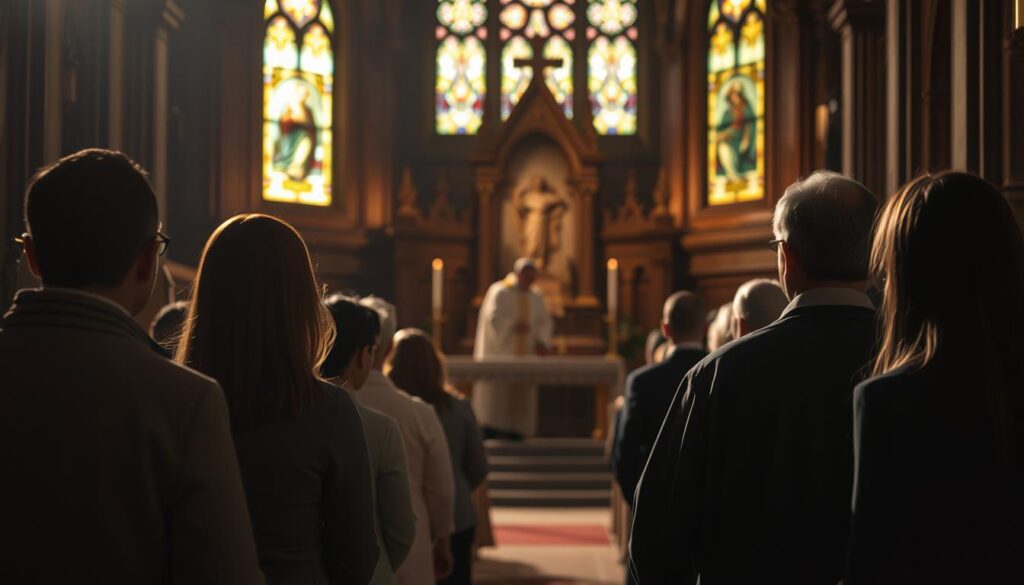
Steps from Inquiry to Sacred Rites
Everything begins with curiosity. Many start by attending open sessions at their local parish, where questions about teachings and traditions get answered. “Our group became like family,” shares recent convert Maria Torres. Over 60% of participants decide to continue after these initial discussions.
The Role of RCIA in Adult Initiation
The Rite of Christian Initiation acts as your roadmap. This year-long process includes four phases:
- Learning core beliefs through weekly classes
- Participating in community worship
- Preparing for sacraments during Lent
- Celebrating initiation at Easter
Sponsors guide candidates through each step, offering personal support and wisdom.
Navigating Catechumenate, Election, and Scrutinies
The catechumenate phase forms the heart of formation. Here, adults study scripture and Church teachings while practicing prayer habits. Come Lent, the rite of election marks their official commitment. Three scrutinies follow—special services focusing on spiritual growth and renewal.
This gradual approach ensures people fully understand their decision. As one priest notes: “We’re not just welcoming members—we’re nurturing disciples.”
Embracing Faith, Sacraments, and Community
The final steps in this spiritual journey blend personal transformation with shared celebration. Adults preparing to join often describe sacraments as living milestones that anchor their faith in tangible experiences. These sacred moments connect individual stories to a 2,000-year-old tradition of worship.
Three Pillars of Spiritual Renewal
Baptism marks the starting point, washing away old patterns and welcoming new life. Many find this ritual especially powerful when received as adults—a conscious choice rather than childhood tradition. The water symbolizes both cleansing and rebirth.
Confirmation invites the Holy Spirit to strengthen one’s commitment. Through anointing with oil, participants feel empowered to live their faith actively. This sacrament often surprises people with its emotional depth and sense of purpose.
The Eucharist then becomes a weekly homecoming. Sharing this meal creates bonds within the community while nourishing personal spirituality. Recent members frequently mention how this practice reshapes their understanding of belonging.
These sacraments typically culminate at the Easter Vigil, where candlelight illuminates new beginnings. The ancient rhythms of Christian initiation remind everyone that faith grows best when rooted in both heart and history.
FAQ
What’s the first step to joining the Catholic Church?
Start by connecting with a local parish. Many begin with the Rite of Christian Initiation for Adults (RCIA), a program guiding adults through learning, prayer, and sacraments. It’s a space to ask questions and explore the faith lived by Catholics worldwide.
How does prior baptism affect the process?
If you’re already baptized in another Christian tradition, your journey may differ. The Catholic Church recognizes valid baptisms, so you’ll focus on confirmation and Eucharist instead. Unbaptized individuals prepare for all three sacraments of initiation.
What role does RCIA play in becoming Catholic?
RCIA is the Church’s pathway for adults seeking membership. It includes faith formation, community support, and rituals like the Rite of Election. This process helps deepen your relationship with God and the Church before receiving sacraments at Easter.
What are scrutinies, and why are they important?
Scrutinies are special prayers during Lent for those preparing for baptism. They focus on spiritual healing and strength, inviting the Holy Spirit to renew hearts. This step emphasizes turning toward Christ and embracing a life rooted in service and love.
Which sacraments do adults receive at the Easter Vigil?
Unbaptized adults typically receive baptism, confirmation, and First Eucharist together during the Easter Vigil. Baptized Christians from other traditions often complete their initiation with confirmation and Eucharist, depending on their background.
How long does the conversion process take?
Timing varies based on personal readiness and parish practices. RCIA often spans months, aligning with the liturgical calendar. Some need extra time for discernment, while others move faster. The focus is on meaningful preparation, not rushing the journey.
Can I participate in Mass before becoming Catholic?
Yes! Attending Mass helps you experience the community and liturgy. While only baptized Catholics may receive Communion, everyone is welcome to pray, sing, and observe. Many find this involvement strengthens their connection during the process.