What does it mean to be part of a religious community spanning over a billion people? For over a century, the global Catholic population has grown alongside worldwide demographic shifts, creating a fascinating story of faith and numbers. From 291 million followers in 1910 to 1.4 billion today, this growth reflects both tradition and adaptation.
Surprisingly, the proportion of Catholics worldwide has stayed steady at 16-17% since the early 1900s. This balance shows how the faith expands even as Earth’s total population skyrockets. Modern tools like Pew Research studies and Vatican yearbooks help track these patterns, revealing where growth thrives and where challenges emerge.
Regional shifts tell their own stories. While some areas see declining participation, others experience rapid growth. Migration, cultural changes, and birth rates all play roles in shaping today’s religious landscape. Understanding these trends offers clues about how communities adapt while staying rooted in tradition.
Key Takeaways
- The Catholic community has tripled in size since 1910, reaching 1.4 billion members worldwide
- Faith representation remains stable at 16-17% of Earth’s population for over a century
- Regional growth patterns vary dramatically, with declines in traditional areas and surges elsewhere
- Demographic data sources include Pew Research studies and Vatican-published statistics
- Cultural shifts and migration significantly influence participation rates across continents
The Evolution of Global Catholic Population Distribution
Over the past century, the map of religious affiliation has redrawn itself in surprising ways. While total numbers grew steadily, where people practice their faith shifted dramatically across continents. This transformation reveals how cultural and social forces reshape spiritual landscapes.
Historical Growth and Regional Shifts
In 1910, Europe claimed 65% of the global faithful, with Latin America hosting another 24%. By 2010, Europe’s share dropped to 24%, while Latin America surged to 39%. This flip reflects broader changes in population growth and cultural influence worldwide.
Sub-Saharan Africa’s story stands out. Starting with under 1% of followers in 1910, it now accounts for 16% – a 170-fold increase. The Asia-Pacific region similarly expanded its share from 5% to 12%, showing how new centers of influence emerged.
Key Influences: Migration, Birth Rates, and Secularization
Three main forces drive these changes. First, migration patterns moved millions from traditional strongholds to new areas. Second, higher birth rates in developing nations fueled rapid growth. Finally, secularization in wealthy countries reduced active participation despite stable numbers.
Economic factors also play a role. As regions develop, education and prosperity often lead to different engagement with traditional practices. These trends continue shaping where and how communities grow, creating dynamic patterns for future generations.
Catholicism Demographics: Current Trends and Regional Analysis
Modern demographic shifts are reshaping the global distribution of religious adherents. Fresh data from trusted sources shows how regional patterns influence faith communities worldwide.
Data Insights from Pew Research and Vatican Reports
The 2023 Annuario Pontificio reveals striking contrasts. Africa’s growth rate leads globally at 3.31%, adding 9 million followers in one year. Pew Research Center studies confirm this trend through migration patterns and birth rate analysis.
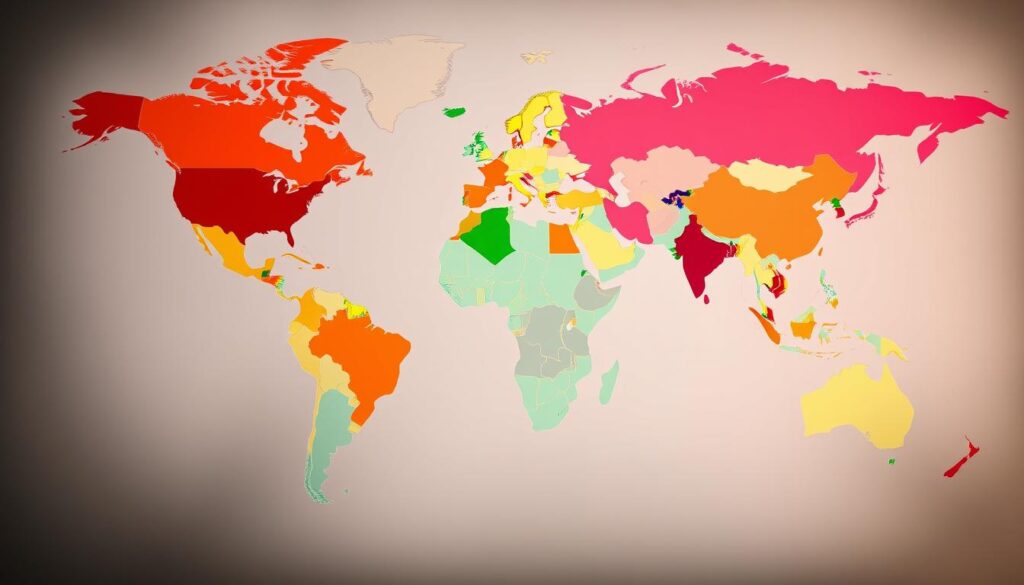
Vatican reports highlight Brazil’s unique position – 182 million followers make it home to 13% of the world’s Catholic population. This data underscores Latin America’s enduring influence despite slower expansion rates than African nations.
Notable Regional Trends in Latin America, Africa, and Europe
Latin America remains the faith’s stronghold with 47.8% of global adherents. Countries like Mexico and Colombia show steady engagement, though Protestant movements create new challenges.
Africa’s surge contrasts sharply with Europe’s 0.2% growth. Nations like Nigeria and Kenya drive this momentum, while European countries face aging populations and secular attitudes. These shifts suggest future leadership roles may tilt toward developing regions.
Regional analysis confirms the Americas still hold the largest numbers, but Africa’s explosive growth hints at coming transformations. As reports from both secular and religious sources agree, these trends will shape spiritual landscapes for generations.
Insights into Future Population Projections and Challenges
Tomorrow’s faithful will look dramatically different from today’s. By 2050, population projections suggest nearly 500 million new believers will join the church – with 9 out of 10 coming from developing countries. This seismic shift promises to redefine leadership roles and cultural priorities within the faith.
Projected Growth in the Developing World
Africa’s growth story stuns analysts. With a 146% surge expected by 2050, nations like Nigeria could soon rival Brazil’s current Catholic numbers. The Democratic Republic of Congo alone might add 40 million believers – equivalent to Spain’s entire population.
Asia’s 63% expansion reveals untapped potential. The Philippines already hosts the world’s third-largest community, while India’s small but growing Catholic populations could reshape regional dynamics. Even North America’s 38% projected increase leans heavily on migration patterns from Latin America.
Implications for Traditional Catholic Power Centers
Europe faces a double challenge – a 6% membership decline and aging congregations. This shift could reduce European influence in global church decisions as African and Asian voices grow louder.
Three key changes emerge:
- Leadership structures may prioritize multilingual capabilities
- Resource allocation could favor education initiatives over heritage preservation
- Social justice focus might shift toward poverty reduction in growing regions
These population projections don’t just change numbers – they signal a transformation in how the faith engages with the world. The coming decades will test traditions while creating new opportunities for connection.
Impact of Immigration and Changing Public Life in the United States
American parishes tell a story of cultural fusion. Nearly 1 in 4 U.S. residents identifies with this faith community, making the United States home to 7% of the world’s believers. This vibrant mix stems from generations of newcomers reshaping spiritual landscapes.
Latino communities drive this transformation. Three-quarters of foreign-born believers hail from Latin America and the Caribbean, bringing traditions that energize local congregations. Over half of all migrants to America share this faith, creating steady renewal despite some members leaving.
The Role of Latino Immigrants and U.S. Demographic Shifts
Today’s Catholic population reflects shifting borders. Thirty percent of America’s 75 million believers were born elsewhere – equivalent to the entire population of Florida. These numbers shape everything from Sunday services to community outreach programs.
Public spaces now mirror this diversity. Spanish-language masses outnumber English ones in many urban areas. Advocacy groups increasingly focus on migrant rights and bilingual education, reflecting members’ priorities. This cultural shift influences policy debates nationwide.
Future growth hinges on continued connections with Latin America and the Caribbean. As immigration policies evolve, so will the character of local congregations. These changes ensure America remains a dynamic chapter in the global Catholic story.
Conclusion
The changing face of global faith communities presents both opportunities and tests for religious institutions. Recent data reveals striking contrasts: Africa and Asia now produce 61% of seminarians worldwide, while Europe struggles with priest shortages. This shift mirrors broader population growth patterns, where countries like the Democratic Republic of Congo add believers faster than traditional strongholds can retain them.
Leadership trends tell a compelling story. Bishop numbers grew 1.4% last year – mostly in developing countries – even as priest counts dipped globally. These changes suggest future church decisions might prioritize regions with booming Catholic populations over areas facing membership decline.
Immigration continues reshaping communities, particularly in the U.S., where cultural fusion creates vibrant parishes. Meanwhile, projections indicate 75% of believers will soon call developing nations home. This transformation challenges institutions to balance resource allocation between rapid expansion zones and established Catholic countries.
The road ahead demands creative adaptation. From multilingual leadership training to reimagined social programs, the faith’s future hinges on embracing change while honoring tradition. As numbers shift and priorities evolve, one truth remains – spiritual communities thrive when they grow with their people.
FAQ
How has the global distribution of Catholics changed over time?
Over the past century, growth has shifted from Europe and North America to Latin America, Africa, and Asia. Today, nearly 40% of Catholics live in Latin America, while Europe’s share has declined due to lower birth rates and secularization.
What factors influence Catholic population trends today?
Migration, birth rates, and religious practice levels play key roles. For example, Africa’s high fertility rates drive growth, while secularization in Europe contributes to declining participation in public life and sacraments.
Which regions are projected to see the most growth by 2050?
Sub-Saharan Africa and Asia are expected to lead, with countries like the Democratic Republic of Congo and the Philippines expanding their Catholic populations. Meanwhile, Europe may see further declines in its share of the global total.
How does immigration affect Catholic communities in the United States?
Latino immigrants have helped stabilize U.S. numbers, offsetting declines among non-Hispanic groups. Over 50% of American Catholics under 30 now identify as Hispanic, reshaping parish dynamics and cultural practices.
What challenges do traditional Catholic power centers face?
Countries like Italy and Spain now grapple with aging congregations and reduced vocations. The Vatican’s Annuario Pontificio reports slower growth in priest numbers compared to regions like Africa, where seminaries are thriving.
How reliable are current Catholic demographic reports?
Organizations like Pew Research Center and the Vatican provide robust data, but challenges remain. Some countries lack precise counts, and self-identification (rather than active practice) can skew reported numbers.