Whether you’re new to religious studies or deepening your spiritual journey, understanding the Catholic Church offers insights into one of humanity’s most enduring institutions. With over 1.3 billion followers globally, its teachings and traditions shape lives across six continents. This guide invites you to explore its core principles without overwhelming jargon or assumptions.
Many wonder how a 2,000-year-old institution remains relevant today. The answer lies in its blend of ancient rituals and modern adaptability. From weekly Mass to sacraments like baptism, Catholic practices create meaningful connections between individuals and their communities. We’ll unpack these traditions in simple terms, addressing common questions about prayer styles, leadership roles, and cultural influences.
You don’t need prior religious knowledge to benefit from this overview. Maybe you’ve heard terms like “Eucharist” or “Vatican” but want clearer context. Perhaps you’re curious how local parishes differ from global church governance. Our approach respects the complexity of Catholic faith while prioritizing accessibility—like having coffee with a knowledgeable friend.
Key Takeaways
- The Catholic Church serves 1.3+ billion people through 3,500 dioceses worldwide
- Its 24 autonomous branches blend unity with cultural diversity
- Core practices connect ancient traditions to modern spiritual needs
- Common questions about sacraments and leadership will be addressed
- No religious background required—concepts explained in everyday language
Introduction to Catholicism and Its Global Role
More than a Sunday gathering, the Catholic Church runs Earth’s biggest network of schools and hospitals. Imagine an organization managing 95,200 elementary schools and 18,000 medical clinics—all while serving tacos in Mexico City, hosting choir practice in Nairobi, and stocking food pantries in Manila. This is faith in action.
From Local Roots to Worldwide Reach
What began as small groups meeting in homes now spans 1.3 billion people. Bishops still guide communities like in the early church, but today’s parishes stretch from Brazilian favelas to Korean high-rises. The Catechism of the Catholic Church keeps teachings consistent, whether you’re in Chicago or Chennai.
Solving Today’s Problems With Timeless Wisdom
Why does a 2,000-year-old institution matter now? Look at South America, where Catholic charities teach job skills. Or Africa, where nuns run AIDS clinics. Over 60% of Catholics live in the Global South, proving the faith adapts while keeping its core. Ancient ideas about human dignity now fuel modern fights for fair wages and clean water.
The church isn’t stuck in history—it’s using centuries of wisdom to tackle today’s toughest issues. From Filipino typhoon relief to Polish addiction recovery programs, this Christian community shows how old beliefs create new solutions.
Historical Foundations and Evolution of the Church
The story of the Catholic Church begins with a small group of followers in ancient Judea. Jesus Christ gathered twelve ordinary people—fishermen, tax collectors, and seekers—to build something extraordinary. Their mission? To share transformative teachings about love, justice, and divine connection across all nations.
Early Beginnings and the Apostolic Era
Jesus gave his closest followers clear instructions: “Go and make disciples of all nations”. This Great Commission launched a movement that outlived empires. When Jesus told Peter, “You are the rock,” he established leadership continuity still seen today—every pope traces authority to this first apostle.
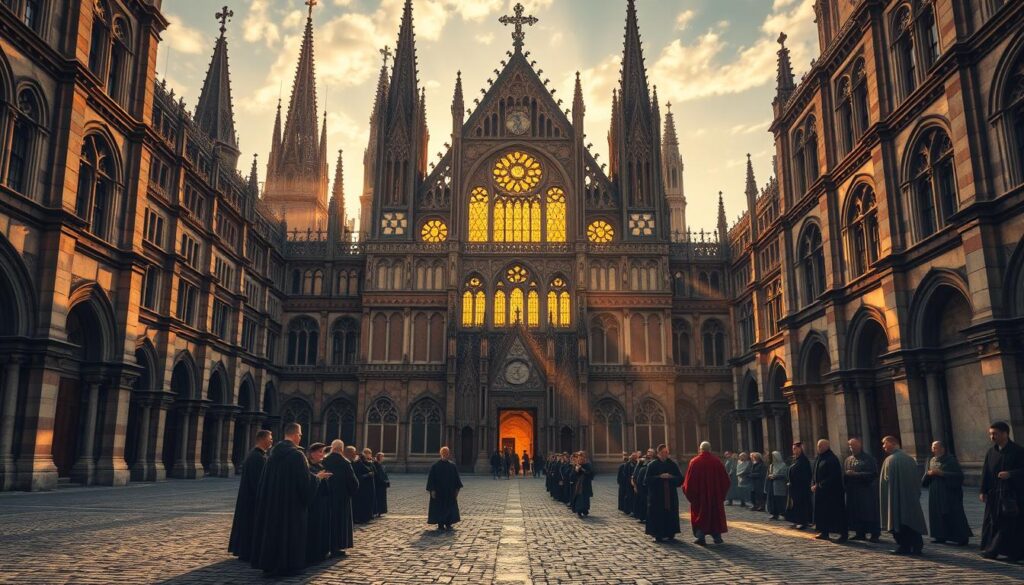
Early believers met in homes, sharing meals and stories of resurrection. As communities spread through the Roman Empire, apostles appointed bishops to maintain unity. These leaders resolved disputes and preserved core teachings while adapting to local cultures.
Development Through the Roman Empire and Middle Ages
Everything changed in 313 AD. Emperor Constantine’s Edict of Milan stopped Christian persecution. By 380 AD, Christianity became Rome’s official religion. This shift let the church influence laws, education, and social services.
Monasteries became knowledge hubs during the Middle Ages. Monks copied ancient texts, blending Scripture with oral tradition. Through wars and plagues, these communities safeguarded faith practices that still shape worship today.
Centuries of councils and debates refined teachings without breaking that original chain. What started as whispered prayers in catacombs grew into a global family tree—rooted in one teacher, branching across two millennia.
Deep Dive into “catholicism explained”: Core Beliefs and Teachings
At the heart of Catholic practice lies a set of beliefs that shape daily spiritual life. These teachings connect ancient wisdom to modern faith journeys through shared rituals and community bonds.
https://www.youtube.com/watch?v=y9FnljV4bKg
The Nicene Creed and Sacred Tradition
The Nicene Creed serves as a spiritual fingerprint for Catholics. Its opening lines—“I believe in one God, the Father almighty”—establish three core truths: a loving creator, Jesus as both divine and human, and the Holy Spirit guiding believers. This 4th-century statement remains central to Mass worldwide.
Catholics view God as a Trinity—one divine essence with three distinct persons. Imagine sunlight split into warmth, light, and energy—different expressions of the same source. This mystery anchors their understanding of divine relationships.
Sacred tradition acts like a family recipe passed through generations. It blends Scripture with teachings preserved by bishops since apostolic times. Together, they form a living guidebook for interpreting God’s message in changing times.
Understanding Sacraments and Religious Practices
Seven sacraments mark key moments in Catholic life. Baptism welcomes newborns, Confirmation strengthens teens, and Marriage unites couples. Each practice channels God’s grace through tangible actions—water, oil, or vows exchanged.
The Eucharist stands above all. During Mass, Catholics believe simple bread and wine transform into Christ’s body and blood. This ritual reenacts Jesus’ Last Supper, offering spiritual nourishment and communal unity.
Salvation in Catholic doctrine resembles a dance—divine grace leads, but human steps matter. Good works and sacraments express faith actively, creating a partnership between believers and their creator.
Exploring the Structural and Cultural Dimensions of the Catholic Church
The Catholic Church operates like a global family with a shared playbook. Its structure balances central leadership with local flexibility, while its cultural contributions shape societies far beyond Sunday services.
The Papacy and Ecclesiastical Hierarchy
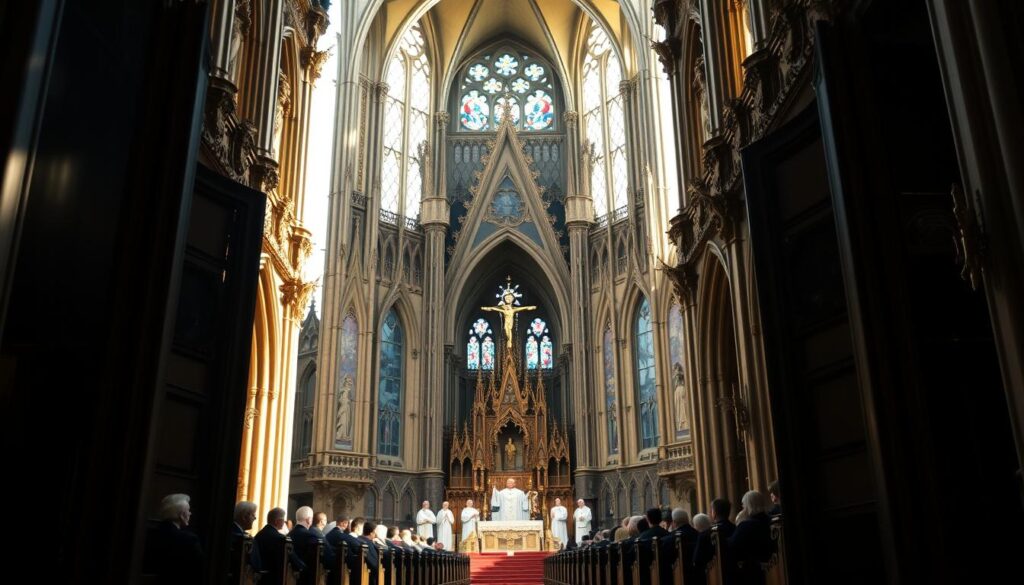
Imagine the Pope as a spiritual CEO working from the world’s smallest country. Vatican City—smaller than Central Park—houses the Holy See, where the Pope and Roman Curia manage global church affairs. This team of advisors helps interpret teachings while respecting diverse cultures.
Leadership flows through clear roles:
| Role | Responsibility | Symbol |
|---|---|---|
| Pope | Global spiritual leader | Fisherman’s Ring |
| Cardinals | Elect new popes | Red zucchetto |
| Bishops | Regional supervisors | Crosier staff |
| Priests | Local community guides | Stole |
This system keeps worship consistent worldwide while letting Nigerian parishes use drums or Polish churches feature traditional hymns. Unity doesn’t mean uniformity.
Influence on Art, Literature, and Education
Michelangelo’s Sistine Chapel wasn’t just a job—it was divine inspiration funded by church patrons. For centuries, Catholic teachings fueled masterpieces from Dante’s Divine Comedy to Bach’s Mass in B Minor.
Education remains central to Catholic tradition. Medieval monks founded Europe’s first universities. Today, over 95,000 Catholic schools worldwide teach math alongside morality. These institutions often serve as community hubs, helping families bridge faith and daily life.
The Catechism of the Catholic Church acts as a spiritual GPS for modern believers. Updated in 1992, it answers questions about everything from social justice to family dynamics—proving ancient wisdom still guides contemporary homes.
Worship, Liturgical Practices, and Sacraments in Daily Life
Daily Catholic life pulses with rituals that bridge heaven and earth. These practices turn ordinary moments into sacred encounters, blending ancient patterns with personal spirituality.
Sunday Gatherings and Sacred Meals
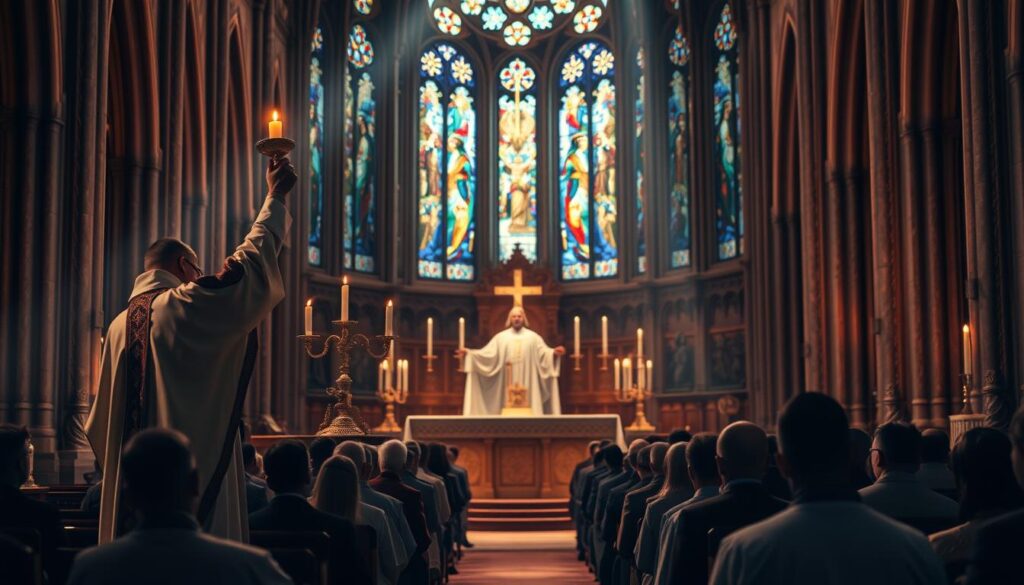
A typical Mass unfolds like a spiritual conversation. Scripture readings set the tone, followed by prayers where the faith community voices joys and struggles. The climax comes during the Eucharistic Prayer, when Catholics believe simple bread and wine become Christ’s body and blood. “This is my blood of the covenant,” Jesus instructed at the Last Supper—a moment relived weekly.
Heavenly Friends and Earthly Guidance
Catholics see saints as experienced travelers on the faith journey. When they pray to saints, it’s like texting a wise aunt for advice. The Virgin Mary holds special honor as Jesus’ mother—believed free from original sin through her Immaculate Conception. Rosary beads become prayer tools, each “Hail Mary” deepening connection to Christ.
Sacraments for Life’s Journey
Seven milestones mark Catholic life:
- Baptism: Welcome into God’s family
- Confirmation: Personal commitment to faith
- Marriage: Blessing lifelong love
- Anointing the Sick: Comfort during illness
Confession offers reset buttons for strained relationships with God. Modern parishes blend these traditions with food drives and youth groups, proving ancient teachings still nurture 21st-century souls.
Conclusion
Exploring this global spiritual community reveals how ancient practices meet modern needs. The Catholic Church thrives by balancing sacred rituals with practical service—feeding hungry families, educating children, and advocating for justice. Its strength lies in unity, not uniformity, allowing Brazilian processions and Chicago soup kitchens to express shared values differently.
Sacraments act as spiritual touchpoints, marking life’s milestones with divine connection. From baptism’s welcoming waters to marriage’s lifelong vows, these traditions anchor believers in something greater than themselves. They answer a timeless human craving for meaning through tangible actions.
Local parishes prove faith isn’t confined to cathedrals. Soup kitchen volunteers and youth group leaders show how teachings translate into action. Meanwhile, the Vatican’s guidance ensures continuity across 24 unique traditions—a rare blend of flexibility and stability in our fast-changing world.
Whether you’re drawn to its art, inspired by its charities, or curious about Sunday rituals, this faith offers doors for exploration. Like stained glass refracting light, its many facets invite personal discovery within a 2,000-year-old story still being written.
FAQ
What makes the Catholic Church unique among Christian denominations?
The Catholic Church traces its origins directly to Jesus Christ and the apostles, emphasizing apostolic succession, the sacraments, and the authority of the Pope. Its global presence, centered in the Vatican, unites over 1.3 billion believers through shared traditions and teachings.
How did early Christian communities shape the Church’s foundation?
Early Christians faced persecution but grew rapidly, organizing under bishops and preserving teachings through writings like the Gospels. The Council of Nicaea in 325 AD solidified key doctrines, such as the divinity of Christ, shaping the Church’s identity.
What role does the Nicene Creed play in Catholic beliefs?
The Nicene Creed summarizes core beliefs, including the Trinity, Jesus’ resurrection, and the Church’s unity. Recited during Mass, it connects Catholics to centuries of shared faith and doctrinal clarity.
Why are sacraments like Baptism and Eucharist central to Catholic life?
Sacraments are visible signs of God’s grace. Baptism cleanses original sin and initiates one into the Church, while the Eucharist (Communion) unites believers with Christ’s sacrifice through consecrated bread and wine.
How does the Pope influence the Church’s global mission?
As the successor of St. Peter, the Pope serves as a spiritual leader and symbol of unity. Pope Francis, for example, emphasizes social justice and interfaith dialogue, guiding the Church’s response to modern challenges.
What impact has Catholicism had on art and education worldwide?
The Church inspired Renaissance masterpieces like Michelangelo’s Sistine Chapel and founded early universities, such as Oxford. Today, Catholic schools and charities continue to promote education and serve communities globally.
What happens during the celebration of the Eucharist at Mass?
The Eucharist involves consecrating bread and wine, believed to become Christ’s Body and Blood (transubstantiation). This ritual commemorates Jesus’ Last Supper and nourishes participants spiritually.
Why do Catholics honor saints and the Virgin Mary in their prayers?
Saints are seen as holy intercessors who model faith and virtue. Mary, honored as the Mother of God, holds a special place for her role in salvation history, reflected in devotions like the Rosary.
How does Confession strengthen a Catholic’s relationship with God?
The Sacrament of Reconciliation offers forgiveness for sins through confession to a priest. It restores grace, encourages self-reflection, and fosters spiritual growth through God’s mercy.
What guidance does the Catechism provide for modern believers?
The Catechism of the Catholic Church, updated in 1992, clearly explains doctrines, moral teachings, and worship practices. It serves as a reliable resource for understanding faith in a changing world.