Welcome to a spiritual path followed by over 1.1 billion people globally. This guide simplifies core principles of the Roman Catholic Church, offering clarity for those new to its traditions. Whether you’re curious or committed, you’ll find a clear roadmap here.
The Church’s teachings are organized into four pillars: core beliefs, moral guidance, worship practices, and prayer. These elements work together to create a meaningful connection with God and community. You don’t need prior knowledge—we’ll start from the ground up.
Many wonder how this faith differs from other Christian traditions. Key distinctions include the Pope’s role as spiritual leader and the balance between Scripture and sacred tradition. These unique aspects shape daily life for believers worldwide.
Far more than rules, Catholic doctrine provides tools for finding purpose and joy. Through sacraments like Communion and practices like Lent, followers build a relationship with the divine. This living tradition adapts to modern life while honoring ancient wisdom.
Key Takeaways
- Discover a 2,000-year-old tradition practiced by over 1.1 billion people
- Learn through four structured pillars: beliefs, morality, worship, and prayer
- Understand unique features like papal authority and sacred traditions
- Find practical tools for spiritual growth and daily meaning
- Explore sacraments that deepen connection to God and community
Introduction to the Catholic Faith
Have you ever wondered what unites over a billion people across continents and cultures? At its heart, this spiritual tradition combines ancient wisdom with modern relevance. The term “Catholic” stems from the Greek word katholikos, meaning “universal”—a perfect description of its worldwide embrace.
What Is This Global Tradition?
Rooted in the teachings of Jesus Christ and his apostles, the Catholic Church forms the largest Christian community. Unlike other denominations, it maintains unbroken leadership tracing back to Saint Peter. This connection between past and present gives the faith its unique continuity.
Two pillars uphold Catholic teachings: the Bible and Sacred Tradition. While Scripture forms the foundation, Tradition preserves interpretations passed through generations. As one bishop noted,
“We don’t read the Word alone—we celebrate it through living practice.”
Walking Through History
From Roman catacombs to Gothic cathedrals, this 2,000-year journey shaped civilizations. The Church established Europe’s first universities and inspired masterpieces like Michelangelo’s Sistine Chapel. Yet its core mission remains unchanged—sharing God’s love through service and sacraments.
Vatican City serves as the spiritual headquarters, where the Pope guides 1.1 billion members. Whether through weekly Mass or works of mercy, Catholics worldwide express their faith in action. This blend of prayer and practicality makes the tradition thrive in changing times.
Foundational Beliefs in Catholicism
Central to the Catholic experience are timeless truths that have guided generations. These principles form a spiritual compass, helping believers navigate life’s challenges while staying rooted in divine truth. Let’s explore the tools that preserve this wisdom across centuries.
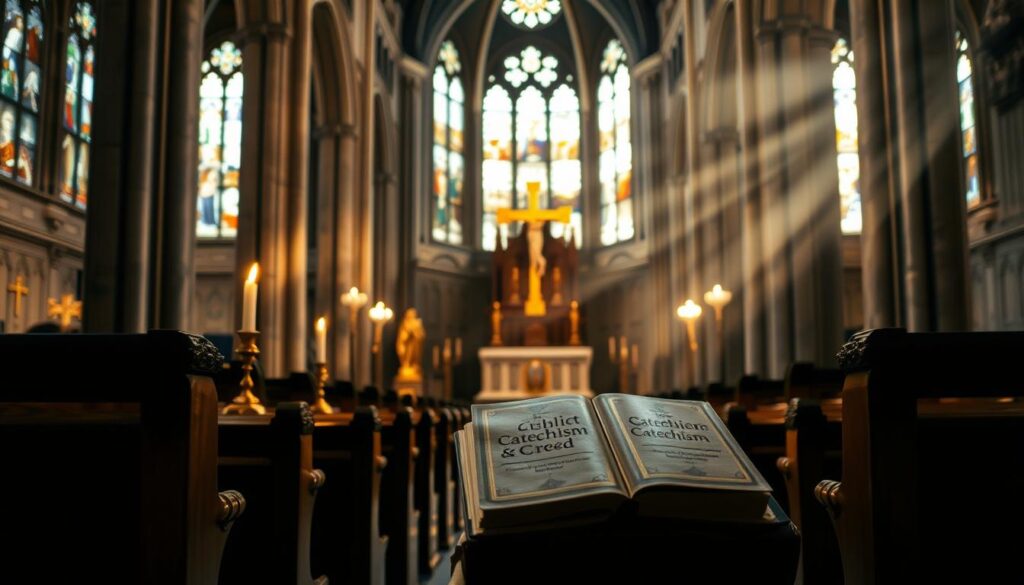
Core Doctrines and the Catechism
The Catechism of the Catholic Church acts like a spiritual encyclopedia. This 900-page guide organizes teachings into four parts: beliefs, sacraments, moral living, and prayer. As the Catechism states:
“It is the privileged place where the Church’s constant Tradition is kept alive.”
Newcomers often find its clear structure helpful for understanding complex ideas. The book explains everything from the Trinity to social justice, showing how ancient wisdom applies today. Many parishes use it for study groups, making theology accessible to everyone.
The Role of Creeds in Defining Faith
Imagine memorizing a 2,000-year history lesson. That’s what creeds accomplish through poetic simplicity. The Apostles’ Creed packs core beliefs into twelve short lines. Catholics recite it during Mass, baptism, and personal prayer.
The Nicene Creed goes deeper, clarifying Jesus’ divine nature. Both statements unite believers in proclaiming one God through Father, Son, and Holy Spirit. As living documents, they bridge ancient word and modern faith, keeping essential truths fresh across generations.
catholicism basics: Core Principles for Beginners
At the heart of Catholic identity lies a 12-line statement recited for nearly 1,700 years. The Apostles’ Creed serves as both a spiritual roadmap and a unifying force across generations. Let’s explore how these ancient words shape modern belief.
The Apostles Creed and Its Significance
The creed opens with “I believe in God”—a bold declaration of trust in one supreme being. This foundation supports every Catholic teaching, from creation to eternal life. As the Catechism notes:
“The creed summarizes the gifts God gives through baptism.”
Three divine persons emerge in its lines: the Father as creator, Jesus as redeemer, and the Holy Spirit as guide. This Trinity concept isn’t math—it’s a mystery revealing God’s nature as love. The creed’s middle section focuses on Christ’s humanity, stating he was “born of the Virgin Mary” and “suffered under Pontius Pilate.”
Why does this matter today? Reciting these words connects modern believers to early Christians hiding in Roman catacombs. Each phrase answers vital questions: Who made us? Why do we suffer? What happens after death?
Newcomers often find the creed’s structure helpful. It moves from God’s power to Christ’s sacrifice to our eternal hope. This pattern mirrors the spiritual journey—from seeking truth to living it. Memorizing these lines creates a portable faith toolkit for daily challenges.
The closing lines about communion and everlasting life remind believers they’re part of something bigger. Whether whispered in prayer or proclaimed at Mass, these words unite 1.1 billion people across time and space.
Living the Catholic Life: Practices and Sacraments
Daily rhythms shape Catholic spirituality through sacred actions that connect belief to behavior. Seven sacraments form the backbone of this journey, offering tangible ways to experience divine grace. Let’s explore how these practices transform faith from concept to lived reality.
Weekly Worship and Spiritual Nourishment
Sunday Mass stands as the Christian life‘s heartbeat. Catholics gather to relive Christ’s sacrifice through the Eucharistic prayer. When the priest consecrates bread and wine, believers witness what the Catechism calls:
“The source and summit of the whole Christian life.”
Receiving Holy Communion strengthens one’s bond with Jesus and the global Church. Many parishes encourage weekly participation, though Easter and Christmas remain minimum requirements. This meal isn’t symbolic—it’s considered soul food for life’s challenges.
Renewal Through Sacraments
The Confession booth offers fresh starts. By admitting sins to a priest, Catholics believe they hear Christ’s forgiveness spoken aloud. Most parishes require annual participation, though many visit monthly for spiritual clarity.
Fasting traditions teach self-control. During Lent’s 40 days, adults skip meat on Fridays and limit food intake on Ash Wednesday. These acts redirect focus from physical cravings to prayer and charity.
| Practice | Purpose | Frequency |
|---|---|---|
| Sunday Mass | Communal worship | Weekly |
| Holy Communion | Spiritual nourishment | Weekly encouraged |
| Confession | Sins forgiveness | Annual minimum |
| Fasting | Spiritual focus | Lent + holy days |
These living traditions bridge ancient wisdom with modern work schedules. By weaving sacraments into daily routines, Catholics create a seamless flow between Sunday reverence and weekday service.
Understanding the Ten Commandments and Divine Law
What if ancient wisdom could solve modern problems? Carved into stone tablets millennia ago, the Ten Commandments remain humanity’s oldest moral operating system. These directives form a spiritual blueprint for balancing divine connection with human relationships.
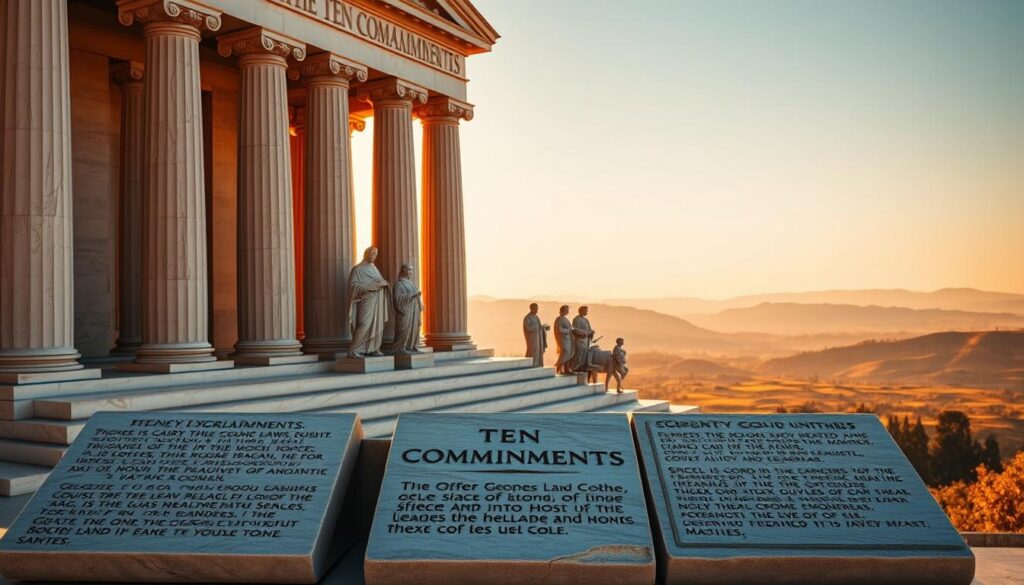
The Commandments as Foundations for Moral Living
Moses received these commandments on Mount Sinai as part of God’s covenant—a sacred agreement promising guidance for those who follow thy God. The Catechism explains:
“They express humanity’s fundamental duties toward God and neighbor.”
The first three rules focus on divine relationship. “I am the Lord thy God—you shall have no other gods before me” establishes exclusive devotion. Honoring God’s name and keeping the Sabbath holy complete this triad of reverence.
Seven principles then govern human interactions. From honoring parents to rejecting envy, these laws protect life, truth, and dignity. They’re not restrictions but guardrails preventing spiritual crashes.
| Focus Area | Commandments | Modern Application |
|---|---|---|
| Divine Relationship | 1-3 | Prioritize spiritual growth |
| Family & Life | 4-5 | Strengthen community bonds |
| Social Harmony | 6-10 | Promote justice and honesty |
When Catholics examine their conscience, they use these commandments as a checklist for spiritual health. “Thou shalt not steal” applies to both shoplifters and tax evaders. “Thou shalt not covet” challenges social media envy.
These timeless principles adapt to new contexts while keeping their core intact. They remind man that true freedom comes from living in harmony with divine wisdom—not chasing endless desires.
Works of Mercy: Corporal and Spiritual Acts
Imagine transforming faith into action through simple, powerful deeds. The Church’s fourteen Works of Mercy turn belief into living service—seven for the body, seven for the soul. These timeless practices help anyone make a real difference in others’ lives.
Hands-On Compassion
The Corporal Works address basic human needs. Feeding the hungry and sheltering the homeless aren’t just nice ideas—they’re Jesus’ direct commands. From soup kitchens to disaster relief, Catholics put work into easing physical suffering. Visiting prisoners and burying the dead show dignity matters even in dark times.
Heart-Centered Support
Spiritual Works heal invisible wounds. Sharing knowledge lights paths through confusion. Forgiving hurts—even small ones—breaks chains of bitterness. As the Catechism notes:
“Mercy nourishes hope in man‘s heart more than justice alone.”
Praying for others bridges earthly struggles with eternal hope. These acts create ripples of justice that uplift entire communities.
Whether tutoring children or comforting grief, both works express love through action. They remind us faith grows strongest when shared—one merciful work at a time.
FAQ
What is Catholicism?
Catholicism is the Christian faith rooted in Jesus Christ’s teachings and preserved by the Catholic Church. It focuses on sacraments, community, and following God’s will through prayer, service, and moral living.
How did the Catholic Church begin?
The Church traces its origins to Jesus and His Apostles, with St. Peter as the first Pope. Over centuries, it grew through missionary work, councils, and reforms, shaping Christian history and global culture.
What are the core beliefs of Catholicism?
Central beliefs include the Trinity, Christ’s Resurrection, and the sacraments. The Catechism guides Catholics in faith and morals, emphasizing love for God and neighbor as the path to holiness.
Why are creeds like the Nicene Creed important?
Creeds summarize essential truths, uniting Catholics worldwide. They affirm shared beliefs about God, Christ, and the Church, providing clarity and strength in living the faith.
What role does the Apostles’ Creed play?
The Apostles’ Creed outlines core teachings, such as creation and eternal life. Used in Baptism and Mass, it connects believers to the early Church’s witness and unity.
How do Catholics participate in Mass?
Mass includes prayer, Scripture, and Holy Communion. Receiving the Eucharist unites believers with Christ, while active participation renews their commitment to the Gospel.
Why are Confession and fasting practiced?
Confession offers forgiveness and healing, restoring one’s relationship with God. Fasting cultivates humility and solidarity with the poor, deepening reliance on divine grace.
How do the Ten Commandments guide daily life?
The Commandments provide divine laws for honoring God and respecting others. They shape choices about justice, honesty, and love, aligning life with God’s plan.
What are the Corporal Works of Mercy?
These are acts like feeding the hungry or sheltering the homeless. They reflect Jesus’ call to serve others’ physical needs, showing compassion and upholding human dignity.
What are the Spiritual Works of Mercy?
These include forgiving others and praying for those in need. They address spiritual struggles, guiding people toward God’s mercy and fostering peace in communities.