New data reveals a significant shift in global religious landscapes. The Vatican’s 2025 Pontifical Yearbook shows over 16 million people joined the Catholic Church last year, pushing worldwide membership to 1.406 billion. This 1.15% growth continues a decades-long pattern of steady expansion across six continents.
Behind these numbers lies a vibrant story of community and tradition. While some regions face declining religious participation, the Church maintains strong connections through cultural adaptations and digital outreach. Young adults in particular show renewed interest in ancient rituals and moral frameworks.
The report highlights surprising growth areas like sub-Saharan Africa and Southeast Asia. Meanwhile, established strongholds in Europe navigate modern challenges through social programs and interfaith dialogue. This complex picture defies simple explanations about faith in the 21st century.
Key Takeaways
- Global membership grew by 1.15% from 2022-2023
- Growth rates vary significantly by region
- Younger generations drive new engagement strategies
- Technology helps maintain connections worldwide
- Annual reports track both numbers and community impacts
Global Growth Trends and Demographic Shifts
Recent Vatican statistics paint a vivid picture of changing religious demographics worldwide. The numbers reveal striking contrasts between continents, showing where faith communities thrive and where they face challenges.
Overview of Vatican Yearbook Insights
Africa leads global expansion with a 3.31% population increase – the highest growth rate worldwide. This surge adds 9 million believers in one year, reshaping the Church’s geographic focus. Countries like the Democratic Republic of Congo now boast 55 million Catholics, while Nigeria follows with 35 million.
Statistical Breakdown by Continent
- Americas: Home to 47.8% of Catholics, with Brazil alone accounting for 182 million
- Asia: 11% global share, driven by the Philippines (93M) and India (23M)
- Europe: Minimal 0.2% growth despite housing 20.4% of believers
- Oceania: Small but active community showing 1.9% expansion
These shifts influence how the Church allocates resources and plans future initiatives. While traditional strongholds stabilize, emerging regions demand new approaches to community building and spiritual support.
Regional Analysis: Dynamics in Africa, Americas, Asia, Europe & Oceania
The world’s Catholic community displays remarkable diversity across regions. Unique cultural landscapes and historical contexts shape how faith takes root – from bustling African cities to remote Pacific islands.
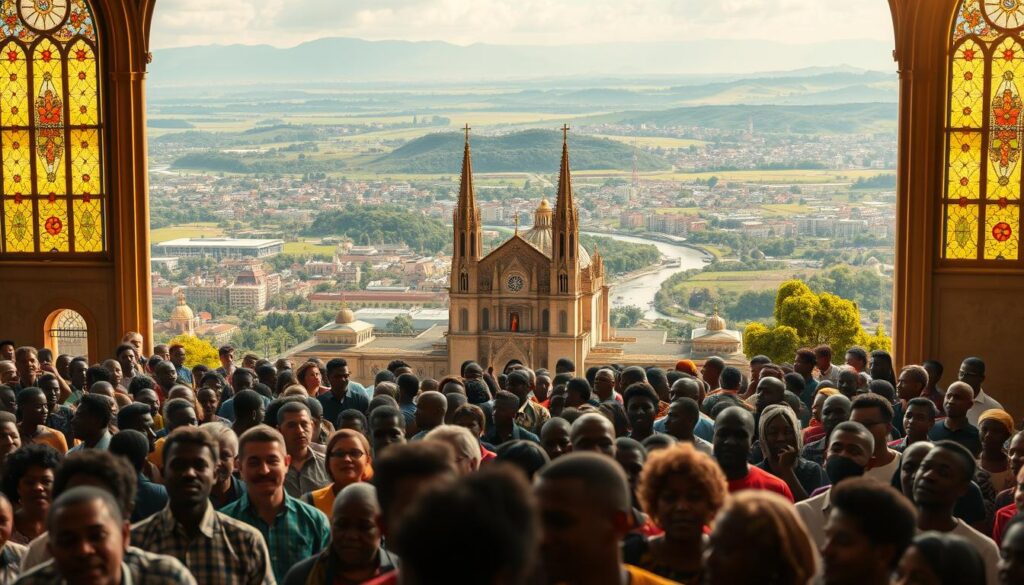
Africa’s Spiritual Renaissance
Sub-Saharan nations drive unprecedented expansion. The Democratic Republic of Congo now hosts 55 million believers – more than Spain and Poland combined. Nigeria’s Catholic population surged to 35 million through local leadership programs and healthcare initiatives.
This 3.31% annual increase reflects strategic adaptations. Dioceses train native clergy while preserving tribal traditions. Urban churches blend vibrant worship styles with social justice outreach, attracting young families.
Established Strongholds and New Frontiers
The Americas maintain their global influence through concentrated faith communities. South America’s 27.4% Catholic distribution includes Paraguay where 96% identify with the Church. North America sees steady growth through immigrant communities reshaping urban parishes.
Asia presents fascinating contrasts. While 76.7% of Asian Catholics live in the Philippines and India, Vietnam shows promising growth through underground house churches. Europe’s established churches focus on cultural preservation, balancing historic cathedrals with modern outreach in secular societies.
- Central America’s 13.8% Catholic share remains stable
- Oceania adds 1.9% annual growth through island missions
- Italy maintains 90% affiliation despite low birth rates
Structural Shifts in the Catholic Church
Leadership roles within the Church are undergoing dramatic changes. New patterns emerge as clergy numbers shift across continents, revealing both promising developments and pressing challenges.
Changes in Bishops, Priests, and Permanent Deacons
The global bishop count rose by 1.4% to 5,430 – growth seen everywhere except Oceania. Africa and Asia account for 62% of new appointments, matching their expanding congregations.
Priest numbers tell a split story. While worldwide figures dipped 0.2%, Africa gained 2.7% more priests and Asia 1.6%. Europe’s 1.6% decline highlights aging clergy in traditional strongholds.
Permanent deacons shine as the fastest-growing group. Their ranks jumped 2.6%, with Oceania’s 10.8% surge leading the way. Over 51,000 now serve communities worldwide, handling sacraments and outreach.
Vocation Trends and Seminarian Declines
Seminarian numbers keep falling, down 1.8% since 2012. Only Africa bucks the trend with a 1.1% increase. Europe’s 4.9% drop raises concerns about future clergy pipelines.
Religious sisters decreased 1.6% globally, but African communities grew 2.2%. This contrast shows how cultural contexts shape vocational choices. Young women in Nairobi join orders while their Paris counterparts pursue other paths.
These shifts push the Church to rethink ministry models. Lay leadership programs expand as clergy numbers fluctuate. The rise of deacons and African vocations offers hope amid changing realities.
Insights on catholicism growing in a Changing Cultural Landscape
An unexpected trend emerges as parishes report surging interest from twenty-somethings. The Diocese of Fort Worth saw 72% more converts last year, with most under 35. “Our community feels alive again,” says Rev. Raymond La Grange, noting post-pandemic growth spikes.
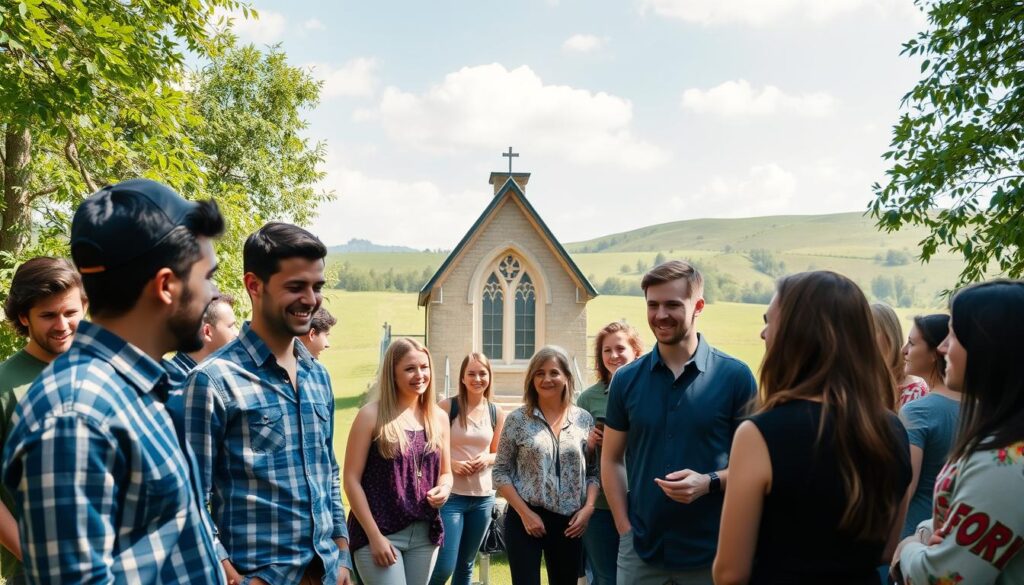
Youth Conversion Stories and Digital Evangelism
Software developer Adrian Lawson found peace through daily rosary prayers. “My anxiety vanished when I embraced structured spiritual life,” he shares. YouTube creator Cameron Bertuzzi’s public conversion video went viral, inspiring others to explore church history.
Columbia graduate Marin Minamiya crossed continents and faiths. Raised Shinto in Japan, she now finds meaning in Catholic rituals. “The beauty of Mass anchored me during lonely times,” she explains.
The Role of Tradition and Modern Appeal
Young people crave authenticity in our swipe-right culture. Sydney Johnston traded nondenominational services for ancient traditions. “I needed deeper roots than feel-good sermons,” she says. Online resources help seekers like Taylor New overcome doubts through historical research.
Parishes blending timeless practices with tech-savvy outreach thrive. Livestreamed Masses and TikTok faith discussions meet youth where they live. As one convert notes: “Truth doesn’t change – but how we share it must.”
Conclusion
The Catholic Church’s global story combines ancient traditions with modern realities. Over 1.4 billion members now participate in faith communities spanning six continents, with Africa’s 3.31% annual growth outpacing all other regions. This expansion contrasts sharply with Europe’s aging clergy and shrinking seminaries.
Structural challenges persist where priest numbers dwindle, yet new energy emerges elsewhere. North America sees young adults embracing sacramental life, drawn to historic rituals and parish networks. Digital tools help bridge generational gaps while maintaining core teachings.
Religious leaders face dual priorities: supporting booming dioceses abroad while revitalizing established communities. The Church’s ability to adapt – through localized ministries and tech-savvy outreach – suggests enduring relevance in changing times.
FAQ
What regions are driving the increase in Catholic followers?
Africa leads global growth, with a 64% rise in baptized members since 2010. Asia and parts of Latin America also show steady increases, while Europe faces declines due to cultural shifts and aging populations.
How does the Vatican track changes in the Church’s structure?
The Vatican Yearbook provides annual data on clergy, dioceses, and lay communities. Recent reports highlight a 10% rise in permanent deacons worldwide, offsetting slower priestly ordinations in North America and Europe.
Why are seminarian numbers declining in some areas?
Cultural secularization and shifting priorities among young people have reduced vocations in regions like Europe. However, countries like Nigeria and the Philippines see growing seminary enrollment tied to strong community ties.
How is digital evangelism influencing younger generations?
Social media campaigns, podcasts, and online ministries resonate with youth seeking authenticity. Platforms like Hallow and Ascension Presents bridge tradition with modern storytelling, fostering conversions and renewed engagement.
What role do women play in the Church’s expansion?
Women lead 70% of parish ministries and educational programs globally. Their work in catechism, healthcare, and grassroots organizing strengthens community bonds, particularly in fast-growing regions like sub-Saharan Africa.
How does tradition attract new members today?
Many young adults find stability in ancient rituals like Latin Mass and Eucharistic adoration. This “countercultural” appeal merges with social justice outreach, creating a holistic faith experience for modern seekers.