Religious teachings often spark intense debates, but few topics carry as much historical weight as doctrinal disagreements. To grasp these complex discussions, we must first understand how faith communities define core beliefs and address challenges to them. Official guidelines emphasize that genuine dissent requires specific conditions: conscious rejection of established teachings after receiving proper guidance.
Historical records show many theological disputes arose from earnest attempts to explain divine mysteries. Early communities wrestled with concepts like the Trinity and Christ’s nature, debates that ultimately shaped foundational creeds. These discussions weren’t mere arguments – they sought to preserve essential truths while addressing new questions.
Modern conversations sometimes oversimplify these nuanced debates. Accusations of wrong belief often stem from misunderstandings rather than willful defiance. For instance, someone questioning a teaching out of confusion differs fundamentally from one rejecting it despite clear correction.
Key Takeaways
- Doctrinal disagreements require specific conditions to qualify as formal dissent
- Historical debates often aimed to clarify rather than undermine core beliefs
- Proper correction processes distinguish confusion from intentional rejection
- Early theological disputes shaped foundational Christian understandings
- Modern discussions frequently lack historical context about belief development
Understanding Catholicism Heresy
Clear definitions matter when discussing sensitive religious topics. The Church distinguishes between honest questions and formal dissent through specific criteria developed over centuries.
What Makes a Teaching Dispute Significant?
Three key factors determine whether disagreement crosses into formal territory. First, valid baptism is required – this explains why groups like Muslims aren’t classified under certain labels. Second, the person must knowingly reject established doctrine after receiving correction. Third, the disputed teaching must address divinely revealed truths defined by Church authority.
How History Shaped These Ideas
Early Christian communities faced debates about spiritual truths while building institutional structures. Councils like Nicaea (325 AD) became turning points where leaders clarified doctrines through collective decisions. Over time, these processes helped separate unified beliefs from localized interpretations.
Political tensions often influenced theological disputes. Rulers sometimes used doctrinal conflicts to consolidate power, while regional differences in worship practices sparked new questions. Through it all, the Church’s teaching role evolved to address both spiritual concerns and practical community needs.
The Circumcisers: Early Controversy in the Church
One of the most pivotal debates in first-century Christianity centered on physical rituals versus spiritual transformation. This clash of perspectives tested whether the new faith would remain tied to ancestral traditions or embrace a broader vision.
Biblical Foundations and Debates
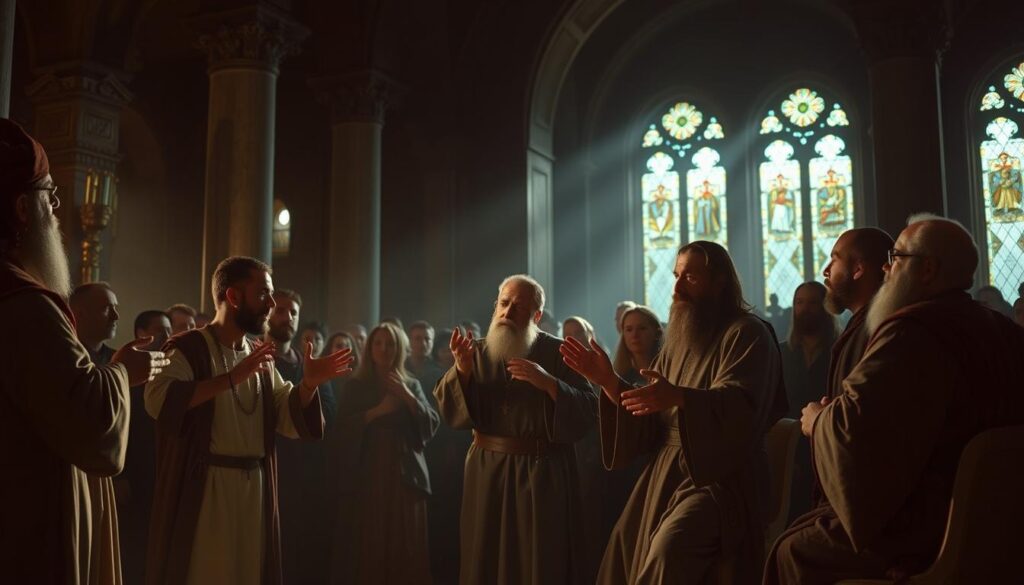
Jewish believers initially struggled to separate their faith heritage from the teachings of Jesus Christ. As one group insisted, “Unless you are circumcised… you cannot be saved” (Acts 15:1). Their argument drew strength from Genesis 17 – where circumcision marked God’s eternal covenant.
“But some men came down from Judea and were teaching the brethren, ‘Unless you are circumcised according to the custom of Moses, you cannot be saved.'”
Paul’s missionary work among Gentiles revealed a different reality. His letters emphasized that faith in Christ, not physical signs, defined the New Covenant. The Jerusalem Council settled the matter by affirming baptism as the primary marker of belonging.
| Position | Biblical Support | Outcome |
|---|---|---|
| Circumcision Required | Genesis 17, Levitical Law | Rejected by Council |
| Faith Alone | Acts 10, Galatians 3 | Official Position |
This resolution paved the way for Christianity to become a global movement. By distinguishing cultural practices from core beliefs, early leaders preserved unity while welcoming diverse communities.
Gnosticism: Matter vs. Spirit in Early Christianity
Ancient belief systems often reveal unexpected tensions between philosophy and faith. The Gnostic movement, flourishing in the first two centuries AD, presented a radical view that reshaped early religious debates. Their core idea—that matter is inherently corrupt—clashed directly with foundational Jewish-Christian teachings about creation.
Debating the Incarnation
Gnostics argued that spiritual purity required rejecting physical existence. This belief created immediate problems for Christian doctrine. If the material world was evil, how could Jesus Christ be both divine and truly human? Some groups claimed he only appeared to have a body—a concept called docetism.
“And God saw everything that he had made, and behold, it was very good.”
This perspective undermined salvation’s core premise. Church leaders emphasized that Christ’s real humanity proved God’s love for creation. They also countered Gnostic claims about two separate deities—one for the Old Testament and another for the New.
Influence on Later Theologies
The Gnostic challenge forced clearer definitions of Christ’s nature. Early theologians like Irenaeus developed detailed arguments showing how spirit and matter coexist in God’s plan. Their writings became building blocks for later creeds.
Though officially rejected, Gnostic ideas resurfaced across centuries in various movements. Their dualistic worldview continues to influence modern spiritual thought, proving that ancient debates still shape how we understand divinity and existence.
Montanism and the Advent of Prophecy
A wave of spiritual excitement swept through Phrygia in the late 100s AD. Montanus, a recent convert, sparked a movement calling Christians back to strict discipline and vivid spiritual experiences. His message gained traction among believers craving the miraculous power described in apostolic writings.
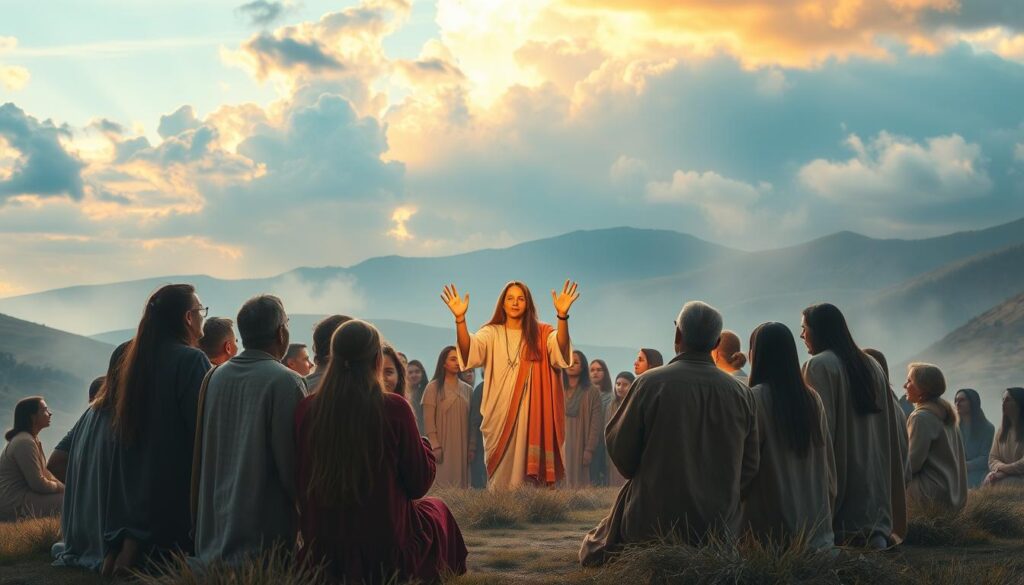
Early followers praised Montanus for reviving practices like fasting and prophetic speech. “The Spirit speaks plainly through us,” he declared, positioning his teaching as divine updates to Church traditions. This included bold claims about Christ’s imminent return to a specific valley near his hometown.
Miraculous Claims and Critiques
Montanists believed their ecstatic prophecies proved God’s ongoing revelation. They saw themselves as the “New Prophecy” movement, restoring what institutional churches had lost. However, their insistence that Montanus channeled the Paraclete—the Holy Spirit—alarmed many leaders.
Church authorities faced a dilemma. How could they honor spiritual gifts without undermining apostolic teachings? Their response shaped future guidelines: genuine revelations must align with established doctrine and serve community unity.
Though condemned, Montanism’s emphasis on personal spiritual experiences left lasting marks. It reminded communities that faith involves both structure and wonder—a balance still sought today.
Sabellianism: Unraveling the Mystery of the Trinity
Third-century theologians faced a puzzle: how to explain God’s three-in-one nature without compromising divine unity. Sabellius proposed a radical solution that reshaped early Christian thought. His teachings sparked debates about whether the Trinity represented distinct persons or divine roles.
Modalism Explained
Sabellianism argued Father, Son, and Holy Spirit were different modes of one divine person. Imagine an actor playing multiple roles—this analogy captured their view. While preserving monotheism, this approach struggled to explain biblical accounts of Father and Son interacting as separate beings.
Early critics noted a critical flaw: If God merely switched “modes,” who received prayers during Christ’s earthly ministry? The theory created logical knots in understanding scripture and worship practices.
Implications for Christology
The most startling consequence involved Jesus’ crucifixion. If Father and Son weren’t distinct, this suggested the Father suffered on the cross—a concept called Patripassianism. Church leaders rejected this as incompatible with biblical accounts of Christ’s unique sacrifice.
These debates forced clearer definitions of divine nature and personhood. Through councils and writings, theologians developed language distinguishing unity of essence from diversity of persons—a foundation for later creeds.
Though rejected, Sabellianism’s challenges helped refine orthodox doctrines. Modern theology still studies it as a caution against oversimplifying sacred mysteries.
Arianism: Controversies Over Divine Nature
The fourth-century Church faced its greatest theological storm when Arius challenged fundamental beliefs about Jesus Christ. This Libyan priest argued the Son was God’s first creation—divine but not eternal. His catchy slogan “There was when He was not” spread rapidly through Mediterranean cities.

Arius cleverly used biblical terms like “begotten” to suggest Christ’s subordinate status. Many bishops initially supported him, unaware his ideas undermined salvation’s core premise. If Jesus wasn’t fully God, how could humanity be redeemed through Him?
Council of Nicaea and Beyond
Emperor Constantine intervened, convening 300 bishops in 325 AD. After heated debates, they crafted groundbreaking language:
“We believe in one Lord, Jesus Christ… true God from true God, begotten not made, consubstantial with the Father”
The term “consubstantial” became Christianity’s shield against Arian claims. Yet the conflict continued for decades. Some rulers favored Arianism for political unity, creating regional divisions.
By 381 AD, the First Council of Constantinople reaffirmed Christ’s divinity and clarified the Holy Spirit’s role. These decisions shaped doctrine for future generations. Today, millions still declare these truths weekly—proof that ancient battles forged enduring foundations.
Pelagianism: The Struggle Between Human Effort and Grace
How much can people achieve through willpower alone? This question fueled fiery debates in the 5th century. Pelagius, a British monk, argued humans could live virtuously through free will alone. His teachings clashed with Augustine’s emphasis on divine help for moral growth.
Central to this conflict was the role of grace. Pelagius saw it as helpful but optional—like training wheels on a bike. Critics countered that ignoring God’s active role risked spiritual pride and misread human limitations.
Debate Over Original Sin
Pelagius rejected the idea that sin passed through generations. He claimed Adam’s disobedience only affected Adam. Augustine fired back: “If human nature stayed pure, why do babies cry from birth?” He saw shared weakness as proof of inherited brokenness.
The Church ultimately ruled that effort alone couldn’t overcome sin. True transformation required both human cooperation and grace. This balance shaped later teachings about redemption and personal responsibility.
These debates remind us that spiritual growth isn’t a solo project. Like a vine needing soil and sunlight, faith thrives where determination meets divine support.
FAQ
What defines a teaching as heretical in Christian history?
Teachings are labeled heretical when they contradict core doctrines affirmed by the Church, such as the divinity of Jesus, the Trinity, or the role of grace. These ideas often challenge unified beliefs and are addressed through councils or theological debates.
Why was the Council of Nicaea significant in addressing Arianism?
The Council of Nicaea (325 AD) rejected Arius’s claim that Jesus was a created being, affirming His full divinity. The Nicene Creed, developed here, became a cornerstone of Christian orthodoxy, clarifying Christ’s eternal relationship with God the Father.
How did Pelagianism challenge traditional views of sin and salvation?
Pelagius argued humans could achieve righteousness through free will alone, downplaying the necessity of divine grace. This conflicted with teachings about original sin and redemption, leading the Church to emphasize humanity’s dependence on God’s grace for salvation.
What role did Montanism play in early Christian practices?
Montanism emphasized direct prophetic revelations and strict asceticism, claiming new authority outside Church leadership. Critics saw it as disruptive, as it challenged structured teachings and prioritized personal spiritual experiences over tradition.
How did Gnosticism influence early debates about Jesus’s nature?
Gnostics viewed the material world as evil, arguing Christ’s physical body was an illusion. This denied the Incarnation, prompting the Church to defend Jesus’s full humanity and divinity, which became central to orthodox theology.
Why is Sabellianism considered a distortion of the Trinity?
Sabellianism taught that God exists as one person manifesting in three modes (Father, Son, Spirit), not three distinct persons. This “modalism” conflicted with the Trinity’s relational nature, risking a flattened understanding of God’s complexity.
What was the controversy around the "Circumcisers" in the early Church?
This group insisted Gentile converts follow Jewish law, like circumcision, to be saved. Apostles like Paul opposed this, arguing faith in Christ alone sufficed—a pivotal moment in defining Christianity’s separation from Jewish legal traditions.