Religious traditions often face unique challenges when crossing cultural boundaries. One faith’s remarkable story unfolds across dynastic eras, political shifts, and modern transformations. A recent international conference in Rome highlighted this ongoing journey, marking 100 years since a pivotal moment in its history.
The 1924 Shanghai Council reshaped how this global community operates within East Asian contexts. Scholars at the 2024 centennial event examined how early 20th-century reforms laid groundwork for today’s practices. Cardinal Pietro Parolin and Bishop Joseph Shen Bin joined Pope Francis in reflecting on progress made since those groundbreaking decisions.
Modern statistics reveal surprising growth despite complex circumstances. Over 12 million believers now participate in sacramental life across mainland regions, with all clergy leadership unified under Rome. This harmony follows decades of careful diplomacy between spiritual and governmental authorities.
Key Takeaways
- 1924 Shanghai Council initiated major reforms for local leadership development
- Recent Vatican conference highlights ongoing global scholarly interest
- All current bishops maintain formal ties with Rome
- 12 million adherents practice faith under evolving social conditions
- Cultural adaptation remains central to the community’s resilience
Historical Roots and Evolution of the Catholic Church in China
The story of faith communities often weaves through unexpected historical crossroads. Long before modern diplomatic dialogues, early spiritual connections took root during the Yuan dynasty. Missionaries from distant lands began planting seeds of belief, creating vibrant communities that blended ancient traditions with new teachings.
Early Missionary Arrivals and Cultural Exchange
Foreign priests arrived as early as the 13th century, drawn by trade routes and curiosity. Their work gained momentum centuries later when the 1842 Treaty of Nanjing reshaped interactions. This agreement opened coastal cities like Shanghai to outsiders, allowing spiritual messengers to establish schools, hospitals, and worship spaces.
By 1900, nearly 900 foreign missionaries worked alongside 470 local priests. This partnership fueled remarkable growth – from scattered groups to over 740,000 believers in under 100 years. Cultural exchanges flourished as communities adapted rituals to honor both faith and heritage.
From Unequal Treaties to the Rise of Indigenous Leadership
The 19th century’s political changes brought challenges alongside opportunities. While treaties granted missionaries legal protections, tensions sometimes flared. The Boxer Rebellion (1899-1901) saw tragic violence against believers, including dozens of clergy deaths.
Yet resilience prevailed. Local leaders emerged stronger, blending foreign teachings with Chinese identity. This shift laid groundwork for future self-governance, proving communities could thrive through both foreign support and homegrown vision.
The Impact of Missionary Efforts and Western Influence
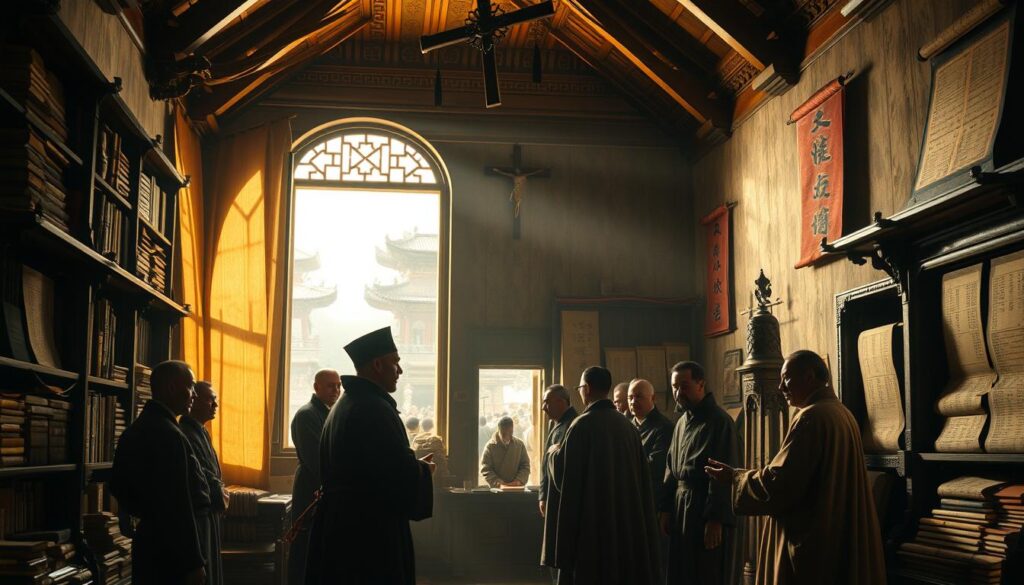
Cultural bridges often form through unexpected encounters between civilizations. One remarkable example began when Matteo Ricci arrived in Guangdong province during the Ming dynasty. This Italian Jesuit scholar didn’t just spread beliefs – he redefined cross-cultural dialogue through language mastery and philosophical exchange.
Transformative Roles of Pioneers Like Matteo Ricci
Ricci’s genius lay in blending East and West. He translated Confucian classics into Latin, revealing China’s intellectual depth to Europe. His respect for local traditions extended to accepting ancestral rites – a controversial stance that later influenced global church policies.
High-profile conversions demonstrated his approach worked. Officials like Xu Guangqi embraced his teachings, proving that shared knowledge could open hearts. As one Ming scholar noted:
“He speaks our truths while sharing his own – a true bridge between worlds.”
Key Reforms and Milestones in Church Councils
Centuries later, Pope Benedict XV’s 1919 encyclical Maximum Illud echoed Ricci’s principles. It urged missionaries to respect national identities, stating:
“The church grows not by erasing cultures, but by nurturing them.”
| Aspect | Ricci’s Method (1580s) | 20th Century Approach (1919) |
|---|---|---|
| Cultural Adaptation | Integrated ancestral rites | Emphasized local leadership |
| Scholarly Focus | Translated Confucian texts | Promoted indigenous clergy training |
| Global Impact | Changed Europe’s view of China | Redefined worldwide mission strategies |
These reforms helped transition from foreign-led missions to locally-rooted communities. Today, this legacy lives through clergy who honor both spiritual traditions and cultural heritage.
Political Challenges and Religious Persecution
Major political shifts after 1949 reshaped spiritual life across the nation. New leadership viewed international religious ties as threats to national sovereignty. This sparked a series of confrontations that would redefine faith practices for generations.
The Emergence of the Chinese Catholic Patriotic Association (CCPA)
The Chinese government expelled Vatican diplomat Archbishop Riberi in 1951, cutting formal religious diplomacy. Officials then launched the Three Autonomies Movement, demanding churches operate without foreign influence. Clergy faced impossible choices – abandon global connections or risk punishment.
By 1957, the CCPA became the state-approved religious body. This organization answered directly to the Communist Party‘s Religious Affairs Bureau. Its creation formalized a divide between government-sanctioned worship and underground communities loyal to Rome.
Consequences of Communist Policies on Church Freedom
September 1955 saw shocking raids across Shanghai. Over 200 clergy and believers were arrested overnight, including Bishop Ignatius Kung. His three-decade imprisonment became a rallying symbol for persecuted faithful.
These policies forced believers into complex dual identities. As one survivor recalled:
“We kept our rituals hidden like precious seeds – waiting for better soil.”
Today, this legacy continues shaping how communities balance official rules with spiritual commitments.
Catholicism China: Modern Trends and Diplomatic Relations
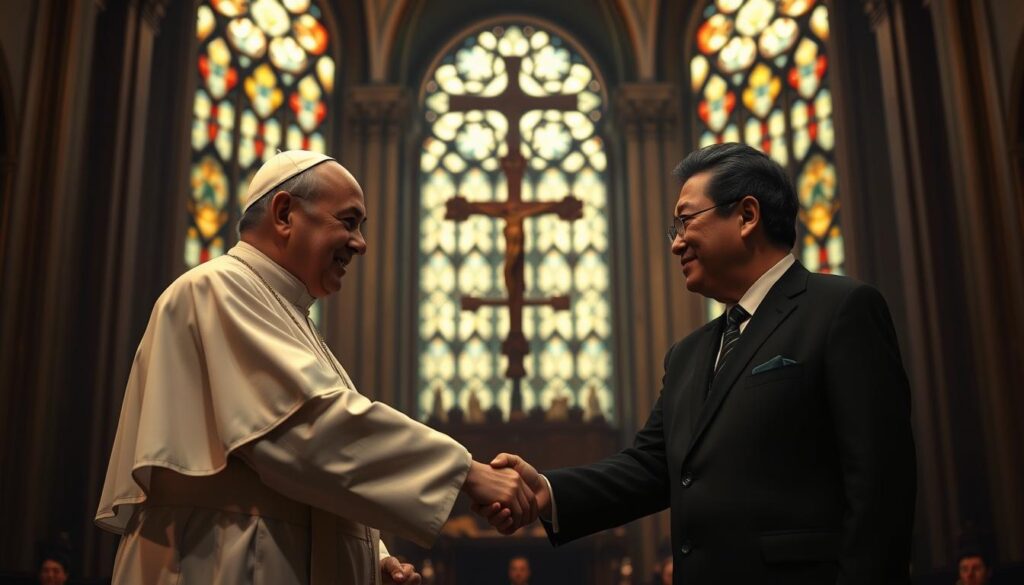
Global diplomacy continues to reshape spiritual landscapes in unexpected ways. Pope Francis recently marked a milestone by addressing a 2024 international conference celebrating 100 years since the first Plenary Council. His video message emphasized unity while acknowledging Bishop Joseph Shen Bin’s controversial 2023 appointment – a move balancing Vatican principles with practical diplomacy.
Papal Engagements and International Conferences
The centennial event brought scholars from five continents to discuss faith development. “Dialogue builds bridges, not walls,” Francis stated, echoing Matteo Ricci’s cross-cultural legacy. This gathering highlighted progress since the 1924 reforms while addressing modern hurdles like state-appointed clergy.
Challenges and Opportunities in Contemporary Leadership
Bishop Ma Daqin’s decade-long house arrest shows the personal costs of prioritizing Vatican loyalty. His 2012 detention after resigning from the Patriotic Association remains a sticking point in diplomatic relations. Meanwhile, Pope Benedict XVI’s 2007 call for “authentic religious freedom” still guides negotiations today.
| Key Issue | Francis’s Approach | Benedict’s Legacy |
|---|---|---|
| Bishop Appointments | Post-facto recognition | Insisted on Vatican authority |
| Diplomatic Strategy | Flexible dialogue | Clear doctrinal lines |
| Religious Freedom | Pragmatic progress | Non-negotiable principle |
These strategies reveal evolving tactics to maintain spiritual unity while navigating complex political waters. As one attendee noted:
“Our shared history teaches patience – change often comes through persistent conversation.”
Cultural Integration and Ongoing Conflicts
Cultural blending often sparks both harmony and tension. Communities navigating dual identities face unique challenges in preserving traditions while embracing new beliefs. These dynamics become especially clear when examining spiritual practices across generations.
The Chinese Rites Controversy and Its Lasting Legacy
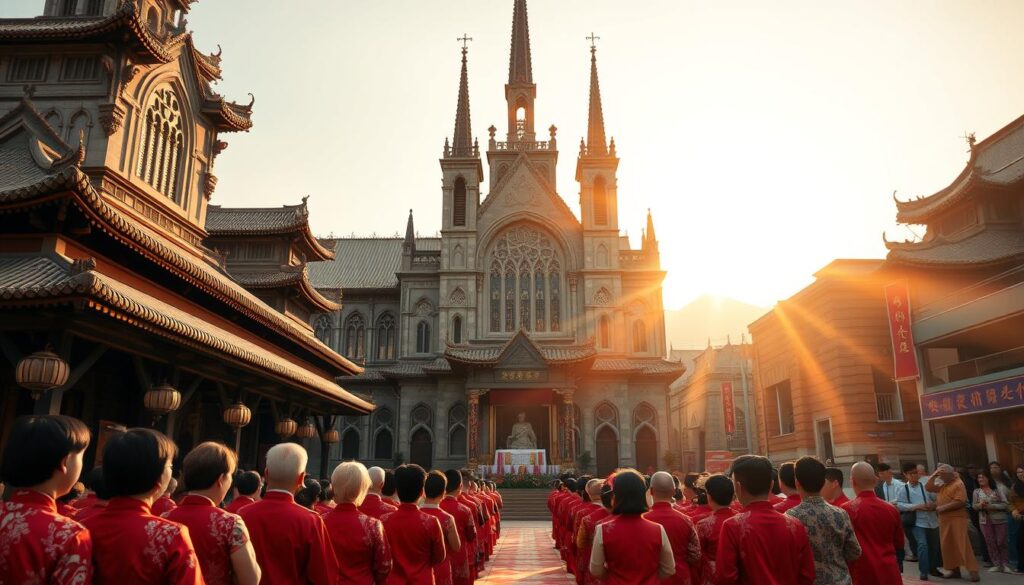
For 300 years, a fiery debate shaped how communities practiced their faith. Dominican missionary Juan Bautista Morales ignited the conflict in 1645 by challenging ancestral honor rituals. His objections led Rome to ban these practices, calling them incompatible with religious teachings.
This decision created unexpected consequences. The Chinese translation of “dragon” as long – a positive symbol – clashed with biblical imagery of evil. As one scholar noted:
“We turned cultural icons into theological landmines.”
The Vatican reversed its stance in 1939, but the damage lingered. Families struggled to reconcile spiritual life with cultural roots, creating divisions that still echo today.
Balancing Traditional Festivals with Catholic Practices
Modern believers creatively merge heritage with faith. In Hong Kong, where religious freedom thrives, communities reimagine festivals like Qingming (Tomb-Sweeping Day). Instead of burning incense, many now light candles or offer flowers at ancestors’ graves.
| Traditional Practice | Catholic Adaptation | Cultural Significance |
|---|---|---|
| Ancestral tablets | Memorial prayer cards | Honoring family history |
| Mooncake gifts | Charity donations | Celebrating Mid-Autumn unity |
| Dragon dances | Parish processions | Community celebration |
A Hong Kong parish leader explains:
“Our faith enriches Chinese culture – it doesn’t erase it.”
This approach helps maintain cultural continuity while nurturing spiritual life across generations.
The Role of Conferences and Scholarly Engagement
Global gatherings of scholars often reveal untold stories of faith communities. Three 2024 conferences marked a century since groundbreaking reforms shaped spiritual leadership. Events in Milan, Rome, and Macau highlighted how international dialogue continues fueling progress.
Reflections on the 100-Year Legacy Councils
The 1924 Shanghai Council transformed leadership structures when all bishops were foreign missionaries. Today, over 12 million believers benefit from locally ordained priests. May’s Rome conference featured Cardinal Parolin discussing this shift:
“True growth comes when roots deepen in native soil.”
Academic Perspectives from Chinese and Global Researchers
Macau’s June symposium showcased cross-border collaborations. Scholars compared 1930s foreign-led clergy to modern life church initiatives training local leaders. A Beijing researcher noted:
“Shared learning helps bridge past and present.”
These exchanges prove that while geography shapes practice, universal bonds endure through open dialogue.
FAQ
When did Catholicism first arrive in China?
The faith traces its roots to the Tang Dynasty (7th–9th centuries), but organized missionary work began in the 16th century with Jesuit pioneers like Matteo Ricci. His approach blended respect for local traditions with theological teachings, creating early cultural bridges.
How did Communist policies affect religious freedom?
After 1949, the government established the Chinese Catholic Patriotic Association (CCPA) to oversee church activities independently of the Vatican. This led to restrictions on clergy appointments and worship practices, though underground communities continued practicing their faith.
What is the current status of Vatican-China relations?
Recent years saw progress, including a 2018 provisional agreement on bishop appointments. While tensions remain over authority and governance, Pope Francis has prioritized dialogue to foster unity among divided Catholic communities.
How do Catholics in China balance tradition with local culture?
Historical debates like the Chinese Rites Controversy shaped this balance. Today, many integrate ancestral customs with sacraments, though challenges persist in aligning state-approved practices with global Catholic norms.
What role do international conferences play today?
Events like the 2023 Vatican-China symposium encourage scholarly exchanges on theology and governance. These platforms aim to address historical grievances while exploring collaborative solutions for the church’s future.
Are there recognized saints from China?
Yes! In 2000, Pope John Paul II canonized 120 martyrs persecuted during the Boxer Rebellion. Their veneration remains a sensitive topic, reflecting both spiritual heritage and complex historical narratives.
How has indigenous leadership evolved in recent decades?
Since the 1950s, the CCPA promoted clergy trained within China. While some bishops maintain unofficial ties to the Holy See, others operate fully under state oversight—a duality that continues to spark debates about legitimacy and unity.