Imagine a faith surviving centuries of turmoil to become one of England’s most vibrant religious forces. That’s the extraordinary story unfolding across this nation, where ancient traditions meet modern vitality.
Recent reports reveal a stunning shift: Roman Catholic services now draw more regular attendees than Anglican ones. Young people particularly favor this revived church community, with London leading this cultural transformation. This reversal would astonish Henry VIII, whose 16th-century break with Rome shaped England’s religious identity.
How did a marginalized faith regain such influence? The answer lies in dramatic historical turns – from Reformation-era persecution to today’s multicultural cities. While the country grows more secular overall, Catholic communities thrive through immigration and renewed spiritual interest.
This resurgence defies expectations. As the birthplace of Anglicanism, England’s evolving religious landscape shows how deep-rooted traditions can adapt. Our exploration will uncover pivotal moments that preserved Catholic identity and examine what this shift means for society today.
Key Takeaways
- England’s Catholic community now outnumbers Anglican worshippers in weekly attendance
- Younger generations drive this religious shift, particularly in urban centers like London
- The faith’s revival contrasts with its centuries of suppression after the Reformation
- Modern growth stems from immigration and renewed interest in traditional practices
- This transformation challenges assumptions about secularization in Western societies
Historical Roots and Transformations
Hidden beneath modern cities lie echoes of a spiritual past waiting to be uncovered. Visitors exploring the church england network often stumble upon medieval treasures – priestly robes in display cases, faded frescoes peeking through plaster, and altars repurposed during turbulent times.
Ancient Foundations That Shaped a Nation
For over 1,000 years, early Christian communities built stone monasteries that became hubs of learning. These sites housed illuminated manuscripts and trained scholars who shaped England’s religion and culture. Gothic cathedrals like Canterbury became pilgrimage destinations, their walls echoing with prayers to saints like Thomas Becket.
| Aspect | Pre-Reformation Influence | Post-Reformation Changes |
|---|---|---|
| Religious Sites | 1,200+ monasteries | 80% destroyed/dissolved |
| Education | Church-run universities | State-controlled colleges |
| Art | Vibrant wall paintings | Whitewashed surfaces |
| Land Ownership | 25% church-held | Crown redistribution |
Reformation’s Enduring Mark
The 16th-century religious upheaval left visible scars. At Stratford-Upon-Avon’s Guildhall, clever preservation saved Catholic artworks beneath Protestant paint. Bath Abbey’s current structure stands where a catholic church once hosted pilgrims. These physical reminders show how England’s spiritual roots survived suppression.
Westminster Abbey’s Shrine of St. Edward reveals another layer. Though modified over years, its medieval carvings still draw those seeking connections to the past. Such sites prove that history never fully disappears – it simply waits to be rediscovered.
Modern Trends: catholicism in england and its Renewed Conviction
A quiet revolution is reshaping Sunday mornings across Britain. Recent attendance reports reveal a stunning reversal: Catholic worshippers now regularly outnumber Anglicans during weekly services. This marks the first time since the Reformation that the nation’s religious majority has shifted so dramatically.
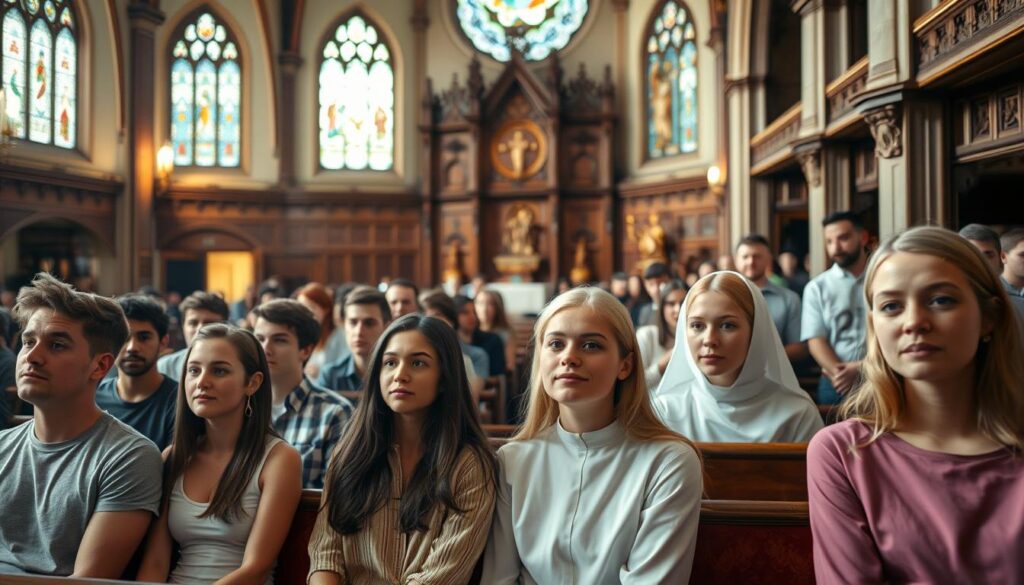
The Shift in Church Attendance and Active Participation
Young adults drive this transformation. Among 18-24 year-olds, Catholics outnumber Anglicans by more than double – 41% versus 20% in recent surveys. Even more surprising? Young men lead the charge, with 21% attending monthly services compared to 12% of women their age.
What’s drawing them in? Many cite the appeal of time-honored rituals and clear doctrinal guidance. As one London university student shared: “The ancient traditions feel grounding in our fast-paced world.” This contrasts with declining Anglican numbers, where flexible approaches seem less compelling to younger generations.
While pandemic impacts linger, Catholic mass attendance shows steady growth. Anglican services, meanwhile, continue their decades-long slide. Experts predict this trend will accelerate as older Anglican congregants dwindle and youthful Catholic communities expand.
Generational Shifts and Changing Church Demographics
A surprising spiritual awakening is reshaping religious life across Britain’s cities. Recent studies reveal young people aged 18-24 now rank as the nation’s second most committed church attendees – trailing only seniors over 65.
The Rise of Young Catholics and Increased Engagement
Sixteen percent of 18-to-24-year-olds attend services monthly compared to 19% among pensioners. What makes this group unique? Thirty-three percent express strong belief in divine power – 10% higher than the general population. Nearly a quarter pray daily, forming deep spiritual connections early in life.
| Age Group | Monthly Attendance | Daily Prayer | Belief in Higher Power |
|---|---|---|---|
| 18-24 | 16% | 23% | 33% |
| 25-64 | 12% | 15% | 27% |
| 65+ | 19% | 18% | 29% |
Gender Dynamics and Evolving Patterns of Mass Attendance
Traditional patterns have flipped completely. Young men now outpace women in religious participation – 21% versus 12% attend monthly services. This reversal suggests many young people crave structured communities amid modern uncertainties.
These shifts reveal more than temporary trends. As one theology student noted: “We’re not checking boxes – we’re building lives around faith.” With fresh energy transforming ancient traditions, England’s religious landscape enters an unexpected new chapter.
Cultural Impact on Community and Society
England’s ancient stones whisper stories of faith to modern seekers. Historic churches now serve dual roles as spiritual centers and cultural landmarks, drawing both worshippers and curious visitors. These living monuments bridge past and present through preserved rituals and restored architecture.
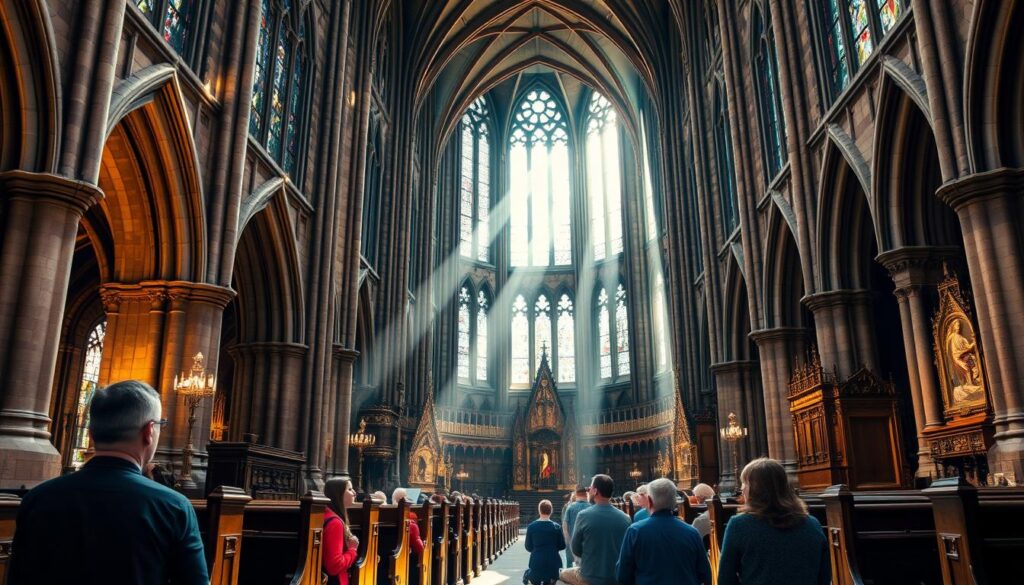
Heritage Sites, Pilgrimages, and the Revival of Tradition
Pilgrimage routes see renewed interest as travelers seek meaning beyond guidebooks. At Bath Abbey – nicknamed “the lantern of the West” – sunlight streams through stained glass onto visitors attending mass where medieval believers once prayed. Similar transformations occur at Westminster Abbey, where St. Edward’s shrine attracts historians and devotees alike.
| Site | Historical Significance | Modern Use |
|---|---|---|
| Bath Abbey | Medieval pilgrimage center | Active worship & tourism hub |
| Tower of London | Martyrs’ execution site | Commemorative services |
| Stratford-Upon-Avon | Shakespeare’s Catholic school | Art preservation studies |
| Westminster Abbey | Royal coronations | Ecumenical events |
Thought leaders increasingly embrace this spiritual legacy. Writers like Paul Kingsnorth and J.D. Vance find inspiration in Catholic teachings, while scholars uncover hidden influences in literature. “Shakespeare’s work breathes with Catholic imagery,” notes Oxford researcher Dr. Eleanor Marston. “His school’s preserved artwork proves this history wasn’t erased – just waiting to be rediscovered.”
Modern churches extend their reach beyond Sunday services. Many host language classes, food banks, and concerts – becoming vital community places. As one London priest observes: “We’re not just keeping traditions alive. We’re showing how they solve modern problems.”
This cultural resurgence even draws global attention. When the pope visited in 2022, over 50,000 gathered at Wembley Stadium – a testament to faith’s enduring pull in secular times. From ancient stones to bustling city parishes, England’s spiritual landscape keeps rewriting its surprising story.
Conclusion
England’s religious revival offers lessons far beyond its shores. The Catholic Church now draws more weekly worshippers than the Church of England – a historic shift fueled by young adults and immigrant communities. Scholars like Stephen Bullivant note thriving university groups and adult conversions breathing new life into ancient traditions.
Recent reports show resilience despite challenges. While abuse scandals impacted attendance, over 800,000 still gather weekly for Mass nationwide. This persistence reveals a deeper truth: people crave authentic spiritual anchors in uncertain times.
What makes this growth remarkable? Young intellectuals and cultural figures increasingly embrace structured faith. Clear moral guidance and time-tested rituals provide meaning that flexible modern alternatives often lack. London’s vibrant parishes now rival New York’s in diversity and energy.
For communities worldwide, England’s story proves tradition can thrive when rooted in conviction. As the United States faces similar spiritual questions, these cross-cultural insights light pathways forward – showing how ancient wisdom meets contemporary hunger for truth and belonging.
FAQ
How has church attendance changed in England recently?
Recent reports show a shift in participation, with Catholic congregations growing in some areas. Young adults and families are increasingly drawn to traditional practices, while other denominations see slower engagement.
Why are young people returning to Catholic traditions?
Many find connection through community-driven events, social justice initiatives, and a renewed focus on spiritual depth. Figures like Pope Francis also inspire younger generations to explore their faith roots.
What role do heritage sites play in modern faith practices?
Historic locations like Walsingham and Westminster Cathedral attract pilgrims and tourists alike. These sites blend spirituality with cultural identity, reviving interest in England’s religious past.
How did the Reformation shape today’s religious landscape?
The 16th-century reforms led to centuries of conflict but also forged resilience among believers. Today, this history informs ecumenical dialogues and mutual respect between Anglican and Catholic communities.
Are there gender differences in mass participation?
Women often lead grassroots ministries and educational programs, though leadership roles remain uneven. Recent years show more balanced engagement, especially in youth-focused activities.
Do Catholics outnumber Anglicans in England now?
While exact numbers vary, some surveys suggest Catholics may outnumber Church of England attendees at weekly services. This reflects broader societal shifts toward diverse expressions of faith.