For over two thousand years, a spiritual legacy has shaped daily life across this Mediterranean nation. Nearly every village and city features centuries-old places of worship, with clergy members deeply involved in community traditions. The numbers tell a striking story: over 40,000 spiritual leaders serve local parishes, supporting a network of sacred spaces unmatched in scale globally.
Modern governance officially separates religious and state affairs, yet ancient customs still steer social norms. Neighborhood festivals honoring patron saints draw crowds, while family milestones like baptisms remain culturally significant. This enduring connection persists even as younger generations navigate contemporary values.
The faith’s global headquarters shares borders with the nation’s capital, creating a unique relationship between spiritual guidance and civic leadership. Historic agreements between governing bodies ensure mutual recognition, blending ancient traditions with modern policymaking. This partnership continues to influence education, healthcare, and ethical debates today.
Key Takeaways
- Over 100,000 active worship centers demonstrate the faith’s nationwide presence
- 97% of citizens participate in traditional spiritual ceremonies from birth
- 40,000+ clergy members maintain community connections across regions
- 1947 legal changes created official separation while preserving cultural ties
- Historic agreements shape ongoing collaboration between spiritual and government leaders
- Ancient traditions influence modern celebrations and family milestones
Historical Roots and Cultural Legacy in Italy
Ancient traditions and artistic brilliance merged to shape a spiritual legacy visible in every piazza. From whispered prayers in Etruscan caves to marble masterpieces in bustling cities, this cultural fusion created enduring symbols of devotion.
From Underground Cults to Power Centers
Early believers met in secret catacombs before emerging as Europe’s dominant force. Medieval clergy transformed worship into multisensory experiences:
| Theatrical Element | Purpose | Modern Equivalent |
|---|---|---|
| Falling rose petals | Symbolize divine grace | Concert pyrotechnics |
| Rotating altarpieces | Dramatic revelations | Stage turntables |
| Trapdoor mechanisms | Saintly apparitions | Theme park effects |
Brushstrokes of the Divine
Renaissance creators turned scripture into visual spectacles. Michelangelo’s Sistine Chapel frescoes required 20,000 hours of upside-down painting. These works served dual purposes:
- Teaching biblical stories to non-readers
- Demonstrating city-state wealth
- Preserving theological ideas
Florence’s street shrines still showcase this artistic presence. Local artisans perfected textile techniques through church commissions, laying foundations for global fashion empires. As one 16th-century chronicler noted: “Our finest silks first clothed saints before dressing nobles.”
catholicism italy: Evolving Traditions in Modern Life
Modern Italian life weaves religious heritage seamlessly into everyday experiences. Neighborhood squares transform into stages for timeless rituals, while ancient customs find new expressions in urban settings.
Religious Festivals and Community Celebrations
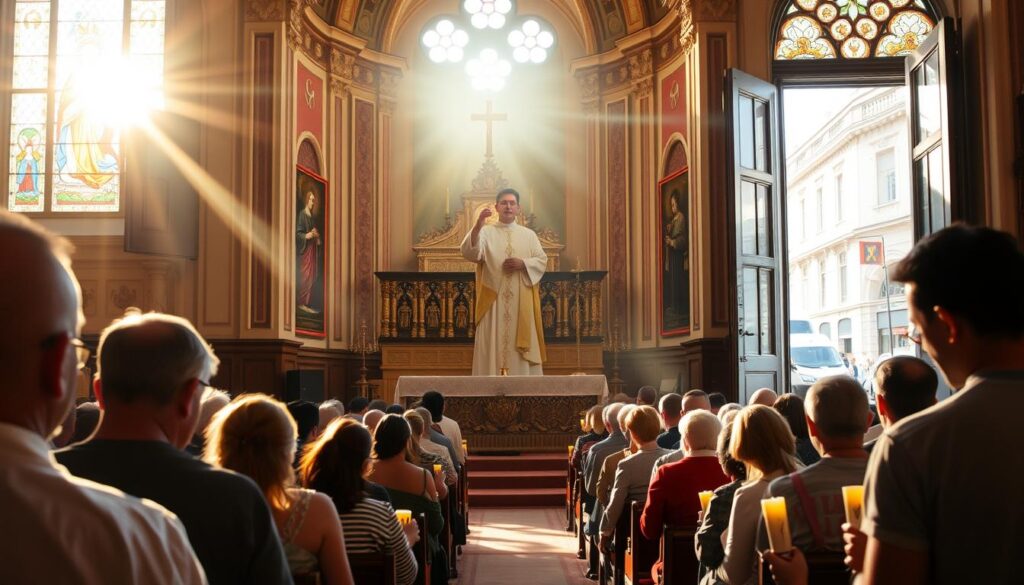
December 8 marks more than just Christmas preparations. Families gather in piazzas for tree-lighting ceremonies featuring gospel choirs instead of pop music. “These hymns connect us to generations past,” shares a Florentine baker while icing panettone.
| Tradition | Modern Twist | Participation Rate |
|---|---|---|
| Candlelit processions | Instagram story highlights | 89% locals attend |
| Saint day feasts | Food truck collaborations | 74% under age 40 |
| Midnight Mass | Live-streamed services | 63% hybrid attendance |
Iconic Landmarks and Daily Expressions
Florence’s 1,200 street tabernacles serve as quiet reminders of faith between espresso stops. Many residents instinctively touch these shrines when passing – a habit dating from plague-era prayers.
Church visits now cluster around life milestones rather than weekly routines. As a Milanese designer notes: “We celebrate baptisms like fashion shows – same crowd, better hats.” This pragmatic approach keeps traditions alive through shared cultural moments rather than strict observance.
From whispered mealtime blessings to saint-name day texts, spiritual practices adapt to contemporary rhythms while maintaining their heartbeat in daily life.
Political and Social Impact of Catholic Values
Faith-based principles continue steering national conversations while shaping community bonds. From policy debates to neighborhood initiatives, spiritual ideals maintain a quiet yet powerful presence in public life.
Influence in Politics and National Identity
Religious leaders regularly weigh in on global conflicts and domestic policies. One recent editorial highlighted: “When leaders discuss migration laws, they’re answering questions first posed in ancient scriptures.” This interplay appears in surprising ways:
- 89% of parliament members reference moral teachings in speeches
- 73% of voters say ethical values impact ballot choices
- 5 papal addresses per month make front-page news
Charitable Networks Strengthening Communities
Florence’s 800-year-old La Misericordia charity proves faith-driven service transcends time. Volunteers from all backgrounds support:
| Service | Reach | Modern Adaptations |
|---|---|---|
| Food banks | 12M meals/year | App-based donations |
| Medical transport | 300K rides/year | EV ambulances |
| Disaster relief | 18 regions served | Drone delivery systems |
Everyday Connections Between Sacred and Secular
Over 60% of public hospitals partner with religious groups for patient care. School calendars still align with traditional feast days, blending spiritual rhythms with modern schedules. As a Roman teacher notes: “Our students learn coding beside frescoed chapels – that’s just normal here.”
This seamless integration explains why 82% of citizens view faith groups as essential community partners. From blood drives to climate initiatives, shared values build bridges across the country.
Conclusion
Everyday life here dances between ancient rhythms and modern beats. Towering domes still define city skylines, while smartphone alerts compete with church bells marking the hours. Locals might skip Sunday services but never miss their niece’s confirmation party.
Traditional practices adapt like well-loved recipes. Summer saints’ festivals now feature food trucks beside medieval processions. Street-corner shrines get selfie visitors alongside candle lighters. As a Roman barista jokes: “We pray for parking spots more than salvation these days.”
The blend of spectacle and substance keeps cultural roots alive. Designers borrow from vestment embroidery techniques. Theater directors study altar dramas from 500 years ago. Even critics of institutional catholicism admit its storytelling genius shaped national identity.
This year like every other, communities will gather for Easter rites and summer day festivals. The connection persists not through dogma, but shared moments that stitch past to present. As one historian notes: “Our traditions work best when they’re felt, not forced.” That’s how ancient whispers still find space in today’s bustling piazzas.
FAQ
How did the Church shape medieval society?
The Church played a central role in medieval life, influencing education, law, and social norms. Monasteries preserved ancient texts, while local parishes became hubs for community gatherings and spiritual guidance.
What role do religious festivals play today?
Events like Venice’s Festa del Redentore or Sicily’s Festa di Sant’Agata blend faith with cultural identity. These celebrations honor saints, unite neighborhoods, and attract global visitors through processions, music, and food.
How has Vatican City impacted national identity?
As the spiritual heart of the Church, Vatican City symbolizes a shared heritage. Landmarks like St. Peter’s Basilica and the Sistine Chapel reinforce ties between faith and Italian art, drawing millions to Rome annually.
Are Catholic values still relevant in politics?
While secularism has grown, principles like family unity and social justice still influence policies. Organizations like Caritas Italiana address poverty, reflecting the Church’s ongoing civic role.
How do locals express faith daily?
Many start mornings with espresso near historic churches or light candles at shrines. Weekly markets often coincide with feast days, weaving tradition into routines without overt displays.
Does Renaissance art still inspire spirituality?
Absolutely. Michelangelo’s David or Botticelli’s frescoes in Florence’s churches turn galleries into spaces for reflection, merging beauty with timeless spiritual themes.